
Communities in southwestern Alaska face significant destruction as Typhoon Halong’s remnants lead to evacuations and recovery efforts.
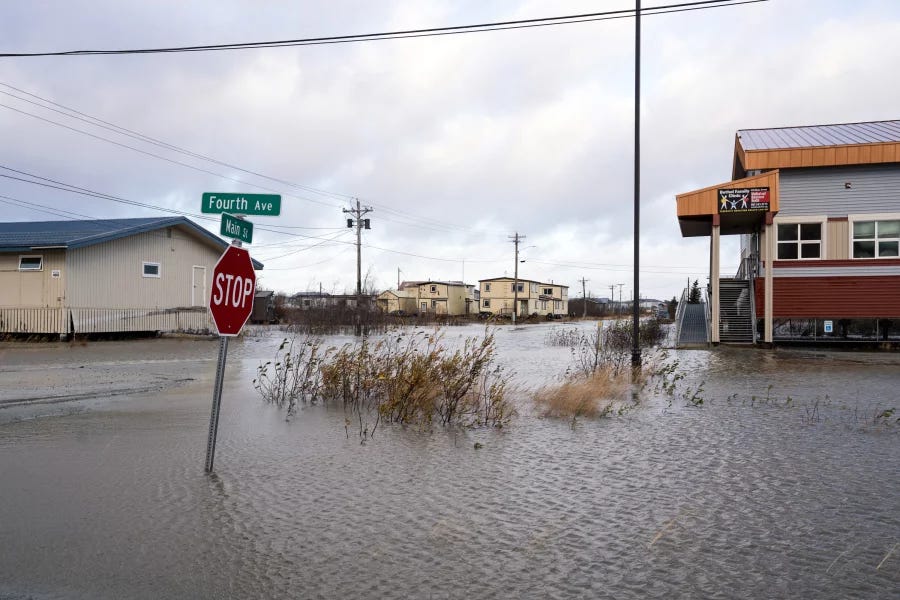
Alaska was devastated by the remnants of Typhoon Halong last week, resulting in one person dead, two missing, and thousands displaced.
“Several of these villages have been completely devastated, absolutely flooded, several feet deep…. This took homes off of foundations,” said Christopher Culpepper, commander for the U.S. Coast Guard.
“This took people into peril, where folks were swimming, floating, trying to find debris to hold onto in the cover of darkness.”
The Indigenous communities of Kipnuk and Kwigillingok faced extensive damage, with local officials stating it would take 18 months to rebuild infrastructure. The implications are significant, as 90% of Kipnuk’s infrastructure was lost in the storm while more than a third of Kwigillingok’s was destroyed.
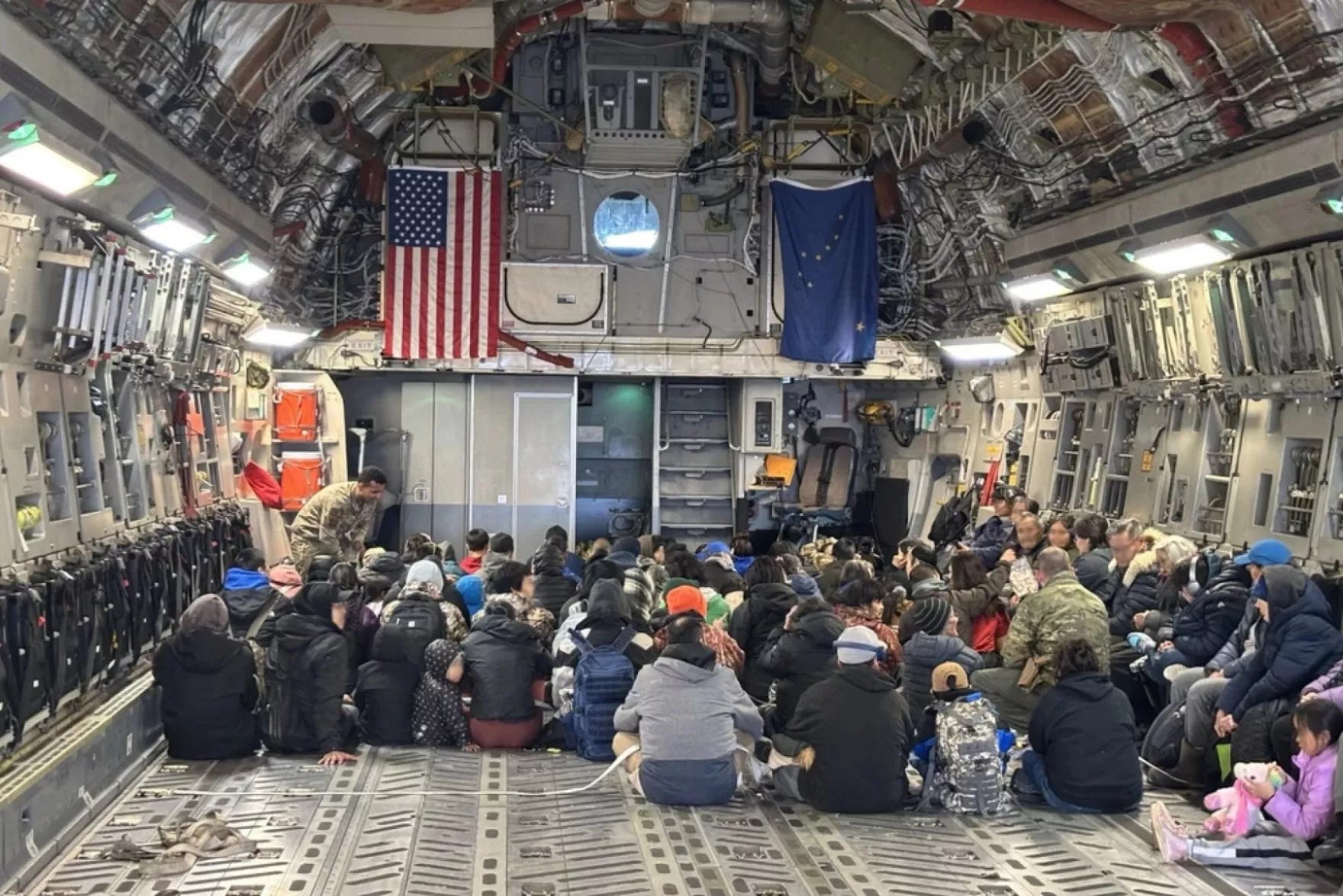
“It is anticipated that more than 1,500 Alaskans will be evacuated to our major cities, many of whom will not be able to return to their communities and homes for upwards of 18 months,” wrote Alaska Gov. Mike Dunleavy in a letter to President Donald Trump obtained by The Introspective.
 Mike Dunleavy Letter
Storm Impact
Typhoon Halong initially impacted Japan’s Volcano, Ogasawara and Izu islands, with winds reaching as high as 123 mph and nearly 14 inches of rain. Thousands of people lost power and water access as flooding damaged infrastructure.
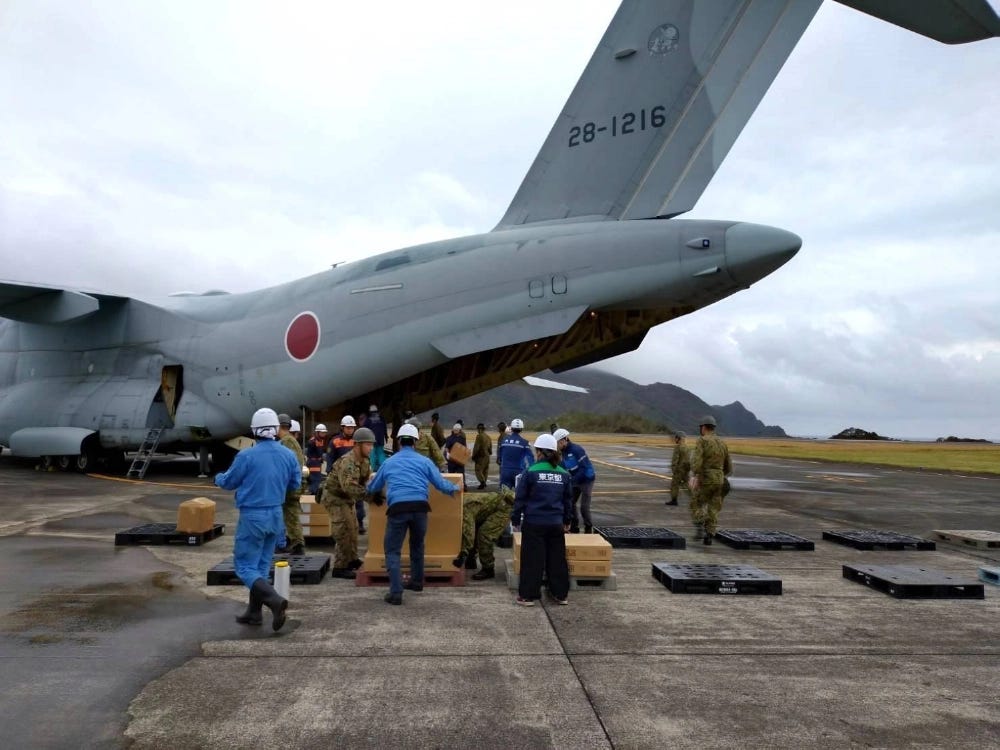
In Alaska, Gov. Mike Dunleavy issued a disaster declaration prior to the storm, with State Emergency Operation Center (SEOC) Incident Commander Mark Roberts thanking first responders.
“I want to commend the people along the western and northern coast for all the preparations that took place prior to the storm. Making sure Alaskans are safe will always be our top priority,” Roberts said in a press release.
“While some areas will not be as severely affected, other areas could see a greater impact from the next storm. Communities and residents in the warning area should continue to prepare, keep shelters ready and avoid travel,” he continued.
“This event is far from over.”
Wind speeds of 113 mph were detected in the Kusilvak Mountains as villages in the Yukon-Kuskokwim Delta faced the most damage, with many not connected by roads and relying on local airports for travel outside their communities.
“Typhoon Halong has devastated our region and disrupted the lives of all our residents. People have lost loved ones, homes, belongings — in some cases, their entire community and their way of life,” said Eric Deakin, CEO of the Coastal Villages Region Fund, to Fox Weather.
“The hard work has already begun.”
Indigenous Community Displaced
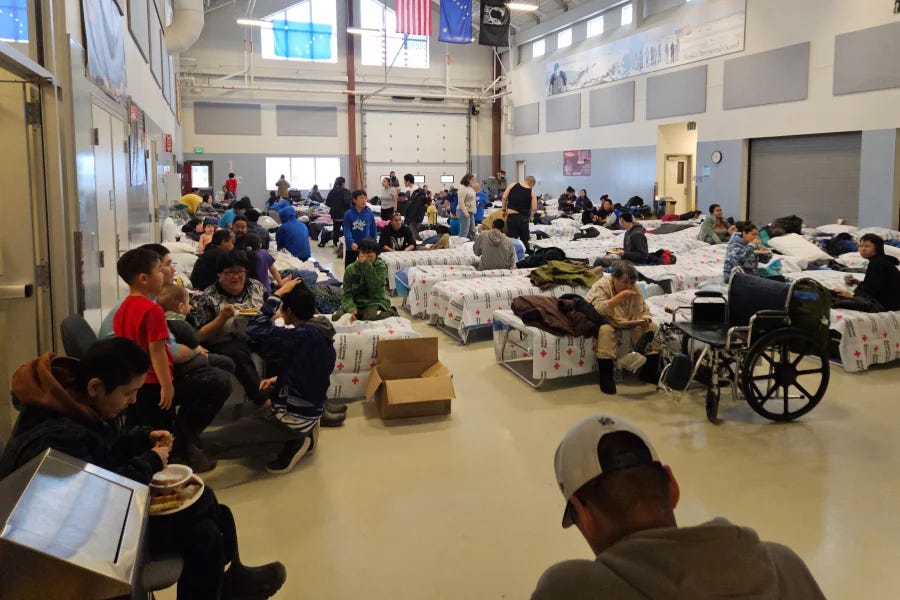
Many of the 1,500 people evacuated were part of the Yup’ik-an Indigenous group native to southwestern Alaska, with many displaced residents being flown to Anchorage—the state’s largest city.
“This transition carries both emotional and cultural weight. Our schools will be places of belonging, healing and hope, where every child feels safe, valued and connected,” Anchorage School District Superintendent Jharrett Bryantt said in a press release.
“Honoring each student’s culture, language and relationships will be essential to helping them heal and rebuild their sense of home.”
The villages of Kipnuk and Kwigillingok faced the most extensive damage, with the storm destroying the majority of their infrastructure.
“It’s catastrophic in Kipnuk. Let’s not paint any other picture,” said Incident Commander Mark Roberts.
“We are doing everything we can to continue to support that community, but it is as bad as you can think.”
In an interview with NPR, Buggy Carl, tribal administrator in Kipnuk, highlighted the trauma residents faced from being displaced.
“I know their mindset, that their heart is here,” he said, referring to community members.
“They don’t know anywhere else to go because, you know, they grew up here. They have their own food throughout the yearlong, doing subsistence hunting. They just can’t leave.”
One person, 67-year-old Ella Mae Kashatok, died in Kwigillingok during the storm, and local officials called off the search for two men who went missing after their home floated away.
“This is not a decision any of us ever wanted to make,” said Austin McDaniel, spokesperson for the Alaska State Troopers, to the Anchorage Daily News, emphasizing that the search was “robust and extensive.”
“It comes after a careful evaluation of all of the available information and the available resources.”
Infrastructure was also flooded in Napakiak, with erosion reported in Toksook Bay. Oil spills later occurred in the town of Nightmute.
The Alaska Federation of Natives (AFN), the largest Native organization in the state, passed a resolution calling for help in the region, urging the state and federal governments “to make sustained investments in permanent Alaska Arctic infrastructure and protective measures” and to maintain relationships with local tribes to “ensure a consistent federal presence and equitable access to resources for remote communities across the Bering Sea and Arctic regions.”
AFN Resolution
Sens. Dan Sullivan and Lisa Murkowski, along with Rep. Nick Begich, later wrote a letter to President Donald Trump urging federal involvement in recovery efforts.
“While first responders, tribal and local governments, and state emergency management personnel have acted swiftly and effectively, the scale of this disaster surpasses the state’s ability and capacity to respond without federal support,” they wrote.
“With winter fast approaching, and transportation and broadband connectivity limited, there is an urgent need for federal aid to repair housing, restore utilities and secure heating fuel before severe winter conditions set in.”
Alaska Delegation Letter
Trump previously canceled a $20 million grant to Kipnuk meant for preventing coastal erosion and flooding.
 The Introspective
Leave a comment