
A collision near Adamuz in Córdoba province sparks national mourning and an ongoing safety investigation.
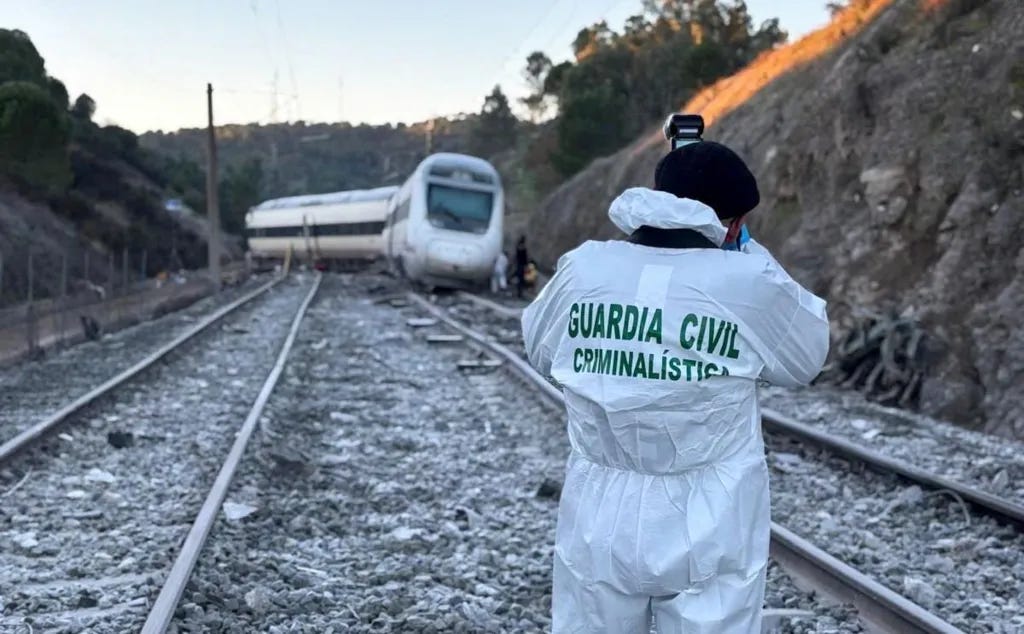
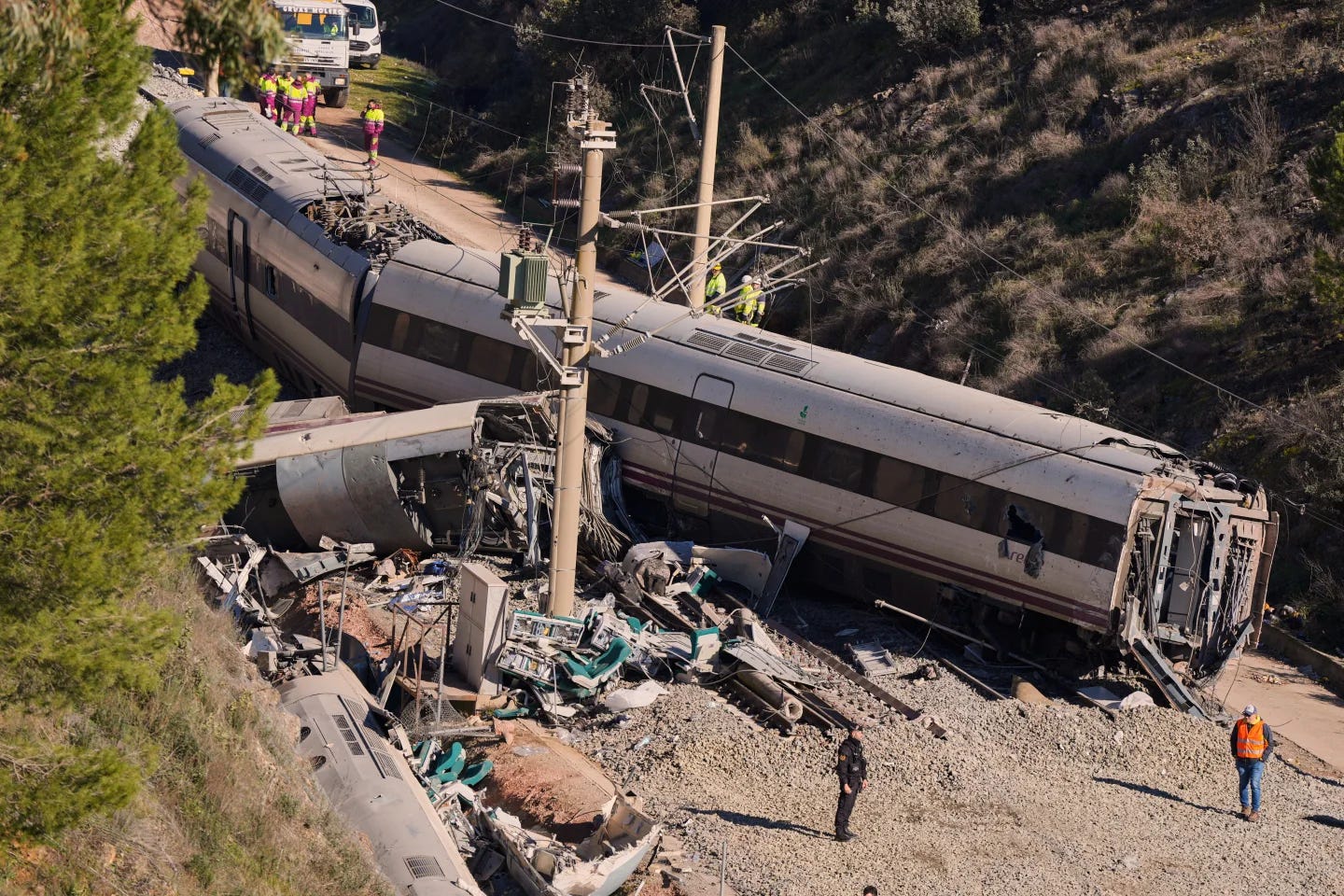
More than 40 people are dead and 200 injured after a high-speed train derailed and crashed into another train near Adamuz, Spain, becoming the deadliest train crash since the Santiago de Compostela derailment in 2013.
“Everything was very fast and chaotic; suitcases started falling, and when we were finally able to get out of the train cars, we saw a catastrophic situation,” recalled one passenger who was traveling to Huelva.
This comes as the first train, an Iryo 6189, left Málaga for Madrid when the second train, an Alvia 2384, collided on a recently refurbished section of the track, with both trains traveling within the speed limit before the derailment.
“I was thrown through the carriage, it felt like being on a carousel,” said Santiago Salvador, a Portuguese citizen who broke his leg in the crash.
“It was a very tragic accident; it looked like hell. There were people who were very seriously injured.”
Investigation
As the investigation continues, hundreds of people have been reported missing, with officials noting the terrain is making search and rescue efforts more difficult.
“The problem is that the carriages are twisted, so the metal is twisted with the people inside,” said Francisco Carmona, head of firefighters in Córdoba, to Spanish media.
“We have even had to remove a dead person to be able to reach someone alive. It is hard, tricky work.”
Juanma Moreno, president of Andalusia—an autonomous community in Spain—said officials were waiting for “heavy machinery” to lift the second train, which has “taken the worst part of this accident.”
“Until the heavy machinery can do its job and free the wagons from the track, emergency services will not be able to start searching and identifying any remaining victims,” Moreno said.
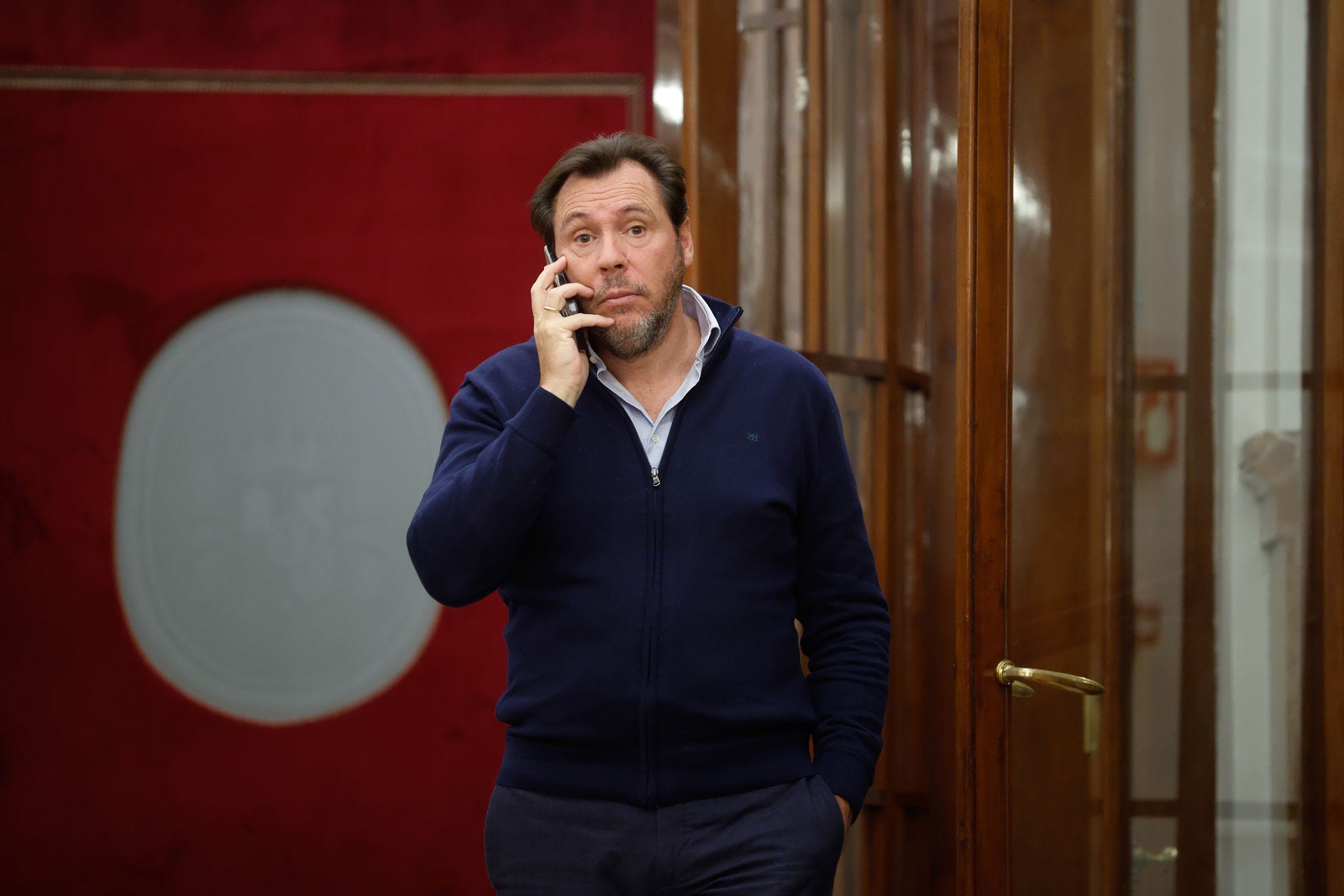
Spain’s Minister of Transportation Óscar Puente said the crash was “extremely strange,” emphasizing how the flat stretch of track was recently renovated, adding that “all the railway experts are extremely surprised.”
“There are many pieces of the puzzle we must fit together,” he said to Spain’s Onda Cero in an interview.
“Nothing seems to suggest anything was wrong with it,” he added, saying that newly laid track can exhibit “youthful sins.”
However, a Reuters report alleged investigators assessing the scene found a broken joint on the rails that created a gap, which widened as trains passed over it.
Puente later warned against drawing any conclusions based on “mere speculation.”
“When the train went off the rails, it produced a ton of fractures in the track, for about 200 meters (yards). And so for the first fracture in the track, the key is to determine—and currently no expert can say for certain—if this fracture was a cause or a consequence,” he continued.
“That is the crux of this whole thing, or one of them, knowing what came first—the fracturing of the track and then the derailment, or if the derailment caused the fracture in the track,” he added, saying that investigators would still “have to find out why” if there was an issue with the track.
Reactions
Spanish Prime Minister Pedro Sánchez announced three days of national mourning since the crash, saying that officials will “get to the bottom of” what caused the crash.
“This is a day of sorrow for all of Spain, for our entire country,” he said.
“We are going to get to the truth, we are going to find the answer, and when that answer about the origin and cause of this tragedy is known, as it could not be otherwise, with absolute transparency and absolute clarity, we will make it public.”
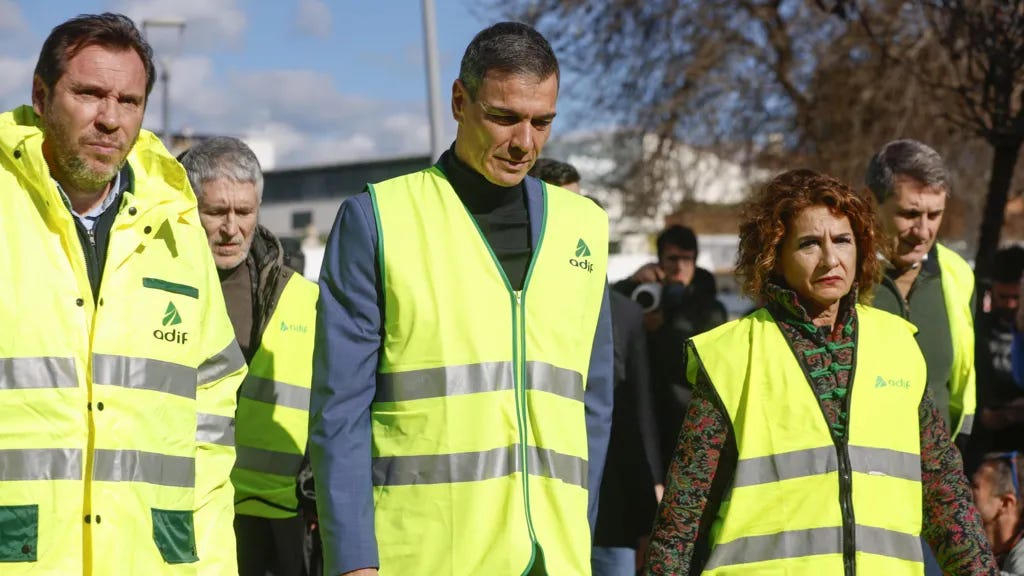
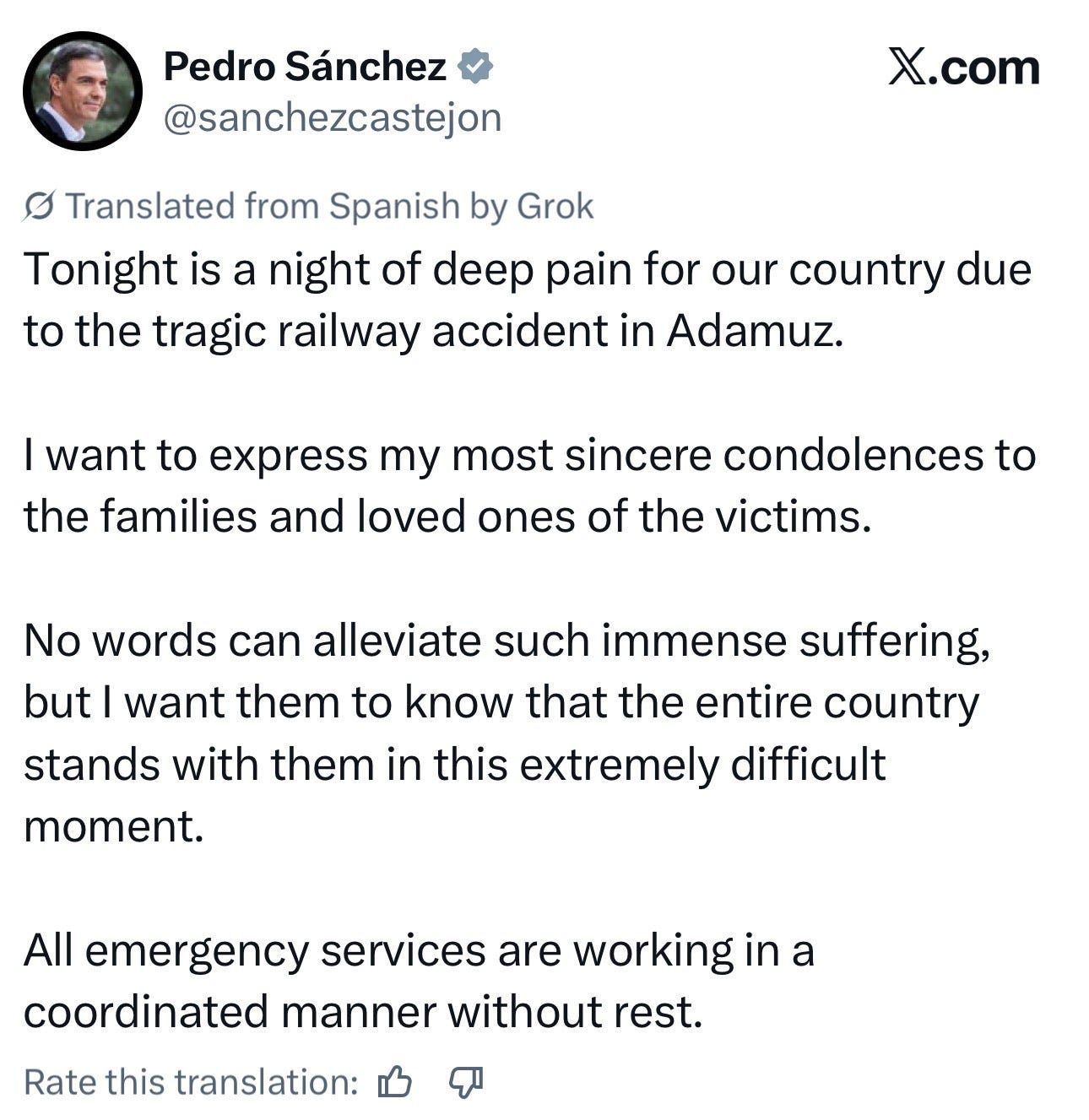
In an X post, he later expressed his “sincerest condolences to the families and loved ones of the victims.”
“No words can alleviate such great suffering, but I want you to know that the whole country is with you in this very difficult time,” he wrote.
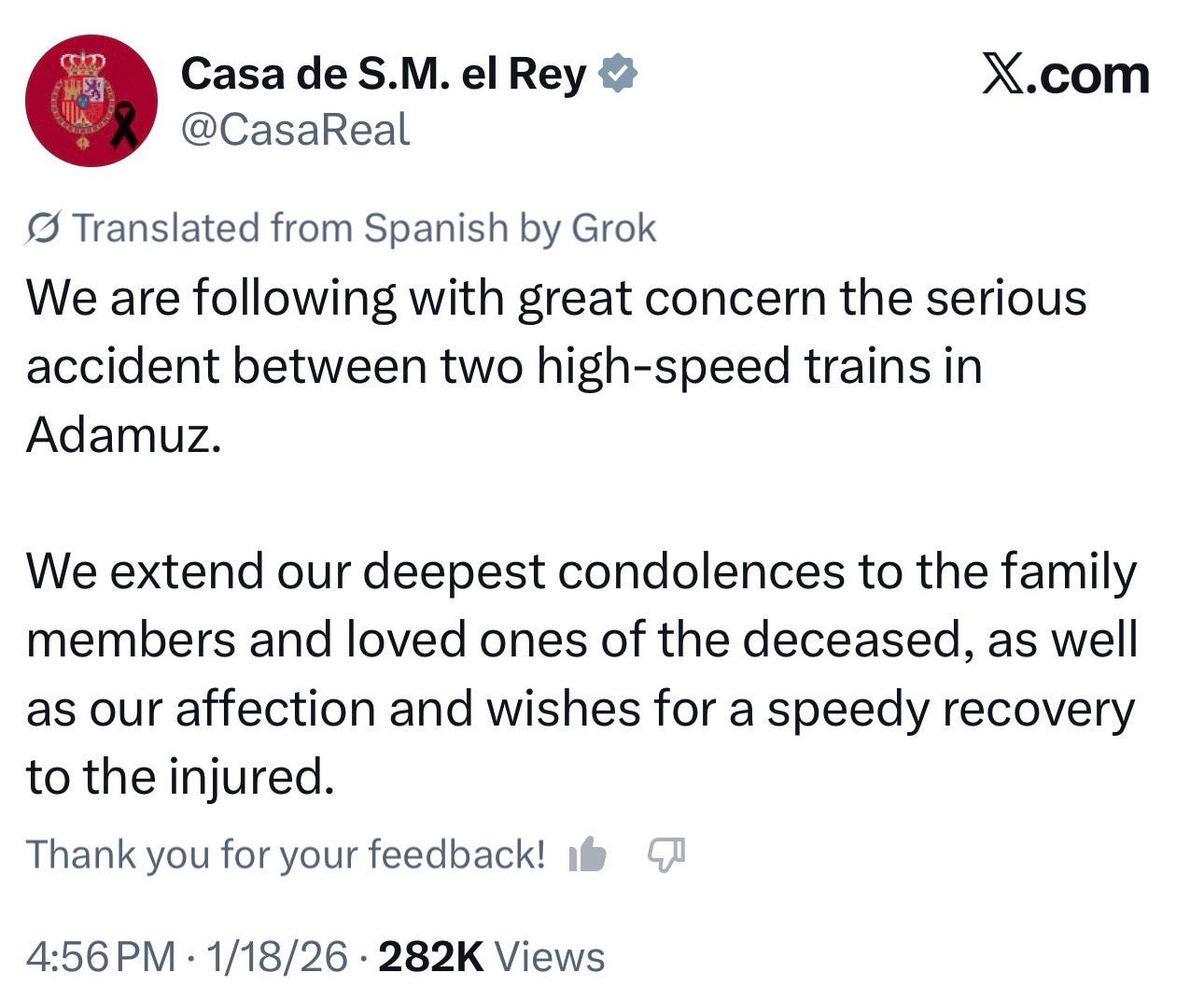
Spain’s Royal Palace wrote that King Felipe VI and Queen Letizia were following the news with “great concern.”
“We extend our deepest condolences to the families and friends of the deceased, as well as our affection and wishes for a speedy recovery to the injured,” the palace wrote on X.
French President Emmanuel Macron and European Commission President Ursula von der Leyen later offered their condolences following the crash.
 The Introspective
Leave a comment