
From punitive origins to modern-day injustices, the U.S. prison system faces mounting calls for reform amid systemic abuse and overcrowding.
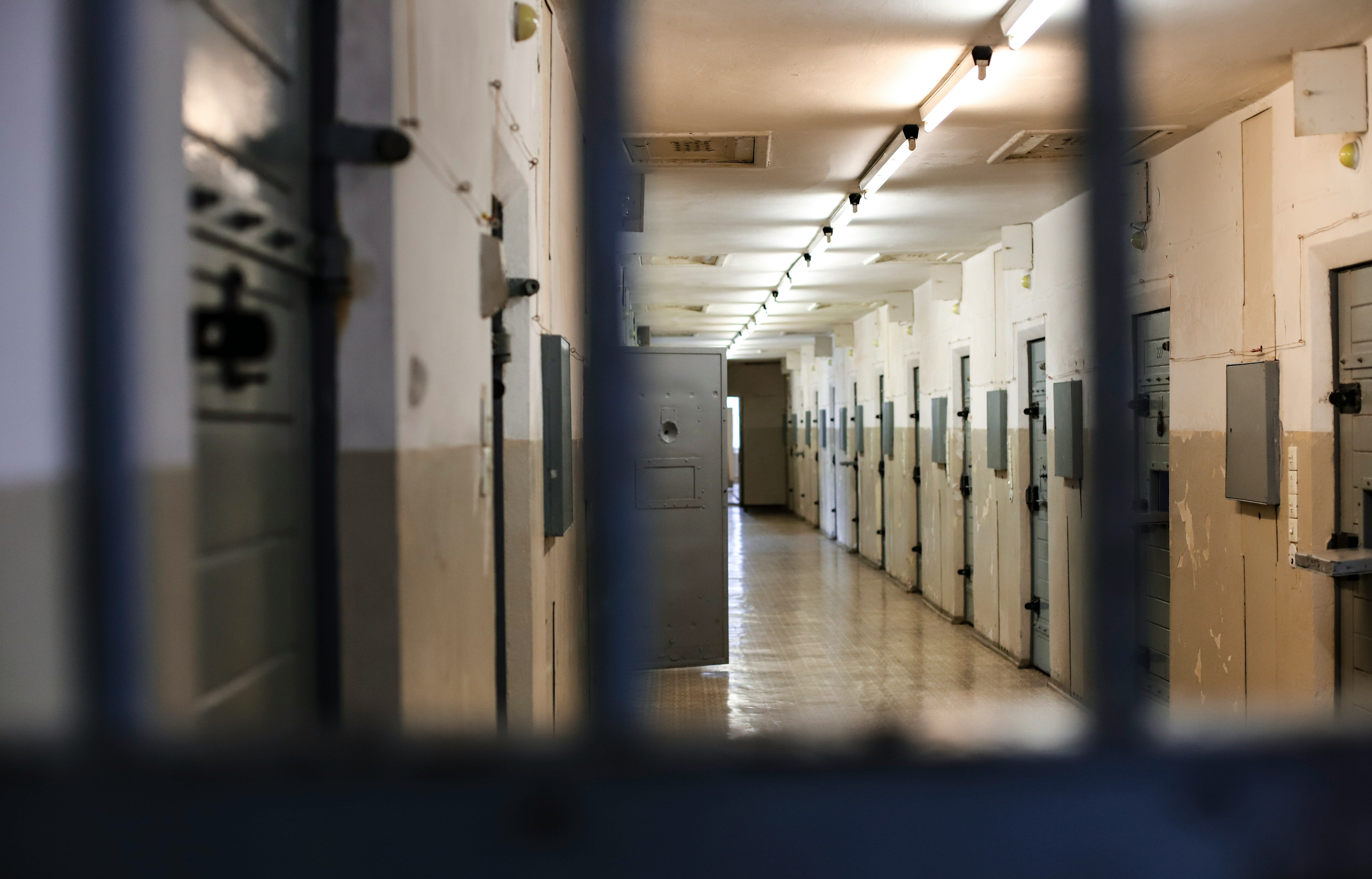
Content Warning: This article contains discussions of physical and sexual abuse, racial violence, and death in custody. Reader discretion is advised.
As times change, the prison system remains at the center of debate. More than 1.2 million people are held in federal, state and local prisons, costing $182 billion a year.
However, despite the declining incarceration rate, many advocates have criticized the data, claiming it is ambiguous.
“The uncertainty that results muddies the waters around our society’s use of incarceration, giving lawmakers and lobbyists the opportunity to advance harmful policies that do not make us safe,” wrote the Prison Policy Initiative.
Research from Statista found that the United States has the fifth-highest incarceration rate in the world, behind El Salvador, Cuba, Rwanda and Turkmenistan.
Evolution of the U.S. Prison System
Prior to the 18th century, the United States relied on corporal punishment, with many prisoners being held in large rooms of 30 to 40 people, influenced by British law.
William Penn—the founder of modern-day Pennsylvania—inspired by Quaker ideals, abolished the death penalty except for murder. Founding Father Benjamin Rush advocated for punishment that included solitude, labor, watchfulness and silence.
Federal prisons were created in 1891 after Congress passed the Three Prisons Act, establishing United States Penitentiaries (USPs) in Kansas, Georgia and Washington state. The Bureau of Prisons (BOP) was later established in 1930.
Mass incarceration began in 1970 as the “war on drugs” took hold, disproportionately impacting communities of color. Black Americans are six times more likely to be arrested for drug offenses than their white counterparts, despite making up only 12% of substance users. Research from the Vera Institute found that from 1850 to 1940, racial minorities made up 40% to 50% of the prison population. In 2015, 55% of people imprisoned were either Black or Latino.
“Mass incarceration is an era marked by significant encroachment on the freedoms of racial and ethnic minorities, most notably Black Americans,” the institute wrote.
The 13th Amendment—which outlaws slavery—allows involuntary servitude as punishment for a convicted crime, underscoring what many advocates say is cause for reform.
Abuse Within the Prison System
Many prisons have reported cases of abuse, particularly sexual and physical abuse, against prisoners in solitary confinement.
In a report from The Marshall Project, prison journalist Kwaneta Harris recalled overhearing an incarcerated woman at a Texas prison ask a guard for toilet paper, with the guard responding, “What are you gonna do for it?”
“Raise your hand if you’ve ever been sexually abused while in prison,” she called out to other women in her cellblock, with many raising their hands from prison cells.
“OK, how many of you have ever had a guard watch you on the toilet or take a shower?” she asked.
“Of course!” replied one woman.
“Have you ever taken your shirt off when a guard came by with the food cart so that you wouldn’t get passed for a meal?”
“Yes!” the women responded.
“That’s all sexual abuse,” said Harris to the women.
In Texas, sexual activity with prisoners is a felony, while the state is federally required to comply with the Prison Rape Elimination Act, a 2003 law that aimed to end sexual abuse in prisons.
 Prison Rape Elimination Act
In California, Gregory Rodriguez, a former correctional officer, was sentenced to 224 years in prison for sexual abuse against imprisoned people spanning a decade. He was previously found guilty on more than 60 charges of abusing women in his custody, including cases of rape and battery.
“These victims were put in unfathomable and untenable positions, and they could not leave as they were incarcerated,” said Judge Kathrine Rigby, announcing his sentence.

A report from The Guardian found that hundreds of women filed complaints of sexual abuse; however, only four officers were fired for sexual misconduct.
Abuse against Black Americans in prisons has also continued throughout the years, with a notable case being the killing of Robert Brooks in December 2024. Brooks was held at the Marcy Correctional Facility in Marcy, New York, where video footage showed officers beating and stomping on his genitals while he was handcuffed. His death was ruled a homicide following an autopsy that found compression of the neck and blunt force trauma.
“Several of his internal organs were bruised,” said Prosecutor Bill Fitzpatrick at a court hearing.
“His thyroid bone was fractured. His thyroid cartilage was ripped. He also died as a result of repeated restriction to his airways, causing severe brain damage. And finally, he died by choking on his own blood.”

Officers Nicholas Anzalone, David Kingsley, Anthony Farina, Christopher Walrath and Mathew Galliher, along with another unidentified officer, were charged with second-degree murder and first-degree manslaughter.

A 2023 study from the United Nations noted “shocking” violations of human rights and racial disparities within the U.S. criminal justice system, including instances where women are shackled during childbirth and unpaid forced labor that “perpetuates slavery to the present day.”
“In all the cities we went to, we heard dozens of heartbreaking testimonies on how victims do not get justice or redress. This is not new, and it’s unacceptable,” said Tracie Keesee, a member of the UN’s International Independent Expert Mechanism to Advance Racial Justice and Equality in the Context of Law Enforcement, in a press release.
“This is a systemic issue that calls for a systemic response. All actors involved, including police departments and police unions, must join forces to combat the prevailing impunity.”
Calls for Reform
The Department of Justice (DOJ) introduced measures in 2024 to address systemic failures in prisons and jails, aiming to reform how mental health is addressed among prisoners.
“Providing humane, safe and secure environments for individuals in the custody of the Department of Justice is a vital component of the department’s mission to uphold the rule of law, keep our country safe and protect civil rights,” read the report.
DOJ December 2024
This comes after Congress passed the First Step Act in 2018, a reform bill that focuses on rehabilitation and reducing excessive sentences in the federal prison system.
At the same time, studies conducted during the 2024 election found that the majority of Americans—76% of Republicans, 85% of Democrats and 82% of independents—supported prison reform, with most voters in swing states such as Arizona, Georgia, Pennsylvania and Michigan saying it’s important to reduce the prison population in the country.
 The Introspective
Leave a comment