
A once-tropical storm has surged to Category 5 intensity, highlighting the growing role of climate change in extreme hurricanes.
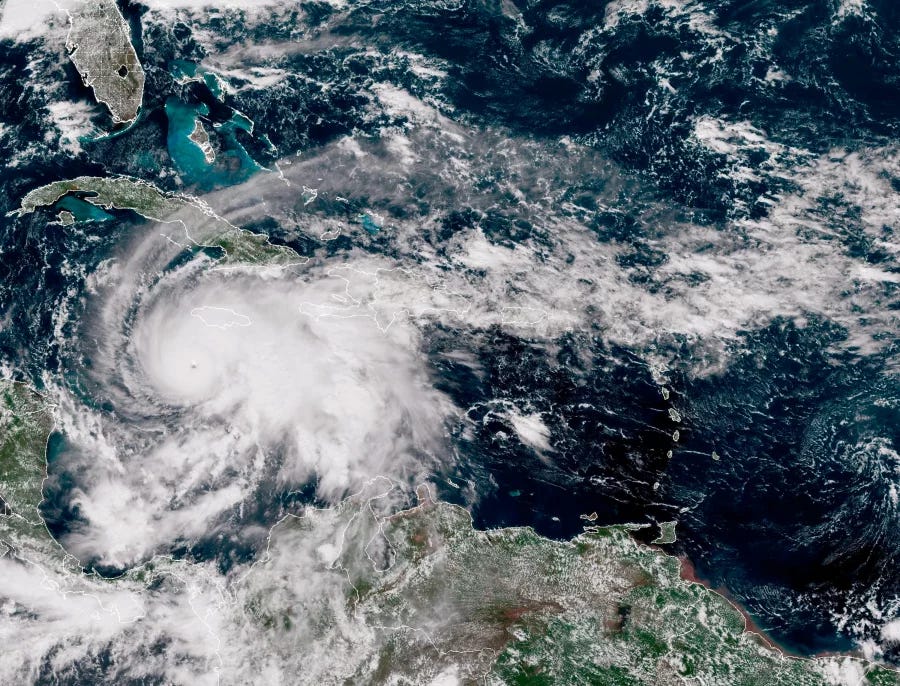
Jamacia was devastated by the effects of Hurricane Melissa on Tuesday, after the unprecedented storm strengthened into a Category 5 over the weekend.
“It’s a catastrophic situation expected in Jamaica,” said World Meteorological Organization specialist Anne-Claire Fontan.
“For Jamaica, it will be the storm of the century for sure.”
Hurricane Melissa became stronger than Hurricane Katrina in 2005, with sustained winds of 180 mph, as the storm became the first Category 5 hurricane to impact Jamacia in the island’s history.
Climate Change Impact
Hurricane Melissa was a tropical storm on Saturday before warm waters in the Atlantic Ocean caused the storm to escalate to a Category 4 hurricane on Sunday. The storm later reached Category 5 by Monday morning, with Climate Central stating that Melissa will cause a “multi-day period of damaging winds and heavy rainfall, causing catastrophic and life-threatening flash flooding and numerous landslides. Extensive infrastructural damage, long-duration power and communication outages, and potentially prolonged isolation of communities is likely.”
“Climate change is fundamentally changing our weather,” said Climate Central meteorologist Bernadette Woods Placky to The Guardian.
“It does not mean that every single tropical cyclone is going to go through rapid or super-rapid intensification. However, in our warmer world, it will continue to increase the likelihood of storms going through rapid and super-rapid intensification.”
Research from NASA found that oceans reached their warmest temperatures on record, raising implications as a 2023 study found that hurricanes in the Atlantic are now twice as likely to rapidly intensify from tropical cyclones (TCs) to powerful storms, with 90% of excess heat being absorbed by the ocean.
“The rate at which ocean surfaces have warmed has also accelerated, with 0.60 °C of this warming occurring since 1980,” read the study.
“Considering the role of warm upper ocean water and SSTs in the fastest TC intensification rates, it is reasonable to expect that we may observe an increase in TC intensification rates that coincides with warming ocean temperatures in recent decades.”
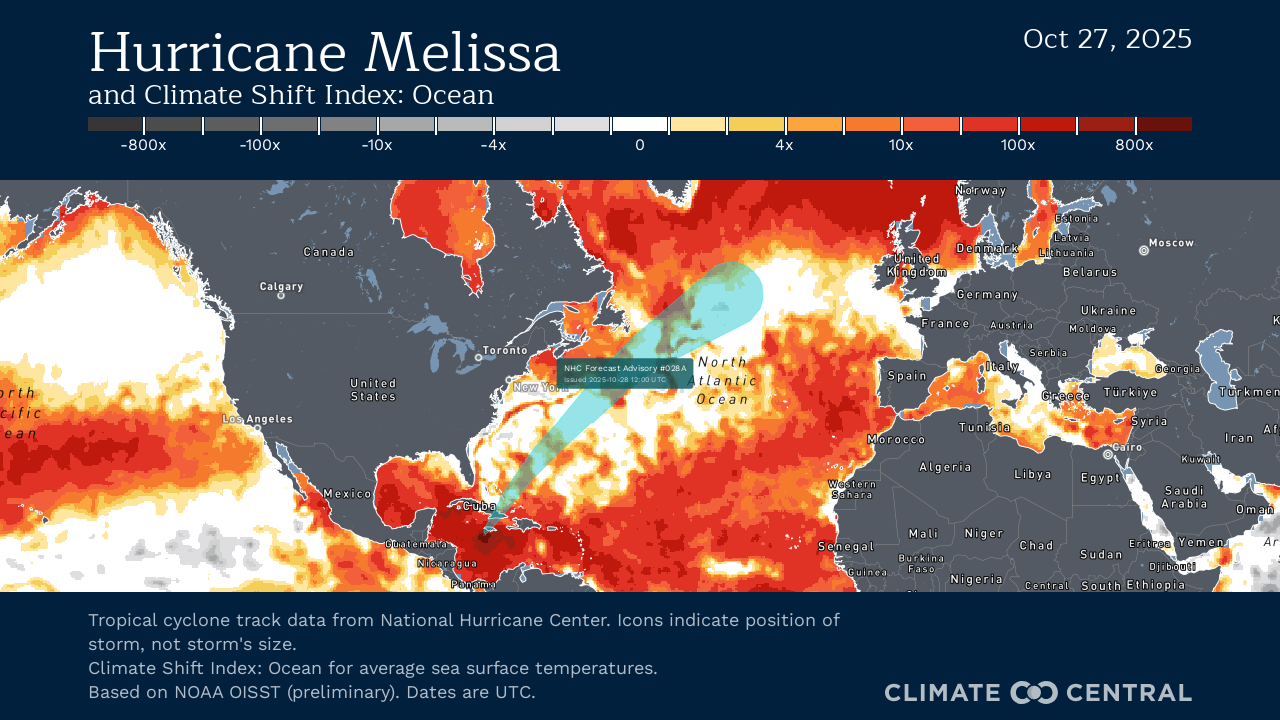
Scientists previously told the Associated Press that Melissa is the fourth storm in the Atlantic this year to be impacted by rapid intensification.
“That part of the Atlantic is extremely warm right now — around 30 degrees Celsius (86 degrees Fahrenheit), which is 2 to 3 degrees Celsius above normal,” said Akshay Deoras, a meteorologist at the United Kingdom’s University of Reading.
“And it’s not just the surface. The deeper layers of the ocean are also unusually warm, providing a vast reservoir of energy for the storm.”
Bernadette Woods Placky emphasized the impact of climate change on islands and coastal areas, stating that the hurricanes are “really ripping away at the coastal infrastructure of these islands.”
“With 90% of our extra heat going into our oceans, we’re seeing these oceans warm and they’re rising. And that plays out with sea level rise. So even outside of any storm, the water levels are getting higher. They’re creeping away at our coastlines and they’re going farther inland,” she said.
Storm Preparation
As the storm made landfall on Tuesday, Jamaican Prime Minister Andrew Holness urged people to stay indoors as the island may face a humanitarian crisis following Melissa.
“I urge all Jamaicans to stay inside and remain within the safety of your homes. Avoid unnecessary travel. Strong winds, heavy rains and flash floods can occur at any moment,” he said on Monday.
“Staying indoors is the safest option and reduces the burden on our security and emergency personnel,” he continued.
“There is no infrastructure in the region that can withstand a Category 5. The question now is the speed of recovery. That’s the challenge.”
Parliament member Desmond McKenzie emphasized the more than 800 shelters the country opened in an interview with Al Jazeera, saying the government did all it could to prepare.
“We have put everything in place in regards to what are required in terms of evacuation, getting people to our shelters, providing the requisite resources, and we have been cleaning our drains. We have been cleaning our gulleys,” he said.
“I must admit that not all the shelters have persons in the shelters. We have seen an uptick in the number of persons turning up to the shelters. The demand in certain parishes is much greater than in some.”
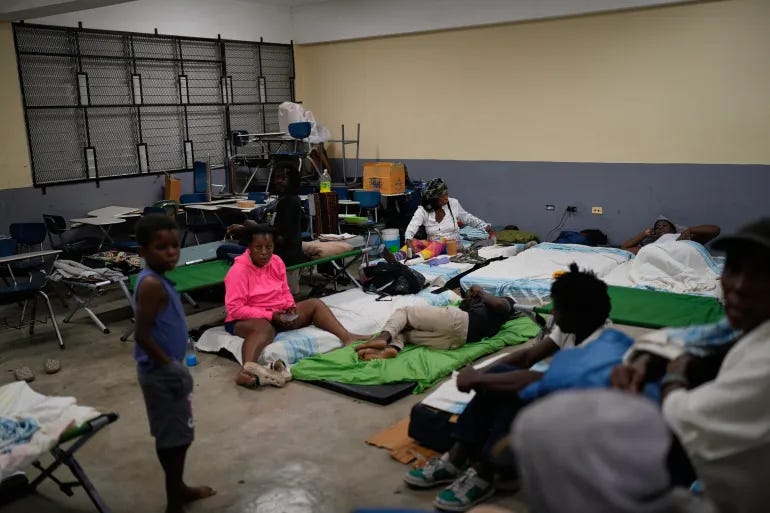
Despite the warnings in place, many residents said that they were not evacuating.
“I am not moving. I don’t believe I can run from death,” said Roy Brown, a resident of Kingston, the capital of Jamaica.
Store owner Enrico Coke emphasized his fear regarding Melissa, stating how many of his neighbors have nowhere to go.
“I’m concerned about farmers. The fishermen will be suffering after this,” he said.
“We’ll need help as soon as possible, especially water for the people.”
Colin Bogle, member of humanitarian group Mercy Corps, said most families were sheltering in place despite evacuation orders in flood-prone areas.
“Many have never experienced anything like this before, and the uncertainty is frightening,” he said.
“There is profound fear of losing homes and livelihoods, of injury and of displacement.”
Melissa is expected to bring over 20 to 30 inches of rainfall to the most affected areas, with other parts of the island expected to receive 12 to 16 inches of rain.
“You might be saying that this system doesn’t seem to be packing much of a punch, because what you’ve been experiencing outside doesn’t seem to be worthy of all the hurrah that we’re creating about the system,” said Evan Thompson, principal director of the Meteorological Service of Jamaica.
“But the truth is, it is still some distance away from the coast, expected to move closer and then move across the island, and that means that the impacts are going to be significantly greater than you’ve already been experiencing.”
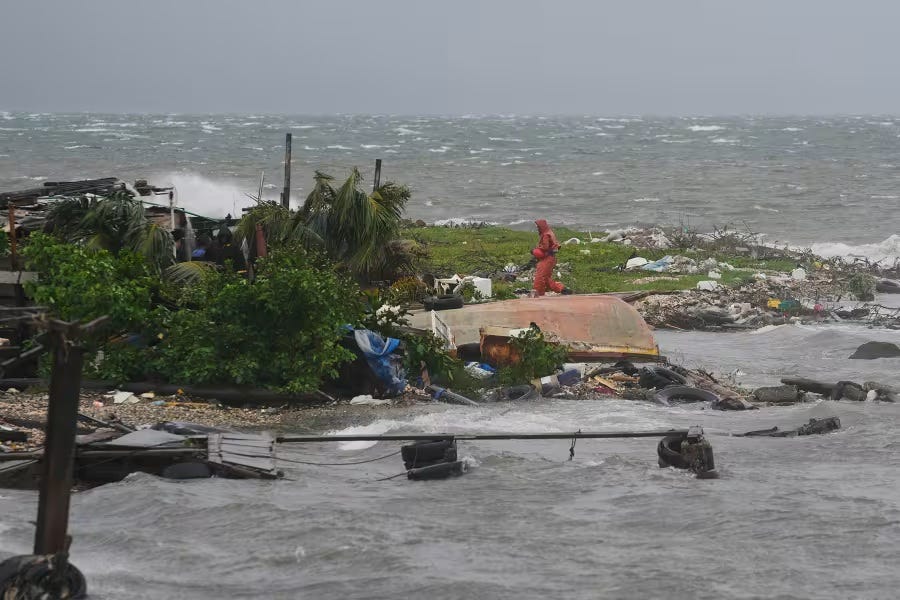
He later reemphasized the impacts of the storm, as Melissa was expected to cause flooding, landslides, and storm surges as high as 13 feet.
“That means it will cause catastrophic damage, life-threatening damage,” he said.
“There is very little that can stop a Category 5 hurricane, regardless of where you are.”
 The Introspective
Leave a comment