
Fifty students have escaped, but more than 250 remain in captivity amid a worsening security crisis in Niger State.
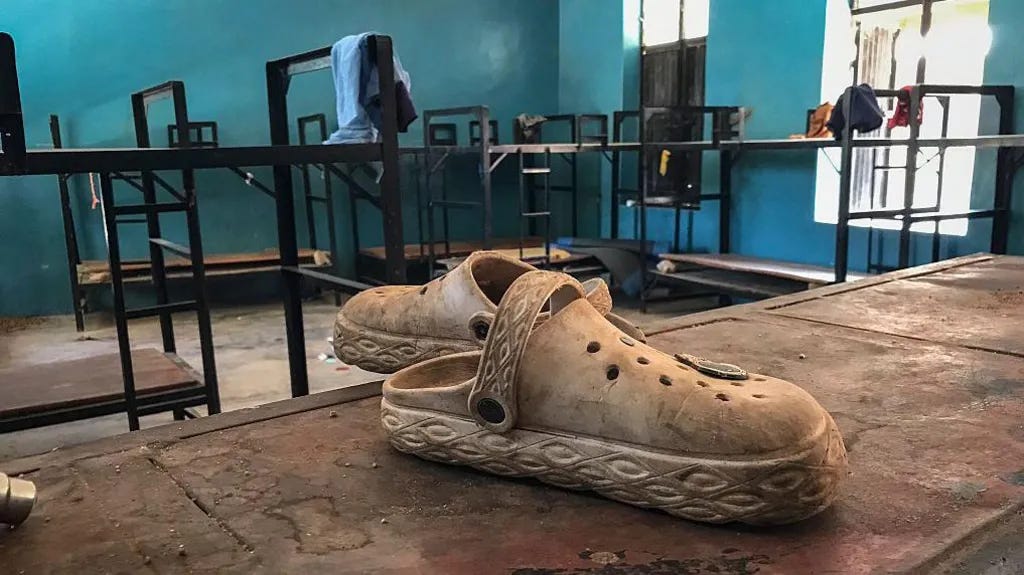
More than 300 students were kidnapped from St. Mary’s Catholic School in northern Nigeria on Friday, becoming one of the worst mass kidnappings since the Chibok kidnappings in 2014.
“I feel great sorrow, especially for the many girls and boys who have been abducted and for their anguished families,” said Pope Leo XIV, adding he was “deeply saddened” by the situation.
“I make a heartfelt appeal for the immediate release of the hostages and urge the competent authorities to take appropriate and timely decisions to ensure their release.”
Since the kidnappings, all schools in Niger state—where the kidnappings occurred—have been closed due to heightened security.
“It is the decision of stakeholders today to close all schools in Niger state,” said Niger Gov. Umaru Bago.
“All schools in Niger are closed till further notice. So we have declared Christmas holiday for all primary and secondary schools in Niger state.”
Escape and Current Status
Fifty children have since escaped captivity and have been returned to their families.
“The pupils escaped between Friday and Saturday and have reunited with their parents as they could not return to the school after they escaped,” said the Most Rev. Bulus Dauwa Yohanna, chairman of the Niger State chapter of the Christian Association of Nigeria (CAN), in a statement.
“We were able to ascertain this when we decided to contact and visit some parents.”
This comes as 12 teachers and 253 students still remain in captivity, with Dominic Adamu, whose daughters attend St. Mary’s School but weren’t kidnapped, telling the BBC that the attacks “took everybody by surprise.
“Everybody is weak,” said Adamu.
Another woman later said that her 6- and 13-year-old nieces were among those kidnapped, adding, “I just want them to go home.”
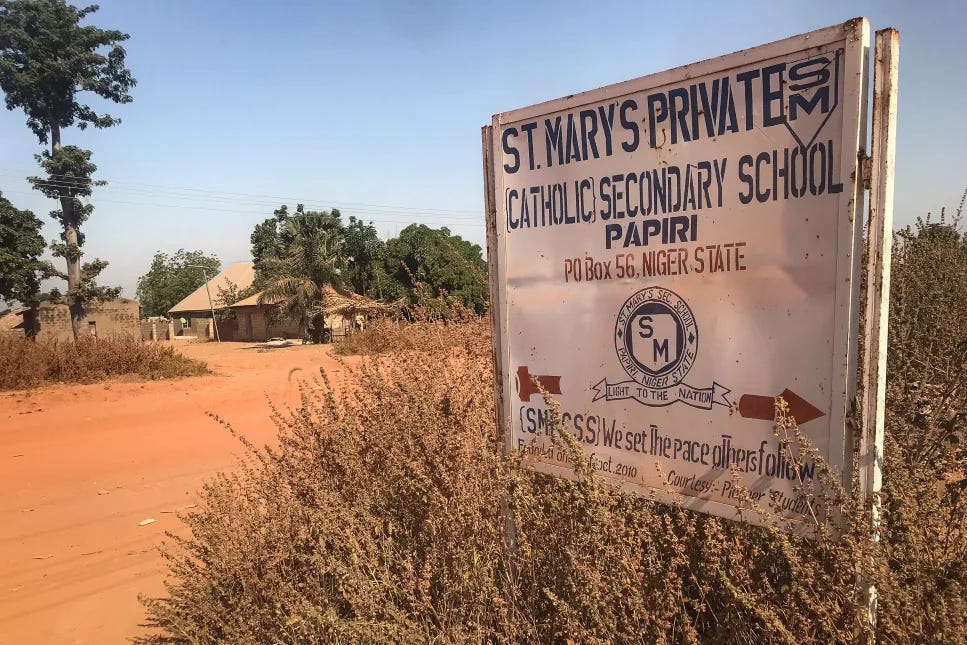
The St. Mary’s kidnapping marked the second mass abduction in Nigeria in less than a week, after 25 students were kidnapped from the Government Girls Comprehensive Secondary School—a high school—in Nigeria’s Kebbi state last Monday.
In a statement obtained by The Introspective, officers said the attackers had “sophisticated weapons” and were “shooting sporadically” during the attack.
“Unfortunately, the suspected bandits had already scaled through the fence of the school and abducted twenty-five students from their hostel to [an] unknown destination],” the statement read.
The school’s vice principal was killed while resisting the gunmen, with a security guard being injured, raising implications as a study from Save the Children found that more than 1,680 students have been kidnapped in Nigeria since the Chibok kidnappings in 2014, when 276 students were kidnapped in Borno state, with many still missing to this day.
“Nearly ten years after the tragic abduction of the Chibok girls made international headlines, more than 90 of them are still held or missing, and countless children and teachers still live under the threat of violence, forcing many to flee or interrupt their education, sometimes forever,” said Famari Barro, country director at Save the Children’s Nigeria chapter, in the study.
“The combination of the trauma and loss of education resulting from these attacks is likely to be lifelong unless children are provided with the means and support to recover from the traumatic events they have been through and are able to return to school. It is vital that children’s lives and right to education are protected through the implementation of the Safe Schools Declaration across the country.”
The Nigerian government launched the Safe School Initiative (SSI) in 2015, costing $30 million. However, advocates have said that “weak, inconsistent implementation” contributed to few success rates.
“On paper, the framework covers everything; infrastructure, safety, emergency readiness, community engagement, teachers’ training and the early warning system,” said Seliat Hamzah in an interview with DW.
“But in many schools, especially in high-risk regions like the north, very little of these has materialized.”
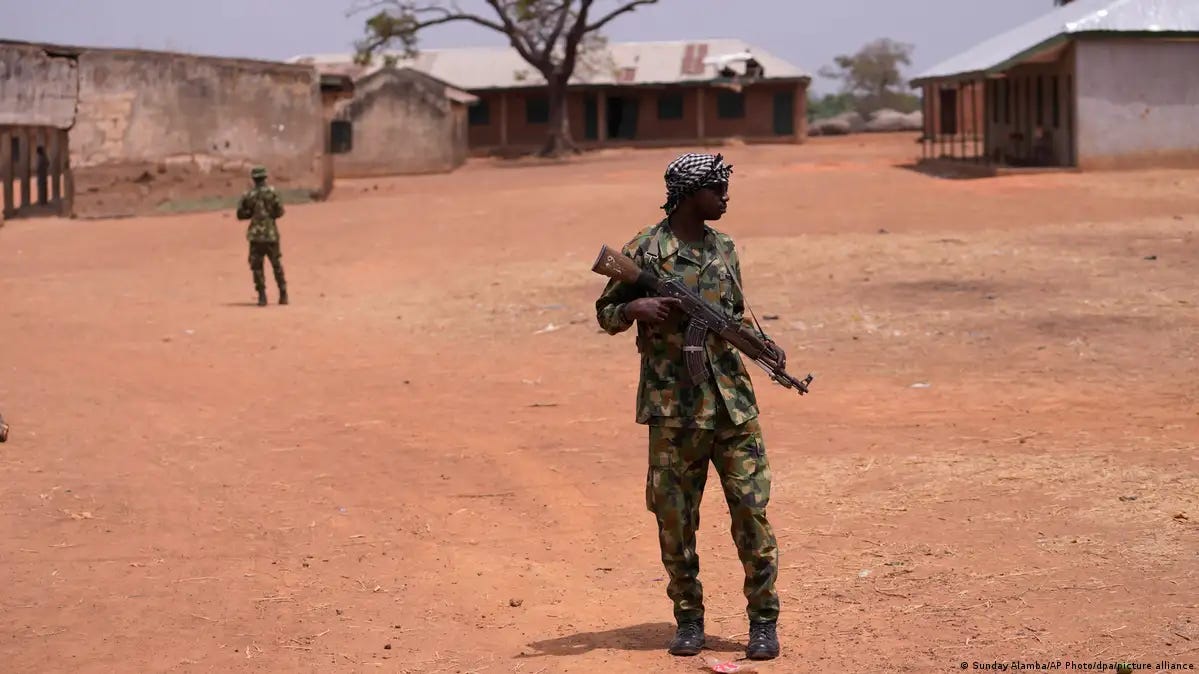
Hassana Maina, executive director of ASVIOL Support Initiative, a group that monitors abductions, claimed that lack of community involvement contributed to the program’s failure.
“Overreliance on security deployments without building community-based protections or early warning systems remains a major problem,” she said.
“Schools are always within a community, so we must ask questions [about] what the ideas are that we have about early warning systems, how we have built and fortified [them] into communities.”
Response
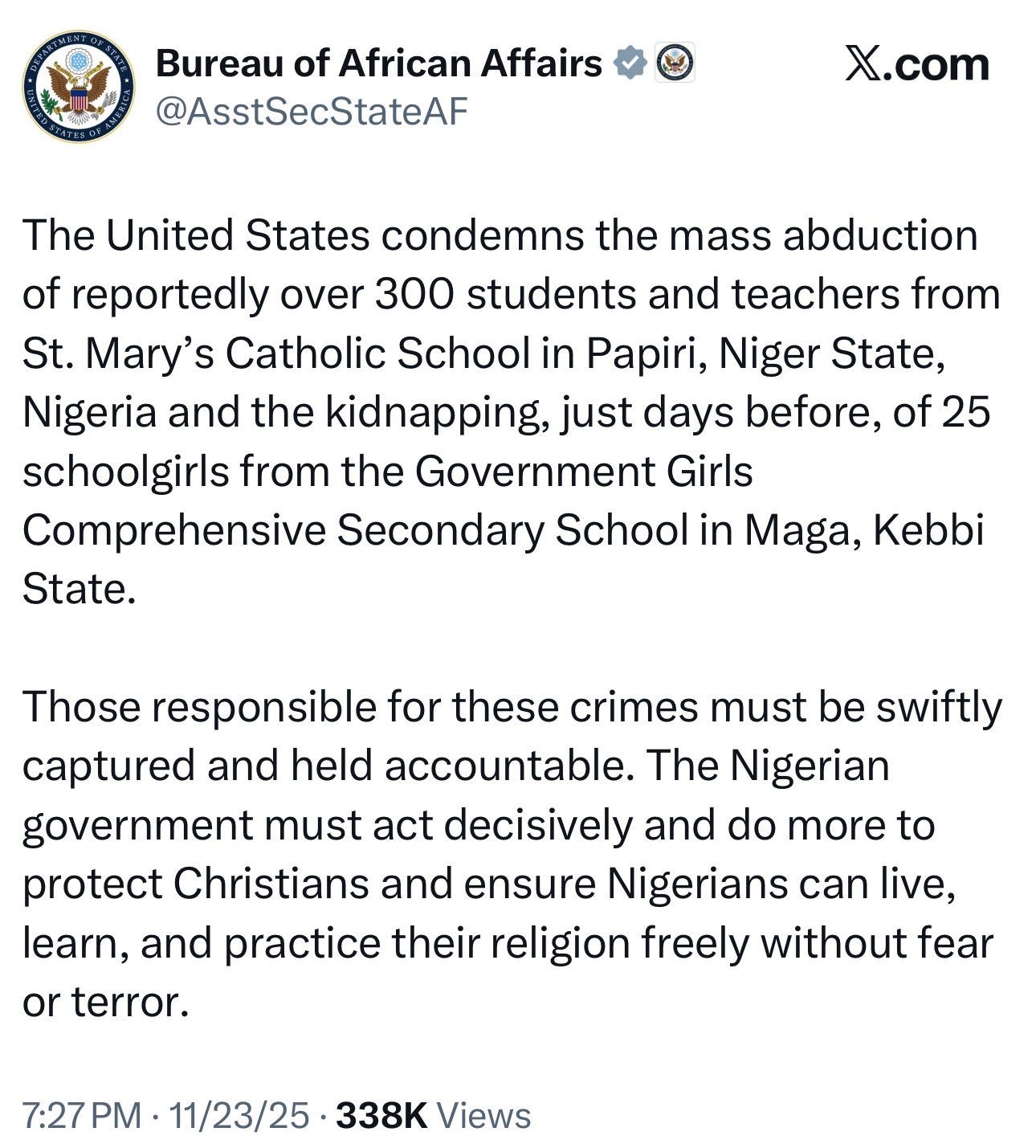
The U.S. State Department condemned both kidnappings in an X post, calling for the attackers to be “swiftly captured” and “held accountable.”
“The Nigerian government must act decisively and do more to protect Christians and ensure Nigerians can live, learn, and practice their religion freely without fear or terror,” the agency wrote.
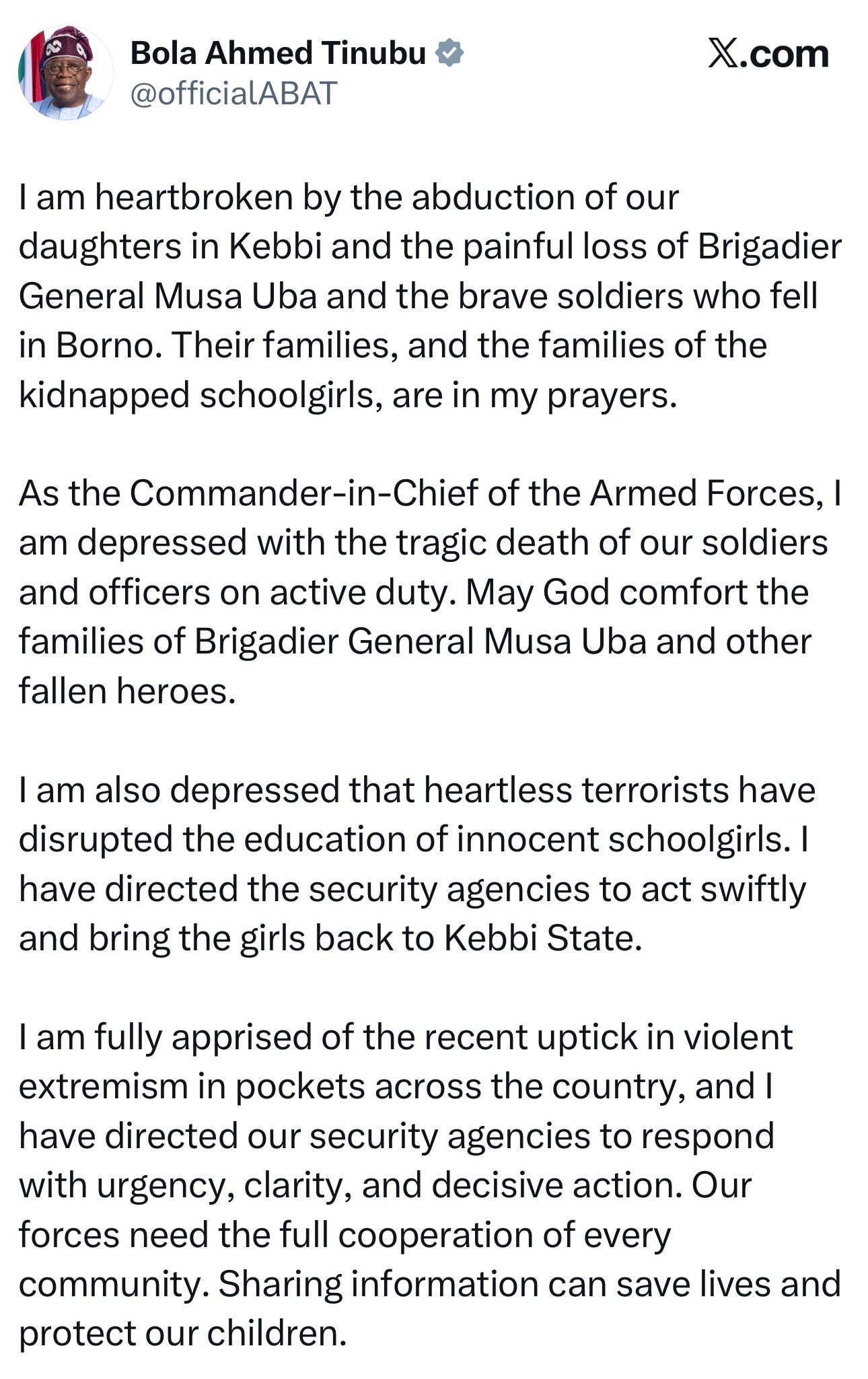
Nigerian President Bola Ahmed Tinubu said that he was “fully apprised of the recent uptick in violent extremism in pockets across the country, and I have directed our security agencies to respond with urgency, clarity, and decisive action.
“I am also depressed that heartless terrorists have disrupted the education of innocent schoolgirls. I have directed the security agencies to act swiftly and bring the girls back to Kebbi State,” he wrote.
This comes as President Donald Trump told Defense Secretary Pete Hegseth to prepare for “possible action” in Nigeria amid alleged persecution against Christians.
“If the Nigerian government continues to allow the killing of Christians, the U.S.A. will immediately stop all aid and assistance to Nigeria, and may very well go into that now disgraced country, ‘guns-a-blazing,’ to completely wipe out the Islamic terrorists who are committing these horrible atrocities,” he wrote to Truth Social, directing the Nigerian government to “act fast.”
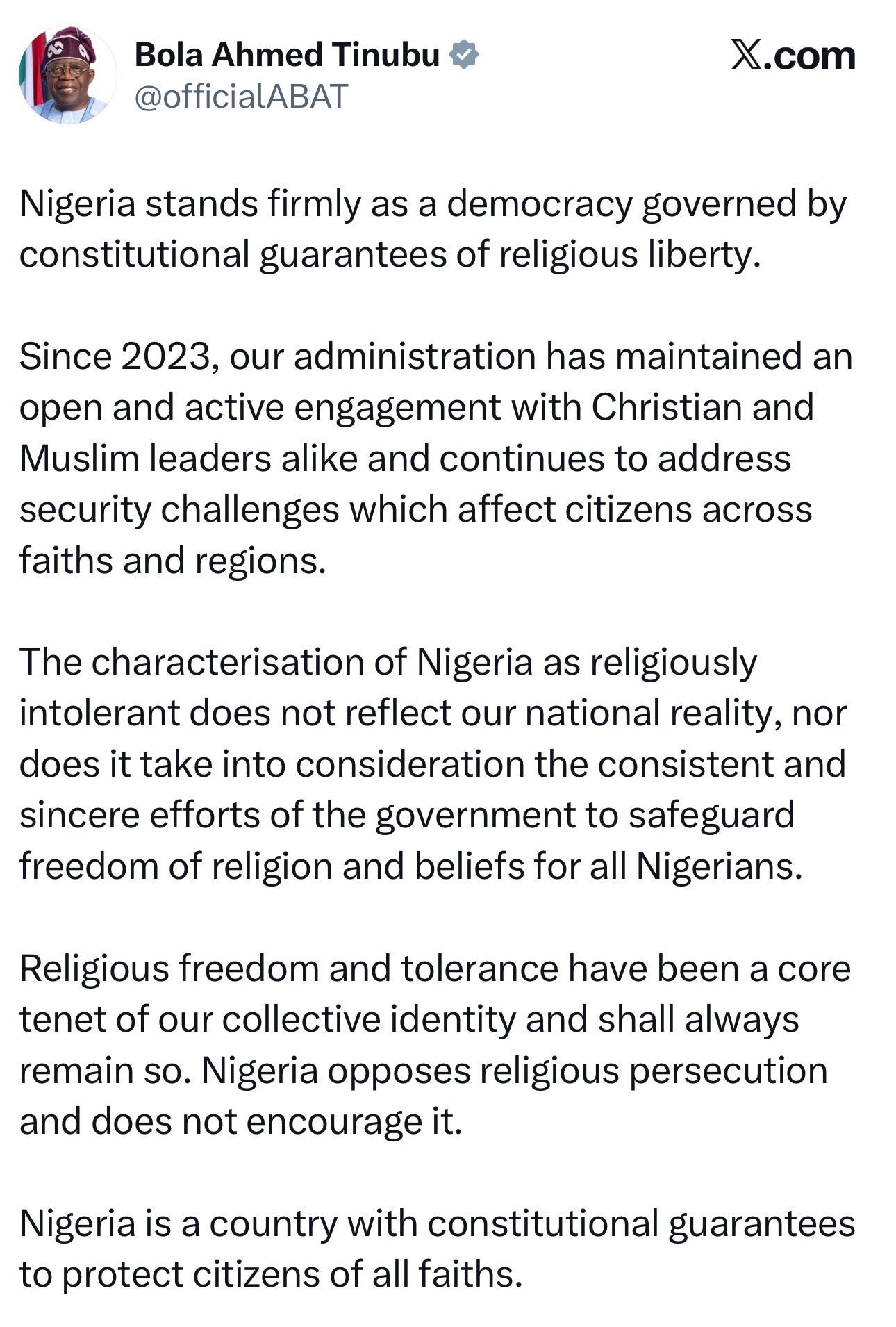
President Tinubu responded to Trump’s post, stating that it “does not reflect our national reality.”
“Religious freedom and tolerance have been a core tenet of our collective identity and shall always remain so,” he wrote to X, adding that Nigeria “opposes religious persecution and does not encourage it.”
“Nigeria is a country with constitutional guarantees to protect citizens of all faiths,” he added.
This comes as rapper Nicki Minaj supported Trump’s claims at a United Nations event, saying that “in Nigeria, Christians are being targeted.”
“Churches have been burned, families have been torn apart… simply because of how they pray,” she added.
 The Introspective
Leave a comment