
From pension overhauls to power blackouts, citizens demand accountability and reform amid growing unrest.
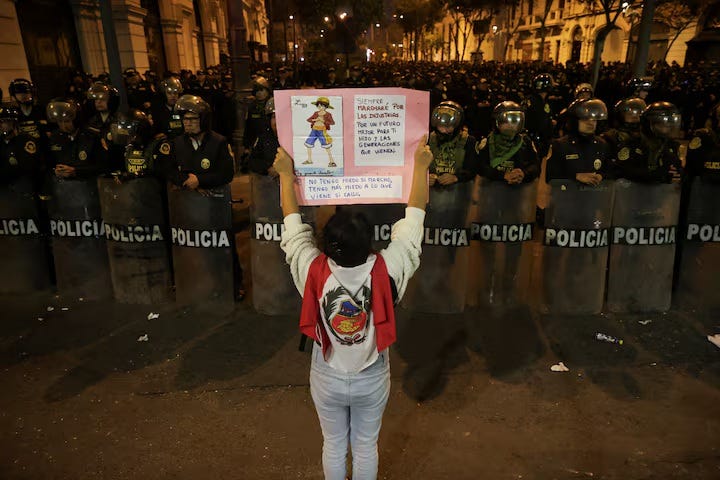
Following recent reports from The Introspective detailing Gen Z-led protests in Indonesia, Nepal and the Philippines, demonstrations against government corruption have formed in both Peru and Madagascar. Protests in Peru began amid increased social unrest after President Dina Boluarte— who has one of the lowest approval ratings of any world leader—passed legislation requiring Peruvians over 18 to obtain a pension provider despite high job insecurity and an unemployment rate of more than 70 percent. In Madagascar, the Leo Delestage movement began on Sept. 25 after the government ordered water and power cuts in the capital, Antananarivo. More than 22 people have been killed so far as the unrest continues.
Peru: Gen Z Protests Over Pensions and Corruption
Protests in Peru began on Sept. 20, amid ongoing corruption scandals involving President Dina Boluarte. She has faced allegations of illicit enrichment after being seen with expensive jewelry, including Rolex watches and a Cartier bracelet, as well as criticism over a lack of accountability after protesters were killed in 2022 when she took office.
“There’s been a low, simmering level of discontent in Peru, and it’s been that way for quite some time,” Jo-Marie Burt, a professor at Princeton University, told Reuters, referencing democracies worldwide experiencing backsliding in certain freedoms.
“It’s very reminiscent of what happened in the 1990s under Fujimori, when the justice system was essentially captured to consolidate authoritarian control.”
Boluarte also faced backlash after raising her salary to more than 35,500 soles ($10,000) per month, as her approval rating sits at 2%—a historic low. A World Bank Group study found that since the COVID-19 pandemic, seven in 10 Peruvians are at risk of falling into poverty.
Over the weekend, protesters clashed with officers in the capital, Lima, leaving at least 19 people injured. Many Gen Z demonstrators used Monkey D. Luffy, a character from the anime series One Piece, as a protest symbol.
“The main character, Luffy, travels from town to town freeing people from tyrannical, corrupt rulers in towns of slaves,” protester Leonardo Munoz told Reuters.
“It represents what’s going on in various countries. That’s what is happening now in Peru.”
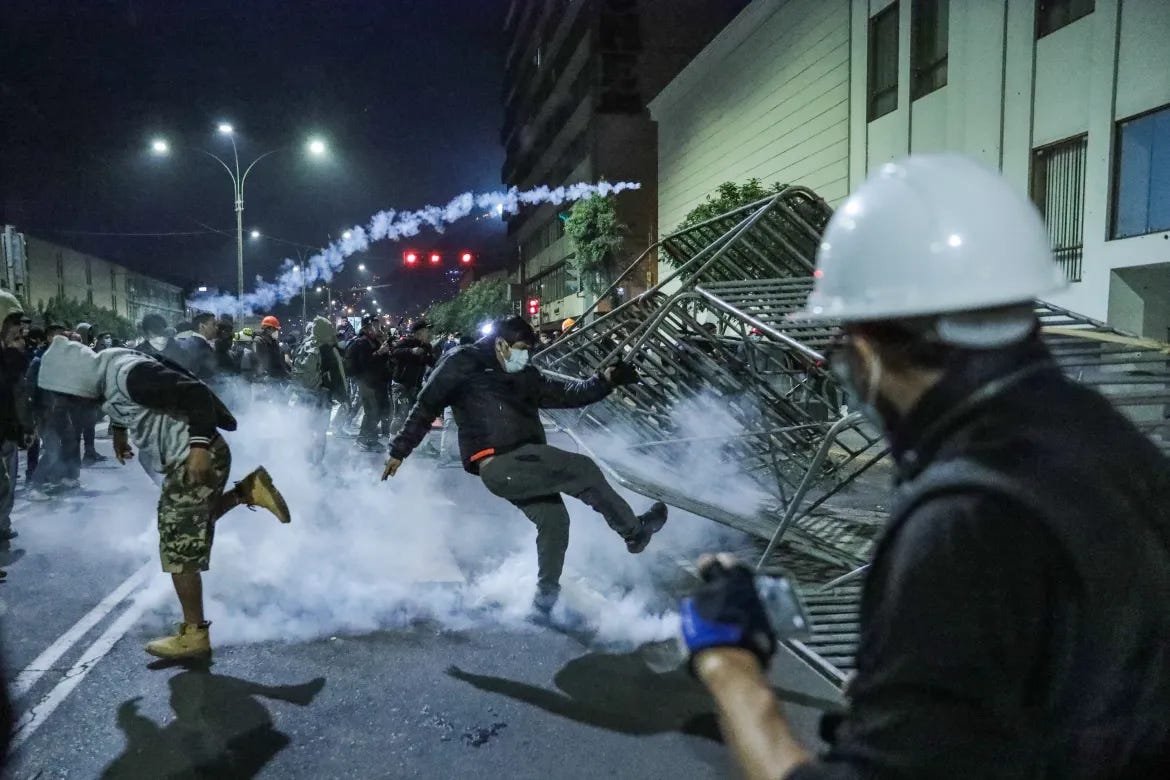
Protesters also expressed dissatisfaction with the Venezuela-based Tren de Aragua gang, saying the Peruvian government is not doing enough to combat extortion. A previous report from The Introspective detailed President Donald Trump designating the gang as a “foreign terrorist organization.”
Madagascar: Outrage Over Water, Power, and Governance
Protests in Madagascar began in the capital of Antananarivo after the government began cutting electricity and water in the city, raising implications as 75% of the country lives in poverty.
“Water and electricity are basic human needs,” “Let us speak out” and “Malagasy people, wake up,” read signs from protesters.
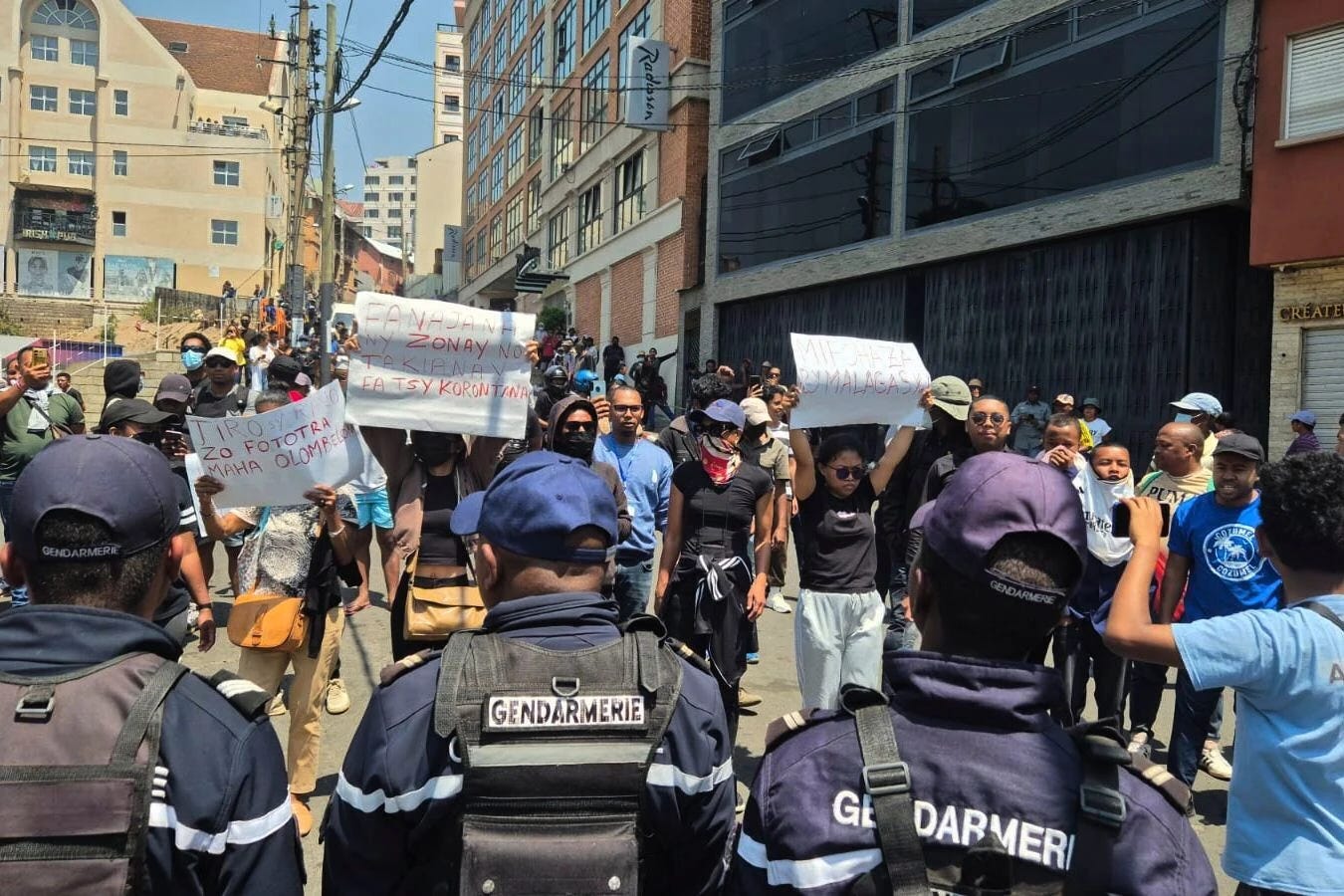
Demonstrators were later tear-gassed by officers and security forces, resulting in Police Chief Angelo Ravelonarivo declaring a curfew until tensions eased, despite protesters saying the demonstrations were peaceful.
“Everyone was in good spirits; we were happy to see many of our friends again. It was a peaceful movement,” said Andry, an observer with France24.
“We came with flowers specifically to show that we didn’t have weapons and weren’t there to attack people.”
Andry later said that once he and a friend approached the city’s Ambohijatovo Square, officers began firing tear gas and driving their cars into crowds.
“We then came to a kind of junction. My friend and I were right in the middle of the crowd. And suddenly, from one of the lanes of that intersection, an SUV drove straight into us — it literally ploughed into the people,” he said.
“Those at the front started running very fast; those who could get to the side tried to protect themselves.”
“There were men in blue gendarmerie uniforms with rifles and grenades who charged at us. In the panic, we tried to escape down a narrow alleyway, about 1.5 meters wide, made of stairs. We took refuge there and, when we got inside, we closed the door. They immediately threw stun grenades and tear gas grenades at us.”
Andry said the grenade exploded between him and his friend, with blood coming out of his ear.
“They tossed the grenades over the door into the corridor. And one landed maybe half a meter from my friend’s head and my arm. He was right behind me, and I was a little higher up on the stairs,” he said.
“It exploded right between me, my friend, and another person who was just in front of me. The door was closed. There were an enormous number of people on the stairs; we could neither move forward nor backward.”
“After it went off, we went back up. It’s a good thing other people were there, because we couldn’t see, walk or breathe anymore. They carried us,” he added.
“We could still hear explosions outside. We didn’t dare to move. We tried calling several medical centers, the Red Cross and others to find out what to do. My friend had blood coming from his ear. We were still too frightened to go back outside to get medical attention.”
The response by officers was criticized by the United Nations, with High Commissioner for Human Rights Volker Türk being “shocked and saddened” by the brutality as more than 22 people were killed.
“I urge the security forces to desist from the use of unnecessary and disproportionate force and to immediately release all arbitrarily detained protesters,” Türk said in a press release.
“International human rights law is particularly strict on the use of firearms; they can only be used by law enforcement officers when strictly necessary to protect life or prevent serious injury from an imminent threat.”
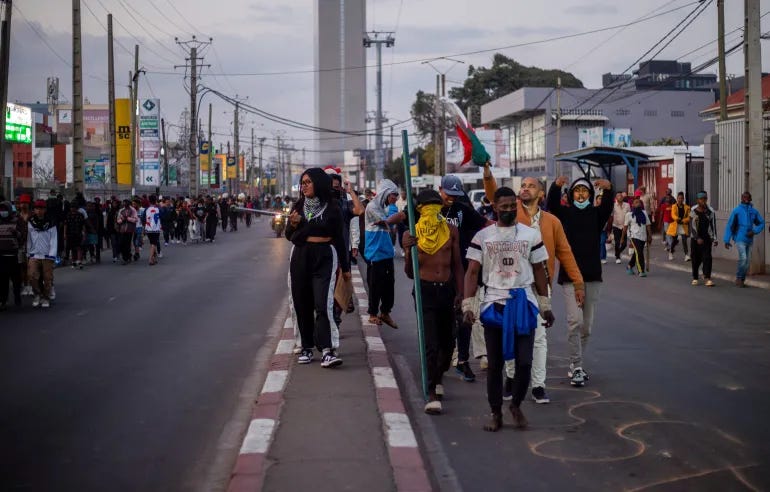
Following the police response, Madagascar President Andry Rajoelina dissolved the country’s government, firing Prime Minister Christian Ntsay and opening applications for government positions.
“Your demands have been heard, and I apologize if there are members of the government who have not done the work that the people expected,” said Rajoelina.
Demonstrators also called for Rajoelina to resign; however, he has so far not acknowledged the demands.
 The Introspective
Leave a comment