
Court decisions, federal policy shifts, and economic updates end another week of significant administrative actions.
Trump’s 42nd week ended with court rulings, anti-immigrant sentiment, and updates to Medicare coverage and the economy. Following a previous report from The Introspective detailing two federal judges directing the Trump administration to continue paying Supplemental Nutrition Assistance Program (SNAP)— the formal name for food stamps—benefits, the Supreme Court allowed the administration to withhold $4 billion in payments. Meanwhile, as the takeover of Washington, D.C., continues, a federal judge blocked the National Guard from being deployed to Portland, claiming Trump “exceeded authority.”
With anti-immigrant sentiment ongoing, the Trump administration claimed that Kilmar Abrego Gracia should be deported to Liberia immediately, seeking to revoke the ban on removal despite being granted permanent status in 2019 after entering the United States in 2011. At the same time, as backlash toward diversity, equity, and inclusion (DEI) continues, the Trump administration reached a $60 million settlement with Cornell University following previous Introspective reports detailing settlements with Brown University, Columbia University, the University of Pennsylvania (UPenn), and the University of Virginia.
Trump later announced deals with pharmaceutical companies Eli Lilly and Novo Nordisk, allowing Medicare to start covering obesity drugs for certain patients in 2026. Meanwhile, as the trade war continues, more than a million layoffs have been announced this year—the highest number since the Great Recession.
SNAP Funding and National Guard
After back-and-forth surrounding the distribution of SNAP benefits, the Supreme Court allowed the Trump administration to withhold $4 billion in payments, with Justice Ketanji Brown Jackson saying the Department of Agriculture (USDA) does not have to immediately comply with a prior court order.
“The Supreme Court just granted our administrative stay in this case,” wrote Attorney General Pam Bondi on X, celebrating the decision.
“Our attorneys will not stop fighting, day and night, to defend and advance President Trump’s agenda.”
 Ketanji Brown Jackson Ruling
At the same time, U.S. District Judge Karin Immergut blocked the Trump administration from deploying the National Guard to Portland, writing that “this court arrives at the necessary conclusion that there was neither ‘a rebellion or danger of a rebellion,’ nor was the president ‘unable with the regular forces to execute the laws of the United States’ in Oregon when he ordered the federalization and deployment of the National Guard.”
“After a three-day trial that included the testimony of federal, state, and local law enforcement officials and hundreds of exhibits describing protest activity outside the Portland ICE building, the evidence demonstrates that these deployments, which were objected to by Oregon’s governor and not requested by the federal officials in charge of protecting the ICE building, exceeded the president’s authority,” Immergut wrote.
Portland Ruling (Nov 2025)
In a statement obtained by The Introspective, Oregon Gov. Tina Kotek celebrated the ruling.
“This ruling, now the fourth of its kind, validates the facts on the ground. Oregon does not want or need military intervention, and President Trump’s attempts to federalize the Guard is a gross abuse of power,” she said.
“Oregon National Guard members have been away from their jobs and families for 38 days. The California National Guard has been here for just over one month. Based on this ruling, I am renewing my call to the Trump administration to send all troops home now.”

White House spokesperson Abigail Jackson said in a statement that the facts “haven’t changed,” disagreeing with the ruling.
“Amid ongoing violent riots and lawlessness that local leaders have refused to step in to quell, President Trump has exercised his lawful authority to protect federal officers and assets,” she said.
“President Trump will not turn a blind eye to the lawlessness plaguing American cities, and we expect to be vindicated by a higher court.”
Kilmar Abrego Gracia and Cornell University
As Kilmar Abrego Gracia remains in custody, the Trump administration is seeking to lift the ban on his deportation to Liberia.
“Petitioner’s claims are procedurally barred multiple times over and fail on the merits in any event,” read the court filing.
“This court should therefore dissolve its preliminary injunction and permit the government to remove Petitioner to Liberia.”
Kilmar Abrego Gracia (Nov 2025)
In a separate filing, Abrego Gracia’s attorneys claimed there was insufficient due process regarding efforts to deport him.
“The government insists that the unreasoned determination of a single immigration officer—who concluded that Abrego Gracia failed to establish that it is ‘more likely than not’ that he will be persecuted or tortured in Liberia—satisfies due process. It does not,” they wrote, alleging that efforts to deport Abrego Gracia to Liberia instead of Costa Rica—which offered him refugee status—is a form of retaliation.
“The timeline suggests a pattern: when the government received orders it disliked in Abrego Gracia’s civil case challenging his unlawful removal to El Salvador, it initiated a criminal prosecution in retaliation; and when it received orders it disliked in Abrego Gracia’s criminal case, it initiated third-country removal efforts in retaliation.”
Abrego Gracia (Attorneys)
Meanwhile, following previous reports from The Introspective detailing settlements reached with Brown University, Columbia University, the University of Pennsylvania (UPenn), and the University of Virginia, the Trump administration reached a $60 million deal with Cornell University.
“Pursuant to the terms of this agreement, the university will invest $30 million over three years in research to strengthen U.S. agriculture and help build even more successful and productive farms,” wrote Cornell President Michael I. Kotlikof in a letter.
“The government has further agreed to restore terminated federal grants, release all withheld funds for active grants, and consider Cornell fully eligible for new grants and funding awards, without disadvantage or preference.”
Cornell Agreement
In an X post, Education Secretary Linda McMahon celebrated the agreement as “another transformative commitment from an Ivy League institution to end divisive DEI policies.”
“These reforms are a huge win in the fight to restore excellence to American higher education and make our schools the greatest in the world,” she wrote.

The university also agreed to train its staff based on a memo from the Justice Department that directs universities to end DEI programs.
Justice Department Memo
Medicare and Economy
Trump announced deals with pharmaceutical companies Eli Lilly and Novo Nordisk, allowing Medicare to start covering obesity drugs for certain patients in 2026.
“This is a triumph for American patients that will save lives and improve the health of millions and millions of Americans,” Trump said, referring to the drugs Wegovy and Zepbound.
“Until now, neither of these two popular drugs have been covered by Medicare for weight loss, and they’ve only rarely been covered by Medicaid. They’ve often cost consumers more than $1,000 per month, and some a lot more than that. Americans have been spending as much as 520% more for Zepbound and 1,400% more for Wegovy than patients in Europe.”
In a press release, Eli Lilly Chair and CEO David Ricks called the agreement “a pivotal moment in U.S. health care policy.”
“As we expand access to obesity treatments for more Americans and advance one of the most innovative obesity pipelines, we remain focused on improving outcomes, strengthening the U.S. health care system, and contributing to the health of our nation for generations to come,” he said.
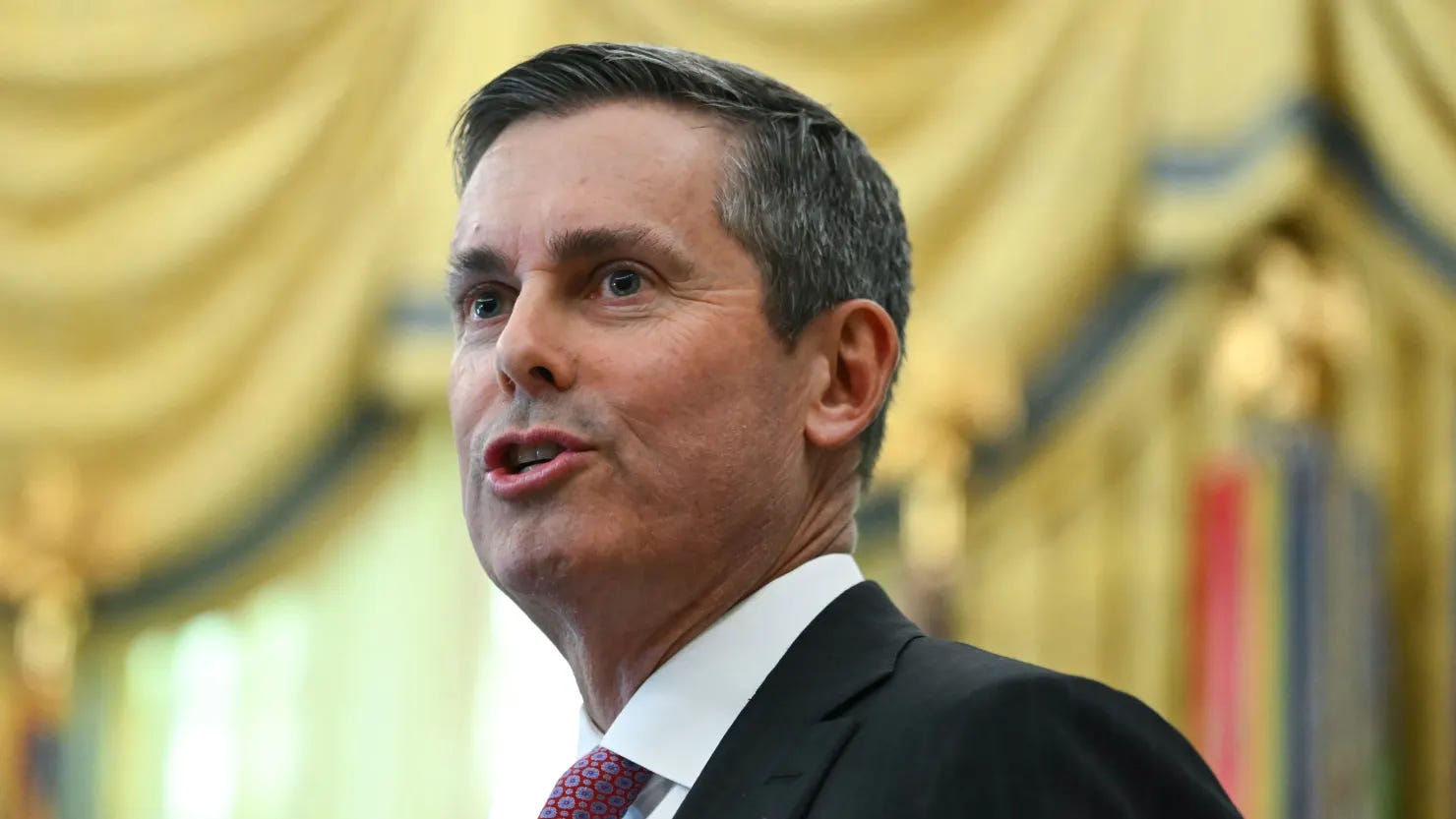
Meanwhile, data from private firm Challenger, Gray & Christmas found that companies have announced more than 1.1 million layoffs so far this year—the highest number since the Great Recession—with 153,074 job cuts announced in October alone.
“This is the highest total for October in over 20 years, and the highest total for a single month in the fourth quarter since 2008. Like in 2003, a disruptive technology is changing the landscape,” said CEO Andy Challenger.
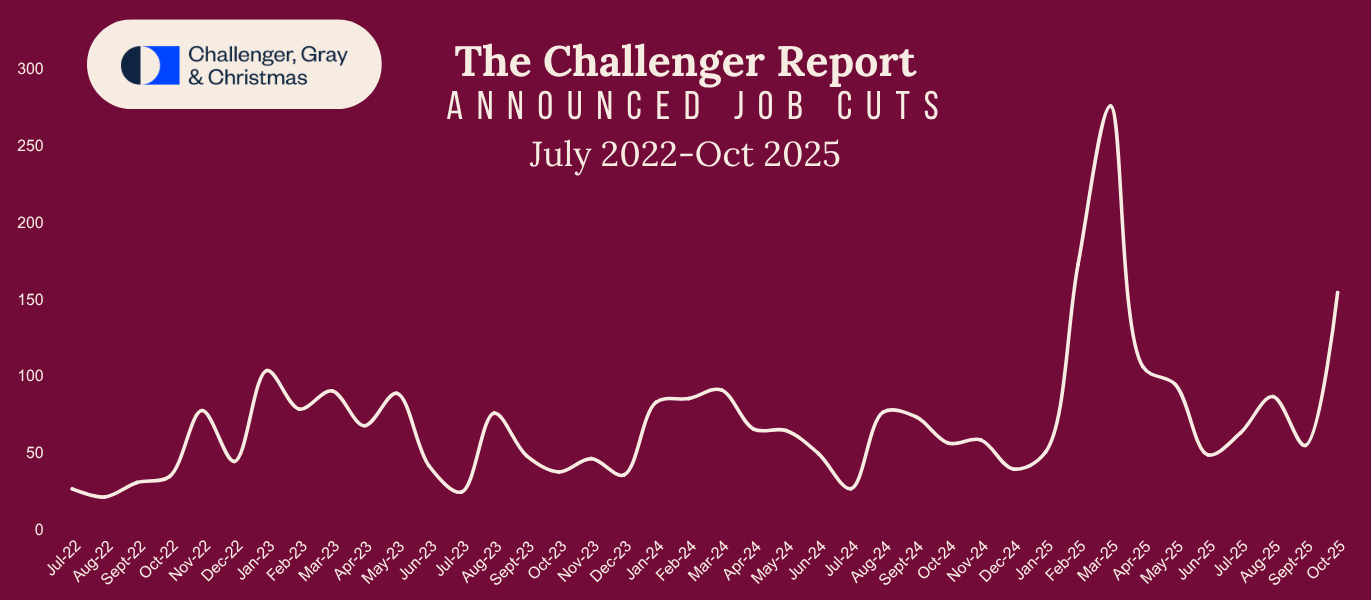
The layoffs come as major employers such as UPS, Amazon, and Target announced workforce reductions.
 The Introspective
Leave a comment