
Press limits, vaccine rollbacks, and expanded federal scrutiny ended the week’s developments.
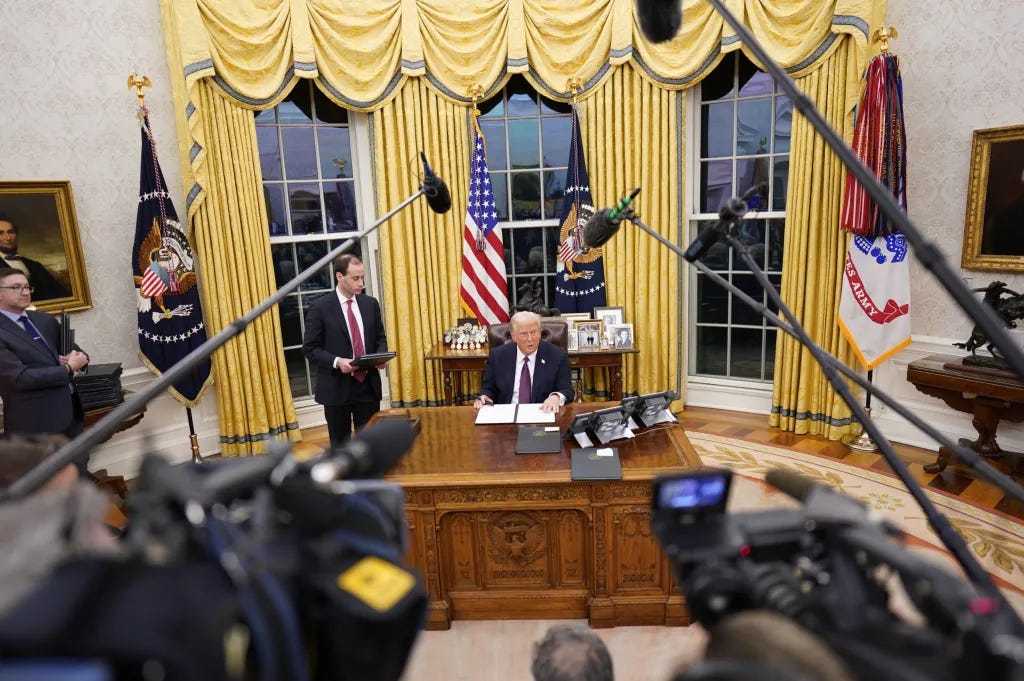
Trump’s 46th week ended with updates to immigration, policy shifts, lawsuits, and backlash to diversity, equity and inclusion (DEI). As anti-immigrant sentiment continues, the Supreme Court has decided to hear the Trump administration’s ban on birthright citizenship—the constitutional right granting citizenship to those born in the U.S.—raising implications for the future of the longstanding precedent.
At the same time, the State Department announced that all applications for the H-1B visa—a program allowing U.S. employers to hire foreign workers with a bachelor’s degree—will be expanded, requiring applicants to make their social media public. This follows previous reports from The Introspective requiring student visa applicants also being required to make their social media public. The agency later began rejecting visa applications from people who worked in content moderation, fact-checking or other activities the administration considers “censorship.”
As backlash to DEI continues, the Trump administration removed Martin Luther King Jr. Day and Juneteenth from the National Park Service’s list of fee-free days, instead making June 14—Trump’s birthday—a no-fee day. That same day, the Department of Justice (DOJ) ended rules protecting LGBTQ+ people from sexual abuse in federal prisons.
Meanwhile, following previous reports from The Introspective detailing Defense Secretary Pete Hegseth’s restrictions on reporters covering the Department of Defense (DOD)—which prompted journalists to walk out of a Pentagon press conference and led to the creation of a new press corps—The New York Times sued the Pentagon, alleging a First Amendment violation. The lawsuit comes as Hegseth announced a shift in foreign policy, declaring an end to the era of “utopian idealism.”
In health, the Centers for Disease Control and Prevention (CDC) ended a long-standing recommendation that all newborns receive the hepatitis B vaccine at birth.
Immigration
With anti-immigrant sentiment ongoing, the Supreme Court agreed to hear the potential ban on birthright citizenship in the spring—a longstanding constitutional right established in United States v. Wong Kim Ark (1898), in which the court ruled that Wong Kim Ark, a Chinese American man born in San Francisco to immigrant parents, was a U.S. citizen.
“No president can change the 14th Amendment’s fundamental promise of citizenship,” said Cecillia Wang, national legal director of the American Civil Liberties Union (ACLU), in a statement criticizing Trump.
“For over 150 years, it has been the law and our national tradition that everyone born on U.S. soil is a citizen from birth. The federal courts have unanimously held that President Trump’s executive order is contrary to the Constitution, a Supreme Court decision from 1898, and a law enacted by Congress. We look forward to putting this issue to rest once and for all in the Supreme Court this term.”
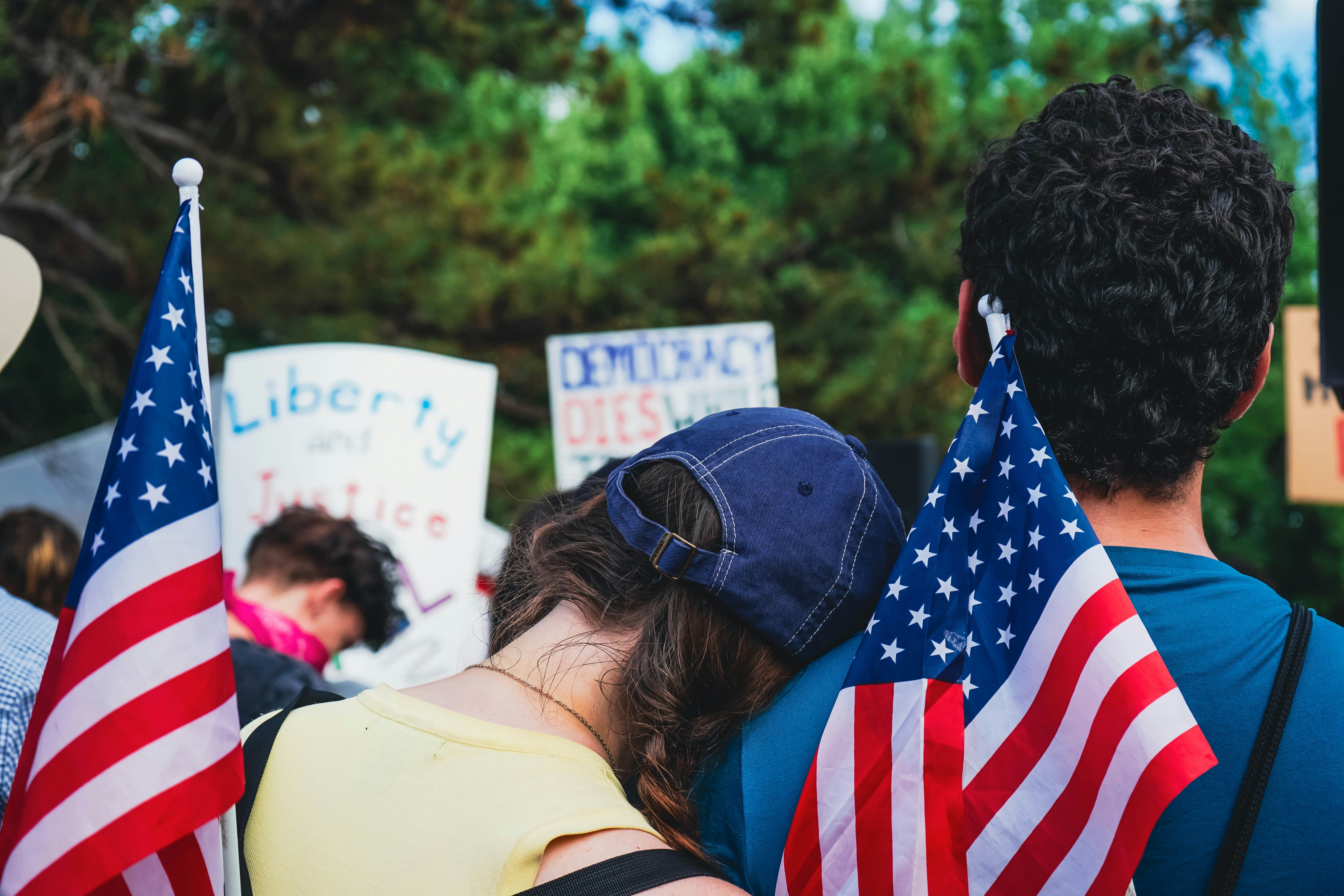
At the same time, following previous reporting from The Introspective on student visa applicants also being required to make their social media public, the State Department issued similar guidelines for all H-1B applicants. The department stated that the rule will ensure applicants “do not intend to harm Americans and our national interests.”
“The State Department uses all available information in visa screening and vetting to identify visa applicants who are inadmissible to the United States, including those who pose a threat to U.S. national security or public safety,” a memo said.
“A U.S. visa is a privilege, not a right.”
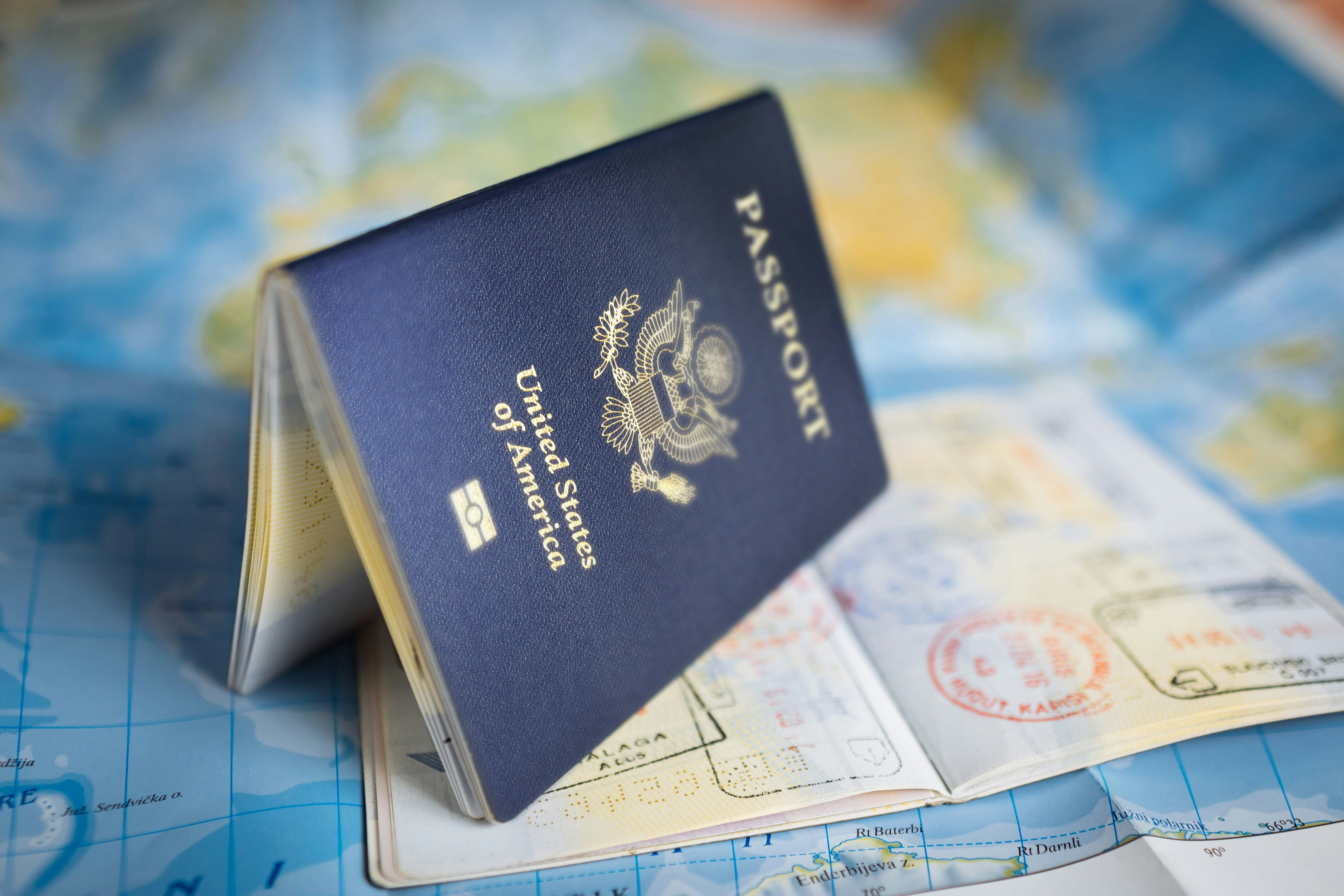
The agency began rejecting visa applications from people who worked in content moderation, fact-checking or other activities the administration considers “censorship.”
“If you uncover evidence an applicant was responsible for, or complicit in, censorship or attempted censorship of protected expression in the United States, you should pursue a finding that the applicant is ineligible,” read a memo obtained by The Introspective.
DEI Backlash and New York Times
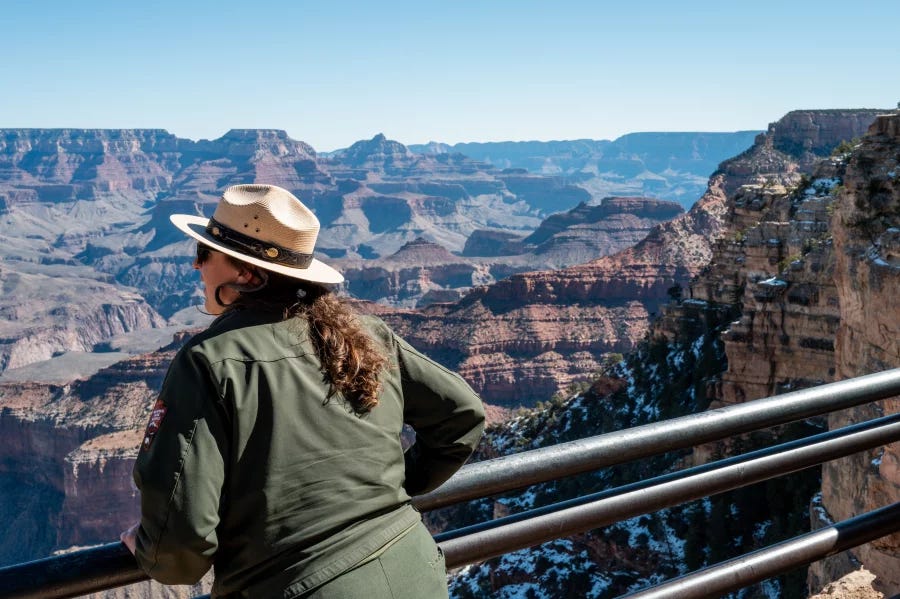
As backlash to diversity, equity and inclusion (DEI) continues, the Trump administration removed Martin Luther King Jr. Day and Juneteenth from the National Park Service’s list of fee-free days, instead making June 14—Trump’s birthday— a no-fee day.
This follows previous reporting from The Introspective highlighting that foreigners visiting national parks must now pay an additional $250 fee.
“President Trump’s leadership always puts American families first,” Interior Secretary Doug Burgum said in the report.
“These policies ensure that U.S. taxpayers, who already support the National Park System, continue to enjoy affordable access, while international visitors contribute their fair share to maintaining and improving our parks for future generations.”
At the same time, the DOJ ended protections for LGBTQ+ people facing sexual abuse in prisons, alleging that certain standards of the Prison Rape Elimination Act (PREA)—a 2003 law aimed at ending sexual abuse in prisons—violate a January executive order requiring the use of the term “sex” instead of “gender.” The order states the administration will “defend women’s rights and protect freedom of conscience by using clear and accurate language and policies that recognize women are biologically female, and men are biologically male.”
“Portions of the PREA Standards are in conflict with the requirements in E.O. 14168,” read a memo obtained by The Introspective.
“Transgender, intersex and gender-nonconforming inmates are to be screened for risk of victimization and how that screening information is to be used, transgender and intersex inmates are to be searched, transgender, intersex or gender-nonconforming inmates are to be communicated with, [and] sexual abuse incident reviews should consider whether a sexual abuse incident was motivated by an inmate’s gender identity, or transgender or intersex identification or status,” the memo continued.
“The Department of Justice is currently updating the PREA Standards to align with the requirements of E.O. 14168. Until these updates are finalized, and further guidance is provided, effective immediately, applicable federal and non-federal correctional facilities shall not be held to subsections of the PREA Standards that may conflict with E.O. 14168.”
 DOJ Memo
Meanwhile, following previous reports from The Introspective detailing Defense Secretary Pete Hegseth’s restrictions on reporters covering the DOD—which prompted journalists to walk out of a Pentagon press conference and led to the creation of a new press corps—The New York Times sued the Pentagon, alleging a First Amendment violation.
“The policy, in violation of the First Amendment, seeks to restrict journalists’ ability to do what journalists have always done — ask questions of government employees and gather information to report stories that take the public beyond official pronouncements,” the Times wrote in a court filing. With the Times calling the policy “a bid to fundamentally restrict coverage of the Pentagon by independent journalists and news organizations.”
“Through the Policy, Pentagon officials have dealt to themselves the power to suspend and eventually revoke journalists’ PFACs for publishing stories that Pentagon leadership may perceive as unfavorable or unflattering, in direct contravention of Supreme Court precedent,” the filing continued, referring to press access credentials.
NYT vs DOD Lawsuit
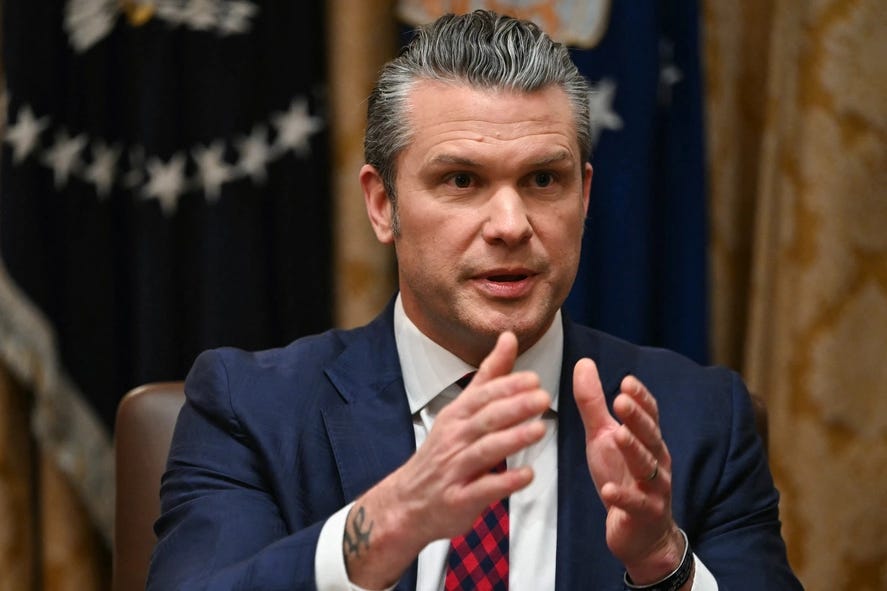
This comes as Hegseth announced a shift in foreign policy, declaring the age of American “utopian idealism” to be over.
“Out with idealistic utopianism,” he said, adding that the U.S. “should not be distracted by democracy building, interventionism, undefined wars, regime change, climate change, woke moralizing and feckless nation-building. In with hard-nosed realism.”
He later emphasized that allies such as South Korea, Poland and Germany have increased their own defense spending in recent years.
“Allies are not children,” he said.
“We can and should expect them to do their part.”
This follows previous reporting from The Introspective detailing that the United States and the Western Hemisphere are top priorities for the military, with plans to conduct “homeland” operations on U.S. soil.
CDC
The CDC’s Advisory Committee on Immunization Practices (ACIP) voted to end a long-standing recommendation that all newborns receive the hepatitis B vaccine at birth.
“Today, the CDC Vaccine Committee made a very good decision to END their Hepatitis B Vaccine Recommendation for babies, the vast majority of whom are at NO RISK of Hepatitis B, a disease that is mostly transmitted sexually, or through dirty needles,” Trump wrote on Truth Social, celebrating the decision and signing a memorandum to “FAST TRACK” an evaluation of vaccine schedules from other countries.
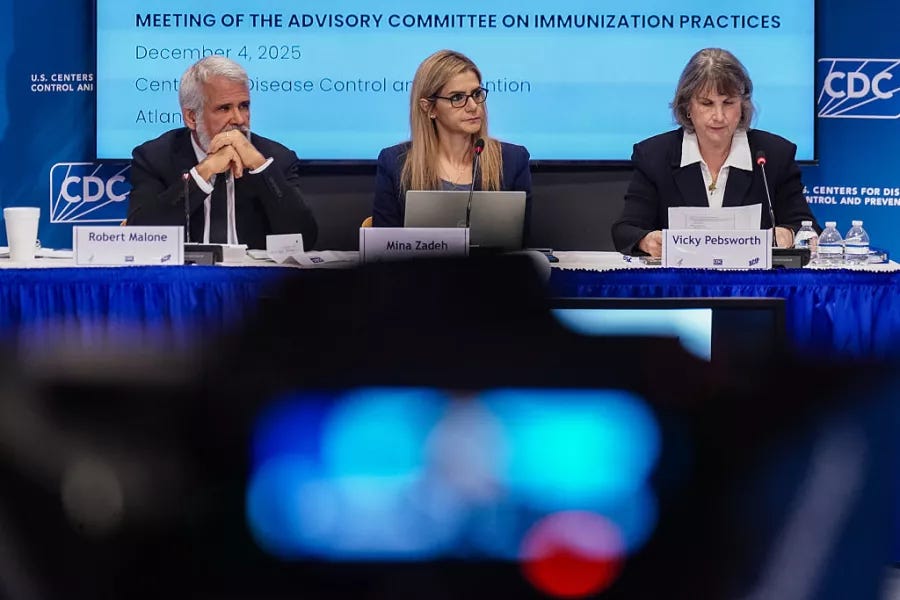
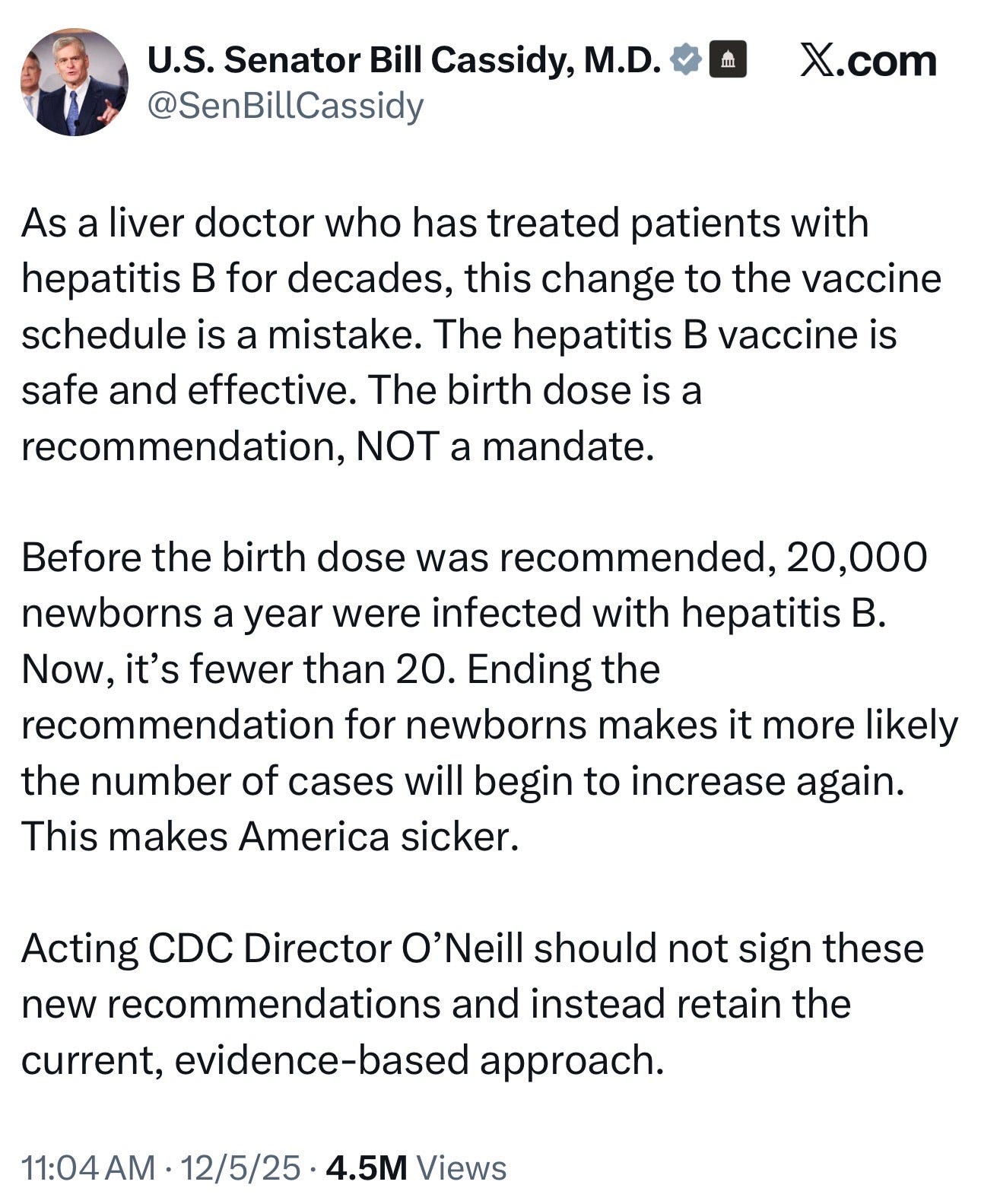
The decision was criticized by lawmakers and health experts, with Sen. Bill Cassidy calling the new recommendation “a mistake.”
“Ending the recommendation for newborns makes it more likely the number of cases will begin to increase again,” he wrote on X.
“This makes America sicker.”
Dr. Cody Meissner, who voted against the change, said the agency would be “doing harm” by altering the requirements.
 The Introspective
Leave a comment