
Policy shifts, legal fights, and economic signals mark the week.
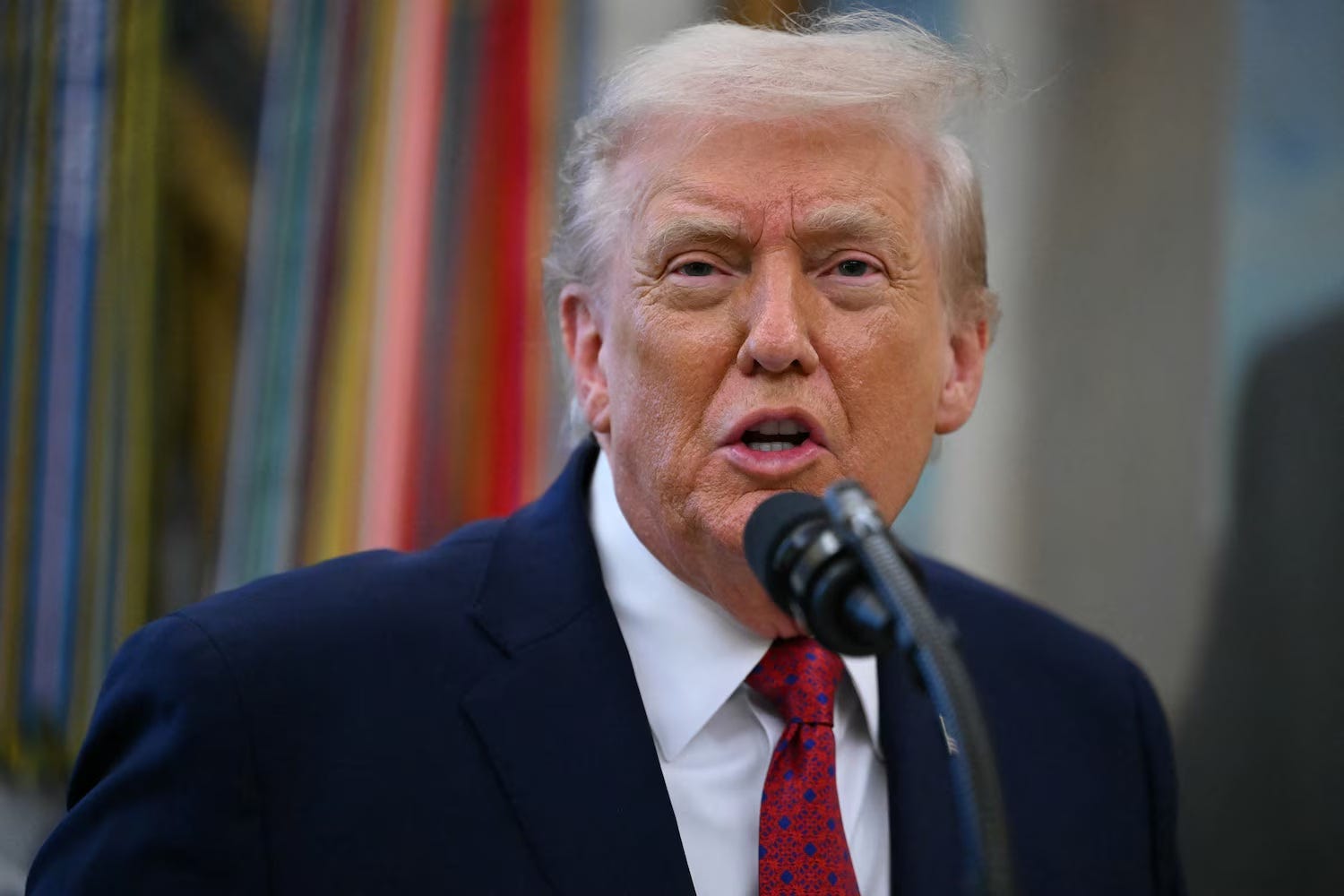
Trump’s 48th week brought updates to the military, the FBI, immigration, lawsuits and the economy. This comes after Trump signed an executive order designating fentanyl as a “weapon of mass destruction,” as tensions with Mexico continue.
Following a previous report from The Introspective detailing the U.S. Coast Guard denying claims that nooses, swastikas and Confederate flags were no longer considered hate symbols, the Guard reversed course, instead reclassifying the symbols as “potentially divisive.” Meanwhile, FBI Deputy Director Dan Bongino announced he will be leaving his position in January.
As anti-immigrant sentiment continues, the White House expanded its prior travel ban to include 15 additional countries and the Palestinian Authority—which governs the West Bank. At the same time, Trump sued the BBC for $10 billion, alleging the network altered a documentary regarding the Jan. 6, 2021, insurrection.
Meanwhile, as the trade war continues, a report from the Bureau of Labor Statistics (BLS) found that 64,000 jobs were added in November, while the unemployment rate rose to 4.6%, the highest level since 2021.
Military and FBI
As tensions with Mexico continue, Trump signed an executive order designating fentanyl a “weapon of mass destruction.”
“Illicit fentanyl is closer to a chemical weapon than a narcotic,” the order read.
“Hundreds of thousands of Americans have died from fentanyl overdoses.”
Trump later said during a White House event that 200,000 to 300,000 deaths are attributed to the drug, raising implications as the president previously designated cartels and international gangs as foreign terrorist organizations, including Venezuela’s Tren de Aragua and MS-13, which originated in the United States.
“No bomb does what this is doing,” Trump said.
At the same time, following a previous report from The Introspective detailing the U.S. Coast Guard denying claims that nooses, swastikas and Confederate flags were no longer considered hate symbols, the Guard reversed course, instead reclassifying the symbols as “potentially divisive.”
“Potentially divisive symbols and flags include, but are not limited to, the following: a noose, a swastika, and any symbols or flags co-opted or adopted by hate-based groups as representations of supremacy, racial or religious intolerance, or other bias,” the Coast Guard’s updated policy read.
 Coast Guard Policy 2025
The prior policy from 2023 listed nooses, swastikas and Confederate symbols as “hate” incidents.
“The following is a non-exhaustive list of symbols whose display, presentation, creation or depiction would constitute a potential hate incident: a noose, a swastika, supremacist symbols, Confederate symbols or flags, and anti-Semitic symbols. The display of these types of symbols constitutes a potential hate incident because hate-based groups have co-opted or adopted them as symbols of supremacy, racial or religious intolerance, or other bias,” the 2023 policy read.
Coast Guard Policy 2023
The policy took effect Monday.
Meanwhile, FBI Deputy Director Dan Bongino announced he would be stepping down from his position in January.
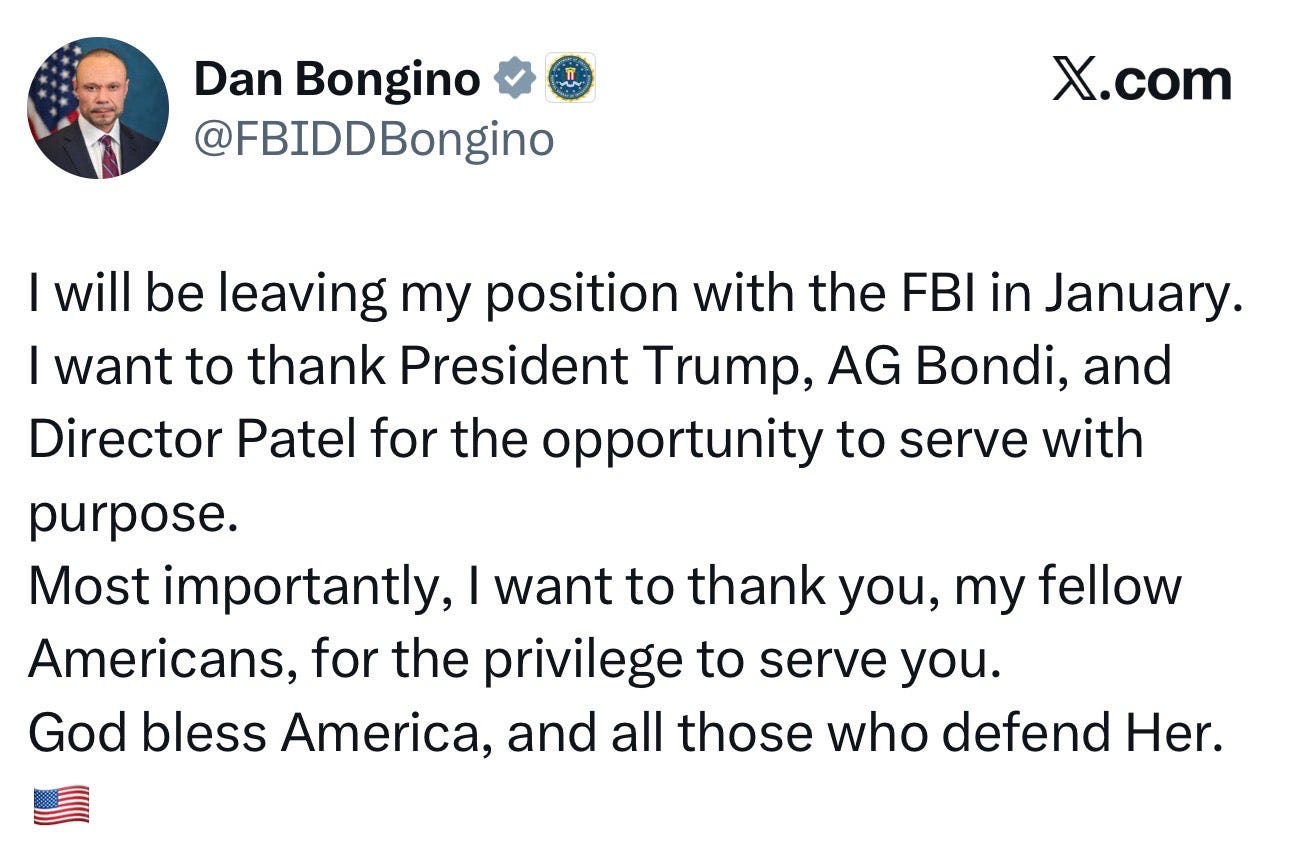
“I will be leaving my position with the FBI in January,” he wrote on X.
“I want to thank President Trump, AG Bondi and Director Patel for the opportunity to serve with purpose. Most importantly, I want to thank you, my fellow Americans, for the privilege to serve you.”
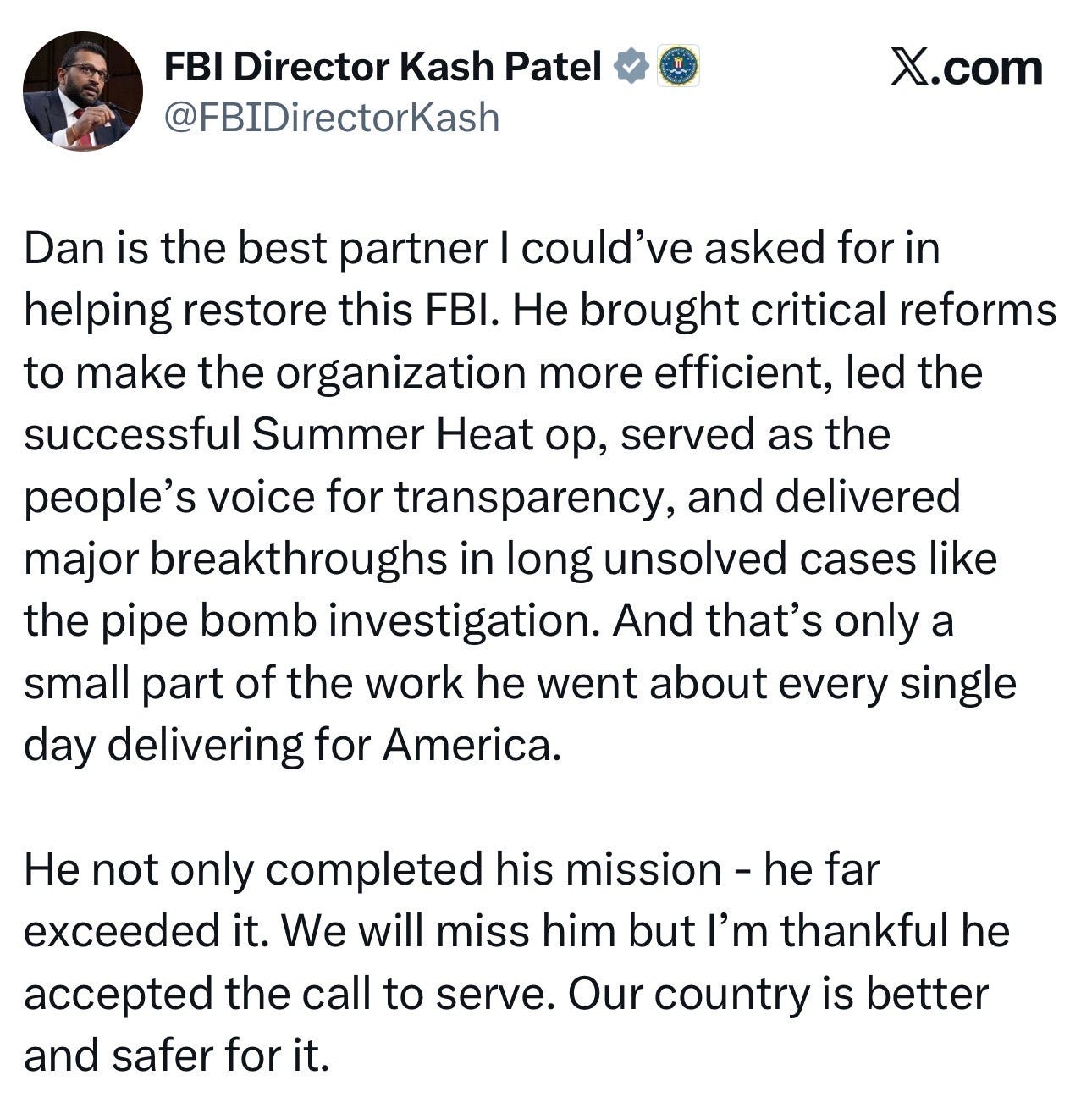
Following the announcement, FBI Director Kash Patel called Bongino “the best partner I could’ve asked for in helping restore this FBI.”
“He not only completed his mission — he far exceeded it,” he wrote on X.
“We will miss him, but I’m thankful he accepted the call to serve. Our country is better and safer for it.”
Immigration and Lawsuits
As anti-immigrant sentiment continues, Trump expanded his travel ban to include 15 additional countries, including Angola, Antigua and Barbuda, Benin, Cote d’Ivoire, Dominica, Gabon, Gambia, Malawi, Mauritania, Nigeria, Senegal, Tanzania, Tonga, Zambia and Zimbabwe, while adding full entry restrictions on people from Burkina Faso, Mali, Niger, Laos, Sierra Leone, South Sudan—not to be confused with neighboring Sudan—and Syria.
“The restrictions and limitations imposed by the proclamation are necessary to prevent the entry of foreign nationals about whom the United States lacks sufficient information to assess the risks they pose, garner cooperation from foreign governments, enforce our immigration laws, and advance other important foreign policy, national security and counterterrorism objectives,” a White House proclamation read.
This comes following the National Guard shooting in Washington, D.C., in which the suspect, Rahmanullah Lakanwal—a 29-year-old from Afghanistan—shot two officers near the White House, resulting in the death of Spc. Sarah Beckstrom.
Meanwhile, Trump sued the BBC, alleging the network altered a documentary regarding the Jan. 6, 2021, insurrection.
“I’m suing the BBC for putting words in my mouth, literally,” Trump said Monday.
“They put words in my mouth. They had me saying things that I never said, coming out. I guess they used AI or something.”
BBC Lawsuit
A spokesperson for the BBC said the network will be “defending this case.”
“We are not going to make further comment on ongoing legal proceedings,” the spokesperson said.
Economy
As the trade war continues, a BLS report found the U.S. added 64,000 jobs in November, while 105,000 jobs were lost in October.
“Businesses are not hiring as they adjust to tariffs, uncertain conditions and AI. The result is about 700,000 more unemployed Americans than there were a year ago,” said Heather Long, an economist at Navy Federal Credit Union, to CBS News.
The unemployment rate rose to 4.6%, the highest since 2021.
 The Introspective
Leave a comment