
The U.N. Security Council backs a stabilization force and transitional authority for Gaza, even as reports continue of Israeli breaches of the ceasefire.
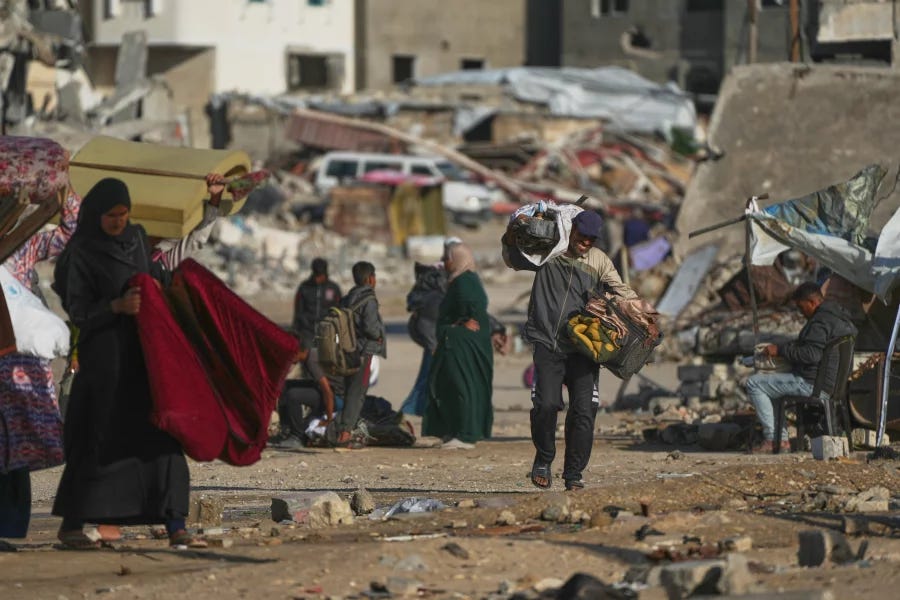
As the ceasefire in Gaza continues, the United Nations (U.N.) approved a plan backed by President Donald Trump that establishes a Board of Peace (BoP) as a “transitional administration” to aid in reconstruction of the Gaza Strip.
“This will go down as one of the biggest approvals in the History of the United Nations, will lead to further Peace all over the World, and is a moment of true Historic proportion!” Trump wrote on Truth Social.
The plan also authorizes the Board of Peace to establish a temporary International Stabilization Force (ISF) in Gaza “to deploy under unified command acceptable to the BoP,” while Egypt and Israel will contribute troops “in close consultation and cooperation.”
This comes following a previous report from The Introspective detailing multiple human rights groups finding that Israel is committing genocide against Palestinians in the Gaza Strip since the events of Oct. 7, 2023, with nearly 70,000 Palestinians being killed in Israeli bombardment as estimates are much higher.
Key Provisions of the U.S.-Backed Plan
According to Resolution 2803—the formal name of the resolution—the Israel Defense Forces (IDF) will withdraw from Gaza as ISF forces work to demilitarize the region. The ISF will later monitor the ceasefire while accepting humanitarian aid from the United Nations, the International Committee of the Red Cross and the Red Crescent.
“Thank you for joining us in charting a new course in the Middle East for Israelis and Palestinians and all the people of the region alike,” said U.S. Ambassador to the United Nations Mike Waltz after the vote, adding that the ISF will “stabilize the security environment, support the demilitarization of Gaza, dismantle terrorist infrastructure, decommission weapons and maintain the safety of Palestinian civilians.”
“Today’s resolution represents another significant step towards a stable Gaza that will be able to prosper and an environment that will allow Israel to live in security.”
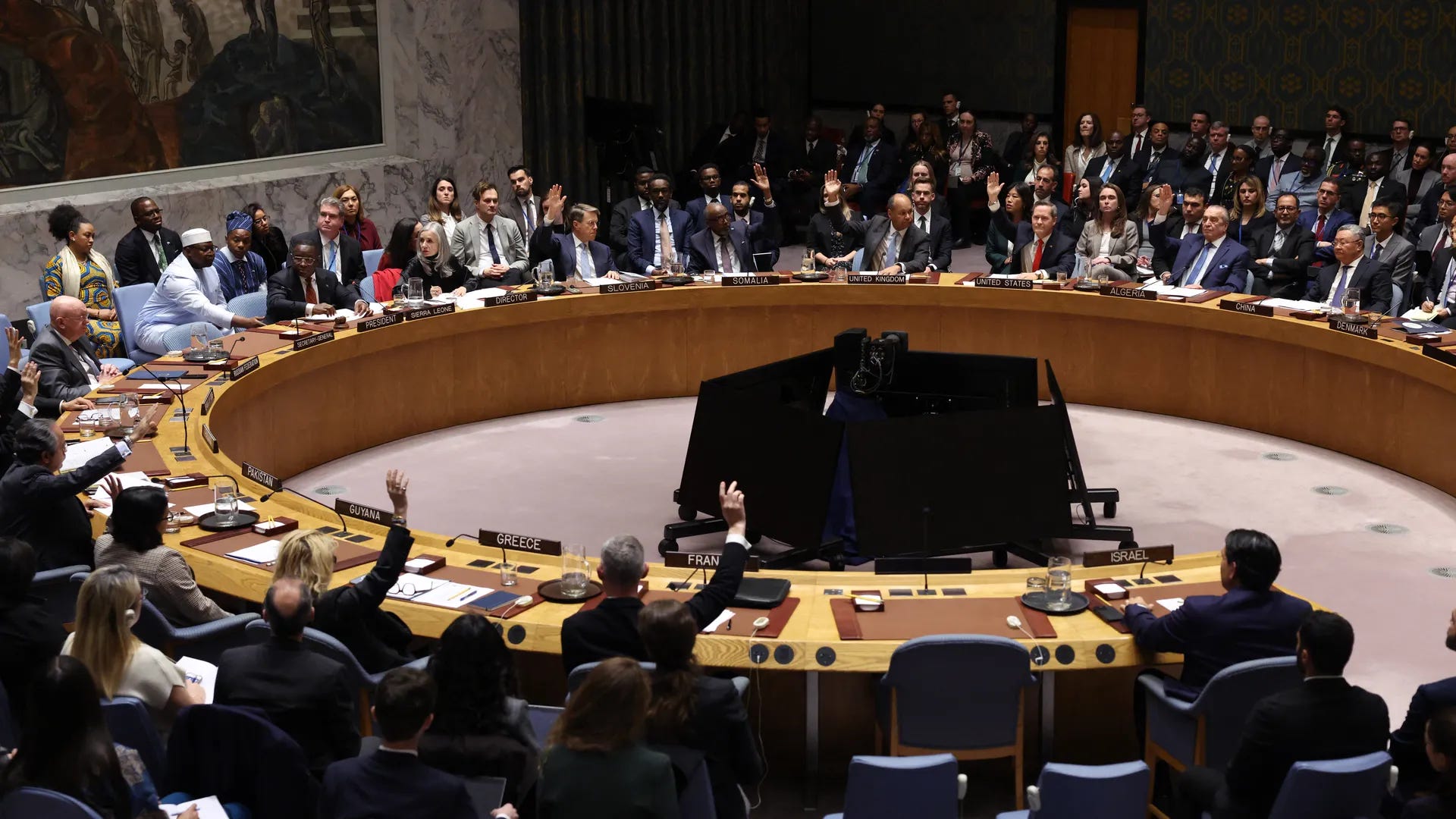
The deal also lays groundwork for a Palestinian state, claiming that if the Palestinian Authority reforms “faithfully” along with Gaza’s reconstruction, then “conditions may be in place for a credible pathway to Palestinian self-determination and statehood.”
“The United States will establish a dialogue between Israel and the Palestinians to agree on a political horizon for peaceful and prosperous coexistence,” read the resolution, obtained by The Introspective.
The deal also directs the World Bank and other institutions to aid in the reconstruction of Gaza, with plans to establish a trust fund that will be governed by unspecified donors.
Reactions
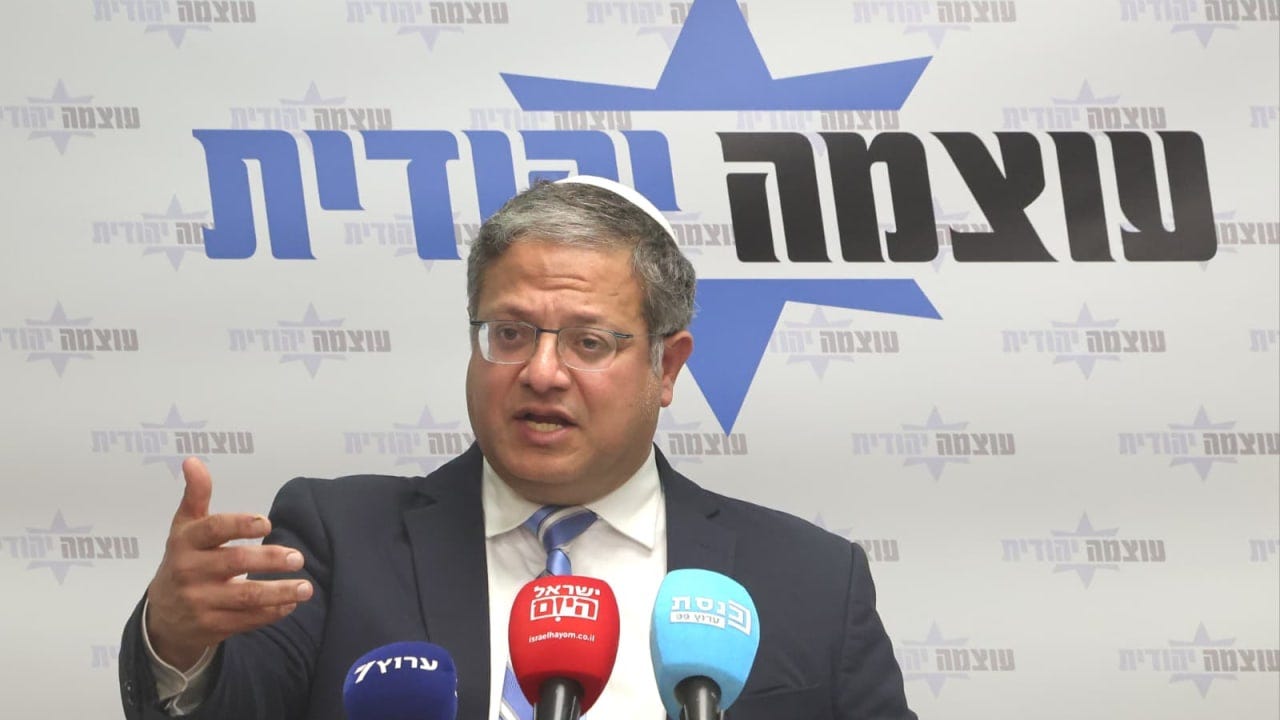
Shortly before the resolution passed, Israeli National Security Minister Ben-Gvir called for Palestinian Authority members to be assassinated if progress was made on the vote.
“If they accelerate the recognition of the Palestinian terrorist state, and the UN recognizes a Palestinian state, targeted assassinations of senior Palestinian Authority officials, who are terrorists for all intents and purposes, should be ordered,” he said, referring to PA members as “terrorists” and also calling for Palestinian President Mahmoud Abbas’ arrest.
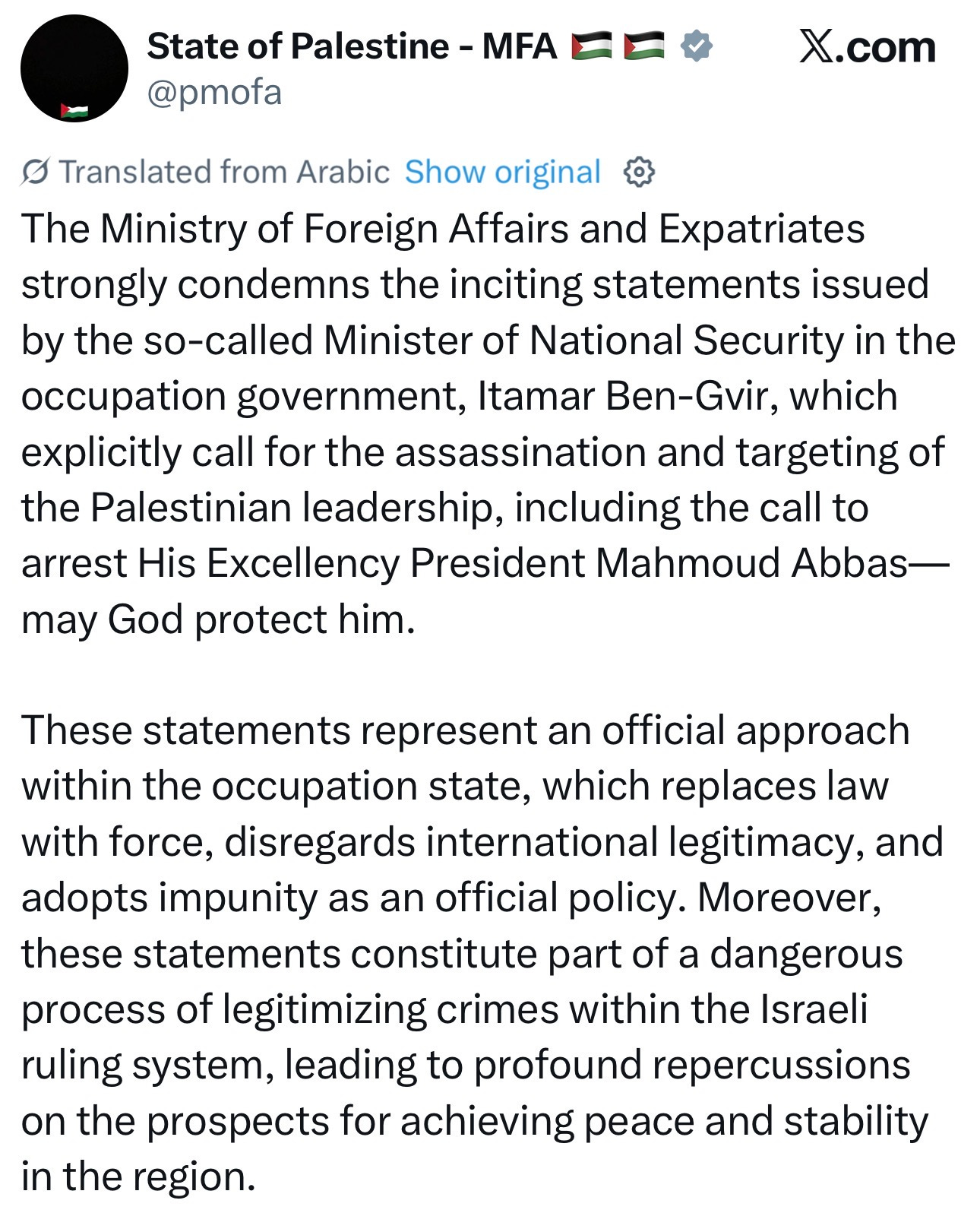
In an X post, the Palestinian Ministry of Foreign Affairs criticized the comments as “systematic incitement” by Israeli politicians and called for international leaders to hold him accountable.
“These statements reflect an official policy within the occupying state, one that replaces the rule of law with force, disregards international legitimacy, and relies on impunity,” read the X post.
“They form part of a dangerous effort to legitimize crimes within the Israeli governing system, undermining prospects for peace and stability in the region.”
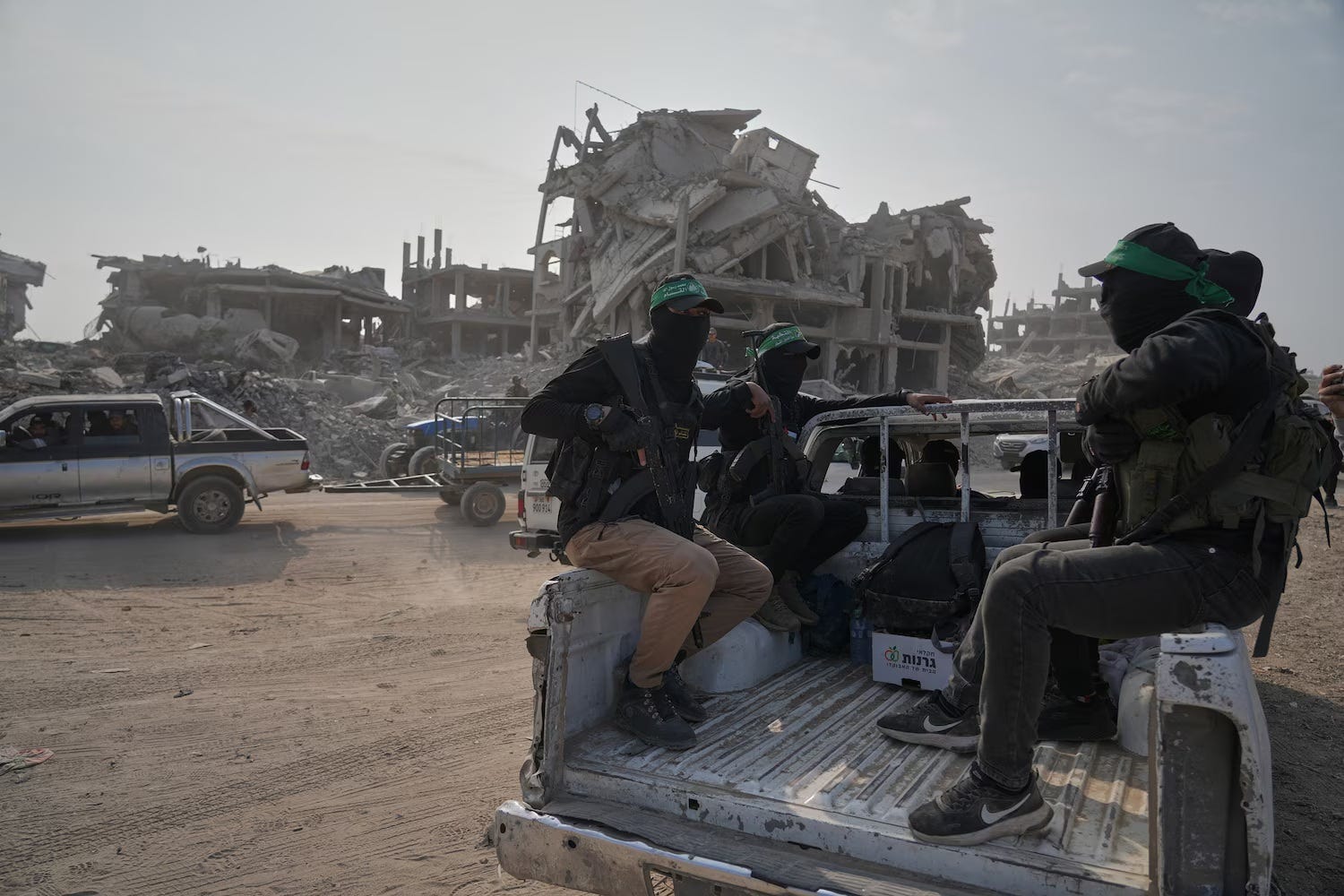
Hamas rejected the resolution following its approval, claiming that the agreement instead established an “international guardianship” upon the Gaza Strip and could lead to further issues later on.
“Assigning the international force with tasks and roles inside the Gaza Strip, including disarming the resistance, strips it of its neutrality, and turns it into a party to the conflict in favor of the occupation,” they said.
“Any international force, if established, should only be present at the border to separate the forces and monitor the ceasefire, and it should be under full UN supervision and act solely in coordination with the Palestinian institutions, without the occupation having any role in this.”
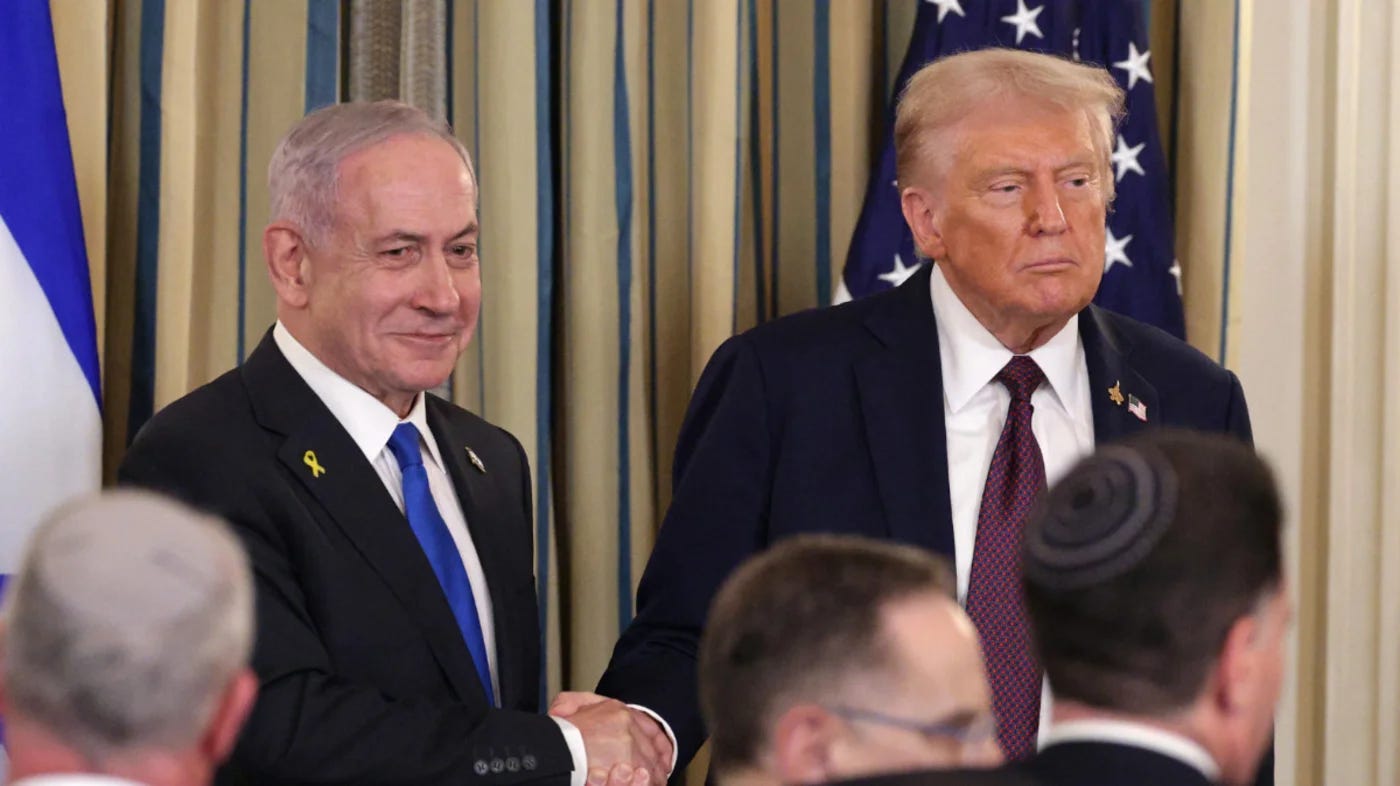
Israeli Prime Minister Benjamin Netanyahu initially rejected the plan, saying that Israel’s opposition to a Palestinian state has “not changed.”
“Our opposition to a Palestinian state in any territory has not changed. Gaza will be demilitarized, and Hamas will be disarmed, the easy way or the hard way. I do not need affirmations, tweets or lectures,” he said Sunday.
He later celebrated the plan following its approval, congratulating President Trump.
“We believe that this plan will lead to peace and prosperity, as it includes full demobilization, disarmament and a process to deradicalize Gaza,” said Netanyahu.
“In cooperation with the United States and other countries supporting the plan, Israel looks forward to the return of all the bodies of the abductees. Without delay,” he continued, referring to alleged hostages from Oct. 7 still believed to be in Gaza.
“We will also begin the process of demilitarizing and disarming the Gaza Strip and ending Hamas rule. Israel extends its hand of peace and prosperity to all its neighbors and calls on them to normalize relations and join the movement to remove Hamas and its supporters from the region,” he added.
This comes as Israel violated the ceasefire since its establishment in October, with at least 282 instances of bombardment and shootings conducted by IDF soldiers. A report from Al Jazeera found that despite the ongoing ceasefire, Israel attacked Gaza 25 out of the past 31 days, with only six days having no attacks, deaths or injuries reported.
 The Introspective
Leave a comment