
The week included limits on mail-in voting, federal court decisions, and a pause on White House ballroom construction.
Dante Belcher
Apr 3, 2026
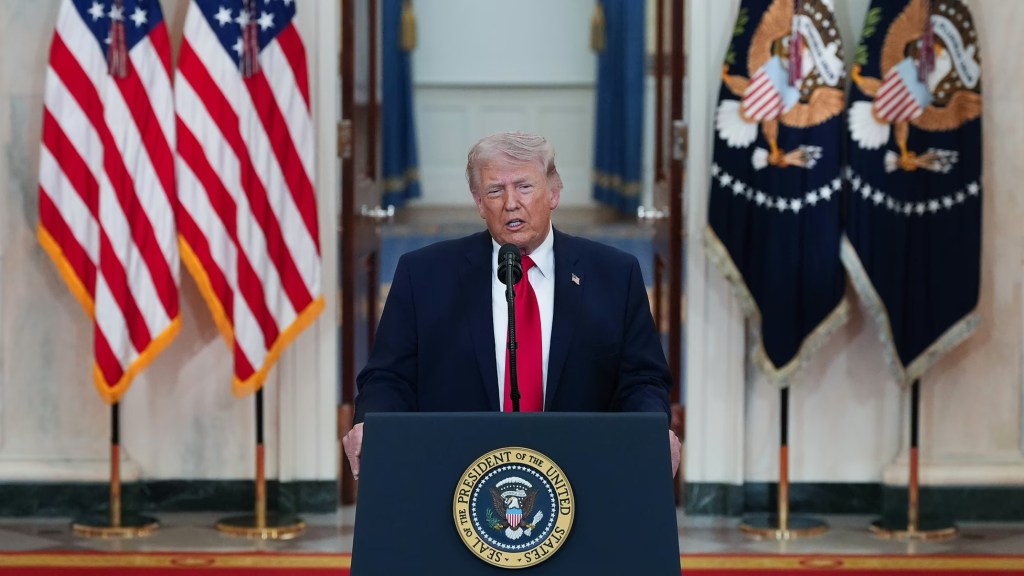
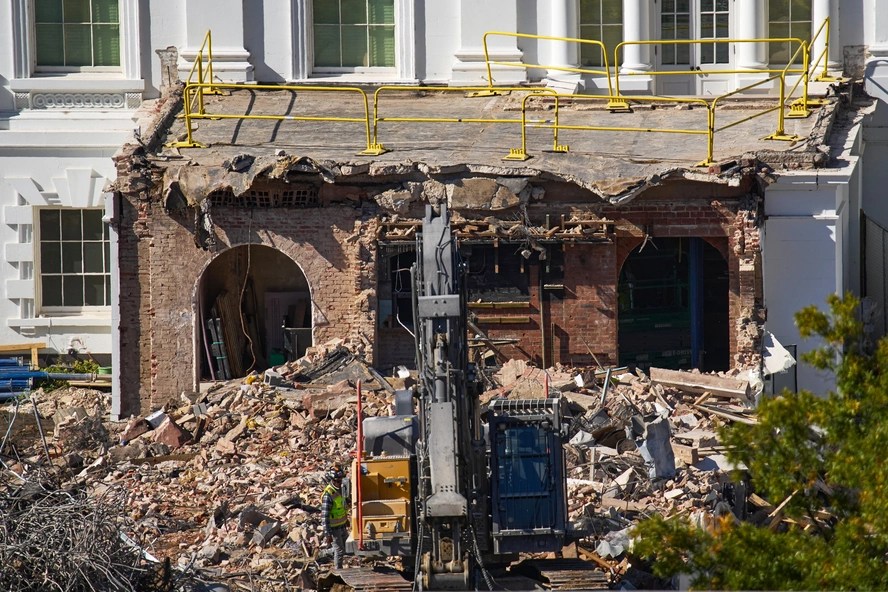
Trump’s 63rd week brought updates on LGBTQ+ rights, court rulings, and executive orders. The Supreme Court ruled 8-1 against Colorado’s ban on conversion therapy, raising implications as 20 states have similar legislation. At the same time, following previous reports from The Introspective detailing funding for broadcasters NPR and PBS being canceled, a federal judge ruled that the action violated the First Amendment. Meanwhile, a separate federal judge ordered construction of Trump’s ballroom to be halted. This follows a previous Introspective report detailing backlash after the East Wing of the White House was demolished by the Trump administration for the planned ballroom.
Following a previous Introspective report detailing Trump criticizing mail-in voting as “inaccurate,” “expensive” and “controversial,” Trump signed an executive order limiting mail-in voting, raising implications as the order calls for creating a federal voter list.
Supreme Court, NPR, and White House
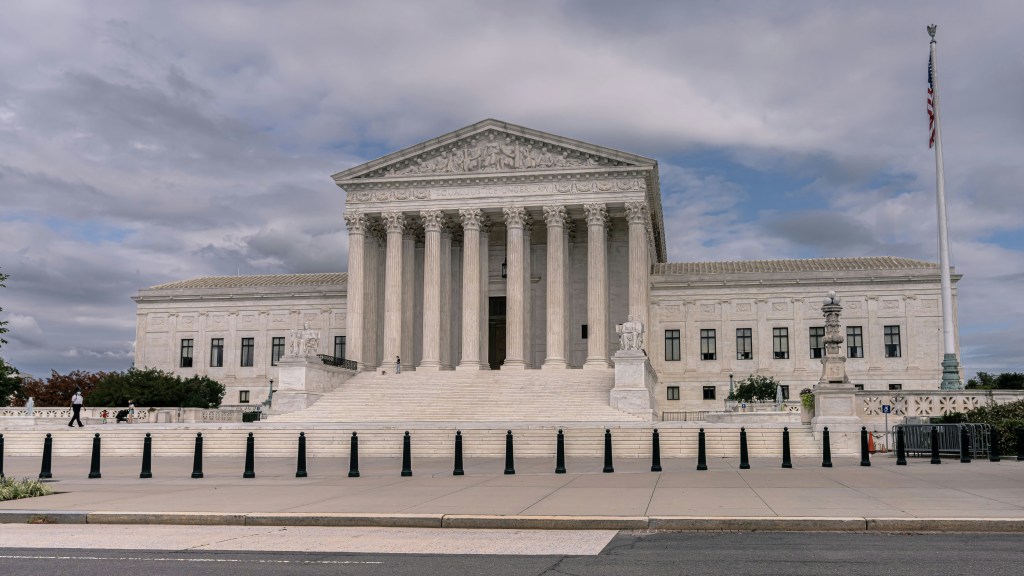
As backlash toward LGBTQ rights and Diversity, Equity, and Inclusion (DEI) continues, the Supreme Court ruled against Colorado’s ban on conversion therapy—efforts by health providers to change someone’s sexuality or gender identity—with Justice Neil Gorsuch saying the ban “censors speech based on viewpoint.”
“Colorado may regard its policy as essential to public health and safety. Certainly, censorious governments throughout history have believed the same,” he wrote in the court filing.
“But the First Amendment stands as a shield against any effort to enforce orthodoxy in thought or speech in this country,” he continued.
“It reflects instead a judgment that every American possesses an inalienable right to think and speak freely, and a faith in the free marketplace of ideas as the best means for discovering truth. However well-intentioned, any law that suppresses speech based on viewpoint represents an ‘egregious’ assault on both of those commitments.”
Justice Ketanji Brown Jackson was the sole dissenter.
“Our precedents do not compel this conclusion,” she wrote.
“Speech uttered for purposes of providing medical treatment may be restricted incidentally when the state reasonably regulates the speaker’s provision of medical treatments to patients.”
She later said the ruling “opens a dangerous can of worms.”
“It threatens to impair states’ ability to regulate the provision of medical care in any respect. It extends the Constitution into uncharted territory in an utterly irrational fashion. And it ultimately risks grave harm to Americans’ health and well-being,” she wrote.
Kaley Chiles, a Christian therapist who brought the case to the court, celebrated the ruling as a “victory for counselors and, more importantly, kids and families everywhere,” with her attorney, Jim Campbell, releasing a statement.
“Kids deserve real help affirming that their bodies are not a mistake and that they are wonderfully made. The U.S. Supreme Court’s decision today is a significant win for free speech, common sense, and families desperate to help their children,” he said.
“States cannot silence voluntary conversations that help young people seeking to grow comfortable with their bodies.”
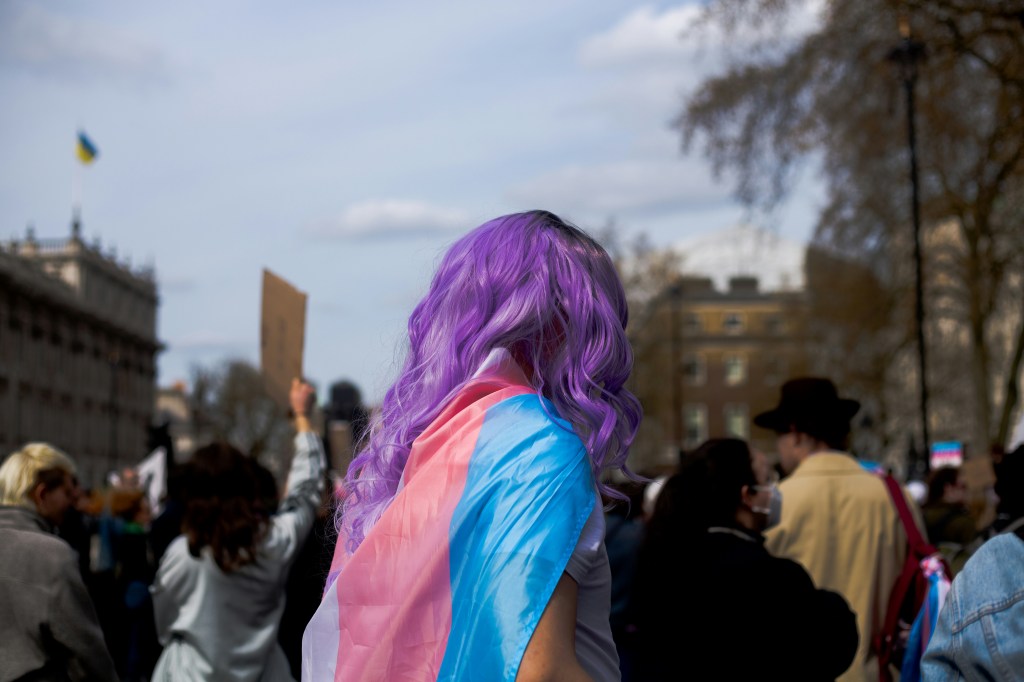
In a press release, Human Rights Campaign (HRC) President Kelley Robinson criticized the ruling, saying more kids will “suffer” due to the “reckless” decision.
“The Court has weaponized free speech in order to prioritize anti-LGBTQ+ bias over the safety, health and well-being of children,” she said.
“Our fight is far from over. We remain committed to protecting children against these abusive practices that tear apart families and will continue to work alongside our coalition partners to ensure that no kid has to be subjected to guilt, coercion and rejection as they seek help to better understand themselves and grow.”
At the same time, following previous reports from The Introspective detailing funding for broadcasters NPR and PBS being canceled, a federal judge ruled that the action violated the First Amendment.
“Because the First Amendment does not tolerate viewpoint discrimination and retaliation of this type, the Court will issue judgment against the federal agency defendants declaring Section 3(a) of the executive order unconstitutional and will issue an injunction barring those defendants from implementing it,” wrote U.S. District Judge Randolph D. Moss, referring to an executive order that halted funding to the broadcasters.
“Executive Order 14290 crosses that line,” he continued.
“It does not define or regulate the content of government speech or ensure compliance with a federal program. Nor does it set neutral and germane criteria that apply to all applicants for a federal grant program. Instead, it singles out two speakers and, on the basis of their speech, bars them from all federally funded programs.”
In a statement obtained by The Introspective, PBS CEO and President Paula Kerger celebrated the decision.
“At PBS, we will continue to do what we’ve always done: serve our mission to educate and inspire all Americans as the nation’s most trusted media institution,” she said.
Theodore Boutrous, the attorney for NPR, called the ruling “a victory for the First Amendment and for freedom of the press.”
“As the Court expressly recognized, the First Amendment draws a line, which the government may not cross, at efforts to use government power—including the power of the purse—‘to punish or suppress disfavored expression’ by others,” he said in a statement.
White House spokesperson Abigail Jackson called the ruling “ridiculous” in a statement obtained by The Introspective, saying that “NPR and PBS have no right to receive taxpayer funds.”
“The Trump administration looks forward to ultimate victory on the issue,” she said.
Meanwhile, a separate federal judge, Richard Leon, ordered construction of Trump’s ballroom to be halted.
“The President of the United States is the steward of the White House for future generations of First Families. He is not, however, the owner!” he wrote.
“Unless and until Congress blesses this project through statutory authorization, construction has to stop!”
This follows a previous report from The Introspective detailing backlash after the East Wing of the White House was demolished by the Trump administration for the planned ballroom.
Executive Orders
As the midterm elections near, Trump signed an executive order, Ensuring Citizenship and Integrity in Federal Elections, aimed at limiting mail-in voting.
“To enhance election integrity via the United States Mail, additional measures are necessary. Secure ballot envelope identifiers provide a reliable, auditable mechanism to enforce federal law without unduly burdening or infringing on the rights of eligible voters,” read the order.
“Unique ballot envelope identifiers, such as bar codes, enable confirmation that only citizens receive and cast ballots, reducing the risk of fraud and protecting the integrity of federal elections.”
During the signing of the order, Trump alleged “cheating” regarding mail-in voting.
“The cheating on mail-in voting is legendary. It’s horrible, what’s gone on. It’s very clearly covered…I think this will help a lot with elections,” he said.
“I don’t know how it can be challenged….You may find a rogue judge. You get a lot of rogue judges, very bad, bad people, very bad judges. But that’s the only way that can be changed, and hopefully we’ll win an appeal.”
The order also directs the Department of Homeland Security (DHS) to create a federal voting list using federal citizenship and naturalization records, raising implications as anti-immigrant sentiment continues throughout Trump’s second term.
“I think this will help a lot with elections. We’d like to have voter ID. We’d like to have proof of citizenship, and that’ll be another subject for another time. We’re working on that. You would think it’d be easy,” said Trump.
 The Introspective
Leave a comment