
As violence continues between Cameroon’s French-speaking government and English-speaking separatists seeking an independent Ambazonia, the Anglophone Crisis reveals the enduring scars of colonialism.
Dante Belcher
Jun 4, 2025
Content Warning: This article contains descriptions of war, violence, displacement, and sexual assault. Reader discretion is advised.
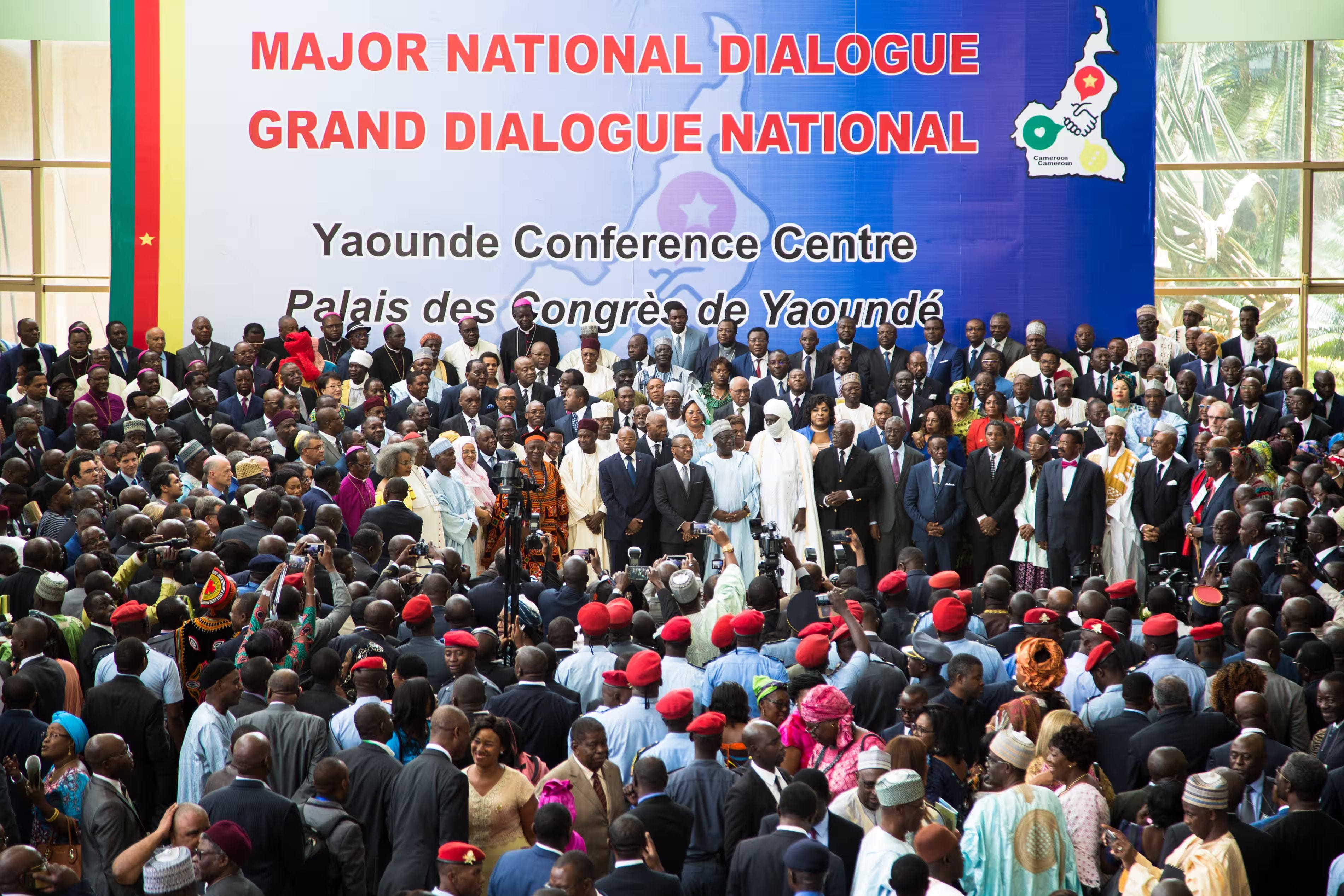
Cameroon is facing ongoing instability rooted in colonial history, political tensions and civil conflict. Since 2017, armed groups in the English-speaking regions of the Central African country have sought independence from the French-speaking central government, declaring a new state called “Ambazonia” in the Northwest and Southwest regions.
Involving separatist groups such as the Ambazonia Defence Forces (ADF) and the Southern Cameroons Defence Forces (SOCADEF), the conflict has killed more than 6,000 people, displaced over 600,000 and left 1.7 million in need of humanitarian aid. The crisis has also raised concerns over attacks on journalists and schools, as well as reports of sexual violence.
Colonial Foundations of Division: French vs. British Cameroon
Before gaining independence in 1961, Cameroon was colonized by Germany from 1884 to 1916, during which it was known as “Kamerun.” At the end of World War I, the League of Nations split the territory into two mandates: the northern region under British rule and the southern region under French control.
Following a series of rebellions in the 1950s, French Cameroon gained independence in 1960 and became known as the “République du Cameroun.” A year later, a referendum was held in British Cameroon to decide whether the colony would join the newly independent Cameroon or merge with Nigeria—independence was not an option. The northern half chose to join Nigeria, while the southern half merged with Cameroon, creating the modern-day division between the French-speaking eastern half and the English-speaking western half of the country.
In 1972, a unitary government—where a single national authority holds power—was established. The country was renamed the United Republic of Cameroon, and political power was centralized in the presidency.
In 1984, an attempted coup against President Paul Biya further inflamed tensions in the northern and southern regions, resulting in the deaths of 70 people, more than 1,000 arrests, and 46 executions. That same year, the country was renamed the Republic of Cameroon, and calls for an independent Ambazonia began to intensify.
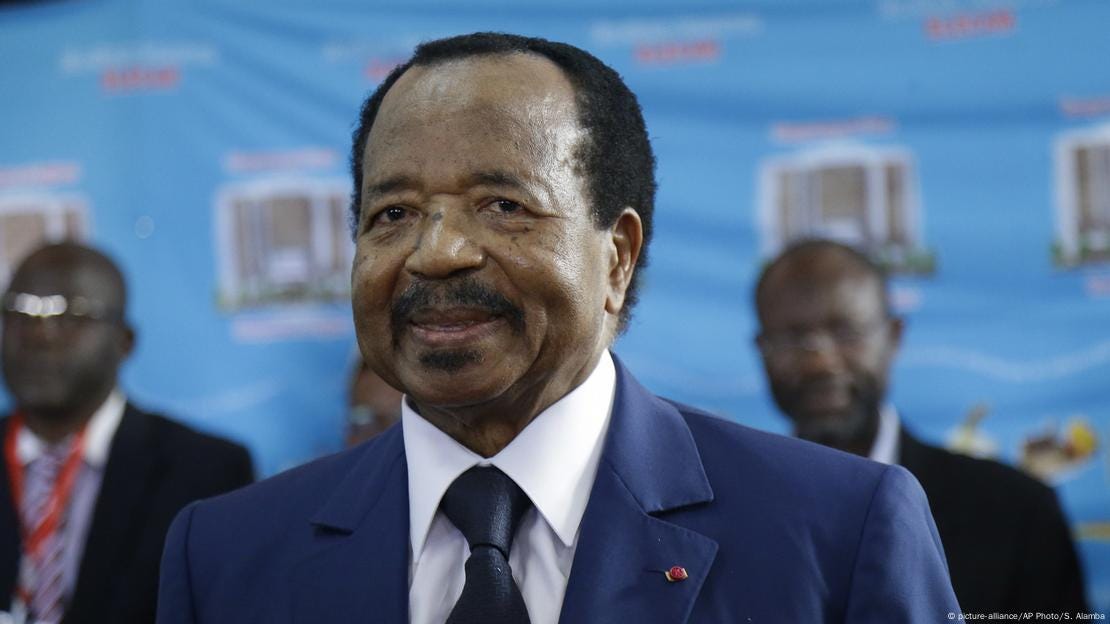
Throughout the 1990s, government crackdowns on pro-democracy movements led to mass arrests of students and nationwide strikes affecting public transportation, shops and businesses. To ease tensions, a constitutional reform process was launched that included both Francophone and Anglophone leaders. Cameroon held its first national election in 1992, which Paul Biya won—he remains president to this day. A new constitution was approved in 1996 with the stated goal of creating a “decentralized unitary state,” but President Biya retained most political power.
2016 Protests: Tensions Reach a Boiling Point
In 2016, lawyers, students and teachers began peaceful protests after French-speaking judges and teachers were sent to the English-speaking regions to implement the French legal system. Tensions rose, as the Anglophone regions have historically maintained the common law system inherited from British colonial rule.
“Southern Cameroonians do not benefit anything from the French Cameroon,” said Enow John, a citizen who joined the protests, in an interview with The Guardian.
“We want this to end this year.”
Violence erupted after military and police forces intervened, launching tear gas and firing live ammunition at civilians. A video circulated showing officers forcing students to rub their faces in mud in the Anglophone town of Buea.
“[We] need to talk about police brutality against female students in @UBuea protests,” read a post on X, referring to the University of Buea.
During this time, Amnesty International condemned the actions of Cameroonian authorities.
“Authorities in Cameroon must shed light on the circumstances of these killings and injuries by immediately conducting thorough, impartial and effective investigations. Those reasonably suspected of criminal responsibility for these deaths must be brought to justice,” said Ilaria Allegrozzi, a Central Africa researcher at Amnesty.
“Responding to incidents of violence during protests with unnecessary or excessive force threatens to further enflame an already tense situation and could put more lives at risk.”
In the same report, witnesses said police fired tear gas into a market despite no protests taking place there.
“Market sellers were sitting at the main gate leading to the market when the police came and decided to break windscreens, knock down bikes parked there, and start firing tear gas,” said one witness.
“Sellers were saying: ‘We don’t know what we have done wrong; we are just selling at the market.’ When police fired tear gas, sellers and bystanders ran into the market and locked the main gate. You could see all the smoke and vapors from the tear gas inside.”
In response, the French-speaking central government launched a crackdown on emerging separatist sentiment. The Anglophone regions were cut off from internet access between January and April 2017, according to Deutsche Welle (DW).
Nine people were killed in clashes with police and the military, while English-speaking politicians, journalists and lawyers were arrested. During this period, separatist groups such as the Ambazonia Defence Forces (ADF) and the Southern Cameroons Defence Forces (SOCADEF) emerged, calling for the creation of an independent state, “Ambazonia.”
The War for Ambazonia
The conflict over Ambazonia’s independence has led to widespread violence and mass displacement. According to Human Rights Watch, more than 638,000 people have been displaced due to the war. In total, an estimated 2.1 million people have been internally displaced across Cameroon, as the country grapples with two other major crises: the Lake Chad conflict in the Far North region bordering Nigeria, and an ongoing refugee crisis caused by instability in the neighboring Central African Republic (CAR).
In an interview, Felix Agbor Nkongho—a lawyer and former member of the now-banned Cameroon Anglophone Civil Society Consortium (CACSC), which once led peaceful protests—expressed sorrow over the direction of the crisis.
“The current state of affairs in the Anglophone regions is very sad,” Nkongho said.
“By and large, we didn’t foresee violence.”
In the same report, Nfor Nkfu, an Anglophone taxi driver, criticized both the Cameroonian government and separatist groups, accusing them of endangering civilians.
“These parties involved in the ongoing crisis are protecting their interests. They are not protecting anyone,” Nkfu said.
In a BBC report, journalist Blaise Eyong recounted the violence and tragedy he witnessed firsthand.
“We used to wake up in the morning to dead bodies on the streets, or you hear that a house has been set ablaze,” Eyong said.
“Or you hear that someone was kidnapped. People’s body parts chopped off. How do you live in a city where every single morning you’re worried if your relatives are safe?”
Citizens like John recalled brutal encounters with the military. He and a friend were arrested by Cameroonian soldiers after being accused of purchasing weapons for a separatist group. They were tortured after refusing to sign an unspecified document.
“That is when they separated us into different rooms,” John said.
“They tortured [my friend]. You could just hear them flogging everywhere. I could feel it on my own body [too]. They beat me everywhere.”
John’s friend later died from his injuries. John was released months later without any charges.
“I just live in fear because I don’t really know where to start from—or where it is safe to start from—or how,” he said.
That same report also highlighted the case of Johnson Mabia, an English-speaking civil servant who was kidnapped by armed separatists. He was held for a $55,000 ransom, to be paid within 24 hours. His wife, Dora, later learned from relatives that he had been decapitated by the separatists and left by the side of the road.
“He said… that I should take care of the children. That my husband is no more. I didn’t even know what to do,” Dora said.
“Tuesday he was traveling, and he was kidnapped. Friday he was killed.”
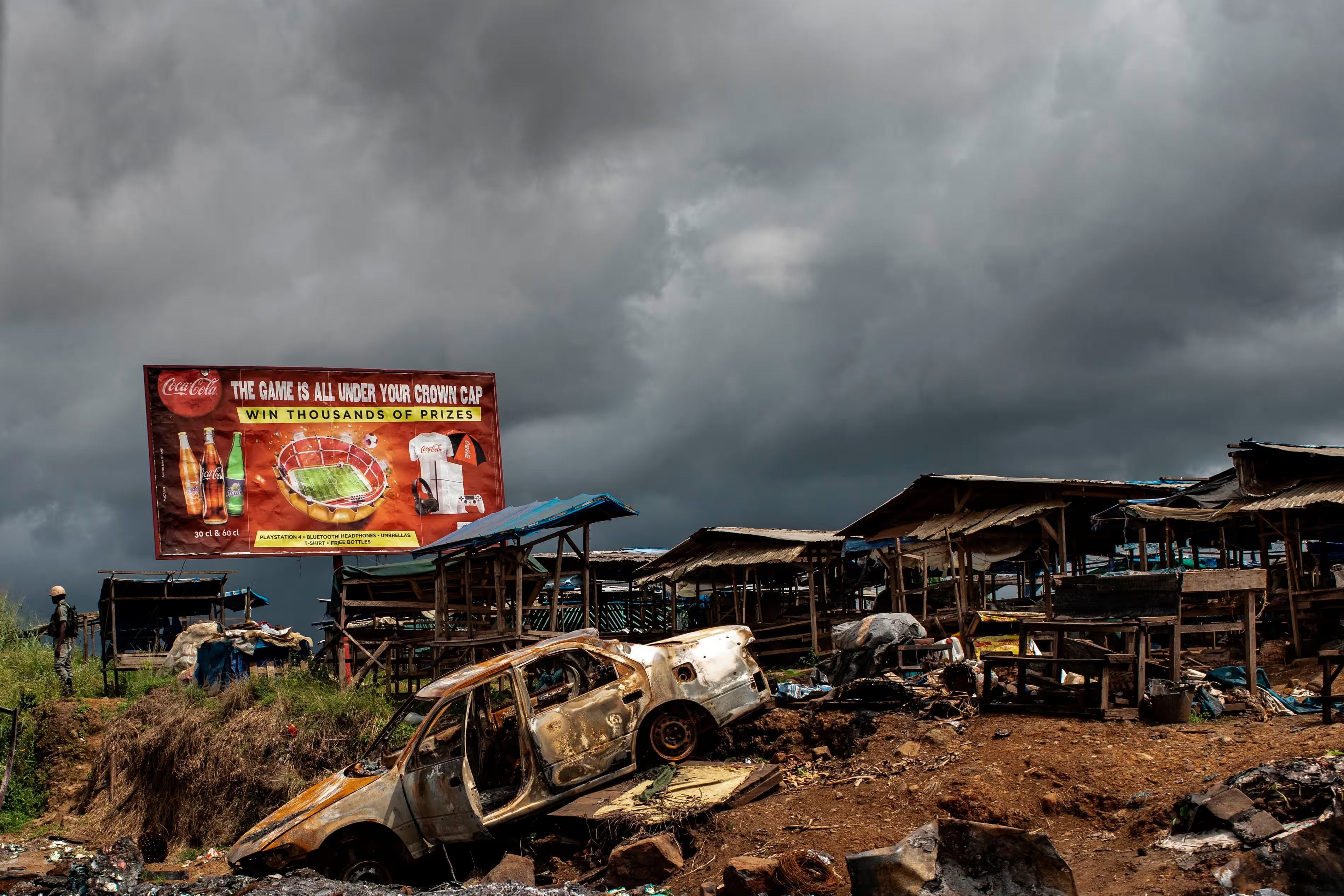
Separatist groups have also enacted a boycott of the country’s education system in opposition to what they describe as a Francophone-centric curriculum. As a result, more than 700,000 students have been denied access to education since the conflict began. Many have been kidnapped, tortured or raped.
“They beat me up. They hit me and my friends with sticks and machetes on the soles of our feet, in the arms and in the back,” said a high school student from Bafia, in the Southwest region, in a Human Rights Watch report.
“They cut my right hand. I was bleeding and was seriously injured.”
The Cameroonian government responded by sponsoring the Safe Schools Declaration—an international agreement urging nations to protect education from attack. However, assaults on schools have continued.
International Silence on Cameroon
Studies from the Norwegian Refugee Council (NRC) have identified Cameroon as the world’s most neglected displacement crisis. Other crises facing African nations—such as Ethiopia, which ranked second, and the Democratic Republic of the Congo (DRC), ranked eighth—also made the list. Fewer than 30,000 articles published in 2024 mentioned the conflict in Cameroon, compared to 451,000 articles about the war in Ukraine.
“International solidarity is being overtaken by increasingly introverted and nationalistic policies in previously generous donor nations,” said Jan Egeland, secretary general of the NRC.
“This is deepening the neglect of people affected by crisis and displacement at a time when a record number of people have been forced from their homes. Across Europe, the United States and elsewhere, we have seen donors turn their backs on people in their hour of need.”
“It is critical that we do not accept donors’ abandonment of aid as a foregone conclusion,” he added.
“Displacement isn’t a distant crisis—it’s a shared responsibility. We must stand up and demand a reversal of brutal aid cuts, which are costing more lives by the day.”
In 2024, funding for humanitarian needs fell short by $25 billion, meeting only half of what was required.
In a report by Al Jazeera, NRC member Christelle Hure, head of advocacy in West and Central Africa, said many crises across the continent are ignored because “they are not seen as of immediate strategic interest to international partners.”
“Crises that knock on Europe’s door—as happened in 2015 [with mass immigration]—tend to receive the greatest media attention, while those far away remain not only out of sight but also out of mind,” said Hure.
In the same report, Beverly Ochieng, a UK-based security analyst, claimed the violence in Cameroon is ignored in part because it poses no immediate threat to the central government.
“There was a feeling initially that some of the secessionist leaders were trying to lobby Donald Trump to support their cause, but they’ve just not received any attention,” said Ochieng, adding that barely any negotiations have taken place.
Hure called for intervention by the African Union (AU)—a bloc of 55 member nations—to help end the conflict, stating that political commitment, not just financial aid, is “urgently needed.”
“Easing these constraints, in close collaboration with authorities and the African Union, would greatly enhance the efficiency and impact of our collective response,” she said.
The conflict in Cameroon’s Anglophone regions remains unresolved, with continued violence, displacement and humanitarian challenges. As the situation evolves, uncertainty remains over how regional and international officials will respond to one of Africa’s most neglected crises.


Leave a Reply