
Fatal attack sparks debate over transit security and mental health policies.

Content Warning: This article contains discussions of violent crime and murder. Reader discretion is advised.
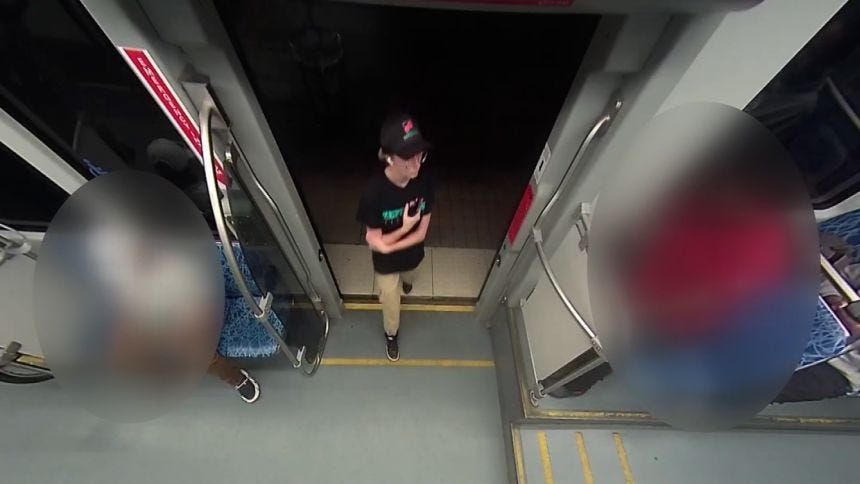
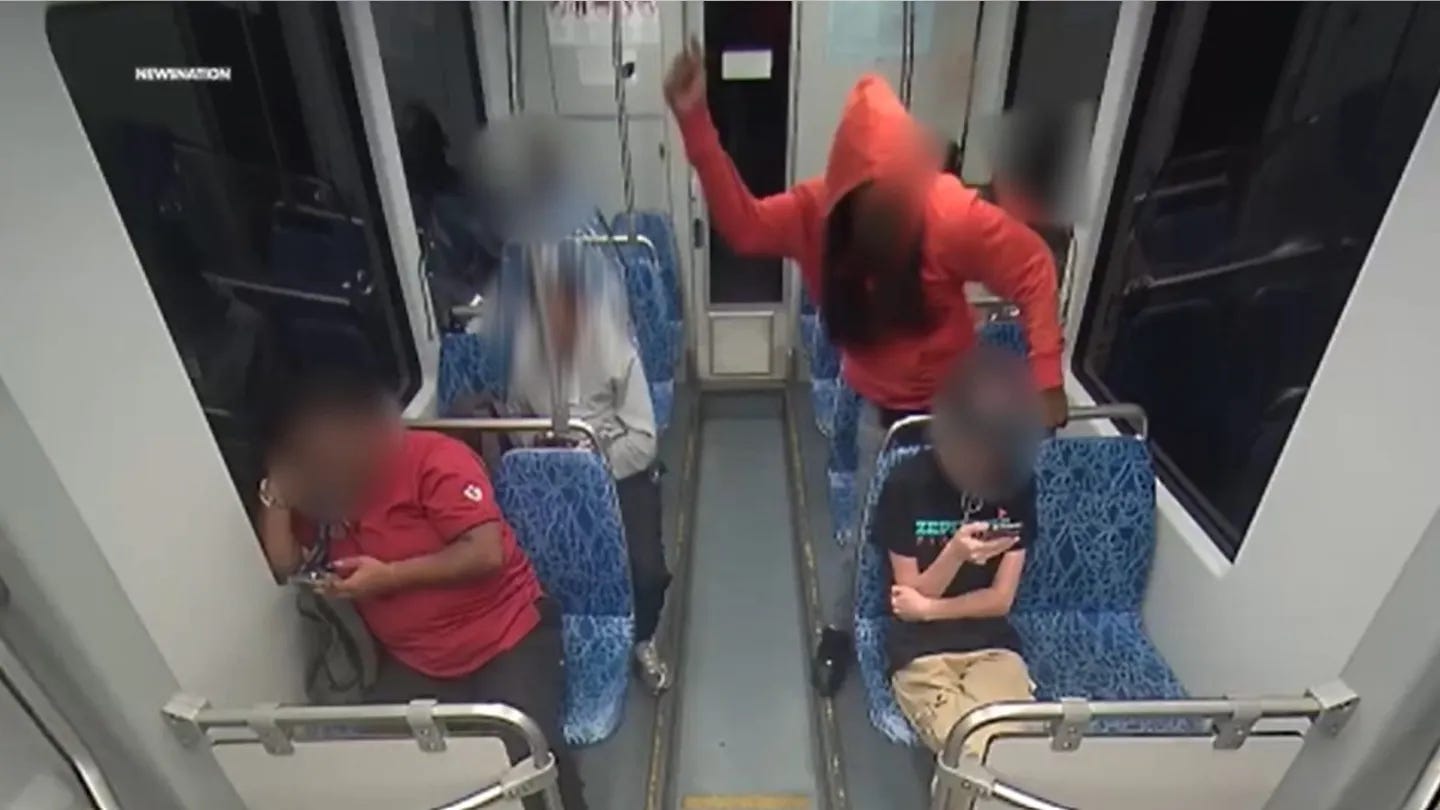
Outrage erupted after Iryna Zarutska, a refugee from Ukraine, was killed on a light rail train in Charlotte, North Carolina, on Aug. 22. Zarutska was riding the LYNX Blue Line when the suspect, Decarlos Brown Jr., stabbed her three times, including once in the neck. She was pronounced dead at the scene, and Brown was immediately arrested after exiting the train.
“Iryna came here to find peace and safety, and instead her life was stolen from her in the most horrific way,” her family’s spokesperson said in a statement obtained by The Introspective.
Investigation
Brown was homeless at the time of the killing and was previously diagnosed with schizophrenia, a report from the Daily Mail found. Brown served five years in prison for armed robbery and was arrested again in 2020 after assaulting his sister, months after he was released. He was again arrested earlier this year, in January, after misusing the 911 system during a welfare check.
“Brown wanted officers to investigate this ‘man-made’ material that was inside of his body,” the affidavit read.
“Officers advised Brown that the issue was a medical issue and that there was nothing further they could do.”

Following Zarutska’s killing, Brown was charged with first-degree murder. Ross Ferguson, U.S. attorney for the Western District of North Carolina, said his office was “looking at every way the federal government can bring justice to Iryna Zarutska and her loved ones.”
“This act of violence affects the confidence of all those who rely on public transportation to commute to work and go about their daily business, and restoring that confidence is our mission,” he wrote on X.

Attorney General Pam Bondi later announced federal charges had been filed against Brown.
“Iryna Zarutska was a young woman living the American dream—her horrific murder is a direct result of failed soft-on-crime policies that put criminals before innocent people,” Bondi said in a press release.
“I have directed my attorneys to federally prosecute DeCarlos Brown Jr., a repeat violent offender with a history of violent crime, for murder. We will seek the maximum penalty for this unforgivable act of violence—he will never again see the light of day as a free man.”
FBI Director Kash Patel called Zarutska’s killing a “disgraceful act that should never happen in America.”
“The FBI jumped to assist in this investigation immediately to ensure justice is served and the perpetrator is never released from jail to kill again,” he said.
Ukraine’s Ministry of Foreign Affairs acknowledged the killing, stating that the Ukrainian embassy is in “constant contact” with the United States.
“The case remains under the oversight of the diplomatic mission,” the ministry said.
Response
The Charlotte Area Transit System (CATS) has since intended to increase fare inspection and security throughout its light rail system.
However, some riders have been cautious since the killing last month.
“It is something I now consciously think about and have in the back of my mind as I show up to a station, as I sit down in my seat,” Alex Grosswald told WBTV.
“I think it’s a great start for everybody to be paying their tickets, and it’s a great start for somebody to be walking through the train getting eyeballs on everyone.”

Charlotte Mayor Vi Lyles called Zarutska’s killing “heartbreaking” in a statement.
“This was a senseless and tragic loss. My prayers remain with her loved ones as they continue to grieve through an unimaginable time,” she said.
City Council member Malcolm Graham criticized policies that allowed Brown to remain out of prison.
“Let me be clear. We also must close the revolving door for repeat offenders,” he said during a press conference.
“Too many of the crimes that disrupt our neighborhoods and transit system are committed by individuals who cycle through the system over and over and over again.”
He later added, “There’s no choice but to meet this moment with clarity of purpose by increasing, by addressing root causes, admitting our shortcomings where they exist, and listening to community voices and acting swiftly to regain public confidence.”
Jason Simmons, chairman of the North Carolina Republican Party, criticized the Democratic Party, claiming that it has “chosen to side with criminals.”
“Their policies of appeasement, their weak-on-crime policies, their open-door and revolving-door policies in our criminal justice system and jails have allowed murderers back on the streets, time and time again.”
White House Press Secretary Karoline Leavitt blamed the media for the killing, noting that the murder did not gain national attention until weeks later.
“Perhaps most shamefully of all, the majority of media—many outlets in this room—decided that her murder was not worth reporting on originally, because it does not fit a preferred narrative,” she said.
The dynamics of Zarutska’s killing were compared to Jordan Neely, a homeless Black man who was killed after being placed in a chokehold by Daniel Penny, a white Marine veteran, on the New York City subway in 2023. Penny was later acquitted on charges of criminally negligent homicide.
“Many of the journalists in this room spilled PLENTY of ink trying to SMEAR Daniel Penny for defending a subway car from a deranged lunatic in New York City, but none of those same reporters lift a finger to write stories about an actual murderer,” Leavitt added.
President Trump acknowledged the Charlotte stabbing, saying, “There are evil people, and we have to confront that. A lunatic just got up and started—it’s right on the tape, not really watchable, because it’s so horrible. But just viciously stabbed. She’s just sitting there. So, there are evil people. We have to be able to handle that. If we don’t handle that, we don’t have a country.”
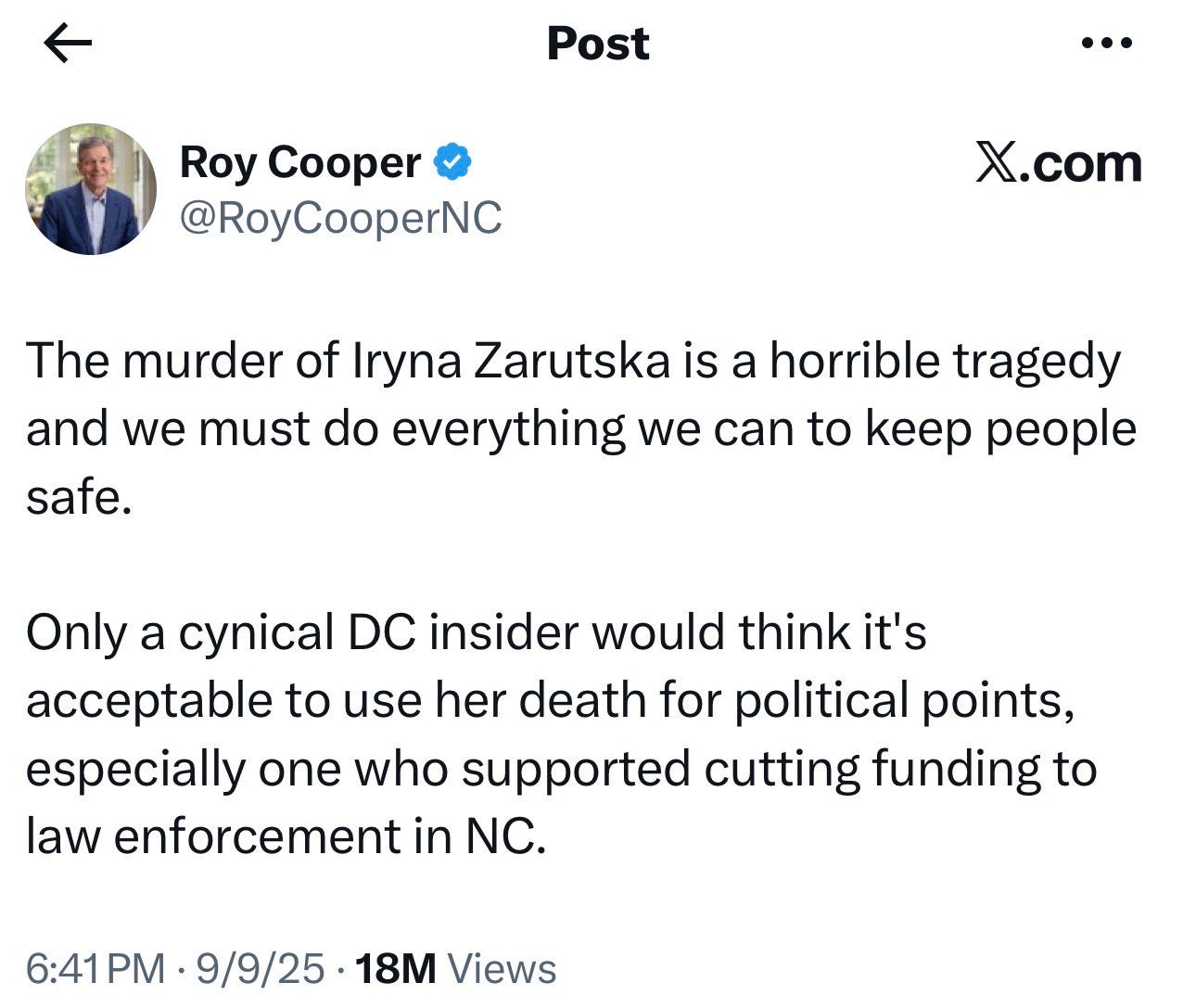
However, North Carolina Gov. Roy Cooper criticized those who sensationalized Zarutska’s death in an X post.
“Only a cynical D.C. insider would think it’s acceptable to use her death for political points, especially one who supported cutting funding to law enforcement in NC,” he wrote.
Mental Health
Research from the American Psychological Association (APA) found that people who have been diagnosed with major depressive disorder, bipolar disorder, schizophrenia, and schizoaffective disorder are more likely to commit violent acts compared with the general population; however, childhood experiences also have a stark influence.
“If a person has a severe mental illness, [they] may have other risk factors for violent behavior,” said Eric B. Elbogen, a psychologist and professor at Duke University.
“So, it may not be mental illness that is driving the violence at all, but rather factors like having been abused as a child, being unemployed, or living in a high-crime neighborhood.”
Another study from Stanford University noted that people with mental health histories have higher rates of being repeat offenders, serve longer prison sentences, and have more expensive medical needs.
“Our community mental health system also needs reform. But like any public program, success depends just as much on who the program serves as on the program’s design,” wrote Stephen Eide to City Journal, criticizing how Americans approach mental illness.
“Too many community programs fail because they’re forced to handle clients that need a higher level of care.”
 The Introspective
Leave a comment