
Federal judges, universities, and state governments push back as the administration faces fallout from security leaks, immigration rulings, and controversial education reforms.
Dante Belcher
Apr 25, 2025
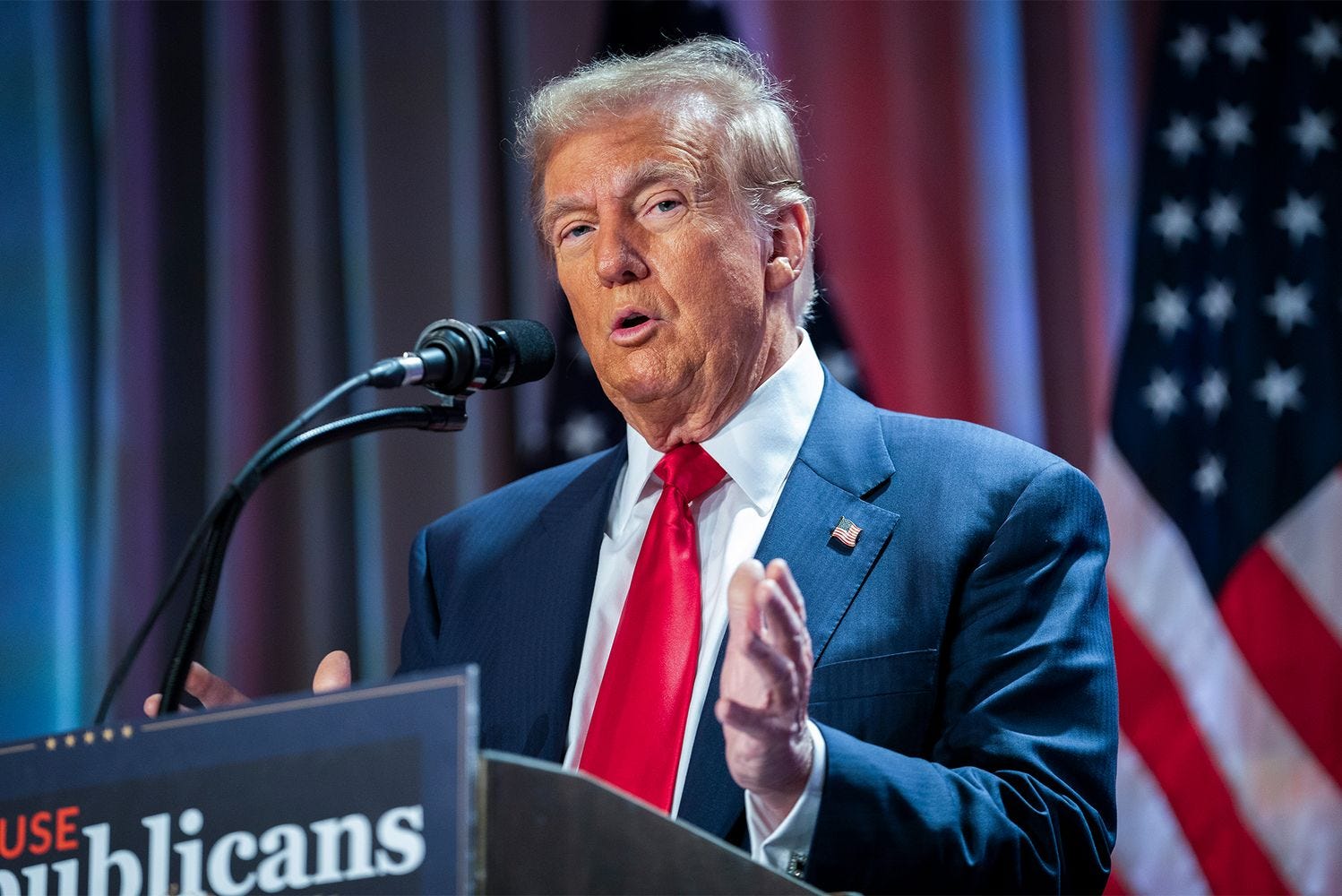
Week 14 of Trump’s second term has brought new fallout from the ongoing “Signalgate” scandal, alongside contentious developments in immigration, education, and press freedom. The latest controversy stems from Defense Secretary Pete Hegseth, who reportedly shared classified details about a military strike in Yemen in a second unsecured Signal group chat—including his wife and brother as participants. The Introspective previously reported on the March airstrikes against the Houthi-group in Yemen, killing 50 people.
Meanwhile, amid ongoing anti-immigrant sentiment, a federal judge ordered Tufts University student Rumeysa Öztürk transferred from an Immigration and Customs Enforcement (ICE) facility in Louisiana to Vermont by May 1. Öztürk was arrested by Immigration and Customs Enforcement over her activism supporting Palestine, raising fresh concerns about abuse in ICE detention centers. The Trump administration is appealing the transfer. In a separate ruling, another judge ordered the return of another immigrant deported to El Salvador, following the earlier removal of Maryland resident Kilmar Abrego Gracia.
In education, the Department of Education resumed “involuntary” collections on defaulted federal student loans, prompting backlash amid rising economic uncertainty. Harvard University also filed suit against the federal government after $2.2 billion in grants were frozen—following the school’s refusal to comply with a Trump administration directive to restrict student activism and scale back diversity, equity, and inclusion (DEI) policies. Trump later signed an executive order overhauling the accreditation process for higher education institutions.
Concerns over press freedom also grew as longtime 60 Minutes executive producer Bill Owens resigned, citing a “loss of journalistic independence.” His departure comes as Trump sues CBS over a 2024 interview with former Vice President Kamala Harris, alleging the segment was edited to bolster her chances in the 2024 election.
In public health, the Food and Drug Administration (FDA) suspended its dairy product quality control program, raising alarm amid the spread of bird flu. Health Secretary Robert F. Kennedy Jr. also drew criticism after announcing the creation of a national autism registry, which would use private health data. On the religious front, the Department of Veterans Affairs (VA) launched a new task force directing staff to report “anti-Christian bias.”
As the trade war escalates, 12 additional states joined a lawsuit against the administration’s sweeping tariffs, calling them unconstitutional and economically damaging. This follows The Introspective’s earlier coverage of California’s legal challenge. Meanwhile, Elon Musk announced he would officially step down from the Department of Government Efficiency (DOGE) to refocus on Tesla.
Signalgate: Deepening Fallout
New developments in the “Signalgate” scandal emerged after it was revealed that Defense Secretary Pete Hegseth created another group chat on Signal—a commercial messaging app known for its encrypted features—that shared details of the March military airstrike against Yemen’s Houthi group. The group chat allegedly included Hegseth’s wife, who is not a government official, and his brother Phil, who works at the Pentagon.
Hegseth denied the allegations in an interview with Fox News, claiming that the information he sent over the group chat was not classified.
“I look at war plans every single day. What was shared over Signal then and now, however you characterize it, was informal, unclassified coordination for media coordination [and] other things. That’s what I’ve said from the beginning,” said Hegseth.
He later went on to accuse former Pentagon staffers Dan Caldwell, former deputy chief of staff, and Colin Carroll, former chief of staff for the deputy secretary of defense, of leaking the group chat to the media to “sabotage” the Trump administration’s agenda.
“Those folks who are leaking, who have been pushed out of the building, are now attempting to leak and sabotage the president’s agenda and what we’re doing, and that’s unfortunate,” said Hegseth.
“So, once a leaker, always a leaker—often a leaker—and so we look for leakers, because we take it very seriously, and we will do the investigation.”
President Trump defended Hegseth, saying that he had “great confidence” in the defense secretary.
“Here we go again. Just a waste of time. He is doing a great job,” said Trump.
Pentagon spokesman Sean Parnell dismissed the allegations as “another old story” in an X post, criticizing the media while denying any classified information had been shared in the Signal chat.
“There was no classified information in any Signal chat. No matter how many ways they try to write the story, what is true is that the Office of the Secretary of Defense is continuing to become stronger and more efficient in executing President Trump’s agenda,” wrote Parnell.
“We’ve already achieved so much for the American warfighter, and will never back down.”
Many have called for Hegseth’s removal as defense secretary, including Rep. Don Bacon, a former Air Force general.
“If it’s true that he had another chat with his family about the missions against the Houthis, it’s totally unacceptable,” said Bacon to Politico.
In that same report, Bacon expressed that he was always skeptical of Hegseth.
“I had concerns from the get-go because Pete Hegseth didn’t have a lot of experience,” he said.
“I like him on Fox. But does he have the experience to lead one of the largest organizations in the world? That’s a concern.”
John Ullyot, a former Pentagon official who worked in the first Trump administration, wrote that the chaos was a “distraction” for President Trump, expressing doubts about Hegseth.
“The dysfunction is now a major distraction for the president—who deserves better from his senior leadership,” said Ullyot.
“Trump has a strong record of holding his top officials to account. Given that, it’s hard to see Defense Secretary Pete Hegseth remaining in his role for much longer.”
Senate Minority Leader Chuck Schumer wrote on X, calling Trump “weak” for refusing to fire Hegseth.
“Pete Hegseth must be fired,” wrote Schumer.
The new developments come after The Atlantic editor-in-chief Jeffrey Goldberg was accidentally added to a Signal group chat in March that included Vice President J.D. Vance, Defense Secretary Pete Hegseth, Secretary of State Marco Rubio, Director of National Intelligence Tulsi Gabbard, and National Security Adviser Mike Waltz—raising concerns about national security and possible violations of the Espionage Act, a 1917 law that criminalizes the unauthorized dissemination and storage of national defense information.
Immigration: Judicial Orders
As anti-immigrant sentiment continues to take hold, a federal judge ordered the return of Tufts University international student Rümeysa Öztürk to Vermont to be detained. This comes following her arrest by ICE in March after her activism regarding Palestine. She was held in Louisiana, where a previous Introspective report highlighted allegations of abuse within ICE facilities in the state.
“The Court further finds that Ms. Öztürk has raised significant constitutional concerns with her arrest and detention which merit full and fair consideration in this forum,” wrote District Judge William Sessions III.
Sessions’ order marked the first time a judge directed the federal government to return a detained student back from Louisiana, where many other detainees—such as Mahmoud Khalil, a legal permanent resident—have been held. He later pointed out that the government has not proved its claims that Öztürk was involved in antisemitism or terrorist activity.
“In support of her First Amendment claim, she has submitted evidence to show that the actions against her were retaliatory, as the only identifiable conduct supporting her detention is her coauthoring of a Tufts University op-ed,” wrote Sessions.
“The government has submitted no evidence to counter her First Amendment claim.”
However, the federal government filed an appeal of Sessions’ order on Tuesday, arguing that Sessions pause Öztürk’s transfer to Vermont while it appeals.
In a court filing obtained by NBC News, Öztürk’s attorneys rejected the request to pause the judge’s order.
“Only one party—Ms. Öztürk—would suffer any harm from a stay, and that harm is irreparable,” wrote her attorneys.
“By contrast, the government suffers no harm at all by holding Ms. Öztürk in detention in Vermont instead of Louisiana and being compelled to justify her continued detention.”

Meanwhile, following the wrongful deportation of Maryland resident Kilmar Abrego Gracia, a federal judge ordered the Trump administration to bring a second immigrant back to the United States after their wrongful deportation to El Salvador.
“Thus, like Judge Xinis in the Abrego Gracia matter, this Court will order Defendants to facilitate Cristian’s return to the United States so that he can receive the process he was entitled to under the parties’ binding Settlement Agreement,” wrote Maryland District Judge Stephanie A. Gallagher in a court filing obtained by ABC News.
The immigrant, who goes under the pseudonym “Cristian,” was deported to El Salvador on March 15, following a previous report from The Introspective detailing Trump’s attempt to invoke the Alien Enemies Act—also known as the Alien and Sedition Acts—a 1798 law that allows the president to arrest and deport noncitizens during periods of war.
Education Developments
The Department of Education announced Monday that it would be resuming “involuntary” collections of federal student loans. This comes after the loans were paused by the first Trump administration during the COVID-19 pandemic.
“American taxpayers will no longer be forced to serve as collateral for irresponsible student loan policies,” said Secretary of Education Linda McMahon in a press release, blaming the former Biden administration.
“The Biden administration misled borrowers: the executive branch does not have the constitutional authority to wipe debt away, nor do the loan balances simply disappear. Going forward, the Department of Education, in conjunction with the Department of Treasury, will shepherd the student loan program responsibly and according to the law, which means helping borrowers return to repayment—both for the sake of their own financial health and our nation’s economic outlook.”
More than 5 million borrowers are in default, with that number estimated to reach 10 million in the coming months. Payments resume May 5.
In an interview with NPR, Aissa Canchola Bañez, policy director for the nonprofit Student Borrower Protection Center, said that borrowers “are already finding themselves having to navigate such incredible economic uncertainty over the last few months.”
“This could not have come at a worse time for millions of Americans,” said Canchola Bañez.
At the same time, Harvard University filed a lawsuit against the federal government over $2.2 billion in grants being frozen. This comes after the university refused to restrict student activism amid allegations of antisemitism and dismantle policies that promote diversity, equity, and inclusion (DEI).
“The consequences of the government’s overreach will be severe and long-lasting,” wrote Harvard University President Alan Garber in a statement.
The university argued in the lawsuit that the funding freeze did not correlate with the administration’s antisemitism accusations.
“The government has not—and cannot—identify any rational connection between antisemitism concerns and the medical, scientific, technological, and other research it has frozen that aims to save American lives, foster American success, preserve American security, and maintain America’s position as a global leader in innovation,” read the lawsuit.
“Nor has the government acknowledged the significant consequences that the indefinite freeze of billions of dollars in federal research funding will have on Harvard’s research programs, the beneficiaries of that research, and the national interest in furthering American innovation and progress.”

In an interview with NBC News, Garber said that the lawsuit was important to protect Harvard’s independence and rights, while claiming that the school had a “real problem with antisemitism” following the events of Oct. 7, 2023.
“We will not compromise on certain issues,” said Garber.
“We’ve made that very clear.”
In a statement, the White House accused the university of being “spineless.”
“The real threat to higher education comes when places like Harvard let their students’ civil rights get trampled in a spineless attempt to coddle pro-Hamas activists,” said White House spokesperson Harrison Fields.
“President Trump is standing up for every student denied an education or safe campus because left-wing universities fail to protect their civil rights. Colleges are hooked on federal cash, and Mr. Garber’s public outburst only fuels the push to shut off the taxpayer money propping up their institution.”
In a Truth Social post, Trump suggested that Harvard should lose its tax-exempt status.
“Perhaps Harvard should lose its Tax Exempt Status and be Taxed as a Political Entity if it keeps pushing political, ideological, and terrorist inspired/supporting ‘Sickness?’” wrote Trump.
President Trump later signed a series of executive orders Wednesday aimed at both universities and K-12 schools.
“Today’s Executive Orders pave the way for critical innovations—inviting more competition in the higher education accreditation system, ensuring transparency in college finances, supporting new technologies in the classroom, and more,” wrote Secretary of Education Linda McMahon in an X post.
The first order is aimed at the college accreditation process—which universities are required to undergo in order to receive federal financial aid—directing McMahon to revamp the system by recognizing new accreditors to spur more competition.
The second order is aimed at K-12 schools and calls for reducing racial disparities in disciplinary punishments, making “racially preferential discipline practices” prohibited.
“Trump’s order empowers local school boards by encouraging real discipline—like suspensions for serious infractions—while letting communities define ‘severe’ and choose fitting methods,” wrote Tiffany Justice, co-founder of conservative group Moms for Liberty.
“By ending federal overreach, it frees educators to focus on teaching, not chaos, ensuring kids get a quality education.”
The third executive order threatens to revoke federal funding for universities if the schools do not undergo a “full and timely disclosure of foreign funding.”
“We believe that certain universities, including, for example, Harvard, have routinely violated this law, and this law has not been effectively enforced,” said White House Staff Secretary Will Scharf.
While the order did not directly list any new rules or thresholds, it claims that universities must “provide the American people with greater access to general information about foreign funding.”
Media and Press Freedom
Following concerns of press freedom, Bill Owens, executive producer of CBS News’ 60 Minutes, announced his resignation Tuesday. This comes following a lawsuit filed by Trump accusing CBS of editing an October interview with then-Vice President Kamala Harris to advance her chances of winning the 2024 election.
“The show is too important to the country,” wrote Owens.
“It has to continue, just not with me as the executive producer.”
He later added that it has “become clear that I would not be allowed to run the show as I have always run it, to make independent decisions based on what was right for 60 Minutes, right for the audience.”
CBS has since denied the allegations, clarifying how journalists routinely edit interviews for time and clarity.
“In making these edits, 60 Minutes is always guided by the truth and what we believe will be most informative to the viewing public, all while working within the constraints of broadcast television,” said the network, while simultaneously publishing the full transcript of the interview.
Health, Public Safety, and Religion
With the president’s initiative to downsize the federal government underway, the Food and Drug Administration (FDA) suspended a program meant for testing milk and other dairy products, raising implications for public health as viruses such as bird flu continue to spread.
“The FDA is actively evaluating alternative approaches for the upcoming fiscal year and will keep all participating laboratories informed as new information becomes available,” said the FDA in an email obtained by Reuters.
This comes after a previous Introspective report detailed more than 20,000 people being laid off as cuts to various federal programs continue.
At the same time, Health Secretary Robert F. Kennedy Jr. announced the launch of a registry to track Americans with autism, creating controversy as the registry plans to use people’s private medical records and stoke fears of eugenics.
“The idea of the platform is that the existing data resources are often fragmented and difficult to obtain. The NIH itself will often pay multiple times for the same data resource. Even data resources that are within the federal government are difficult to obtain,” said Dr. Jay Bhattacharya, director of the National Institutes of Health (NIH).
“I recognize, of course, that autism—there’s a range of manifestations ranging from highly functioning children to children that are quite severely disabled. And of course the research will account very carefully for that.”
RFK Jr. has faced mounting controversy for his opinions on autism. In a previous report by The Introspective, he falsely claimed that vaccines cause autism—a theory that has been widely debunked.
“I do believe that autism comes from vaccines,” said Kennedy.
In that same report, he also faced backlash for comments that promoted medical racism, including the false and dangerous belief that Black people have higher pain tolerances or inherently stronger immune systems.
“We should not be giving Black people the same vaccine schedule that’s given to whites because their immune system is better than ours,” he said
Various people who have autism have reacted to RFK Jr.’s stance on the condition, with people in neighboring Canada expressing fear amid the political climate.
“We for so long have been asking to be adequately supported and accepted, and to instead be told that our autism is a tragedy to our families and society as a whole couldn’t be further from the truth,” said Ontario resident Katherine L’Etang to CBC.
“This isn’t the rhetoric of an administration that is looking to support autistic people.”
In an interview with MedPage, Alycia Halladay, Ph.D., chief science officer at the Autism Science Foundation, called Kennedy’s statements “oversimplified.”
“Autism is actually a very diverse condition. So there are individuals for which they are minimally verbal. They have severe cognitive disabilities. They may never live independently. They may never have a job that pays taxes. That doesn’t impact their meaning in life. They are still important and they’re still valued,” said Halladay.
“There’s also individuals with autism that can live independently, that may go to college, that have competitive jobs, that can pay their own bills. That doesn’t mean that their problems are less important. It means that they’re different. And we shouldn’t be categorizing this broad spectrum of autism with such a narrow comment, right?”
Meanwhile, the Department of Veterans Affairs (VA) established a task force to investigate allegations of anti-Christian bias. The task force, which will last two years, is meant to “identify any unlawful anti-Christian” actions under the Biden administration, change any objectionable policies, and recommend steps to rectify any past failures.
Many Christian groups criticized the decision, highlighting how the task force integrates the church and state—a violation of the First Amendment.
“All people, including Christians, should be able to live as themselves and believe as they choose so long as they don’t harm others,” said Rachel Laser, president of Americans United for Separation of Church and State, in an interview with the Associated Press.
“But rather than protecting religious beliefs, this task force will misuse religious freedom to justify bigotry, discrimination, and the subversion of our civil rights laws.”
The changes come following an Introspective report that details the VA facing downsizing efforts that could lead to mass layoffs.
Trade, Economy, and Elon Musk
As Trump’s trade war continues, 12 states have sued the Trump administration regarding his tariffs. This follows a previous report from The Introspective that detailed California filing a lawsuit due to the trade war, arguing that the state could lose billions of dollars in revenue.
“By claiming the authority to impose immense and ever-changing tariffs on whatever goods entering the United States he chooses, for whatever reason he finds convenient to declare an emergency, the president has upended the constitutional order and brought chaos to the American economy,” read the lawsuit.
The lawsuit later states that only Congress can impose tariffs, and that the president can only invoke the International Emergency Economic Powers Act—which allows the president to control commerce after a national emergency.
“By claiming the authority to impose immense and ever-changing tariffs on whatever goods entering the United States he chooses, for whatever reason he finds convenient to declare an emergency, the president has upended the constitutional order and brought chaos to the American economy.”
Meanwhile, Elon Musk, head of the Department of Government Efficiency (DOGE), announced that he would be stepping down from the agency in May to focus on Tesla.
“Starting next month, I’ll be allocating far more of my time to Tesla,” said Musk.
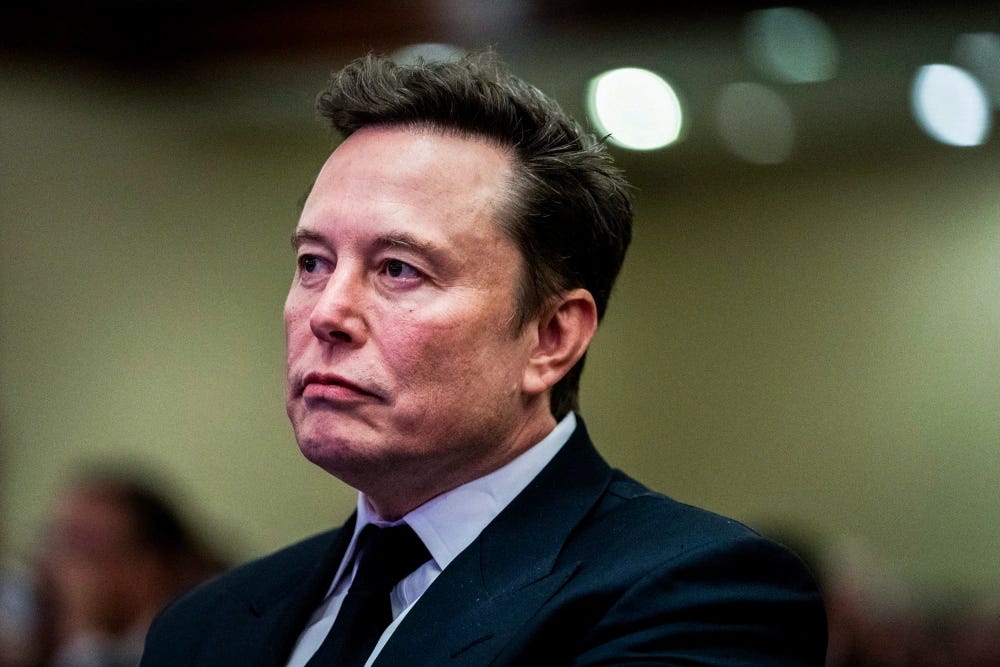
This comes after Tesla’s shares fell 41% this year, with first-quarter earnings declining over 71% in profit.


Leave a Reply