
China’s DeepSeek AI has quickly gained traction, disrupting the AI landscape and triggering market shifts. Here’s what its launch means for the industry, global AI competition, and future innovation.
Dante Belcher
Feb 2, 2025
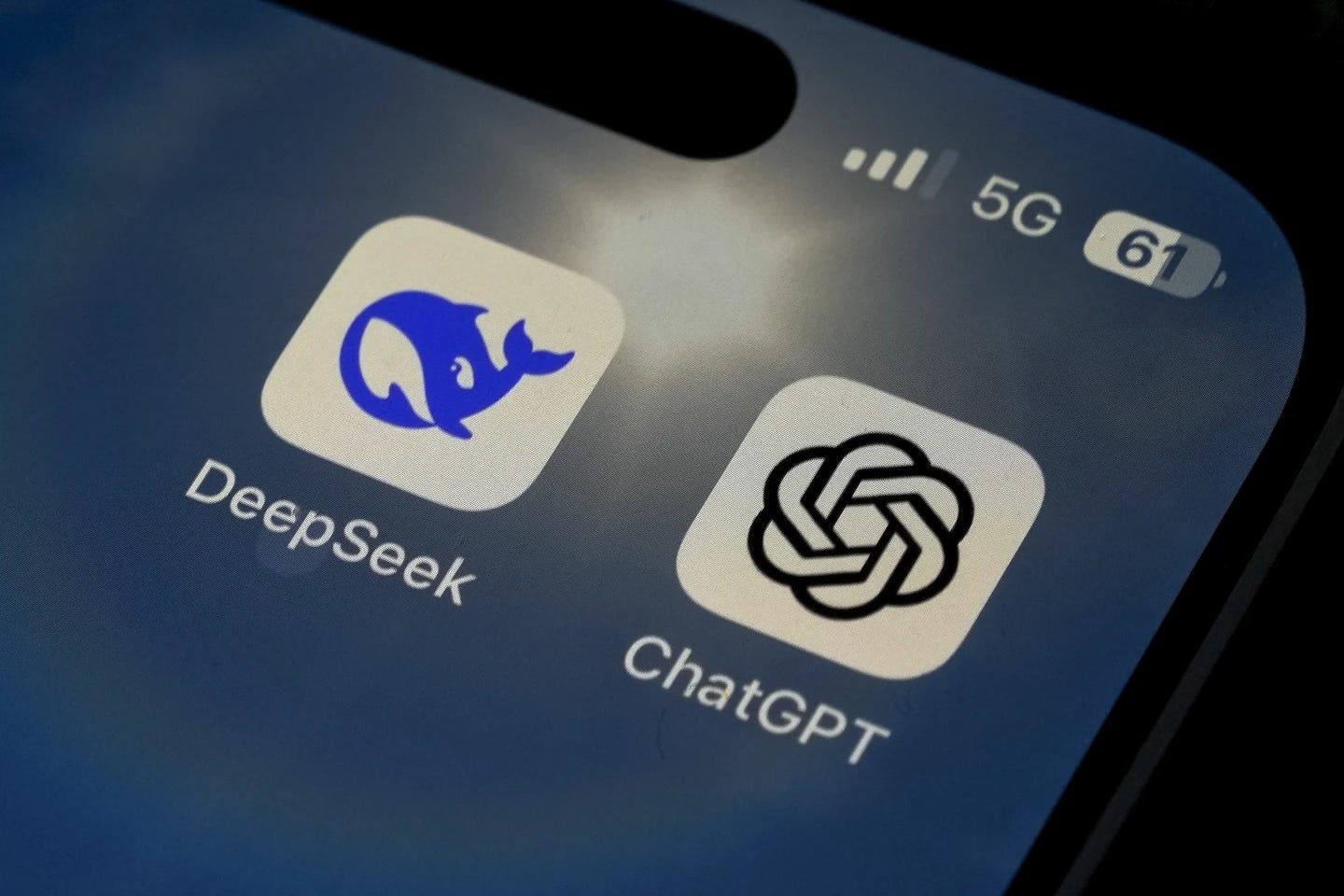
The tech world experienced a major shake-up with the launch of DeepSeek, a Chinese artificial intelligence (AI) startup. Similar to OpenAI’s ChatGPT and Gemini, the app functions as an AI chatbot but offers features at a lower cost than ChatGPT.
Since its release on Jan. 10, DeepSeek has quickly gained traction, surpassing ChatGPT as the most downloaded free app on the Apple App Store by last Monday.
What Makes DeepSeek Different?
DeepSeek’s R1 AI model rivals ChatGPT, developed despite the U.S. restricting computer chip exports to China three times in the past three years. It was created at a fraction of the cost compared to models from OpenAI, Google, and Meta.
“Unlike many Chinese AI firms that rely heavily on access to advanced hardware, DeepSeek has focused on maximizing software-driven resource optimization. The company has embraced open-source methods, pooling collective expertise and fostering collaborative innovation. This approach not only mitigates resource constraints but also accelerates the development of cutting-edge technologies, setting DeepSeek apart from more insular competitors,” said Marina Zhang, a professor at the University of Technology Sydney, in an interview with Wired.
DeepSeek’s open-source model is more affordable than OpenAI’s. The company claims it cost over $5.5 million to train its model, while it took tens of millions of dollars to train OpenAI’s equivalent.
According to reports from the tech website Mashable, consumer access to DeepSeek’s R1 model costs $0.14 for one million tokens, or 750,000 words. OpenAI’s model costs $7.50 for 750,000 words, creating a significant pricing gap. For its app, ChatGPT, OpenAI’s paid tier costs $20 a month, while DeepSeek remains free for most of its use.
Many users have downloaded the novel AI chatbot, with some noting that DeepSeek excels at technical tasks such as logical reasoning, coding, and math problems. In contrast, ChatGPT is better for conversational and creative use and provides updated information on news and current events.
The Market Disruption: AI Stocks and Tech Industry Response
DeepSeek’s unexpected launch sent shockwaves through the tech industry. Computer chip manufacturer Nvidia lost nearly $600 billion in market value last week—the most a stock has ever lost in a single day—as the Nasdaq index dropped 3.1% and the Standard & Poor’s 500 fell 1.5%.
“As AI gets more efficient and accessible, we will see its use skyrocket, turning it into a commodity we just can’t get enough of,” Microsoft CEO Satya Nadella posted on X, citing DeepSeek’s launch as an example of the Jevons paradox.
Nvidia began last Monday as the most valuable publicly traded stock, worth more than $3.4 trillion, but ended the day in third place behind Apple and Microsoft. Nvidia’s competitors, including Taiwan Semiconductor Manufacturing Company (TSMC) and Google’s parent company, Alphabet, also saw declines.
“The bottom line is the U.S. outperformance has been driven by tech and the lead that U.S. companies have in AI. The DeepSeek model rollout is leading investors to question that lead, how much is being spent, and whether that spending will lead to profits—or overspending,” Keith Lerner, an analyst at Truist, told CNN.
Lerner also noted that because tech makes up 45% of the S&P 500, the broader stock market was affected.
In China, many tech enthusiasts celebrated DeepSeek’s impact on the U.S. market, with some calling it a turning point in the U.S.-China tech rivalry.
“A nation like China, which is equipped with substantial technological resources, cannot truly be suppressed. U.S. sanctions in one area will only spur more comprehensive and resilient progress in China, potentially leading to breakthroughs that outpace the U.S.,” Hu Xijin, a retired editor-in-chief of the Chinese newspaper Global Times, wrote in The New York Times.
Others saw DeepSeek’s success as validation of China’s strength in engineering.
“In my book AI Superpowers, I predicted that the U.S. would lead breakthroughs, but China would be better and faster in engineering. Many people simplified that to ‘China will beat the U.S.’ And many claimed I was wrong with GenAI. With the recent DeepSeek releases, I feel vindicated,” Chinese investor and entrepreneur Kai-Fu Lee wrote in an X post.
Despite DeepSeek’s unprecedented success, Yann LeCun, Meta’s chief AI scientist, dismissed the market panic over the chatbot as “unjustified.” He pointed to inference—the process that allows AI models to apply their knowledge to new data—as an example.
“Once you put video understanding, reasoning, large-scale memory, and other capabilities in AI systems, inference costs are going to increase, so the market reactions to DeepSeek are woefully unjustified,” LeCun told Business Insider.
DeepSeek’s rise has not only disrupted the market but also reignited debates over AI regulation and global competition. As China strengthens its foothold in the AI race, questions about government involvement, data privacy, and the broader implications of U.S.-China tech tensions have come to the forefront.
AI Regulation and Geopolitical Tensions
While DeepSeek’s launch disrupted the tech industry, the U.S. Department of Commerce has announced an investigation into whether the AI company has been using U.S.-based technology restricted from export to China. According to Reuters, organized smuggling of AI chips into China has been traced to countries including Malaysia and the United Arab Emirates. Investigators are also examining whether DeepSeek accessed Nvidia-made chips through third parties in Singapore.
“Our public filings report ‘bill to,’ not ‘ship to,’ locations of our customers. We insist that our partners comply with all applicable laws, and if we receive any information to the contrary, we act accordingly,” an Nvidia spokesperson said in a statement to Fox Business, noting that many of the company’s customers operate in Singapore and may use those businesses for products intended for U.S. use.
DeepSeek has reportedly used Nvidia’s H20 chip—which is still permitted for shipment to China—though the Biden administration had restricted its export in December. The Trump administration is expected to continue discussions on the matter.
The controversy surrounding DeepSeek’s rise has also sparked regulatory actions abroad. Italy banned the app over concerns about its handling of personal data, making it unavailable on app stores across the country since Wednesday. The Italian Data Protection Authority (GPDP) has requested that DeepSeek provide details on how it processes Italians’ personal information.
Ireland has also raised alarms about potential data privacy risks, warning that personal data may be stored on Chinese servers.
“If our data is stored in Ireland or other parts of the European Union, there are strong safeguards in place as to how that data will be used. If data is stored in China, those safeguards do not exist,” Irish politician Malcolm Byrne said in an interview with RTÉ.
DeepSeek’s rapid emergence has sent shockwaves through the global tech industry, challenging the dominance of U.S. AI firms, disrupting financial markets, and intensifying scrutiny over AI regulation and geopolitical tensions. While the company’s open-source approach and affordability have drawn praise, concerns over data privacy and potential violations of U.S. trade restrictions have prompted investigations and regulatory crackdowns.


Leave a Reply