
The Idaho murders verdict highlights the dangers of stalking in a digital age where privacy is harder to protect.

Content Warning: This article contains discussions of stalking, digital surveillance, violent crime, and murder. Reader discretion is advised.
Three years after four University of Idaho students were stabbed to death, Bryan Kohberger pleaded guilty to the murders of Kaylee Goncalves, Madison Mogen, Xana Kernodle and Ethan Chapin, facing life in prison without the possibility of parole.
“Are you pleading guilty because you are guilty?” asked Judge Steven Hippler.
“Yes,” replied Kohberger.
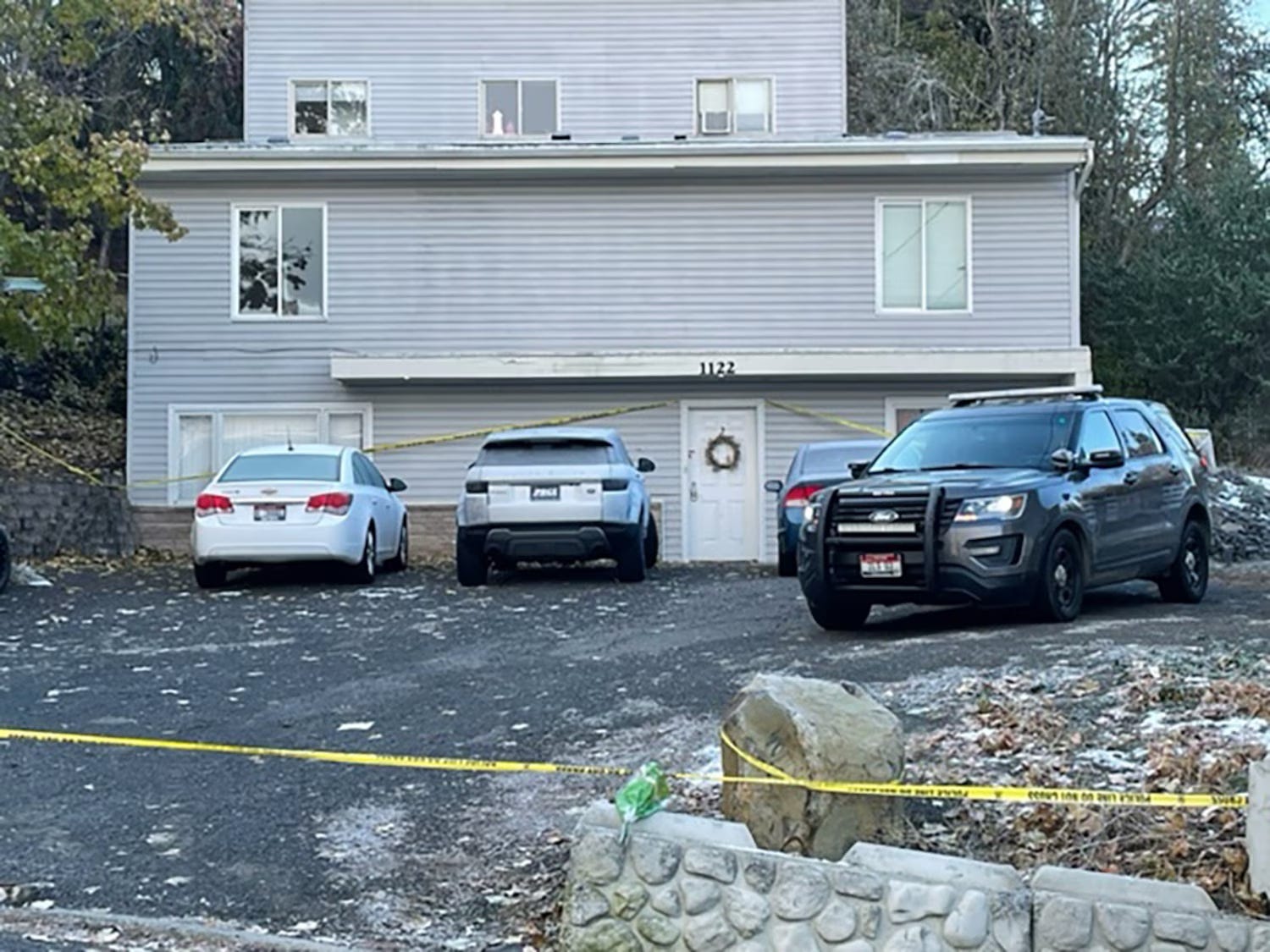
Kohberger entered the students’ house on Nov. 13, 2022, shortly after 4 a.m. and stabbed Mogen and Goncalves on the third floor of the Moscow, Idaho, residence. He then went down to the second floor and killed Kernodle and Chapin.
Police were called by 11:58 a.m., where responding officers found the four victims.
“It looked like what you would expect a house full of college kids to look like,” Idaho State Police Lt. Darren Gilbertson told ABC News, noting that the common rooms had no indication of a crime before investigators discovered the students’ bloody remains and an abandoned knife sheath.
“I don’t think any one of us were prepared that it was four young, completely innocent kids,” he continued.
“How do you prepare for that?”

Investigators later identified Kohberger—then a graduate student at Washington State University —from DNA left on the knife sheath. They also found that his phone had been detected near the victims’ house 12 times before the murders, dating back to August, showing signs of stalking.
“Once we had his name, we figured out everything about him: his life, his behaviors, his routines, from both his phone usage to his financials … all that tells a story,” Gilbertson said.
Digital Footprints and Crime Scene
While a definitive motive remains unknown, Heather Barnhart, the digital forensics analyst who examined Kohberger’s phone and hard drive, said cell phone towers tracked Kohberger calling his mother, Maryann Kohberger, in the hours after the murders. After she didn’t answer, he then called his father at 6:14 a.m.
“And he would go back and forth texting: ‘Father, why did mother not respond? Why is she not answering the phone?’” Barnhart told People.
She eventually did answer later, and the two spoke for 36 minutes before he called her again while driving back to the house in Moscow.
“Then at 8:03 a.m., another outgoing call to ‘Mother’ that lasted 54 minutes,” Barnhart said.
Investigators also found that Kohberger turned his phone completely off between 2:54 a.m. and 4:48 a.m. while he committed the murders — a vital moment in the investigation.
“When he powered it off, it was from a human pressing a button, and the battery was at 100 percent charged,” Barnhart said, noting that it contradicted defense claims of his phone battery dying during the murders.
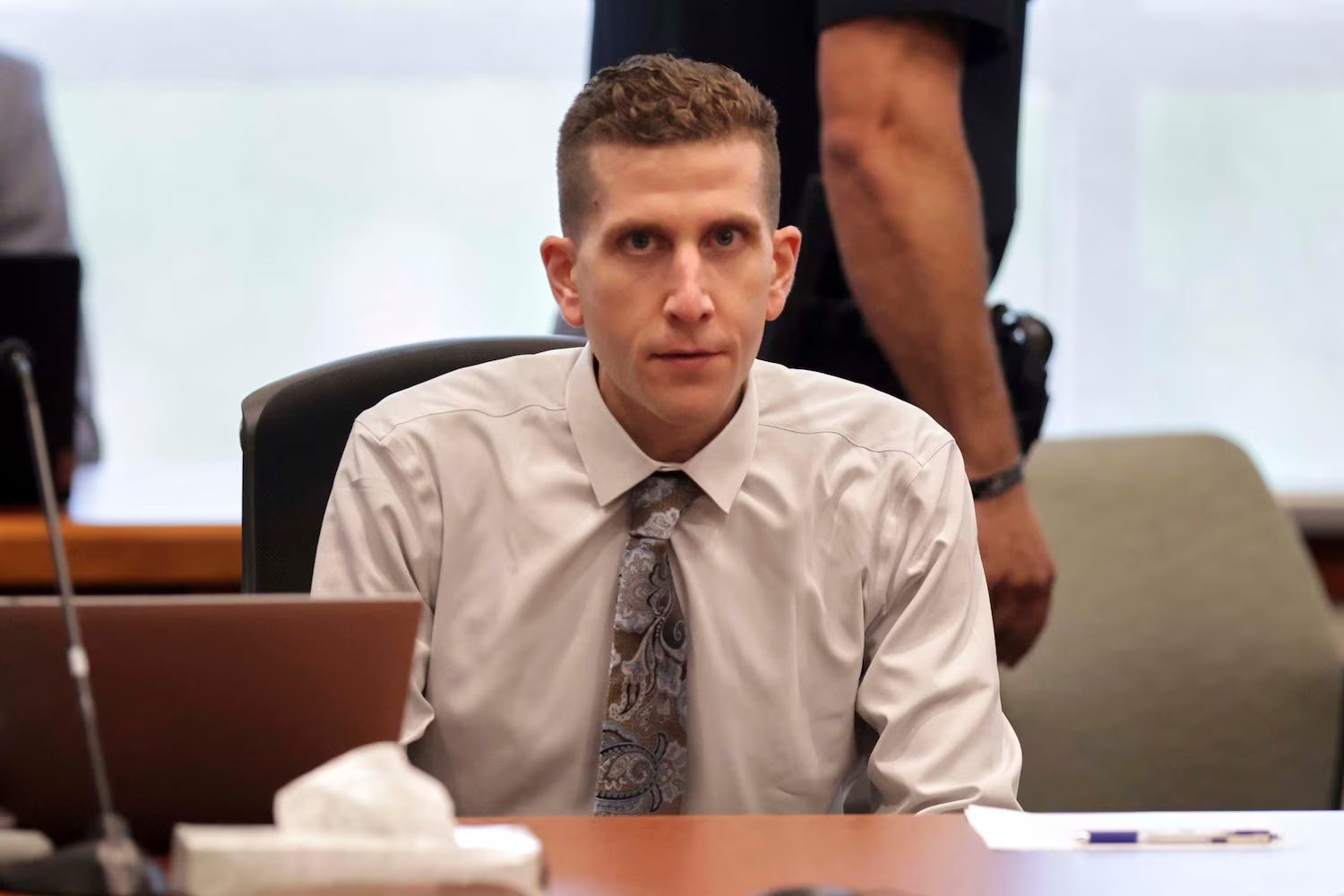
According to documents released by the Moscow Police Department, Kohberger had been stalking the students before the murders. Kaylee Goncalves told her roommates that a man she didn’t know was staring at her when she would walk her dog outside. Another instance detailed the residents coming home to find the door open, loose on its hinges.
A friend of Goncalves told police that on Sept. 11, 2022—two months before the murders—she made references to having a stalker and “thought Kaylee said something about receiving something in the mail. Some of the other friends at the lunch thought Kaylee also mentioned getting a strange message through Facebook Messenger.”
During the murders, surviving roommate Dylan Mortensen recalled opening a door and hearing a man say, “It’s OK, Kaylee, I’m here for you,” while crying.
“She then heard a male voice, which she stated she had never heard before, say, ‘It’s OK, I’m going to help you.’ [Mortensen] believed the unidentified male was in the bathroom and with the person who was crying. She believes it was Kaylee who was the one crying,” read a court filing obtained by the New York Post, which summarized Mortensen’s first interview after the murders.

Goncalves was found with more than 20 stab wounds and signs of blunt-force trauma.
Red Flags
Reports from the Idaho State Police found that Kohberger had a reputation for being “sexist,” “creepy” and “intense” during his time at Washington State University, with one faculty member telling co-workers that he would most likely harass future students. She later urged her co-workers to remove him from the graduate program.
“He is smart enough that in four years we will have to give him a Ph.D.,” the faculty member said in the police report.
“Mark my word, I work with predators. If we give him a Ph.D., that’s the guy that in that many years, when he is a professor, we will hear is harassing, stalking and sexually abusing … his students at whatever university.”
 Idaho State Police Report (GRAPHIC)
The faculty member told investigators that Kohberger would go into offices where women graduate students worked and physically block the door, to the point where one of the students said, “I really need to get out of here.” She also believed he was stalking people on campus, telling police in the report that someone broke into a student’s apartment months before the murders, stealing perfume and underwear.
Another student who worked with Kohberger told police that he would frequently belittle women and would talk about sexual burglary—his field of study—causing people in his department to assume he was a future rapist and an “incel,” a term referring to men who express hostility toward women, blaming them for their lack of romantic success.
Three weeks after he committed the murders, Kohberger later told that same student that whoever did it “must have been pretty good,” and that the murders were a “one and done type thing.”
The student said that “she had never met anyone who acted in such a condescending manner and wondered why people in power in the department did not address his behavior,” wrote Idaho State Police Detective Sgt. Michael Van Leuven in the report.
“The way he spoke to females in the department was unsettling to them.”
One professor told police that she began receiving complaints regarding Kohberger from students and staff in the criminal justice program months before the murders, telling investigators that she spent “a lot of time” talking about Kohberger during disciplinary meetings.
“The meetings focused around Kohberger’s interactions with fellow post-graduate students, in and out of the classroom, along with his behavior around some of the criminal justice professors,” the report read.
The university later held a mandatory training class for all graduate students after receiving nine separate complaints from faculty, administrators and students regarding his “rude and belittling behavior toward women.”
Parallels to You and the Digital Age
A previous report from The Introspective analyzed the Netflix series You and how the series reflects themes such as murder, assault and the dangers of social media. The main character, Joe Goldberg, is a serial killer who stalks the social media of women he’s obsessed with while killing anyone who interferes—highlighting growing concerns around digital stalking and abusive relationships in the 2020s.
“I believe there has been an increase in particular kinds of stalking due to an online culture — not just online access, but a culture that permits online bullying,” said Sarah Scanlon, a sexual violence response coordinator at Wilfrid Laurier University and a faculty member at Vermont Law and Graduate School, in the report, noting how online culture has normalized harmful behavior.
“It encourages a type of behavior that folks might not condone in person. Certain behaviors are seen as more normalized or culturally appropriate online.”
They later added that online abuse has become so prevalent in recent years that many victims have had to delete their social media for protection.
“For people who have experienced stalking, the ways in which their stalkers, abusers or perpetrators have been able to use online systems to manage, control and keep tabs on them has created massive harm. Unless you completely shut down your online persona, people can access so much personal information and use it to get to you,” they said.
“We’ve had cases even at Laurier where individuals used personal information about someone they barely knew to find out how to access them physically and cause harm.”
The report also explored parasocial relationships—one-sided emotional connections where one person is unaware of the other’s fixation—on social media. A 2019 report from the Department of Justice found that 3.4 million Americans, or 1.3% of the population, were victims of stalking. More than 80% received unwanted phone calls or text messages, with an additional 31% being followed or having their stalker appear at their home.
DOJ 2019 Report
Research from The Guardian found that stalking was a factor in 94% of homicides examined in the United Kingdom, with 63% of cases involving surveillance or covert monitoring.
“Practically every case we looked at featured examples of the obsessive, fixated behavior that typifies stalking,” said Dr. Jane Monckton Smith, a criminologist and former police officer.
“Understanding the motivation behind these behaviors, and the risk that they present, is profoundly important.”


Leave a Reply