
Season 7 became a social media sensation as it reshaped how Gen Z watches reality TV and navigates modern dating culture.
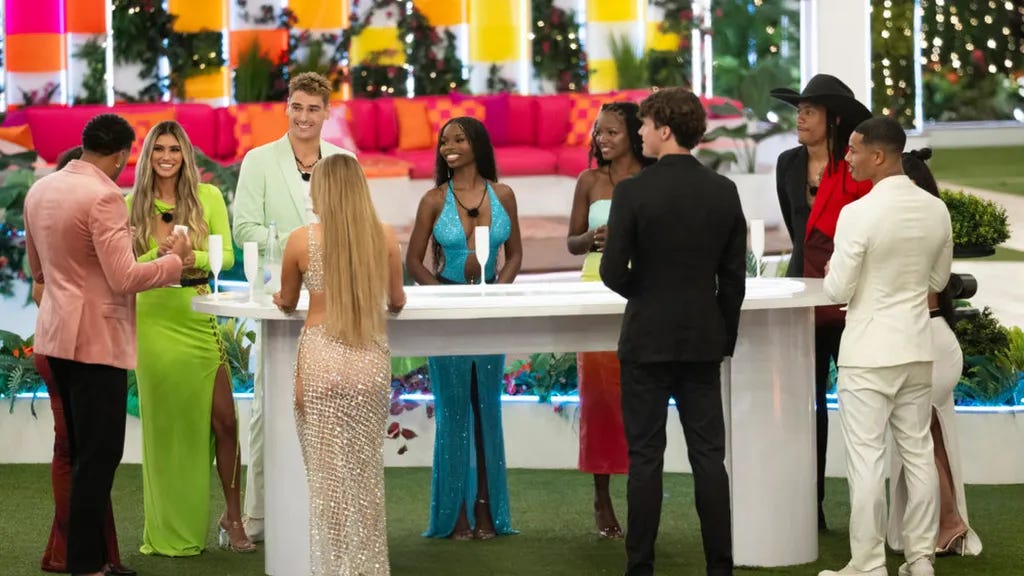
The hit series Love Island USA is breaking viewership records as it mirrors how Gen Z approaches dating in the 2020s. Similar to Big Brother, contestants are brought to a villa under constant video surveillance, with the twist that each must pair up—whether for love or friendship—as the winning couple takes home $100,000.
Season 7, which premiered in June, became Peacock’s most popular series, generating more than 54 million interactions across Instagram, YouTube, Facebook and X within its first three weeks. The show also amassed 623 million views on TikTok—a 232% increase from last season—cementing its place as a summer staple.
Gen Z: A New Approach
Featuring cast members such as 23-year-old TJ Palma, 25-year-old Cierra Ortega, 24-year-old Elan Bibas, and winners Amaya Espinal (25) and Bryan Arenales (27), Season 7 reflected the series’ transition from millennials to Gen Z. However, many viewers criticized the cast for a lack of communication and for controversies surrounding situationships—a relationship that is more than a hookup but less than a committed partnership—citing the pandemic as a contributing factor.
“Some members were in high school when the coronavirus pandemic hit,” wrote Faith Hill in a report by The Atlantic.
“At a time in their life when they might have been crushing on someone in class or going on a first date, they were probably at home staring at a screen. They’ve grown up with phones and social media; perhaps they’ve seen romances performed or publicized—including on Love Island—more than they’ve actually taken part in them.”
In a TikTok, some viewers said the show’s transition from millennial to Gen Z contestants harms the series because Gen Z contestants are not being themselves.
“Their vocabulary is very limited, and the communication actually seems very stunted,” said user @existentialgay.
“I think this is the, like, result of several things, including the timing of the COVID pandemic and the rise of, like, being internet natives and, like, social media.”
She later noted how many of the contestants were hyper-aware of their behavior throughout the season, highlighting social media’s influence on Gen Z.
“Everyone is playing nonchalant, everyone is so hyper-aware of being filmed and their image, both physically and emotionally, and nothing feels, like, authentic or messy. Right?” she added.
“And millennials are known for being, like, really cringe and overly sincere and overly emotional, which all makes for good reality TV and makes them a good fit for something like Love Island.”
Another TikTok user, @kevingchristy, shared similar sentiments, stating that people are “no longer” watching a dating show but are instead seeing the effects of social media on Gen Z.
“These kids don’t know how to interact with each other, themselves, how to fall in love,” he said.
“There’s three entities in every connection: them, the other person, and their bizarre perceived concept of how they’re being viewed by an unnamed outside entity that they’re reacting to like it’s in the room the whole time. It is wild and confusing.”
A report from dating app Hinge found that Gen Z users were more likely to “tiptoe around direct communication to avoid coming off as cringey or overeager,” with 44% of users having little to no dating experience.
“But Gen Z Hinge daters feel it most acutely. Over half (56%) of Gen Z Hinge daters say that worrying about rejection has held them back from pursuing a potential relationship—and they’re 10% more likely than millennial daters to say they’ve missed the chance to be with someone because of it,” the report read.
Research from the American Institute for Boys and Men (AIBM) found that 44% of Gen Z men had no relationship experience at all during their teenage years—nearly double the rate of Baby Boomers (23%) and Generation X (40%). Overall, only 56% of Gen Z adults have been in a relationship during their teenage years—a stark contrast from previous generations.
However, some viewers have defended the Gen Z cast, citing the societal changes that have occurred post-COVID.
“I think folks are hypercritical of the contestants this season (myself included), and something that’s been helpful is to remember the fact that a lot of these contestants grew up with the internet,” wrote a user on Reddit.
“They were all also in college or high school when the pandemic happened, and we know personal interaction hasn’t been the same—especially for people that were young during COVID.”
“Reality TV is a funhouse mirror that reflects our world back to us. Love Island is changing because society is changing,” the user added.
Beyond TV: Fandom Interaction
The show’s mobile app has become a central piece of viewer engagement, allowing fans to actively participate in the series as it airs live. According to Deadline, the app received more than 3.5 million votes following a July episode and became one of the most popular apps on the App Store.
However, some contestants on the series have faced harassment from fans, prompting Peacock to issue a public statement urging viewers not to take their passion too far.
“We appreciate the fans, the passion for the series, and the amazing group of Islanders who are sharing their summer with us,” read a post on X.
“Please just remember they’re real people — so let’s be kind and spread the love!”
Ariana Madix, the host of the series, also addressed the situation during an episode, following reports of threats sent to contestants.
“I do want to say something to some of those people who are online,” she said.
“Don’t be contacting people’s families. Don’t be doxxing people.”
Noah Sheline, ex-boyfriend of contestant Huda Mustafa and father of their daughter, also took to social media to warn fans about the hate comments directed at her.
“Her going on that show to find love, or whatever you think it was she’s doing, remember she’s still human, she has a daughter, and a life,” he wrote in a post obtained by People.
“It’s not my job to police her or the people in my comments, but I will say what you guys do will affect her mental health—and my daughter’s maybe in the future. So I’m looking out for her in that aspect. Out of respect for our daughter.”
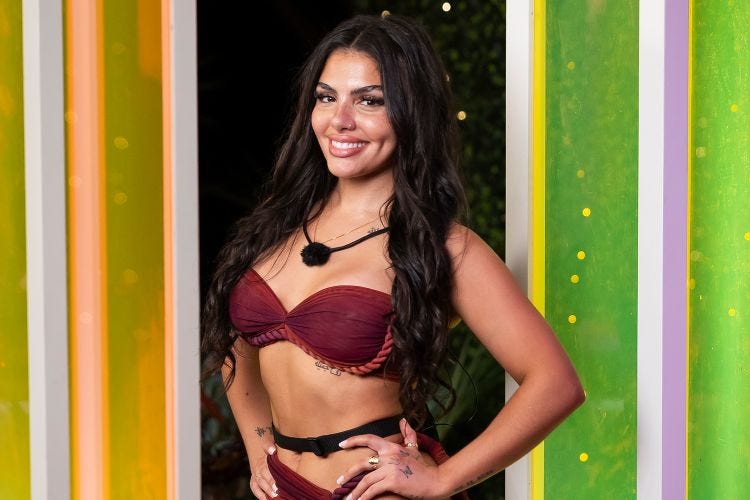
Another cast member, Chelley Bissainthe, called out viewers in an Instagram post, claiming fans were “coming on her page to tear her down.”
“That level of hostility, especially toward someone isolated from the outside world, is disturbing,” the post read, adding that the harassment is “not just unfair, it’s borderline dangerous if we want to keep it a stack. Think about what you’re doing. This behavior isn’t normal. It’s actually kind of mentally unwell.”
A previous report from The Introspective highlighted parasocial relationships—one-sided emotional connections where one person is unaware of the other’s fixation—in the context of social media. Researchers noted that platforms have blurred boundaries and intensified the illusion of closeness.
“We, as human beings, have a brain that is hardwired for survival and reproduction,” said Gayle Stever, a professor at Empire State University, in the report.
“Your brain doesn’t care if you know this person in real life or not.”
Despite the toxicity among some corners of the fanbase, the series has also sparked a resurgence of watch parties, with fans from all backgrounds forming vibrant, offline communities.
“People are screaming. People are shook to their core. They’re applauding like you just landed a plane,” said Dahlia Maria, a fan of the show, in an interview with CNN describing the energy of the gatherings.
“There’s themed outfits—last night was an all-white party—and there were these beautiful lights everywhere. It feels intentional, like everyone came to be in it together.”
She also reflected on how difficult it has become to find “third spaces” that aren’t centered around sports or consumerism.
“I think having a space where you can meet other people interested in the same things is harder now,” she said.
“We’re in a digital age, and it’s hard to meet people in safe, fun third spaces (or, places to build community that aren’t one’s home or workplace) that aren’t tied to shopping or drinking. This felt like a newer, Gen Z way to bring people together.”
In that same report, Emme Elon, another watch party attendee, emphasized how these gatherings help fill a post-COVID social void.
“I do think they’re filling a social gap for Gen Z,” she said.
“More events like this would be great.”
 The Introspective
Leave a comment