
The gripping British miniseries dives into the psychological and societal forces behind a shocking crime.
Dante Belcher
Apr 2, 2025
Content Warning: This article contains discussions of gender-based violence, radicalization, cyberbullying, and murder. Reader discretion is advised.
Since its premiere in March, the Netflix miniseries Adolescence has gained widespread attention for its depiction of misogyny, cyberbullying, social media, and the rise of incel culture—a term referring to men who express hostility toward women, often blaming them for their lack of romantic success.
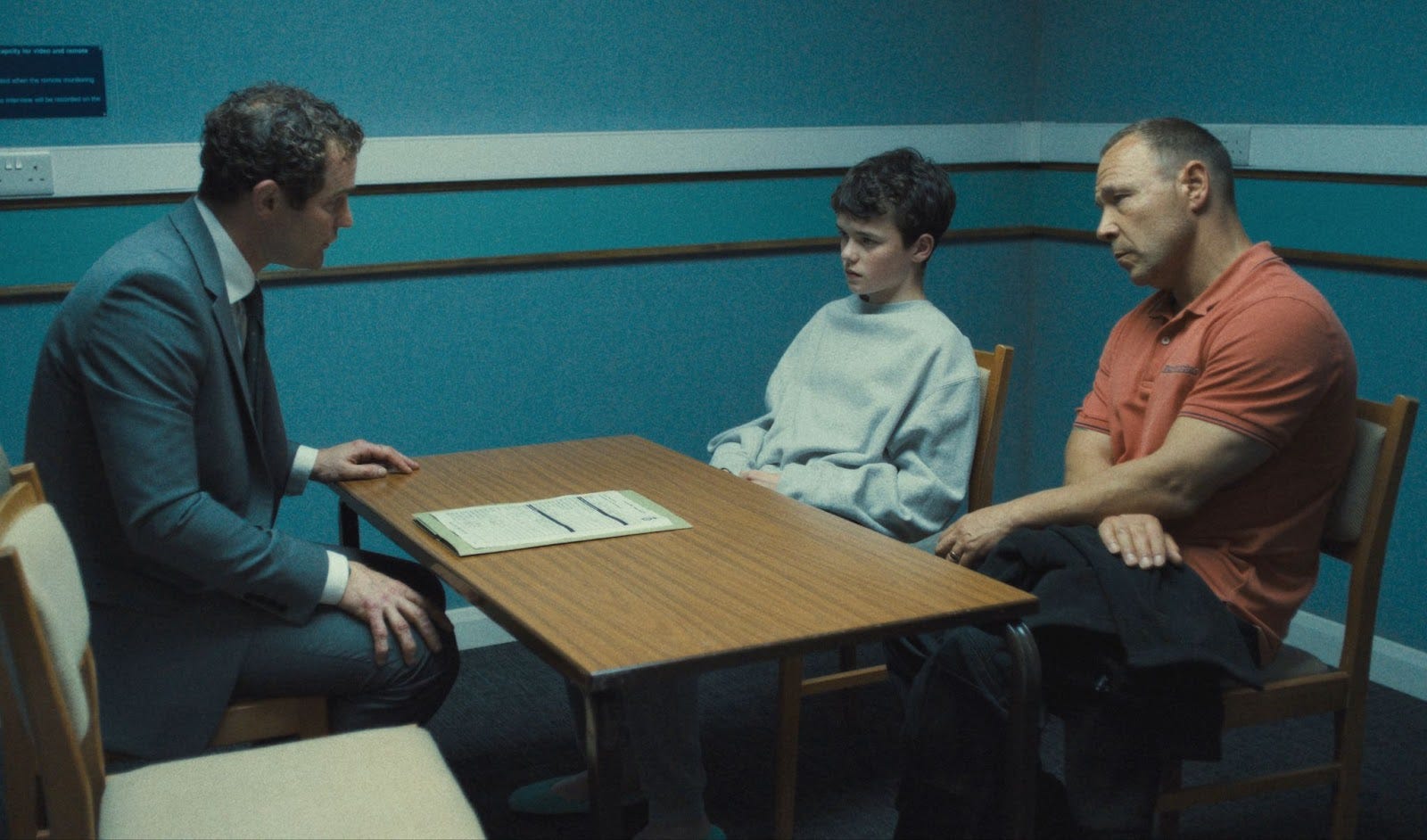
Set in the U.K., the series follows 13-year-old Jamie Miller, who is arrested and accused of murdering his classmate, Katie Leonard. As the series unfolds, new details emerge, including Jamie’s experience with cyberbullying and the growing influence of the “manosphere”—an online space, particularly in conservative circles, that promotes toxic masculinity and misogynistic ideologies.
Sparking discussions on the harms of social media both in the U.K. and abroad, Adolescence has received a 99% rating on Rotten Tomatoes. The series is also set to be screened in schools across the U.K.
Creating a Murderer: Who’s Responsible?
As Adolescence unravels the aftermath of Jamie’s arrest, it is revealed that he stabbed Katie in a parking lot. Series star and co-writer Stephen Graham, who portrays Jamie’s father, Eddie, told The Independent that the show was inspired by a rise in knife attacks against young girls in the U.K., all perpetrated by young boys. Research shows that knife crime in the country has increased by 80% in the past decade, totaling more than 50,000 cases.
“I read an article about a young boy stabbing a young girl,” Graham said.
“And then maybe a couple of months later, on the news, there was [another] young boy who’d stabbed a young girl, and if I’m really honest with you, they hurt my heart.”
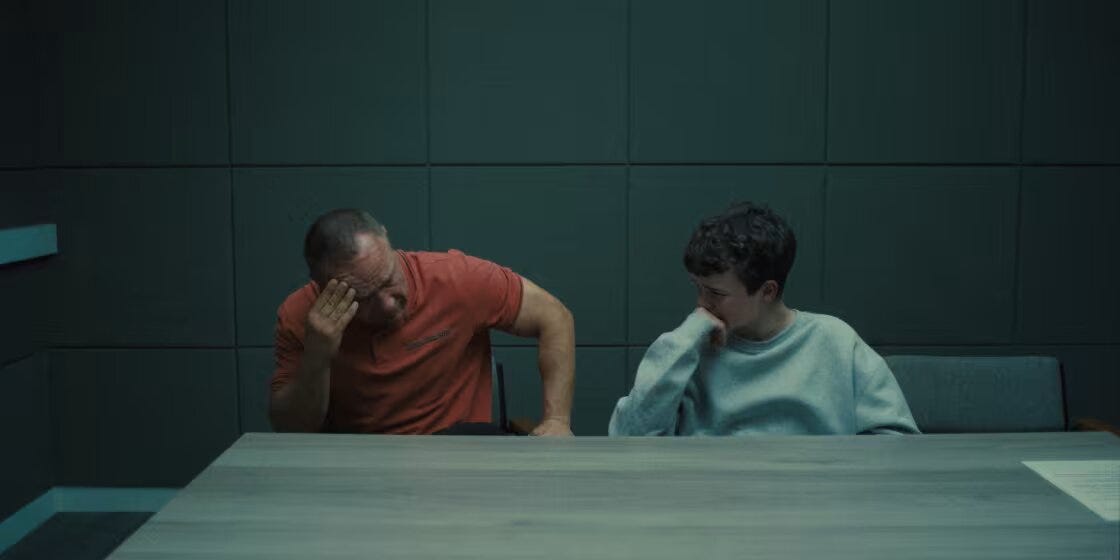
Throughout its four episodes, the series repeatedly asks: Why? Investigators examine Jamie’s experience with cyberbullying and his involvement in the “manosphere” — a digital subculture promoting toxic masculinity and misogyny, which gained widespread attention following the rise of controversial influencer Andrew Tate. Tate, who has been accused of abuse and sexual assault by multiple women, has been widely criticized for promoting misogynistic beliefs in his content.
A shocking revelation in the third episode uncovers that Jamie killed Katie after online communities convinced him he was “ugly” and incapable of receiving affection from a woman. A conversation with psychologist Briony Ariston further reveals that Katie was a victim of revenge porn—her nude photo was spread around school by a classmate. Jamie later asked her out, believing she would accept because she was vulnerable. When she rejected him and left emojis on his Instagram implying he was an incel, he snapped and stabbed her to death.
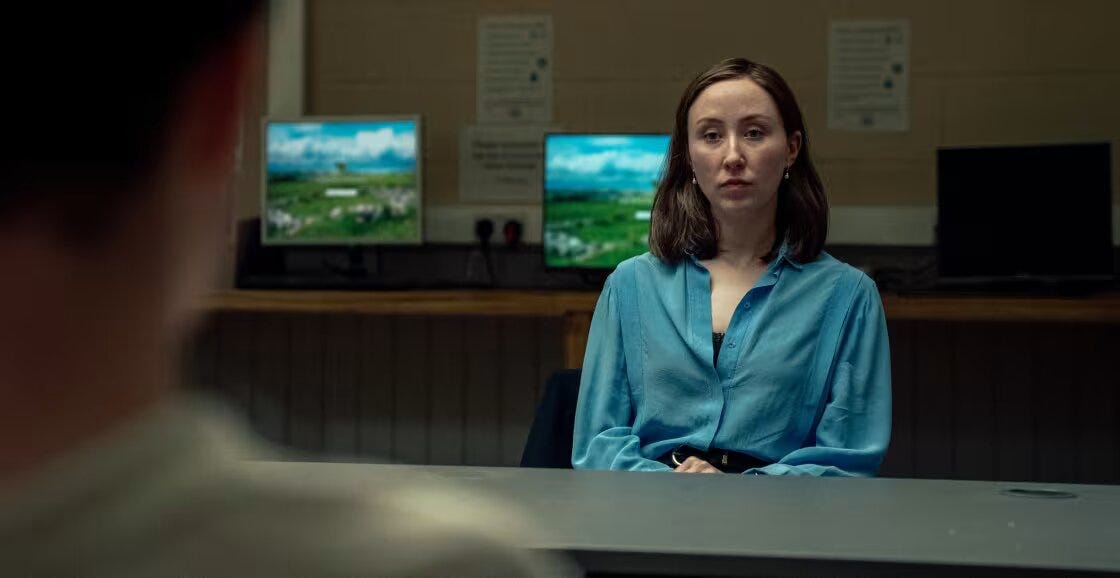
During his session with Ariston, Jamie’s demeanor shifts between friendliness and aggression, unsettling her. His hostility escalates into an outburst, forcing security to escort him from the room.
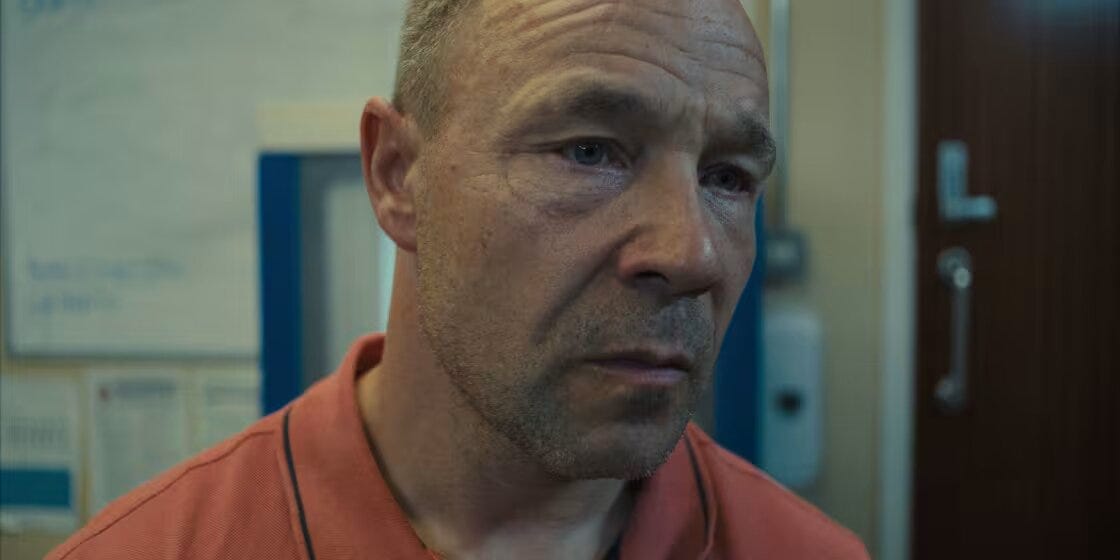
The final episode reveals that Jamie’s father, Eddie, is a survivor of childhood abuse. His anger manifests in violent outbursts throughout the series—especially after his property is vandalized and Jamie calls from jail to announce his plan to plead guilty. The show ends with Eddie breaking down in Jamie’s bedroom as he and his wife, Manda, blame themselves for failing to notice their son’s radicalization into incel ideology.
In an interview with The Guardian, series co-writer Jack Thorne emphasized the importance of acknowledging the “manosphere” subculture, particularly as many young people turned to online spaces for community after experiencing social isolation during the COVID-19 pandemic.
“Jamie is not a simple product of the ‘manosphere,” Thorne said.
“He is a product of parents that didn’t see, a school that couldn’t care, and a brain that didn’t stop him. Put 3,000 kids in the same situation and they wouldn’t do what he did. Yet spend any time on forums like 4chan or Reddit, spend any time on most social media platforms, and you end up, quite quickly, in some dark spaces.”
Thorne also stressed the need for proactive measures to combat the spread of misogynistic and violent content online.
“Parents can try to regulate this, schools can stop mobile phone access, but more needs to be done,” Thorne added.
“There should be government support because the ideas being expressed are dangerous in the wrong hands, and young brains aren’t equipped to cope with them.”
British Prime Minister Keir Starmer has also warned about the radicalization of young men through incel culture, stating that the U.K. faces a growing threat from “loners, misfits, and young men in their bedrooms.” His remarks follow the 2024 Southport stabbings, in which 17-year-old Alex Rudakubana killed three children—all girls—and wounded 10 others at a Taylor Swift-themed dance class.
“We also see acts of extreme violence perpetrated by loners, misfits, young men in their bedrooms, accessing all manner of material online, desperate for notoriety,” Starmer said to Sky News.
“Sometimes inspired by traditional terrorist groups, but fixated on extreme violence seemingly for its own sake.”
According to data from the Office for National Statistics (ONS), 83% of teen homicides in England and Wales involved a knife. Data from 2023-2024 further reveals that the percentage of teenage homicides continues to rise.
Adolescence and Social Media
While Adolescence warns about the prevalence of incel culture, the miniseries also highlights the impact of social media on teenagers.
Research from the Mayo Clinic reveals that more than 35% of teens use at least one of five social media platforms—YouTube, TikTok, Facebook, Instagram, and Snapchat—several times a day. Studies from the Child Mind Institute show that girls are particularly at risk for cyberbullying, with low self-esteem playing a significant role.
“Girls are socialized more to compare themselves to other people, girls in particular, to develop their identities, so it makes them more vulnerable to the downside of all this,” Dr. Catherine Steiner-Adair said in the report.
“We forget that relational aggression comes from insecurity and feeling awful about yourself, and wanting to put other people down so you feel better.”
A study by the American Psychological Association (APA) found that the average American teenager spends nearly five hours on social media daily. Among frequent users with low parental monitoring and poor relationships with their parents, 60% reported experiencing low mental health.
This aligns with a report from the Annapolis Police Department (APD) in Maryland, which found that more than 42% of kids have experienced cyberbullying, and 75% have visited a website that targeted and harassed another student.
“Middle school is already challenging for students due to developmental changes,” said Jacqueline Sperling, a psychologist at McLean Hospital in Massachusetts.
“As they go through puberty, they’re tasked with establishing their identity at a time when the frontal lobes in their brains are not fully developed, leading to a lack of impulse control. All of this happens while their relationships with peers become more important.”
Sperling also emphasized the dangers of unrestricted social media access for young users.
“It’s a very vulnerable population to have access to something where there is no stopgap before they post or press the send button,” she said.
“I think that’s something of which to be mindful.”
Reception & Cultural Impact
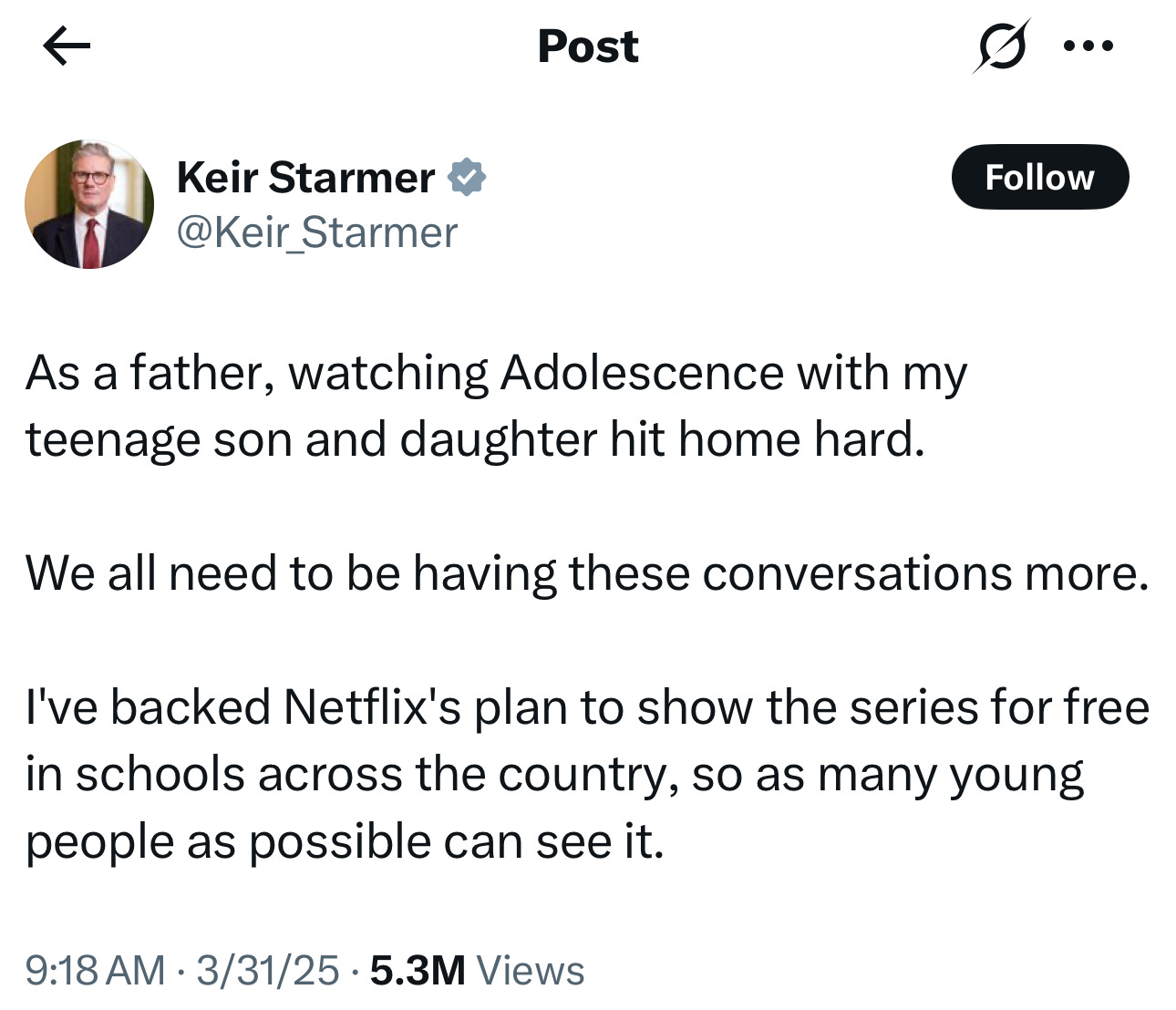
In the three weeks since its release, Adolescence has become one of Netflix’s most popular series of all time, with nearly 97 million viewers since its premiere. The series has sparked global discussions about misogyny and gender-based violence, with British leaders calling for it to be shown in schools across the United Kingdom.
“As a father, watching Adolescence with my teenage son and daughter hit home hard,” British Prime Minister Keir Starmer wrote in a post on X.
“We all need to be having these conversations more.”
Former England soccer manager Gareth Southgate called the struggles facing young men a “crisis.”
“Young men are suffering. They are feeling isolated. They’re grappling with their masculinity and with their broader place in society,” Southgate said in a statement, condemning social media influencers such as Andrew Tate.
“These are callous, manipulative, and toxic influencers whose sole drive is for their own gain. They willingly trick young men into believing that success is measured by money or dominance, never showing emotion, and that the world—including women—is against them.”
A report by the Associated Press highlighted the scale of gender violence in schools, with Soma Sara, founder of the charity Everyone’s Invited, revealing that more than 1,600 cases of child-on-child sexual violence and harassment have occurred in elementary schools alone.
“The testimonies show how early this starts, and how it’s children abusing children—that’s just the devastating reality,” Sara said, emphasizing the generational gap in addressing the issue.
Gavin Stephens, chair of the National Police Chiefs’ Council (NPCC), warned of the dangers of misogynistic influencers like Tate, noting that British police record more than a million crimes against women and girls annually—accounting for a fifth of all reported crimes.
“This is everyone’s problem. And this is what Adolescence says: when a child is accused, everyone’s to answer,” Sara said.
“It’s about realizing that we’re all responsible.”


Leave a Reply