
Israel faces growing global backlash over Gaza devastation and West Bank settlements, as genocide allegations escalate.
Following a previous report from The Introspective detailing the temporary ceasefire in March, Israeli bombardment has continued nearly 22 months after the events of Oct. 7, 2023. Multiple agencies have found that Israel is committing genocide against Palestinians in the Gaza Strip, alongside increasing settlement activity in the West Bank.
“Israel must immediately and completely cease all settlement activities and evacuate all settlers, stop the forcible transfer of the Palestinian population, and prevent and punish attacks by its security forces and settlers,” said United Nations (UN) High Commissioner for Human Rights Volker Türk in a press release. The settlements in the West Bank have been declared illegal by both the UN and the International Court of Justice (ICJ).
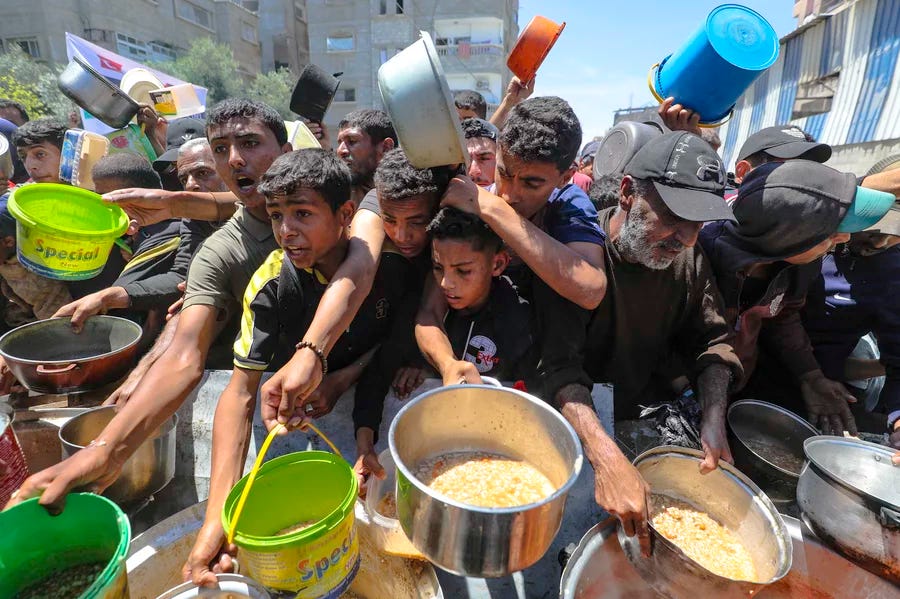
Research from the British Red Cross found that 470,000 people—22% of Gaza’s population—are facing starvation, as more than 1.9 million have been displaced since October 2023.
Allegations of Genocide
Allegations of genocide date back to 2023, following South Africa’s filing of a lawsuit against Israel at the ICJ.
“There is an extraordinary feature in this case,” said lawyer Tembeka Ngcukaitobi to the court.
“That Israel’s political leaders, military commanders, and persons holding official positions have systematically and, in explicit terms, declared their genocidal intent.”
Ngcukaitobi later stated that Israel’s actions in Gaza hold “no ambiguity.”
“It means to create conditions of death of the Palestinian people in Gaza—to die a slow death due to starvation and dehydration or to die quickly because of a bomb attack or sniper, but to die, nevertheless,” he said.

Israeli Prime Minister Benjamin Netanyahu dismissed the ICJ case as “an upside-down world.”
“Israel is accused of genocide at a time when it is fighting against genocide,” he said, referring to the events of Oct. 7, 2023, which led to the invasion of the Gaza Strip.
A report from the U.N. Office of the Special Rapporteur warned of “genocidal intent,” citing Israel’s longstanding occupation of Palestine, racial segregation, and apartheid between Israelis and Palestinians.
“After Israel ordered 1.1 million Palestinians to move south from northern Gaza in 24 hours—one of the fastest mass displacements in history—the Special Rapporteur warned of the risk of deliberate mass ethnic cleansing,” the report read, highlighting that 90% of Palestinians in Gaza have been displaced more than 10 times.
Amnesty International later declared Israel’s actions in Gaza a genocide in a December 2024 report, stating that “sufficient basis” was found.
“Our research reveals that, for months, Israel has persisted in committing genocidal acts, fully aware of the irreparable harm it was inflicting on Palestinians in Gaza,” said Agnès Callamard, secretary general of Amnesty International.
“Israel has repeatedly argued that its actions in Gaza are lawful and can be justified by its military goal to eradicate Hamas. But genocidal intent can co-exist alongside military goals and does not need to be Israel’s sole intent.”
Shortly after the report’s release, Amnesty International’s Israel branch dismissed the genocide allegation but acknowledged that “serious crimes” were taking place.
“While the Israeli section of Amnesty International does not accept the accusation that Israel is committing genocide, based on the information available to us, we are concerned that serious crimes are being committed in Gaza that must be investigated,” the branch said in a statement.
Doctors Without Borders, also known as Médecins Sans Frontières (MSF), stated there were “clear signs of ethnic cleansing.”
“Our firsthand observations of the medical and humanitarian catastrophe inflicted on Gaza are consistent with the descriptions provided by an increasing number of legal experts and organizations concluding that genocide is taking place in Gaza,” said the group.
“In the north of the Strip in particular, the recent military offensive is a clear illustration of the brutal war the Israeli forces are waging on Gaza, and we are witnessing clear signs of ethnic cleansing as Palestinian life is being wiped off the area.”
“While we don’t have legal authority to establish intentionality, the signs of ethnic cleansing and the ongoing devastation—including mass killings, severe physical and mental health injuries, forced displacement, and impossible conditions of life for Palestinians under siege and bombardment—are undeniable,” MSF added.
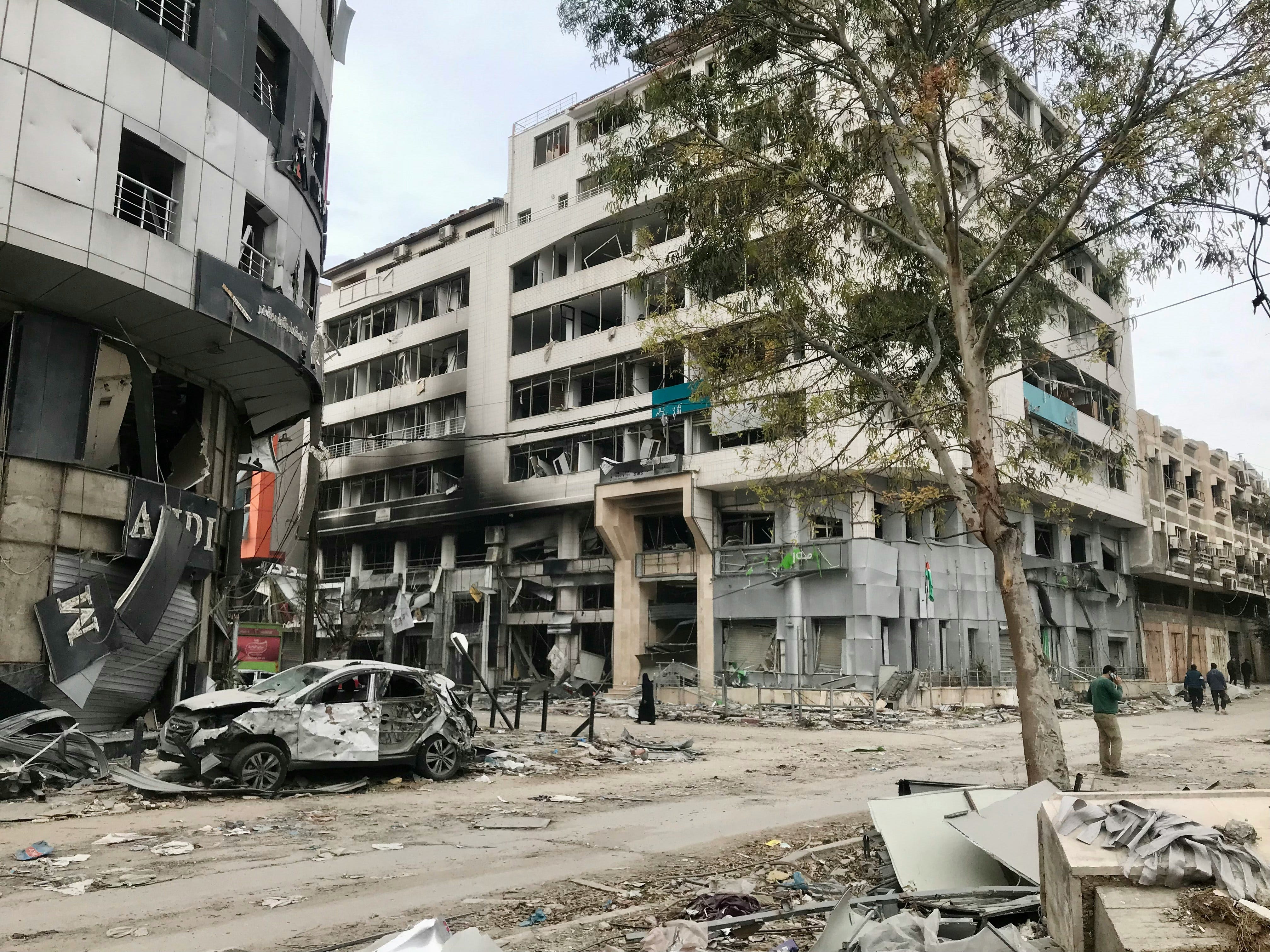
Israeli human rights groups B’Tselem and Physicians for Human Rights–Israel (PHRI) also accused Israel of committing genocide in a report titled Our Genocide. The report highlighted the bombing and razing of Palestinian cities such as Gaza City and Khan Yunis, the displacement of nearly 2 million people, and the restriction of aid into the Strip.
“An examination of Israel’s policy in the Gaza Strip and its horrific outcomes, together with statements by senior Israeli politicians and military commanders about the goals of the attack, leads us to the unequivocal conclusion that Israel is taking coordinated action to intentionally destroy Palestinian society in the Gaza Strip,” the report stated.
B’Tselem also criticized international leaders for failing to take action, stating that Europe and the United States are enabling genocide.
“Many state leaders, particularly in Europe and the U.S., have not only refrained from effective action to stop the genocide but enabled it—through statements affirming Israel’s ‘right to self-defense’ or active support, including the shipment of weapons and ammunition—which continued even after the International Court of Justice ruled that there was a ‘plausible risk that Israel’s actions amount to genocidal acts,’” said the group.
 Our Genocide
In a separate study, PHRI stated that its research found Israel attacked Gaza’s healthcare system “in a manner that is both calculated and systematic.”
“The evidence shows a deliberate and systematic dismantling of Gaza’s health and life-sustaining systems—through targeted attacks on hospitals, obstruction of medical aid and evacuations, and the killing and detention of healthcare personnel,” the study read.
PHRI Genocide In Gaza
The Israeli government has denied the allegations, blaming Hamas for the destruction in Gaza.
“Our defense forces target terrorists and never civilians. Hamas is responsible for the suffering in Gaza,” Israeli spokesperson David Mencer told the BBC.
Humanitarian Crisis in Gaza
More than 60,000 Palestinians have been killed since Oct. 7, 2023, including an estimated 18,592 children and 9,782 women, with actual figures likely much higher.
“Amid relentless conflict, mass displacement, severely restricted humanitarian access, and the collapse of essential services, including healthcare, the crisis has reached an alarming and deadly turning point,” read a report from the Integrated Food Security Phase Classification (IPC), a member of the World Health Organization (WHO), warning of famine in the Gaza Strip.
More than 20,000 children in Gaza were admitted for acute malnutrition between April and July, with over 3,000 classified as severely malnourished.
“The hunger crisis in Gaza has sort of reached new and astonishing levels of desperation,” said Ross Smith, director of emergency preparedness and response at the U.N. World Food Programme (WFP).
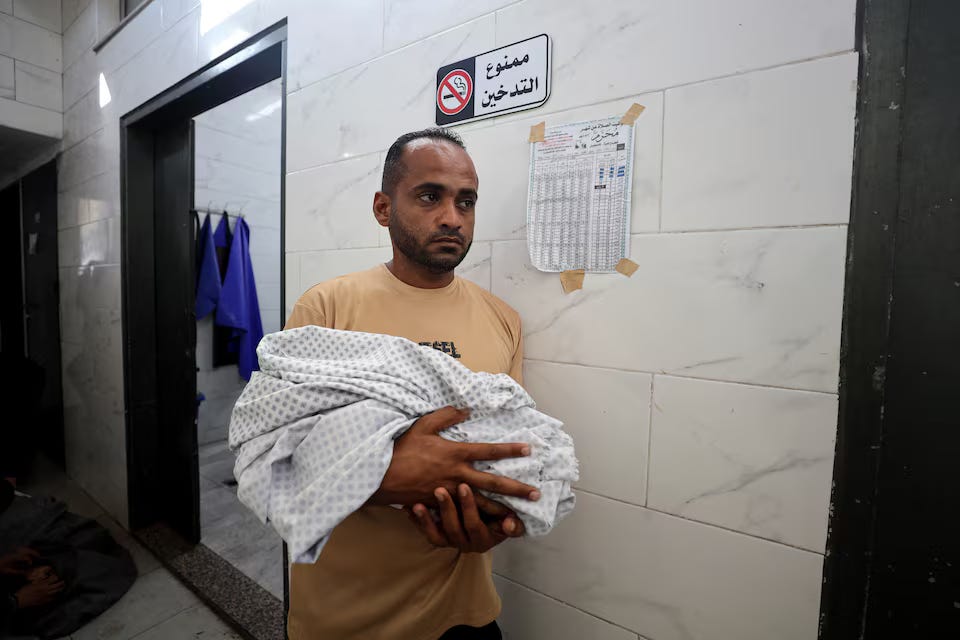
More than 101 people have died from hunger during the bombardment, including 80 children—most in recent weeks. Among them was Yousef, a 6-week-old baby who died from starvation.
“You can’t get milk anywhere, and if you do find any, it’s $100 for a tub,” said his uncle, Adham al-Safadi, in a Reuters report.
Research from the United Nations detailed that nearly 900 people have been killed by Israeli forces at food distribution sites across Gaza, with others killed while searching for food “on the routes of aid convoys or near aid convoys.”
“Our teams on the ground—UNRWA teams and other United Nations teams—have spoken to survivors of these killings, these starving children included, who were shot at while on their way to pick up very little food,” said Juliette Touma, director of communications for the United Nations Relief and Works Agency for Palestine Refugees in the Near East (UNRWA).
She later said she had been banned from bringing in any humanitarian assistance since March, noting that many U.N. trucks containing vital supplies remain stuck in nearby countries such as Egypt and Jordan.
“Medicine and food are going to soon expire if we’re not able to get those supplies to people in Gaza who need it most—among them one million children who make up half of the population of the Gaza Strip,” she added.
Trump: Breaking with Netanyahu
During a meeting with British Prime Minister Keir Starmer, President Donald Trump—a close ally of Benjamin Netanyahu—announced that the United States would establish food centers in Gaza to address the ongoing humanitarian crisis facing Palestinians.
“We’re going to set up food centers, and we’re going to do it in conjunction with some very good people, and we’re going to supply funds. We just took in trillions of dollars—we got a lot of money—and we’re going to spend a little money on some food, and other nations are joining us,” he said.
“So, we’re going to set up food centers, where the people can walk in—no boundaries, we’re not going to have fences.”
President Trump’s comments were seen as a break from Netanyahu’s stance. The Israeli leader previously claimed, “There is no starvation in Gaza.”
“There is no policy of starvation in Gaza, and there is no starvation in Gaza. We enable humanitarian aid throughout the duration of the war to enter Gaza—otherwise, there would be no Gazans,” said Netanyahu.
Trump dismissed those claims, stating the starvation is real.
“That’s real starvation stuff,” he said, adding that Israel “has a lot of responsibility” for aid not reaching the Gaza Strip.
“I see it, and you can’t fake that. So, we’re going to be even more involved.”

A previous report from The Introspective highlighted Trump’s February remarks during Netanyahu’s visit to the United States, when the president called for the U.S. to “take over” and redevelop the Gaza Strip—signaling a potential shift in his stance.
International Reactions
As the bombardment in Gaza continues, Israel has faced mounting criticism—most notably from the Netherlands, which identified Israel as a foreign threat for the first time in its history, claiming it “aims to control public opinion and political decision-making.”
The move came after riots broke out in Amsterdam in November following a soccer match between the two countries.
“The report was not shared through official channels with the government but was sent directly to specific politicians and journalists,” said the Netherlands’ National Coordinator for Terrorism and Security (NCTV) in a statement obtained by The Jerusalem Post.
“The way in which it was disseminated was described by the Dutch Ministers of Justice and Security and of Foreign Affairs as unusual and, due to potential negative consequences for Dutch residents, undesirable.”
“In this way, the individuals mentioned could be intimidated or threatened, or in the worst case, attacked,” the statement continued, alleging that Israeli soccer fans instigated the riots.

Meanwhile, France announced it would officially recognize Palestine in September, becoming the first G7 nation to do so.
“There must be an immediate cease-fire, the release of all hostages, and massive humanitarian aid to the people of Gaza. It is also necessary to ensure the demilitarization of Hamas, secure and rebuild Gaza,” said French President Emmanuel Macron in a post on X.
“Finally, it is essential to build the State of Palestine, ensure its viability, and enable it—by accepting its demilitarization and fully recognizing Israel—to contribute to the security of all in the Middle East.”
U.S. Secretary of State Marco Rubio criticized Macron’s actions, saying the United States “strongly rejects” France’s plan.
“This reckless decision only serves Hamas propaganda and sets back peace,” he wrote on X.
“It is a slap in the face to the victims of October 7th.”
Israeli Prime Minister Benjamin Netanyahu also condemned France’s decision.
“Let’s be clear: The Palestinians do not seek a state alongside Israel; they seek a state instead of Israel,” Netanyahu said.
“Such a move rewards terror and risks creating another Iranian proxy, just as Gaza became. A Palestinian state in these conditions would be a launch pad to annihilate Israel—not to live in peace beside it.”
However, Hussein al-Sheikh, vice president of the State of Palestine, celebrated France’s decision in a post on X, expressing his “thanks and appreciation” to Macron.
“This position reflects France’s commitment to international law and its support for the Palestinian people’s rights to self-determination and the establishment of our independent state,” he wrote.
Since then, both the United Kingdom and Canada have announced their intentions to formally recognize a Palestinian state.


Leave a Reply