
Exploring the class divides of the Pogues and Kooks in Netflix’s hit series and how it mirrors the complex relationship Gen Z has with economic inequality.
Dante Belcher
Oct 25, 2024
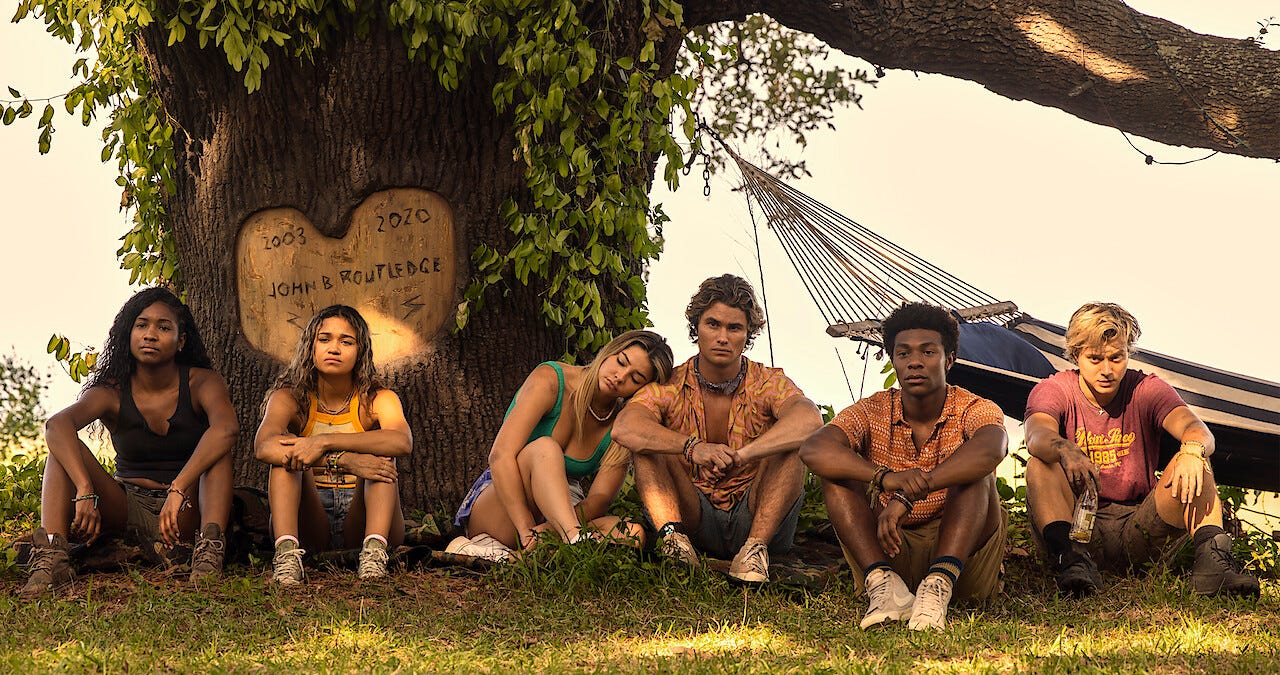
The season premiere of Netflix’s hit series Outer Banks has sparked discussions about economic inequality and social divisions. Currently in its fourth season, the series follows residents in a small coastal town along the Outer Banks of North Carolina, where there is a stark class divide between the wealthy residents, nicknamed the “Kooks,” and the working-class residents, nicknamed the “Pogues.” The series is a mystery featuring a group of Pogue teenagers seeking treasure in hopes of a better life while simultaneously being challenged by a group of Kooks and the police.
Since its premiere in 2020, the series has been a ratings and critical success for Netflix, especially among Gen Z. The season four premiere was watched by more than 8.8 million viewers and held the top spot on Netflix for a week. The season also has a 100% rating on the review website Rotten Tomatoes.
While the series has been applauded for its intense action, story lines, and acting, its story lines help shine a light on class divisions in a different context. Many series that tackle socioeconomic issues are typically set in an urban or suburban setting as opposed to a coastal town in the Southeast, adding a new layer to the existing and widening gaps and introducing Gen Z to different perspectives.
Class Divisions in Outer Banks: Pogues vs. Kooks
The socioeconomic divide between the Pogues and the Kooks is starkly expressed throughout the series. The Pogues live on Pleasure Island, North Carolina, just south of Wilmington, while the Kooks reside in Figure Eight, a popular vacation destination that earned the nickname “The Hamptons of the South.”
The Pogues represent the struggles of economic hardship, as many of the characters come from broken homes and face financial insecurities. Their hopes for financial stability rely on finding hidden treasure, a theme central throughout the series.
Important Pogue characters include John B, the group’s leader, and JJ, John B’s best friend, who highlights the trauma and struggles of growing up in a dysfunctional home, often relying on his friends for stability and support. Kiara, a girl from an affluent background who associates with the Pogues, often finds herself caught between the two worlds. Pope, a gifted student, faces pressure regarding academic success but joins in on the quest for treasure. Cleo, who joins the group in Season 2, brings a street-smart perspective to the group.
In contrast, the Kooks live a life of opulence and affluence, with access to waterfront mansions, boat parties, country clubs, and private schools. Sarah Cameron, who was initially a Kook, becomes caught between both worlds when she and John B begin dating. Rafe, her brother, highlights the dark side of privilege, often using his status to escape consequences for his dangerous behavior. Topper, another Kook, is Sarah’s ex-boyfriend who constantly clashes with the Pogues, whom he sees as inferior.
The differences between the Pouges and Kooks are shown throughout the series. The Kooks have access to better education, are protected by law enforcement, and have a sense of elitism over the Pouges.
The Pouges are shaped by their struggles to overcome socioeconomic limitations. Characters such as John B. and JJ often work various jobs, have dysfunctional home lives, and clash with the police.
Various scenes throughout the series highlight class tensions between the Pogues and Kooks. An important example is a moment from Season 1 when the Pogues sneak into a Kook party, symbolizing their outsider status in spaces where they aren’t welcome. This moment highlights the exclusivity and elitism of the Kook world and the barriers that marginalize the Pogues. Moreover, John B and Sarah’s relationship serves as a narrative that challenges those social divides. Sarah’s steady transition from the Kook lifestyle to the Pogues’ showcases her exposure to the challenges faced by the working class, creating tension with her affluent background.
These dynamics give Outer Banks an inside look into Gen Z’s experience with classism and economic inequity. The setting of the coastal town offers a new perspective on the class structures that influence socioeconomic mobility.
How Gen Z Perceives Class
In a previous article, studies showed that Gen Z was embracing the idea of freelance work and the “side hustle” after facing many unprecedented economic challenges. This comes as rents in the U.S. have risen more than 1.5 times faster than wages in the last four years.
According to the BBC, half of working households in New York City do not make enough money to cover basic needs, with a household of four needing to make more than $100,000 to match the cost of living in the city. Highlighting the rising costs of living across the country.
Research from the Association of American Medical Colleges has highlighted Gen Z’s viewpoint on addressing wealth disparities. Seventy-six percent of those surveyed believe that the federal government should give economic support to those with lower incomes. An additional 73% believe that the government should be more involved in reducing the wealth gap between Americans. While in contrast, 41% of Gen Z believe that everyone should be taxed the same percentage regardless of income, with conservative members of Gen Z in the most agreement with 47%.
In Outer Banks, the characters distrust of law enforcement and experience with financial instability reflect Gen Z’s historic lack of trust in governmental institutions. A Gallup poll revealed that 50% of Gen Z has “very little” trust in Congress, with 38% lacking trust in the Supreme Court and the criminal justice system. Offering an outside look into how Gen Z perceives these institutions considering economic uncertainty.
However, Gen Z does have a more optimistic view regarding wealth building, as 55% of Gen Z feels that it’s easier to build generational wealth compared to previous generations, while 37% of the public share the same viewpoint. Additionally, 34% of Gen Z believe that starting a business is the best path to build wealth, while 39% of the general population prefers investing in property.
Many content creators have been using Tik Tok to voice their frustration with economic uncertainty, alongside other connected issues such as affordable housing and a rapidly rising standard of living.
In an interview with the BBC, Ajla Brama, a content creator, voiced her frustrations with the current landscape.
“I get so tired of seeing content saying, ‘Oh, if you just saved a little more, if you just invested a little more…’ Like, no – people are on the edge. People cannot afford to live, to eat, to put gas in their cars,” said Brama.
By infusing adventure and class critique, Outer Banks provides a fictional narrative that echoes the economic realities many Gen Z viewers face. The series doesn’t just entertain; it continues dialogue about how wealth and privilege shape opportunities in America today, inviting its audience to reflect on the systemic barriers that define their own experiences.
The Impact of Outer Banks
Since its debut in 2020, Outer Banks has captured Gen Z audiences by blending high-stakes adventure with a nuanced look into class divides. The series’ depiction of the struggles faced by the working-class Pouges and the wealthy Kooks reflect greater societal tensions regarding wealth and privilege. The southern, coastal town setting offers a unique background that differs from typical urban stories, which highlights diverse outlooks into socioeconomic issues. The series is also a social media darling, with many people discussing its themes alongside real world issues such as affordable housing, student debt, and economic uncertainty.


Leave a Reply