
Nationwide demonstrations demand accountability as billions in public funds vanish into “ghost” infrastructure projects.
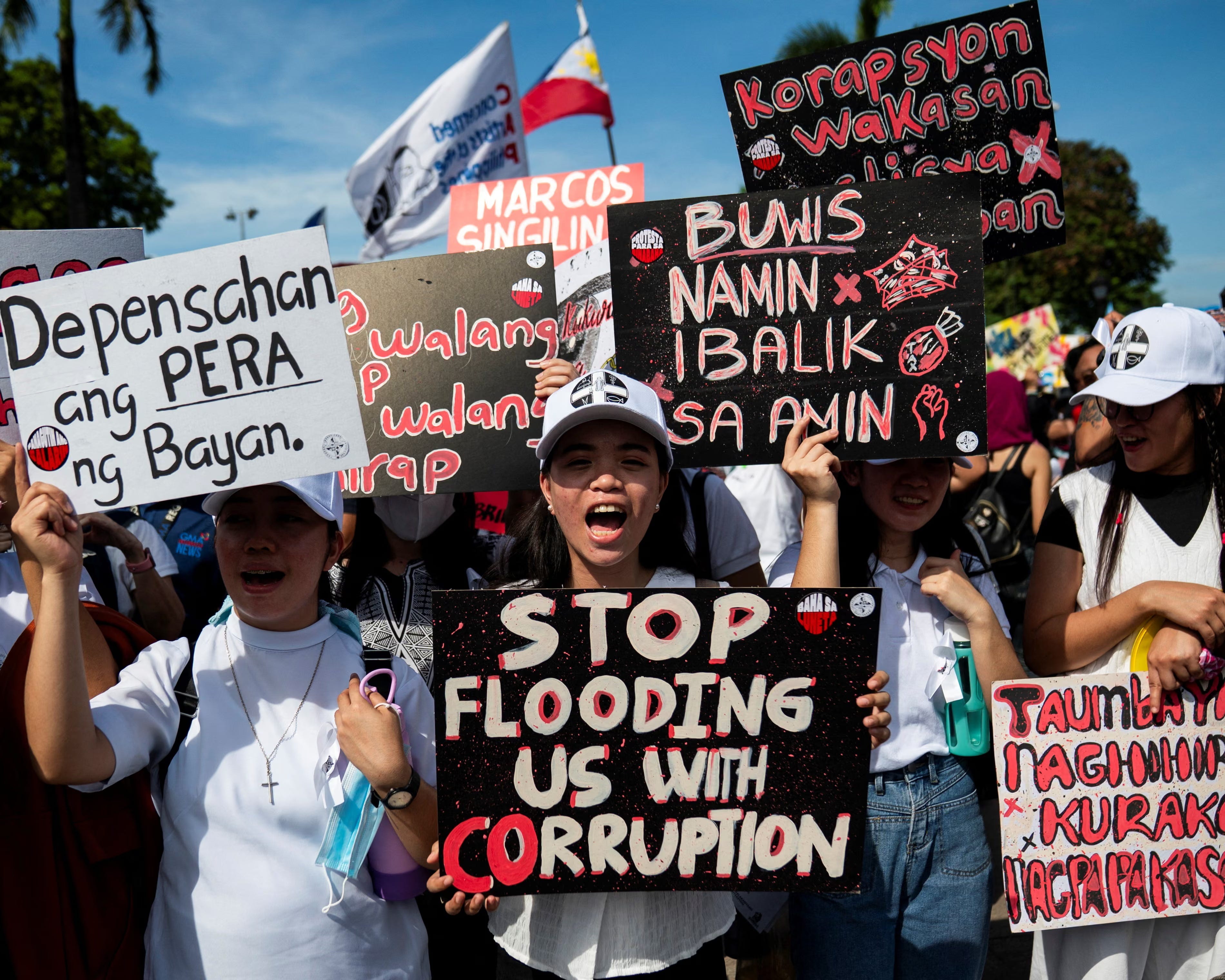
Since Sunday, the Philippines has faced protests over alleged corruption. This comes after Philippine President Ferdinand “Bongbong” Marcos Jr. announced an investigation into flood-control projects and allocated funds being misused.
“Do you blame them for going out into the streets? If I wasn’t president, I might be out in the streets with them,” Marcos Jr. said in a presidential address.
“Of course, they are enraged. Of course, they are angry. I’m angry. We should all be angry. Because what’s happening is not right.”
The protests coincide with the 53rd anniversary of martial law in the Philippines, imposed in 1972 by former President Ferdinand Emmanuel Marcos Sr., Bongbong’s father.
 1972 Martial Law Proclamation
Corruption Allegations
Allegations of corruption began in July when the Senate Blue Ribbon Committee—a government task force aimed at addressing government corruption—launched an investigation into irregularities in flood-control projects.
“It’s time to find out and analyze the truth behind the anomalies surrounding the contracts allocated for flood control. Enough with the circling and diverting from the real problem,” said Sen. Rodante Marcoleta.
The Department of Public Works and Highways (DPWH) acknowledged reports of ghost projects in the province of Bulacan, after contractor Wawao Builders received ₱9 billion ($182.74 million) in funding. The program later received ₱545.6 billion ($9.5 billion) in funds.
Sen. Erwin Tulfo referred to the allegations as “nothing less than a grand robbery of our nation.”
“Before a project is even implemented, contractors are asked to shell out 20 to 25 percent commissions to politicians and officials. That is why projects are substandard or worse, ghost projects. At every level of approval, from district engineers up to undersecretaries, additional cuts are imposed until only 30 to 40 percent of the project’s value remains,” he said, alleging that many DPWH officials own construction firms themselves.
“Names must be named. Heads must roll. Justice must be served.”
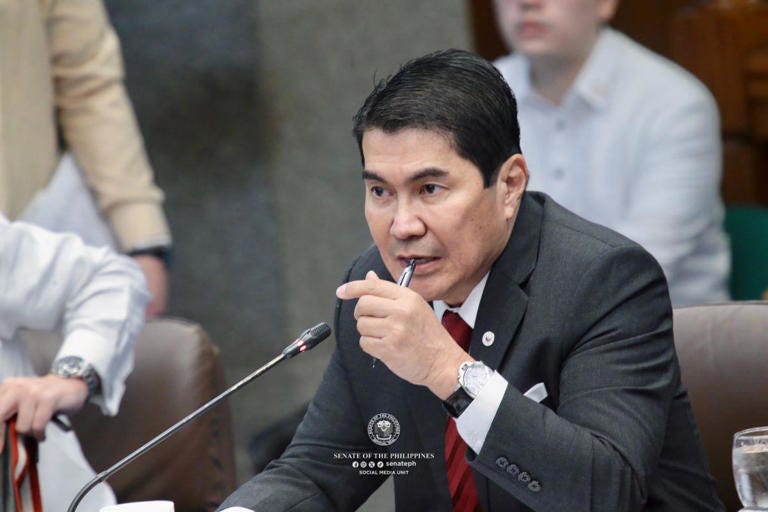
President Marcos Jr. later established the Independent Commission for Infrastructure (ICI) in an executive order, aiming to “maintain honesty and integrity in public service.”
“The ICI shall, on complaint, or motu proprio, hear, investigate, receive, gather, and evaluate evidence, intelligence reports, and information against all government officials and employees, and any other individual, involved in anomalies, irregularities, and misuse of funds in the planning, financing, and implementation of government flood-control and other infrastructure projects nationwide,” the order read.
Independent Commission For Infrastructure (ICI)
Marcos later halted funding for flood-control projects in the 2026 budget, raising implications as his cousin, House Speaker Martin Romualdez, was implicated in the scandal.
“We are already seeing that all the flood-control projects that should have been included in the 2026 budget are probably no longer necessary,” said Marcos, adding that the ₱350 billion ($6.1 billion) for 2025 was enough.
“So, there will be no budget for flood control in 2026, because the ₱350 billion for 2025 has not yet been fully used.”
Romualdez resigned from the Filipino House of Representatives after his implication, saying he was resigning with a “clear conscience” to allow the ICI to “pursue its mandate freely and fully, without doubt, without interference, without undue influence.”
“I step down not in surrender, but in service. For sometimes, the greatest act of leadership is the grace to let it go,” said Romualdez.
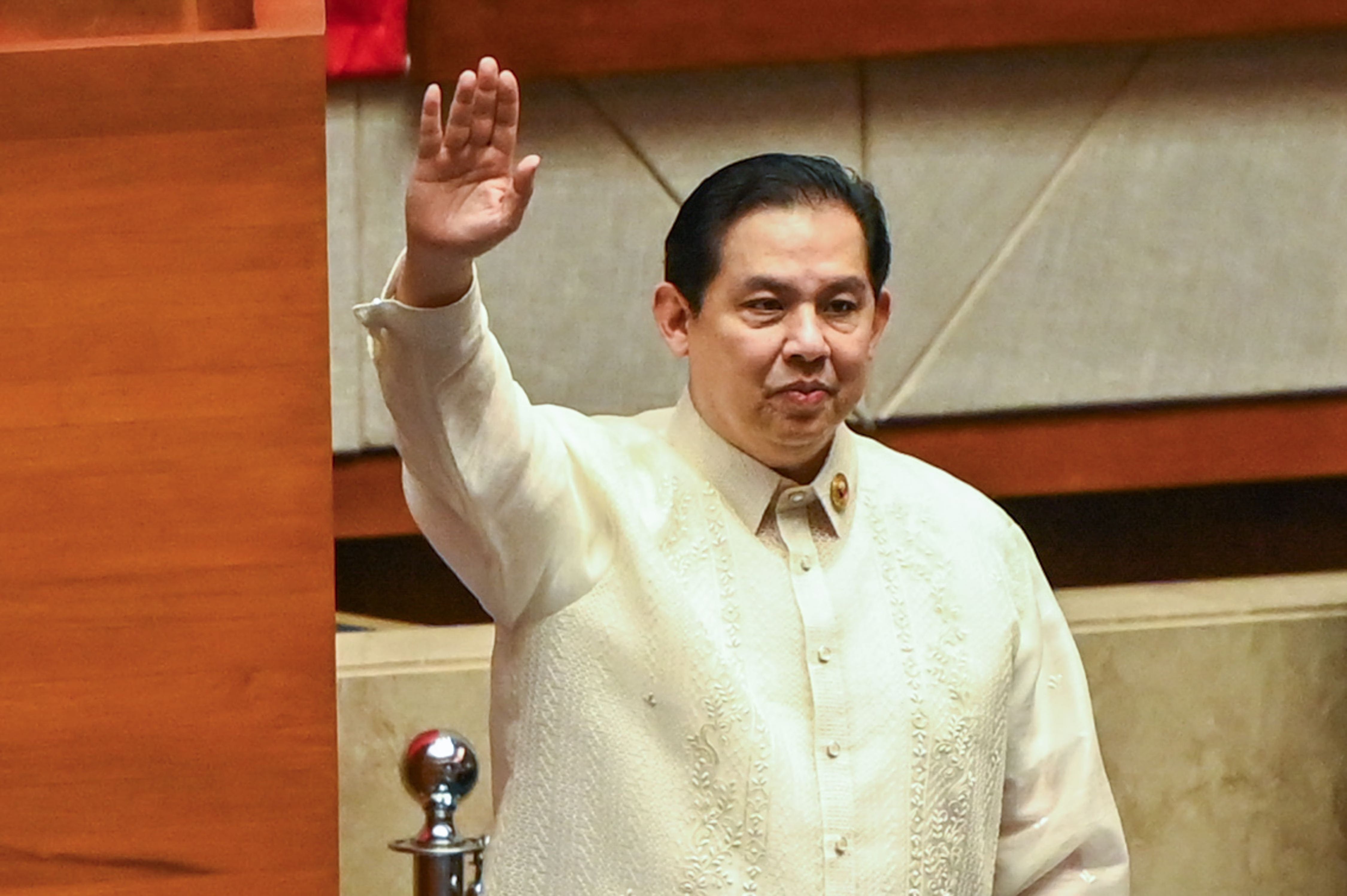
DPWH Secretary Manuel Bonoan also stepped down amid the scandal.
Protests Break Out
Protests emerged throughout the Philippines on Sunday as students, religious groups, celebrities, and members of various political parties filled the streets of Manila and other major cities.
“I feel betrayed,” said Crissa Tolentino, a teacher, to the BBC.
“I work hard, I don’t spend too much and taxes are deducted from my salary every month. Then I learn that billions in our taxes are being enjoyed by corrupt politicians.”
In that same report, Rhens Rafael Galang, a researcher and small business owner, expressed frustration over the corruption, as the Philippines has experienced more extreme flooding in recent years due to climate change.
“I’m angry and dismayed because money allocated for flood-control projects in our province went to waste, to people who used it for their personal gain,” he said.
“But I am hopeful that, in time, a long-term flood-control project will be built in our area, that funds will be used honestly.”
President Marcos encouraged peaceful demonstrations as the scandal continues to be investigated.
“Let them know how much they hurt you, how they stole from you,” he said.
“Let them know, shout at them, demonstrate—just make it peaceful.”
Marcos previously criticized politicians involved in the scandal in a July State of the Nation address, acknowledging that the public “widely knows” about the allegations.
“Let’s stop pretending. The public widely knows such projects invite rackets—kickbacks, initiatives, erratas, SOPs, ‘for the boys,’” he said.
“So, to those conniving to steal from public funds and rob our citizens of our future, you should be ashamed of your fellow Filipinos!”
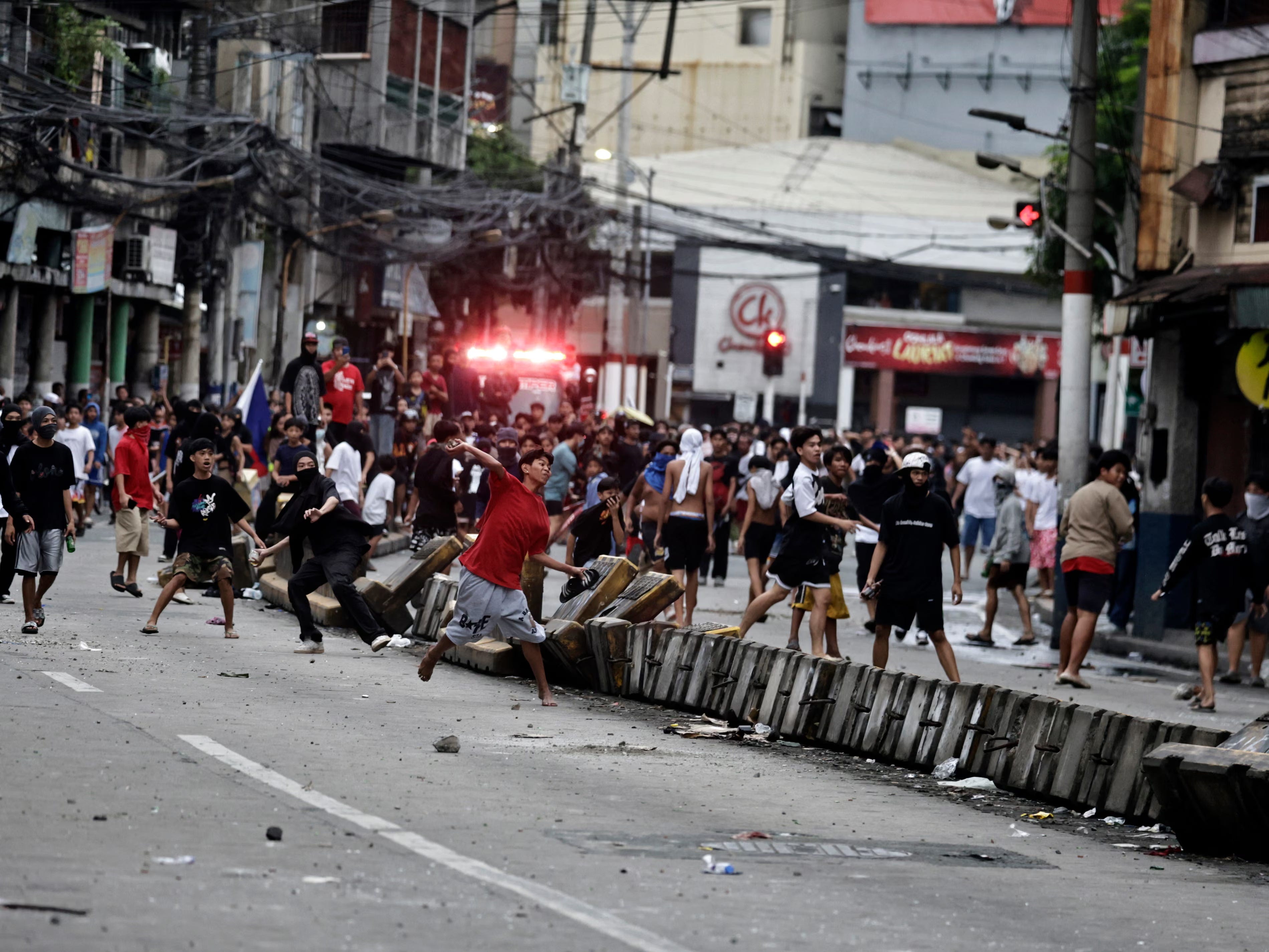
While mainly peaceful, clashes between police and protesters occurred in Manila, with more than 200 people arrested.
“Most assemblies held across Metro Manila were peaceful and orderly, particularly those in EDSA and Luneta. Unfortunately, the gathering in Ayala Bridge and Mendiola, even though unprovoked, turned very violent,” said Maj. Gen. Anthony A. Aberin, director of the National Capital Region Police Office (NCRPO), referring to Epifanio de los Santos Avenue, a major street in the city.
“Protesters turned mobs assaulted police officers with stones and anything they can get their hands on. Not satisfied with harming police officers in uniform, violent protesters set motorcycles on fire, vandalized and ransacked a business establishment. These unlawful acts were recorded and have since circulated on social media.”
Aberin later said that while the NCRPO respects the right to protest and freedom of expression, there are limitations to such rights.
“These rights must be exercised responsibly and within the bounds of law. Violence and criminality will not be tolerated,” he added.
Manila Mayor Francisco “Isko Moreno” Domagoso mentioned that police officers were injured during the clashes but urged protests remain peaceful.
“Manila CDRRMO [City Disaster Risk Reduction Management Office] and Manila Health Department gave first aid to our policemen deployed in Mendiola today,” he said.
“They were rushed to the nearest district hospital, the Sampaloc Hospital, so that they can be treated by our doctors. Let’s maintain order and peace in our city. Let’s all be careful.”
Following the brief unrest, Al Jazeera’s Barnaby Lo said there was “heavier police presence than usual” following the clashes on Monday morning.
“Schools are closed, a curfew for minors has been imposed as investigations into alleged corruption in flood-control projects continue, more protests are expected, and at this point they could be unpredictable,” Lo said.
The protests come following previous reports from The Introspective detailing unrest in Nepal over corruption following a social media ban, and in Indonesia over a stagnant job market, police brutality, and an alleged erosion of democracy.


Leave a Reply