
Public anger over economic policies and police violence fuels nationwide demonstrations
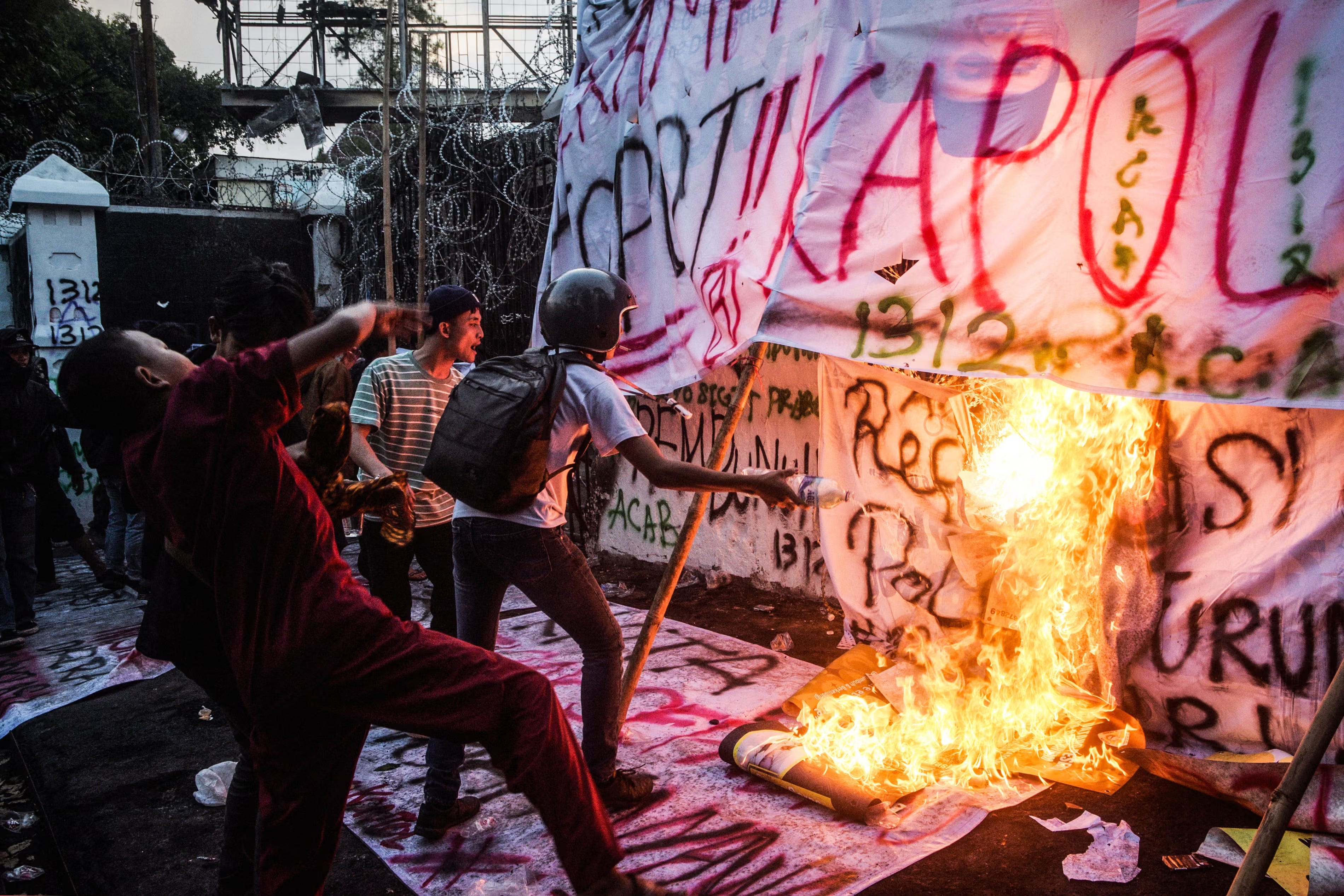
Since February, Indonesia has seen protests over rising unemployment, police brutality and an alleged erosion of democracy. The demonstrations were initially led by students after President Prabowo Subianto issued Presidential Instruction No. 1 of 2025, which aimed to cut national and regional spending by 306.69 trillion rupiah ($18.9 billion).
 Presidential Instruction (in Indonesian)
Students later trended the hashtag #IndonesiaGelap (Indonesia Dark), with more than 14 million X posts within 24 hours.
“The dark is not because there is no light, but because those in power choose to close their eyes. We see, we know, but our voices continue to be muted,” read one post obtained by Tempo magazine.
Protests Escalate
In August, backlash escalated after all 580 members of Indonesia’s House of Representatives proposed a monthly housing allowance of 50 million rupiah ($3,075), in addition to their annual salaries.
The allowance drew sharp criticism, as it amounts to 10 times the minimum wage in Jakarta, the nation’s capital.
“Residents are facing difficulties in basic things, such as daily needs, and taxes have been raised. This housing decision is not a proper decision,” Indonesia Corruption Watch researcher Egi Primayogha told BBC Indonesia. The report later found that parliament members already earn 100 million rupiah ($6,062) a month.
Unrest broke out after 21-year-old driver Affan Kurniawan was run over by an armored police vehicle on Thursday. Kurniawan was delivering food when he was caught up in nearby protests.
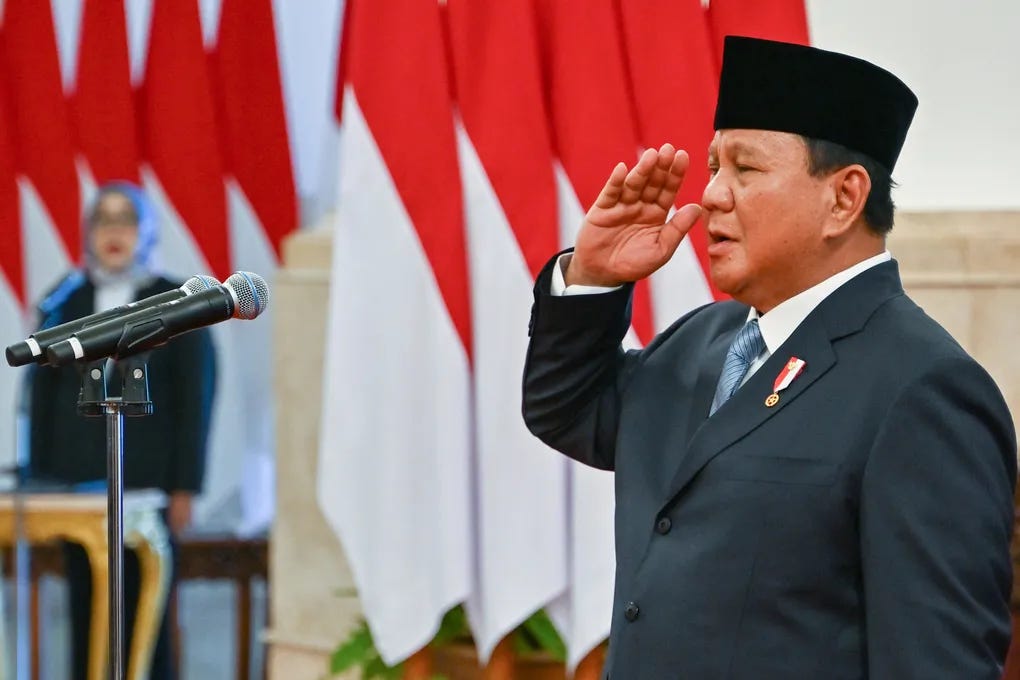
President Subianto apologized for Kurniawan’s death and called for the demonstrations to remain peaceful.
“On my own behalf, and on behalf of the Government of the Republic of Indonesia, I would like to extend our deepest condolences and heartfelt sympathy. I am deeply concerned and saddened by this tragedy,” he said.
“I also call on the entire nation to remain vigilant, especially against elements that consistently seek to incite disorder and chaos. Let me emphasize to all the people that such actions bring no benefit to our citizens, to our society, nor to our nation. Our country is in the process of improvement. We are garnering all our energy, our strength and our resources to rise and build a strong, prosperous and successful nation.”
In a statement, the United Nations criticized the police brutality that occurred during the unrest.
“All security forces, including the military when deployed in a law enforcement capacity, must comply with the basic principles on the use of force and firearms by law enforcement officials,” said spokesperson Ravina Shamdasani.
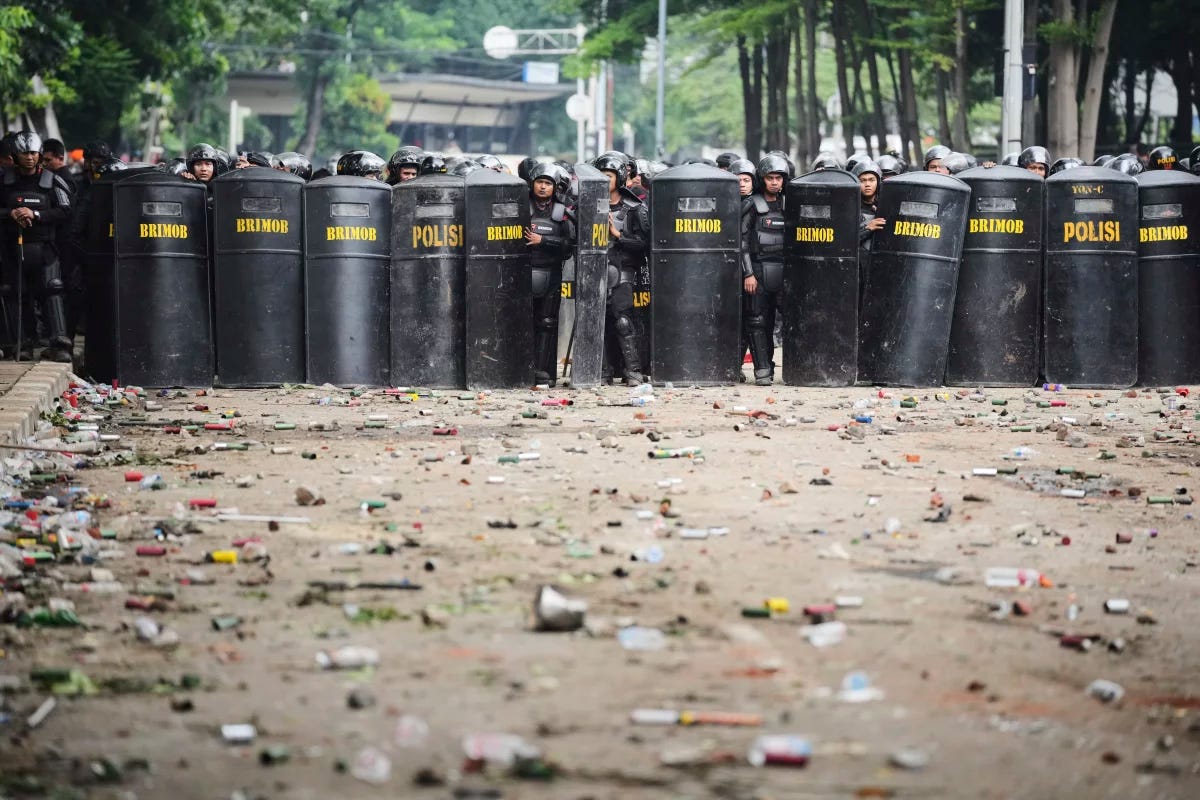
Montse Ferrer, regional research director for Amnesty International, called for police actions during the unrest to be investigated, saying the number of deaths linked to police involvement was “alarming.”
“Despite the largely peaceful nature of the protests, the police in several cities in Indonesia, including Jakarta, repeatedly resorted to unnecessary and excessive force, including inappropriately and excessively using tear gas to quash the demonstrations,” she said.
“It is deplorable that the national police chief instructed police officers to use rubber bullets against protesters who had entered the compound of the Jakarta Police’s Mobile Brigade headquarters. These weapons should only be deployed in exceptional circumstances, such as situations of violent disorder posing an imminent threat of considerable harm to others,” she added.
“Nobody should die while exercising their right to freedom of expression and peaceful assembly.”
Protesters began setting local parliament buildings on fire throughout the country, beginning with one in Makassar, the capital of South Sulawesi province. Three people were killed and five injured in the unrest.
Government Response
Following Kurniawan’s death, seven police officers were arrested: Police Second Inspector M. Rohyani; Police First Constable Danang; Police Second Constable Mardin; Police Chief Patrolman Jana Edi; Police Chief Patrolman Yohanes David; Police Commissioner Cosmas Kaju; and Police Chief Brigadier Rohmat.
Rohmat, who was identified as the driver, said he was protecting his colleagues during the collision, citing poor visibility caused by protesters throwing rocks.
“At that time, the road was already full of rocks, sir. I didn’t understand what was happening, so I hit him. I had to brake, otherwise it would have been over for us, sir. The mob was already out of control,” he said.
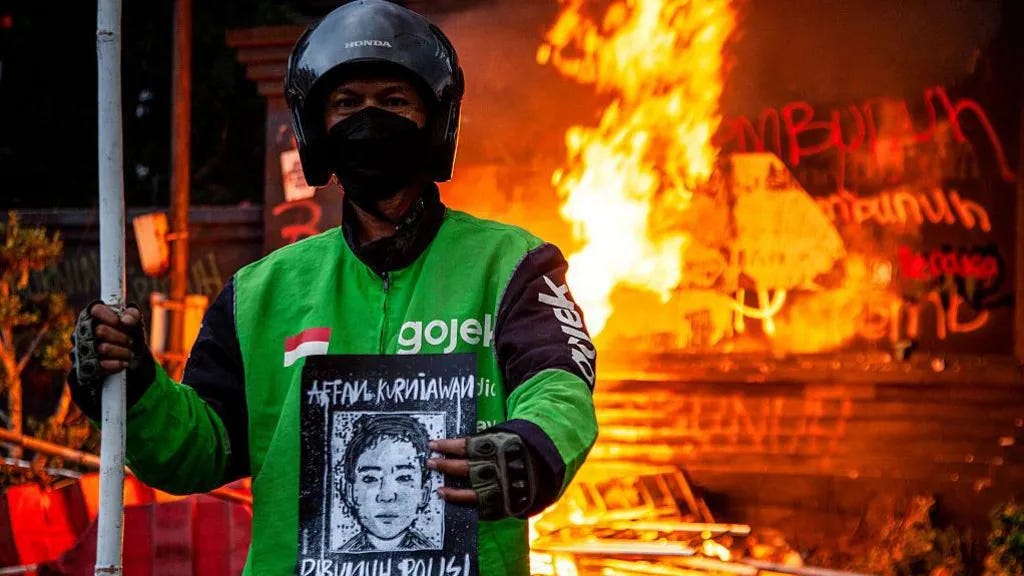
The officers were later sentenced to 20 days in jail, pending investigation.
A report from Channel News Asia highlighted President Subianto’s pledge to revoke the housing allowance for parliament members, stating that by Monday “lawmakers will see certain allowances scrapped and overseas work trips suspended under a new moratorium.”
However, he also criticized protesters, warning that violence could be prosecuted as treason and terrorism, and stressing that “the state would not tolerate attempts to destabilize the country.”
“When demonstrations turn anarchic, destroying public facilities, endangering lives and attacking private homes or public institutions, this becomes a serious violation of law,” he said.
“I sincerely ask all citizens to trust the government and remain calm.”
Amnesty International responded to Subianto’s comments, saying that criticizing protesters dismisses the reasons for the unrest.
“Labeling public demonstrations with accusations of treason or terrorism is excessive, especially when it’s constantly presented with the narrative of ‘foreign interference’ and ‘stirring up conflict’ when people are demonstrating to voice their concerns about problematic government policies,” said Amnesty International Indonesia Executive Director Usman Hamid.
“The president’s statement is insensitive to all the grievances and aspirations the public has voiced during the demonstrations.”
In a report by CNN, university student Cho Yong Gi said people would continue to criticize the government online, despite warnings from Subianto.
“I don’t think there’s a fear to speak up, but there’s a fear that if you go to the street to do a demonstration, there might be undercover police or military personnel to arrest people,” Gi said.
Dr. Eve Warburton, director of the Indonesia Institute at the Australian National University, emphasized the cost of living as a key source of the protests.
“As the government is undertaking austerity measures, and at a time when citizens are feeling economically insecure, the notion that Indonesia’s already wealthy political class would see their incomes rise filled people with rage, and they spilled onto the streets to express that rage,” she told the BBC.
She later said the significance of the protests is “very different to what we’ve seen over the past two decades,” referring to civil unrest in May 1998 that led to the resignation of former President and dictator Suharto and Indonesia’s transition into democracy.
“There have been waves of popular protest in recent years, often led by progressive students and activists,” she said.
“The current demonstrations are different — the grievances run deeper and are likely more broadly felt. The protests reflect people’s sense of economic insecurity and pent-up resentment toward the greed and excesses of their elected officials.”
Subianto has also pledged to boost the Indonesian economy—the largest in Southeast Asia—by 8% within five years. However, the ongoing trade war with the United States has caused tariffs on imports to rise to 19%.
The World Bank estimates that Indonesia’s economy will grow 4.8% by 2027, lower than Subianto’s projection.
World Bank Estimate (June 2025)


Leave a Reply