
Clashes erupt after social media ban as protests grow into wider unrest over alleged corruption and accountability.
Disclaimer: As this is a rapidly evolving situation, the information presented may change after the publication date.
Nepal has been facing unrest over corruption following a social media ban that blocked platforms such as Facebook, Instagram, Twitter, WhatsApp, YouTube and X, claiming it was needed to address misinformation.
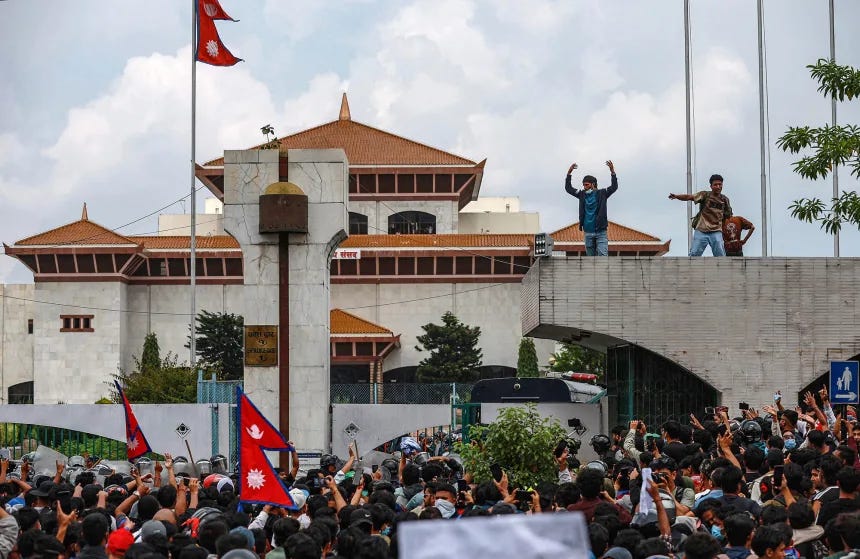
Protests—called the Gen Z protests—began in the capital of Kathmandu on Monday, with crowds chanting, “Stop the ban on social media. Stop corruption, not social media.”
“I am here to protest about the massive corruption in our country,” said Bishnu Thapa Chetri, a student, to The Associated Press.
“The country has gotten so bad that for us youths there is no ground for us to stay.”
According to the World Bank, the unemployment rate for youth in Nepal was 20.8%, with 33% of the country’s gross domestic product (GDP) heavily reliant on money sent home by Nepalis living abroad.
“All the Nepali citizens are fed up with corruption. Every youth is going outside the country. So, we want to protect our youth and make the country’s economy better,” said one protester.
From Marching to Shooting: Protests Turn Deadly
Protests turned violent in Kathmandu after police began firing tear gas, water cannons and live ammunition at the protesters, killing 22 and injuring more than 400 people.
“The police are firing indiscriminately,” said one protester.
In a report by Al Jazeera, 20-year-old Iman Magar recalled when he was shot in his right arm.
“I had been there for a peaceful protest, but the government used force,” he said.
“It was not a rubber bullet but a metallic one, and it took away a part of my hand. The doctor says I need to undergo an operation.”
Ranjana Nepal, an information officer at the city’s Civil Service Hospital, emphasized the unprecedented nature of the unrest.
“I have never seen such a disturbing situation at the hospital,” Nepal said.
“Tear gas entered the hospital area as well, making it difficult for doctors to work.”
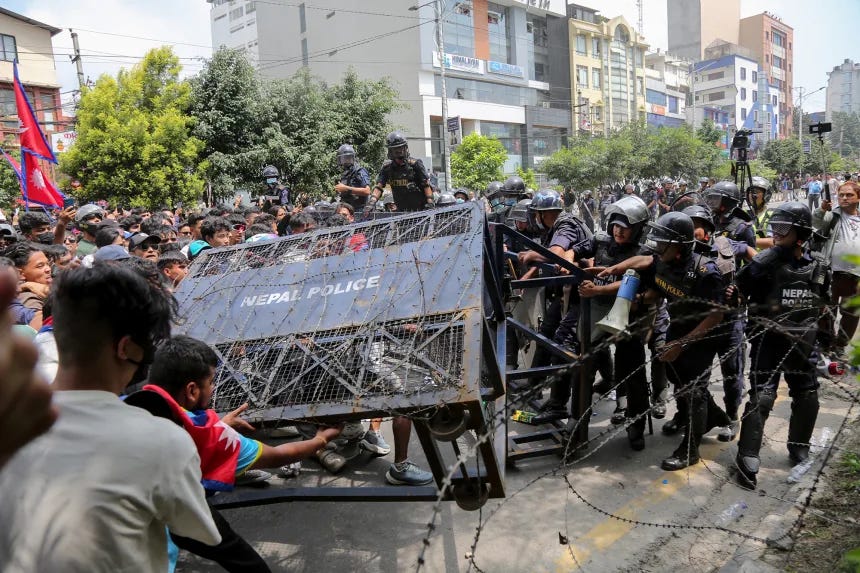
Former Law and Justice Minister Gobinda Bandi accused the government of suppressing free speech, stating that there was a “strong link” between banning social media and the resulting repression by officers, and that the ban “didn’t have any constitutional or legal basis.”
“Banning them is not acceptable. It’s unconstitutional. It goes against Article 17 of the constitution. In our constitution, freedom of expression, freedom of thought, including in Article 19, freedom of press, it’s all guaranteed,” he told The Times.
“The ban also violates Nepal’s obligation under international law because Nepal is party to the ICCPR [the International Covenant on Civil and Political Rights] and many human rights treaties we are party to. Banning them clearly goes against Nepal’s obligation under international law.”
 Nepal Consititution
The United Nations (UN) criticized police officers for the killings of the protesters and urged a “transparent” investigation.
“We have received several deeply worrying allegations of unnecessary or disproportionate use of force by security forces during protests organized by youth groups demonstrating against corruption and the recent government ban on social media platforms,” said UN Human Rights Office spokesperson Ravina Shamdasani.
“We call on the authorities to respect and ensure the rights of peaceful assembly and freedom of expression.”
Amnesty International also criticized the Nepali government for its response.
“Amnesty International strongly condemns the unlawful use of lethal and less-lethal force by law enforcement in Nepal, resulting in deaths and serious injuries of several protesters. We urge the authorities to exercise maximum restraint,” the agency said in a press release.
“The government of Nepal must also immediately conduct a thorough, independent and impartial investigation into the deaths and hold all those found responsible fully accountable, including through criminal prosecution. Victims of unlawful use of force by the law enforcement agencies and security forces must receive full and effective reparations from the state,” it continued.
“The protesters have a right to peacefully protest and express their frustration and outrage against corruption and the government’s restriction on the right to freedom of expression, including the social media ban in Nepal. It is the obligation of Nepali authorities to respect this right in line with its commitments under international law as well as its own constitution and protect all protesters from further harm. The government must genuinely listen to the legitimate demands of the youth to end corruption, deliver accountability and ensure civil liberties instead of meting out such reckless violence against them.”
Among those killed was Sulov Raj Sherestha, a student who was studying civil engineering in Kathmandu.
“He was always smiling and had a friendly behavior,” said his friend Sudhoj Jung Kunwar to Al Jazeera.
“I just found out; he had his GRE exams today.”
His school, Kathmandu Engineering College, later posted to Facebook: “We mourn, we protest, we condemn…Sulov… your nation has failed you …”
Political analyst Krishina Khanal later blamed the Nepali government for the killings, calling it “sheer negligence.”
“The young people should have been handled well; even if they crossed the parliament building, there were other ways to control them,” he said.
The social media ban was then lifted Monday night, as protesters began setting fire to Parliament buildings and the homes of government officials.
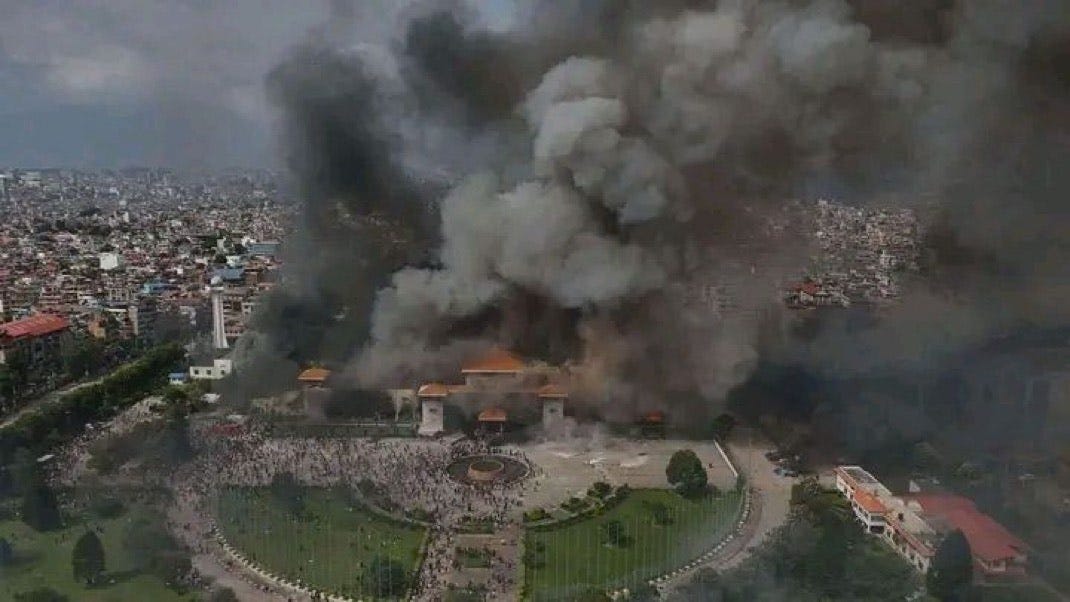
Resignations and Aftermath
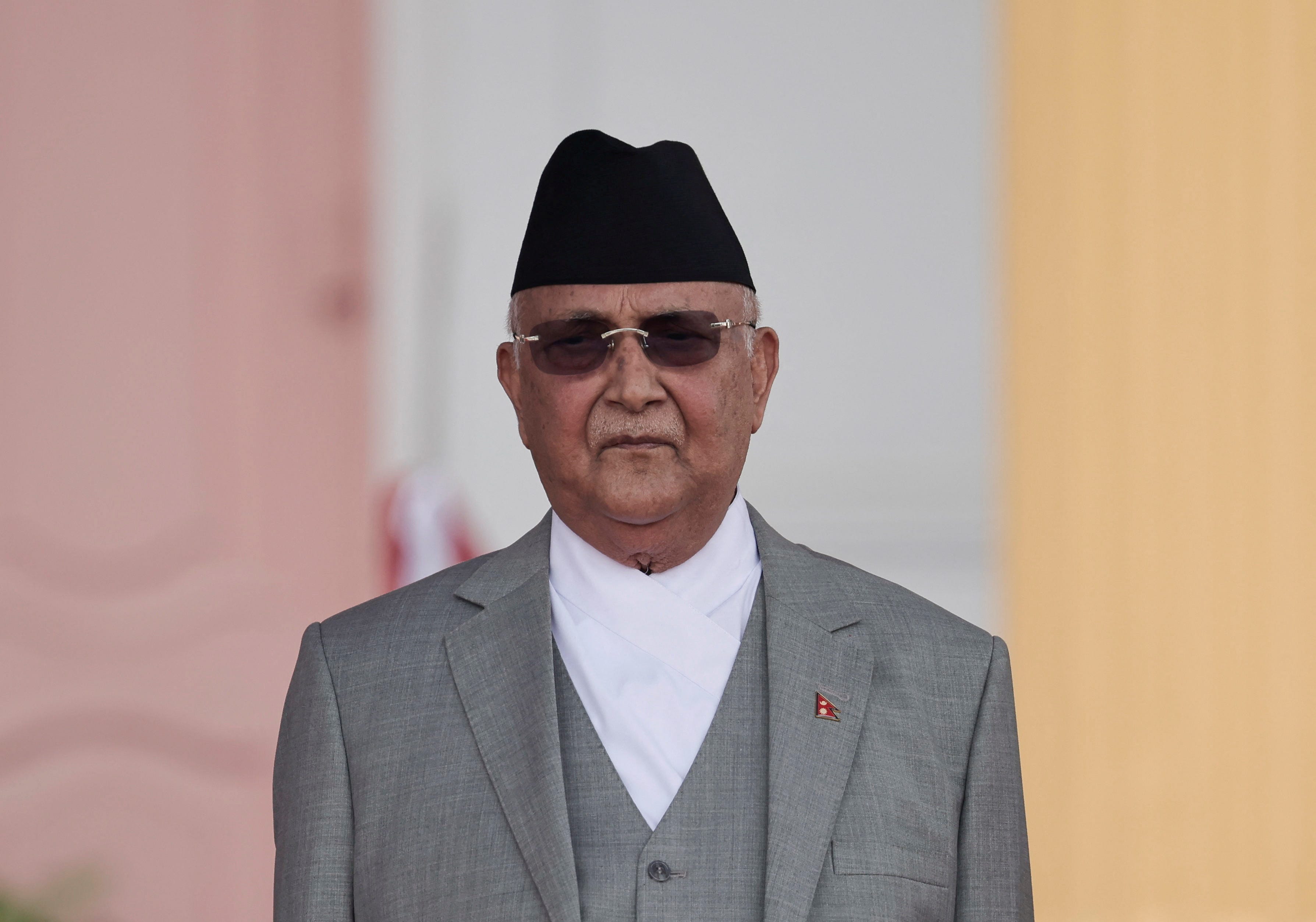
As the unrest escalated, Nepal Prime Minister K.P. Sharma Oli resigned on Tuesday, ending a 10-year term as curfews were enacted throughout the country.
“In view of the adverse situation in the country, I have resigned effective today to facilitate the solution to the problem and to help resolve it politically in accordance with the constitution,” Oli said in his resignation letter to President Ramchandra Paudel.
He previously said he was “deeply saddened” by the killings of protesters.
“The government was not in favor of stopping the use of social media and will ensure an environment for its use,” he said, adding that an “investigation committee will be formed to investigate and analyze” the unrest.
At the same time, Home Minister Ramesh Lekhak resigned during an emergency Cabinet meeting.
“The home minister had made it clear in the Nepali Congress meeting that he will be stepping down from the post on moral grounds,” said a source to The Introspective.
In a statement obtained by The Himalayan Times, the Nepali army urged restraint.
“Considering the current situation, it is our shared responsibility to prevent further escalation, preserve social harmony, and maintain national unity. The Nepali Army calls upon all youth and citizens to act with restraint,” said the country’s Directorate of Public Relations and Information.
President Ramchandra Paudel also called for national unity following the unrest.
“I urge everyone, including the protesting citizens, to cooperate for a peaceful resolution of the country’s difficult situation,” he said in a statement obtained by The Introspective.
“I appeal to all parties to exercise restraint, to not allow further damage to the country, and to come to talks.”
The Gen Z protests have brought the country to uncertainty as unrest reaches levels not seen in decades.
However, many protesters, such as Muna Shreshta—a resident of Kathmandu—say that change in Nepal has been needed, emphasizing the ongoing corruption in the government.
“It has happened now and we are more than happy to witness this and fight for this,” she told the BBC.
“If we can make our country better, our youth can stay here,” she added.
“I am hopeful that our country will change now.”


Leave a Reply