
As The Chi enters its seventh season, the series continues to explore the complexities of Black identity on the South Side of Chicago.
Dante Belcher
May 28, 2025

Since the premiere of its seventh season, the Showtime series The Chi has reignited conversations about Black identity and resilience in the face of generational trauma. Set on the South Side of Chicago, the series began with the murder of Jason Roxboro — a student-athlete — before evolving into an ensemble drama that explores issues such as gang violence, kidnapping, sexual assault and LGBTQ+ rights.
The current cast includes Jacob Latimore as Emmett Washington, Yolonda Ross as Jada Washington, Michael V. Epps as Jake Taylor, Shamon Brown Jr. as Stanley “Papa” Jackson, Birgundi Baker as Kiesha Williams, Luke James as Victor “Trig” Taylor, and Lynn Whitfield as Alicia. The series holds an 87% rating on Rotten Tomatoes, reflecting how deeply The Chi continues to resonate with its audience.
Violence, Poverty, and Structural Racism
Created by Chicago native and lesbian writer Lena Waithe, The Chi has received widespread praise for its handling of violence and poverty, balancing depictions of trauma with opportunity and the power to persevere.
“A lot of people, from the president to other politicians, have used Chicago as an example of what is wrong with the inner cities, and why we need to increase policing and toughen up laws,” wrote actor and rapper Common, who starred in the series, in an NBC News column.
“But I don’t believe that they are really thinking about the children of Chicago, about giving communities hope, or how they could care for these human beings and better their lives.”
Jason’s death occurs within minutes of the pilot episode, with gunshots ringing out in the distance as another character, Charles “Coogie” Johnson (Jahking Guillory), approaches his dead body and steals his shoes and chain necklace — continuing a cycle of desperation. Coogie is later killed by Ronnie Davis (Ntare Guma Mbaho Mwine), who mistakenly believes Coogie was responsible for Jason’s death. This act of retaliatory violence sets off the events of the show’s first two seasons.
The community’s mistrust of the police intensifies after the deaths of Jason and Coogie, underscoring an “us vs. them” dynamic. Even Tracy (Tai’isha Davis), Jason’s mother, urges Ronnie to seek justice himself, saying, “Cops ain’t gonna do shit, Ronnie. You know it.” The division between police and the community becomes more apparent with the arrival of Detective Wallace (Brian King), a jaded and complacent officer, and Detective Cruz (Armando Riesco), an empathetic officer who understands intersectionality — how race, gender and sexuality overlap in systems of discrimination. The two officers eventually clash over the murders of Jason and Coogie, leading Wallace to remark, “They’ll eventually kill who needs to be killed, and then we file the paperwork.”
This disconnect between law enforcement and the community reflects real-world issues like slow police response times. A 2023 report from WGN found that officers often arrived at the scene of shootings within 6 to 12 minutes, depending on the neighborhood, leading city officials to admit they had no reliable estimate of average response times.
“Without this basic information, we can’t assess whether city services are provided equitably or efficiently — and we can’t improve what we can’t measure,” said Inspector General Deborah Witzburg.
Additional research from Cornell University revealed racial bias in traffic stops conducted by the Chicago Police Department (CPD). In neighborhoods where 50% of drivers were Black, they accounted for 70% of traffic stops. In contrast, white drivers in similar areas made up just 20% of stops.
“This is the first time that we’ve had such a granular, block-by-block understanding of bias in traffic enforcement, showing that police disproportionately stop Black drivers at a higher rate,” said Wenfei Xu, assistant professor at Cornell’s College of Architecture, Art and Planning.
“Regardless of where you are in the city and the makeup of drivers on the road,” Xu added,
“Black drivers are always a higher proportion of those that are stopped.”

A report by PBS station WTTW also detailed disparities in police use of force against Black Chicagoans compared to their white counterparts — including higher rates of Taser use and instances of unreasonable search and seizure.
The Power of Community
Community involvement is a hallmark of The Chi, with many characters throwing block parties, attending protests, and participating in everyday activities like visiting neighborhood barbershops, volunteering at kitchens, and celebrating life milestones.
Series stars Jacob Latimore and Luke James told The Philadelphia Tribune that The Chi reflects not just Chicago, but the experiences of Black people across the country.
“People in cities like New York, Atlanta, and several in California can relate to the characters and their narratives, which has resonated deeply with our fans,” Latimore said.
“The show has had a significant impact on our culture, creating a sense of connection and understanding among people from diverse backgrounds.”
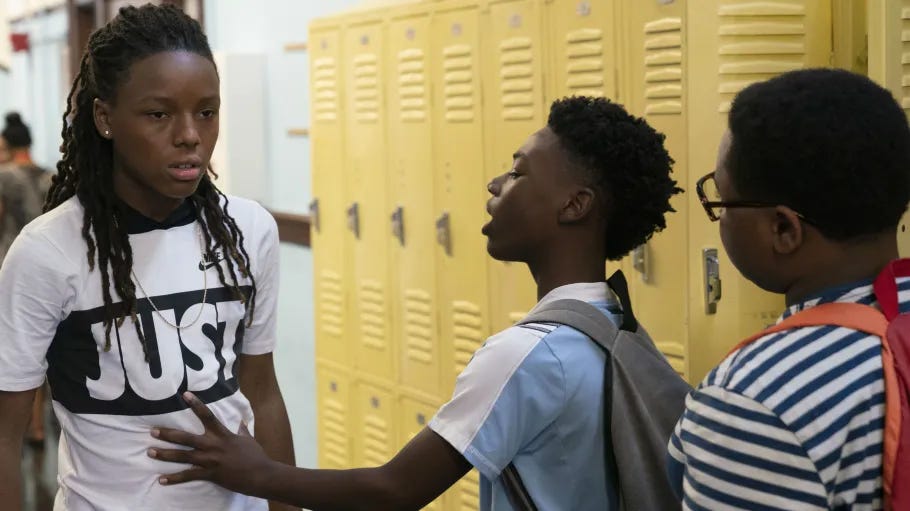
In another interview with CBS Chicago, series star Curtiss Cook — who portrayed corrupt politician Otis “Douda” Perry for the first six seasons — highlighted how the South Side community often looks out for one another without relying on police. He referenced a Season 3 storyline in which Keisha is kidnapped and sexually assaulted.
“With Keisha missing, it’s beautiful to see how this community rallies together for a Black girl, who have been ignored a lot in real time,” Cook said, reflecting on how television mirrors reality.
“The unpacking of how art imitates life and how we really need to take time…”
“Sometimes I feel what television and movies do is they show the stuff that is happening every day, but as we’re living it, we are not really experiencing it. We’re not really going through it because we’re trying to get to the next day,” he continued.
“Sometimes when we’re able to sit back and watch it, then we’re able to reflect on our own personal lives.”
The Chi: Being Queer and Black
The Chi has been applauded for its strong LGBTQ+ representation—something not often highlighted in Black media. The series offers new perspectives and life experiences, reminding viewers that being Black is neither a monolith nor a stereotype.
“I love what Showtime and The Chi are doing. We’re opening people’s eyes to life—coexisting with others,” said Jasmine Davis, who portrays Imani, a transgender woman, in an interview with LGBT News Now.
“That’s our job: to educate and entertain, to inspire. When you see this on TV, when your child goes out into the world, or when you go into a workplace, you’re not that ignorant, you’re not that fearful—because we are depicting them in a human way.”
Davis, who is a trans woman, shared that people from different backgrounds have applauded her role, emphasizing the importance of Black queer voices.
“I have had so many straight Black males tell me how proud they are, how they appreciate my character and how I’m portraying her,” Davis said.
“I even have religious people hit me up—even people who have trans kids. I felt so inspired. I didn’t even know that my character would have this much of an impact, especially on the Black and brown community. I’ve been stopped in stores and told, ‘Oh my God, I so relate to it.’ And these are straight couples! They can relate to our stories even if they’re not in the LGBT community. It’s just so powerful.”
In the same report, Miriam A. Hyman, who portrays Dre, a lesbian high school guidance counselor, agreed with Davis’s sentiments and highlighted the role of social media in expanding the conversation.
“One of the things that I’m really appreciating via social media is being able to have those conversations—and lots of people—men, women, Black, white, Asian, Latino, people who are in the LGBTQIA community—reaching out and saying, ‘Yo, I really rock with Dre. I really, really like who she is as a person and what she’s bringing to the table,’” Hyman said.
“I had a message that said, ‘I grew up with two moms, and it’s great to see that on television.’ It’s dope that I can be a part of telling that story and making it just a bit more normal for people. We fear what we don’t know, and when we’re let in, we chill a little bit.”
In an interview with GLAAD, cast members Jabari Redd and Thomas Mackie, who portray the gay characters Deondray and Quincy, spoke about the hardships of being openly gay.
“It hasn’t always been peaches and cream, and for the first seven years of my adult life, I was closeted,” Redd said.
“But after coming out, I didn’t have the option to retreat into safe spaces—and this is true of many Black gays living in the ’hood.
“We wanted to see this reflected in gay Black characters on TV. We wanted to see open, gay Black men living and thriving within their community—not just as wallpaper, but as valued, needed, and respected people.”
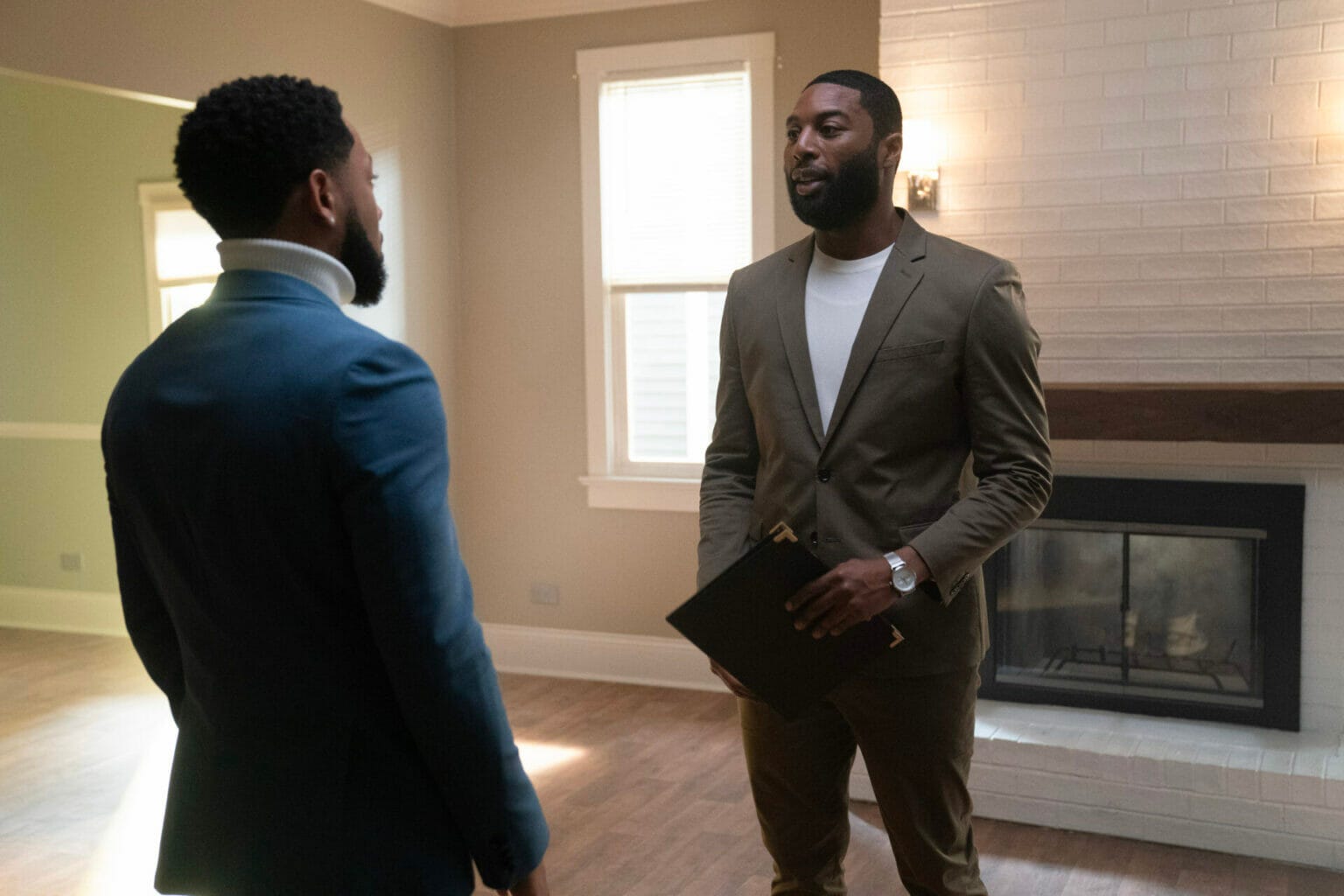
Mackie praised series creator Lena Waithe for her dedication to including Black people from various backgrounds—not just from the hood or middle class.
“I love how she uses her platform to create challenging stories and affirming characters for the African American community, the LGBTQIA community, and African American men and women,” Mackie said, noting how the series has always featured a lesbian couple and how Luke James’ character is bisexual and in a relationship with Imani.
The Chi “has long featured a same-gender-loving lesbian couple and their blended family,” Mackie added.
“Then she introduced a groundbreaking trans character in a loving relationship with a man who doesn’t identify as gay but is a part of the queer spectrum, the beauty of these characters is that they are humanized and aren’t played for stereotypes. They are grounded as people and grounded in the reality of the series. I absolutely love that. These characters are a part of that ongoing commitment to representation.”


Leave a Reply