
Exploring the impact of sensationalism and idolization in the wake of tragedy.
Dante Belcher
Dec 23, 2024
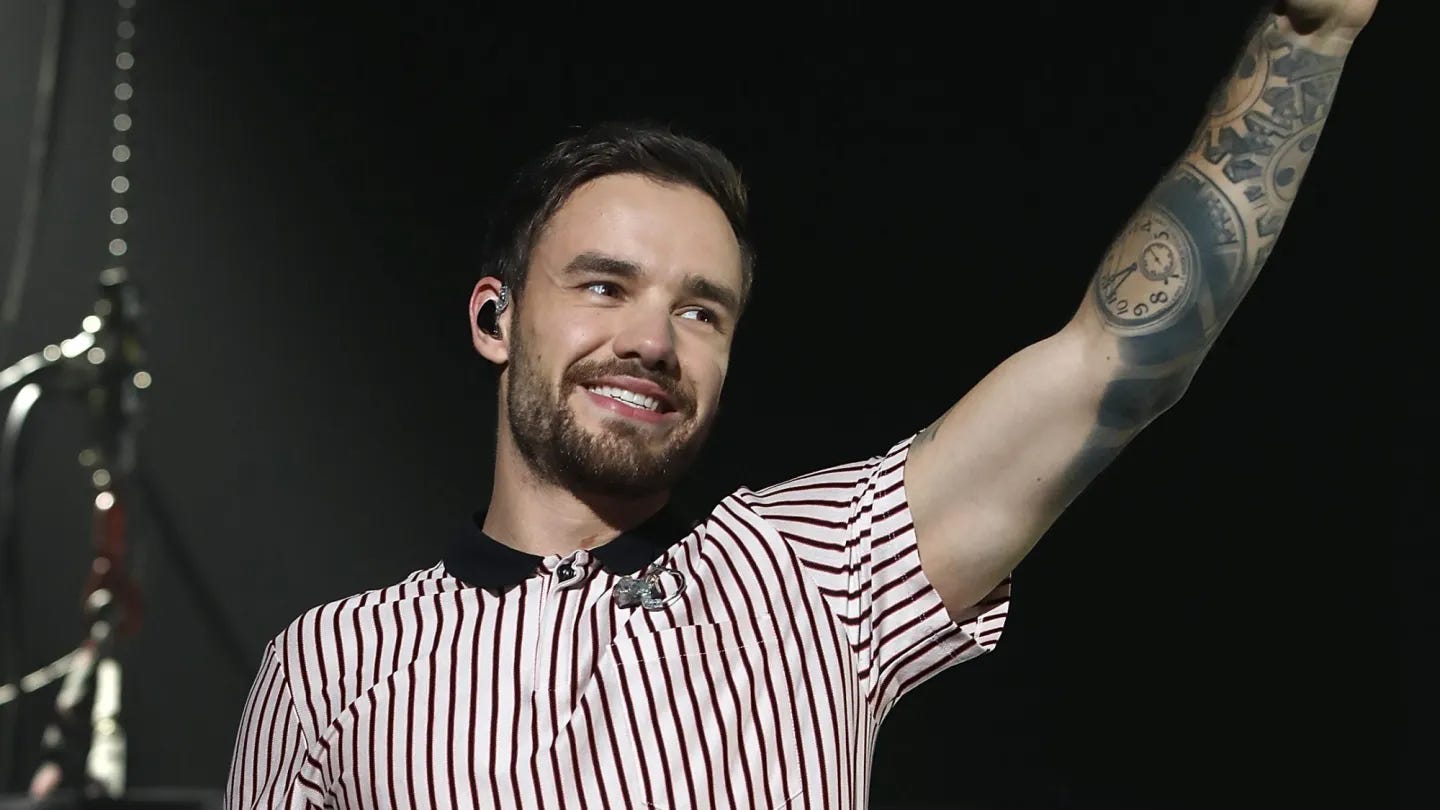
Content Warning: This article contains discussions about substance abuse, domestic abuse allegations, and the circumstances surrounding Liam Payne’s death, which may be triggering or distressing for some readers. Please proceed with caution and prioritize your well-being.
The tragic death of One Direction member Liam Payne in October sent shockwaves through the music industry. The 31-year-old singer died following a fall at a hotel in Argentina, leaving behind his son, Bear.
One Direction, which consisted of Payne, Niall Horan, Zayn Malik, Harry Styles, and Louis Tomlinson, is one of the best-selling boy groups of all time with 70 million records sold. Each member has also had successful solo careers, with Harry Styles having one of the longest-running Billboard Hot 100 No. 1 singles in history with his 2022 hit As It Was, which spent 15 weeks atop the chart.
While Payne’s death is a personal tragedy, it also highlights the media’s role in sensationalizing celebrity deaths. In a culture that idolizes public figures, the coverage of such losses often reveals societal patterns in how grief is processed, and fame is valued.
The Circumstances Surrounding Liam Payne’s Death
Payne traveled to Argentina with his girlfriend Kate Cassidy to renew his U.S. visa at the United States embassy in Buenos Aires and to see former bandmate Niall’s concert. Cassidy later flew to her home in Florida on October 14, while Payne stayed in Argentina.
By October 16, Payne was staying on the third floor of the CasaSur Hotel in Buenos Aires. Fans who encountered Liam that day told reporters that he spoke with them about his time in Buenos Aires and his love for the city.
Payne, who struggled with substance abuse disorder (SUD), later was seen having an outburst in the hotel as the manager called police reporting “an aggressive man who could be under the effects of drugs and alcohol”. Reports from the Associated Press indicate that the hotel had “a guest who is overwhelmed with drugs and alcohol … He’s destroying the entire room and, well, we need you to send someone, please,” mentioning in a 911 call that the room had a balcony.
Following the arrival of emergency services, Payne fell more than 46 feet from the hotel’s third floor balcony and sustained cranial fractures and serious injuries that according to officials rendered him incompatible with life with “no possibility of resuscitation”. His death was confirmed at shortly after 5 p.m. in Argentina. An investigation was opened following his death and several medications including clonazepam, was found in his hotel room.
However, various organizations incorrectly reported that Payne had “multiple substances” in his system when he died, including crack cocaine, benzodiazepine, and the relatively new drug pink cocaine. Argentina’s public prosecutor’s office had to clarify that the results of the toxicology report were not complete at the time and denied the information that was reported. It was later confirmed that Payne had “traces of alcohol, cocaine, and a prescribed antidepressant” in his system.
Buenos Aires police later raided the CasaSur Hotel, as part of their investigation. Police seized camera footage from the hotel, as well as computers. On November 7, three people were charged in connection to Payne’s death with “abandonment of a person followed by death” and “supplying and facilitating the use of narcotics.” The suspects were later identified as a friend of Payne, a hotel employee who provided cocaine to Payne, and a drug dealer.
In the wake of his death, ex-fiancée Maya Henry, who dated Payne on and off from 2018 to 2022, gained attention after publicly discussing the alleged abuse she endured during their relationship. She previously shared details of their relationship on her TikTok account and in podcast The Internet is Dead, where she said that Payne “started to get abusive” following the engagement.
This approach by many media outlets reflects a troubling trend: the sensationalizing of serious issues, such as abuse, in the aftermath of a celebrity’s death. Instead of addressing these allegations with the seriousness they deserve, much of the coverage reduced them to scandalous headlines, which further stigmatizes a sensitive and important issue and is a disservice to survivors and trivializes their experiences. Additionally, since Payne’s death, some of his fans have sent threats towards Maya Henry, further sensationalizing the situation.
The Sensationalism of Celebrity Deaths
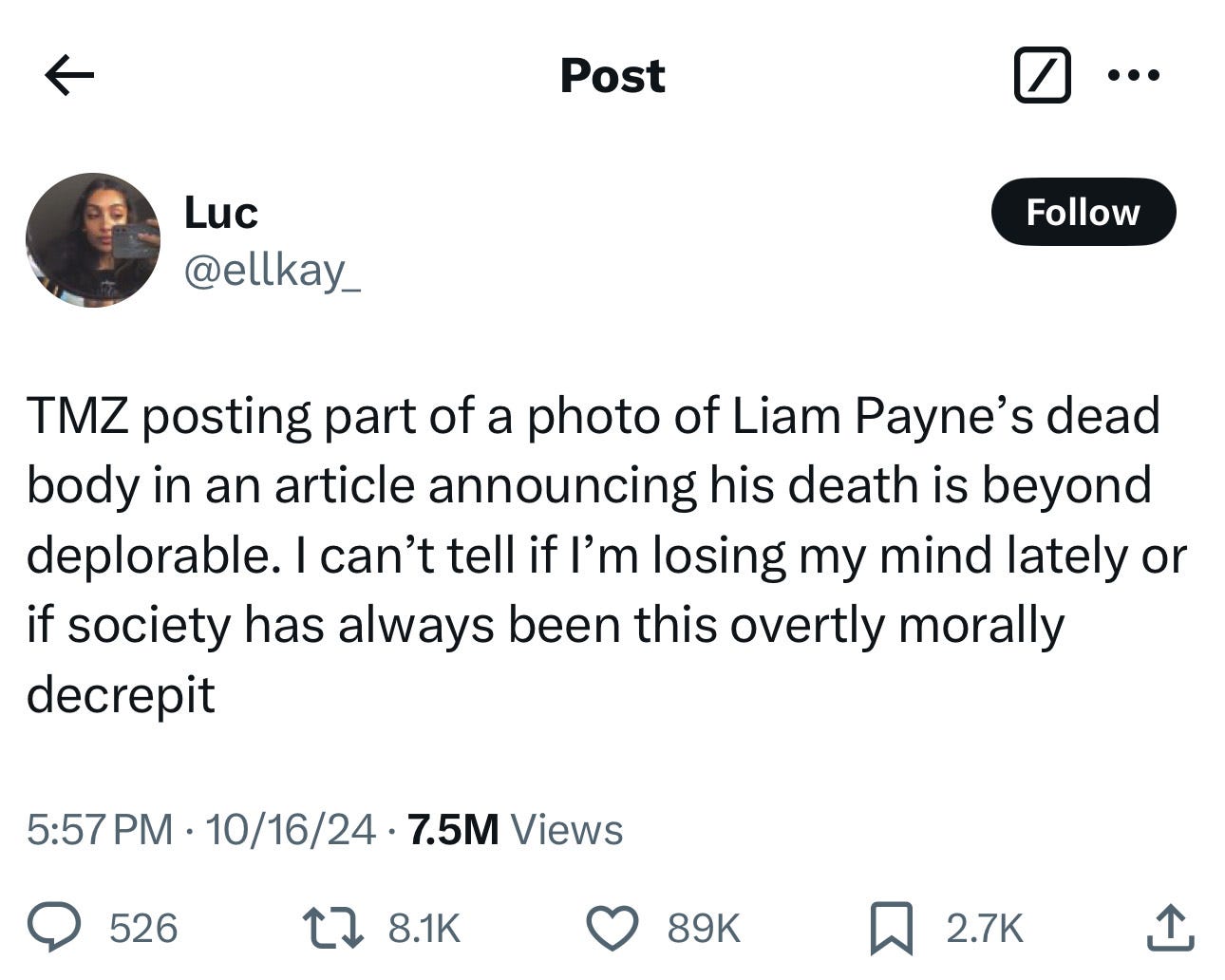
Liam Payne’s death revealed a continuing trend in how the media views celebrities following their deaths. Shortly after Payne died, TMZ obtained pictures of his corpse after his fall from the balcony and published images that showed his arm and waist. TMZ later removed the photo after public backlash.
“TMZ posting part of a photo of Liam Payne’s dead body in an article announcing his death is beyond deplorable. I can’t tell if I’m losing my mind lately or if society has always been this overtly morally decrepit,” wrote a fan on X.
ABC and Hulu received scrutiny from the A.V Club for releasing a documentary about Payne’s final days less than a week after his passing, with the author mentioning how Liam’s body wasn’t buried yet at the time of airing.
The sensationalism of celebrity deaths has been seen with other celebrities such as Amy Winehouse and Marilyn Monroe. In each of these cases, the media’s portrayal of their passing often magnified specific aspects of their lives, while reducing the circumstances of their deaths.
Amy Winehouse has faced extensive coverage posthumously for her struggles with substance abuse and mental health. Upon the release of her biopic Back to Black, named after her second and final studio album, the film was criticized in an opinion piece of The Guardian for exploiting her troubled life and mental state,
“Much of her career was a media circus, with tabloids and commentators fixating on her weight, her substance abuse issues and her public meltdowns. The stark images on set feel like they play into the very same voyeuristic impulses that led to Winehouse’s decline,” said Shaad D’Souza.
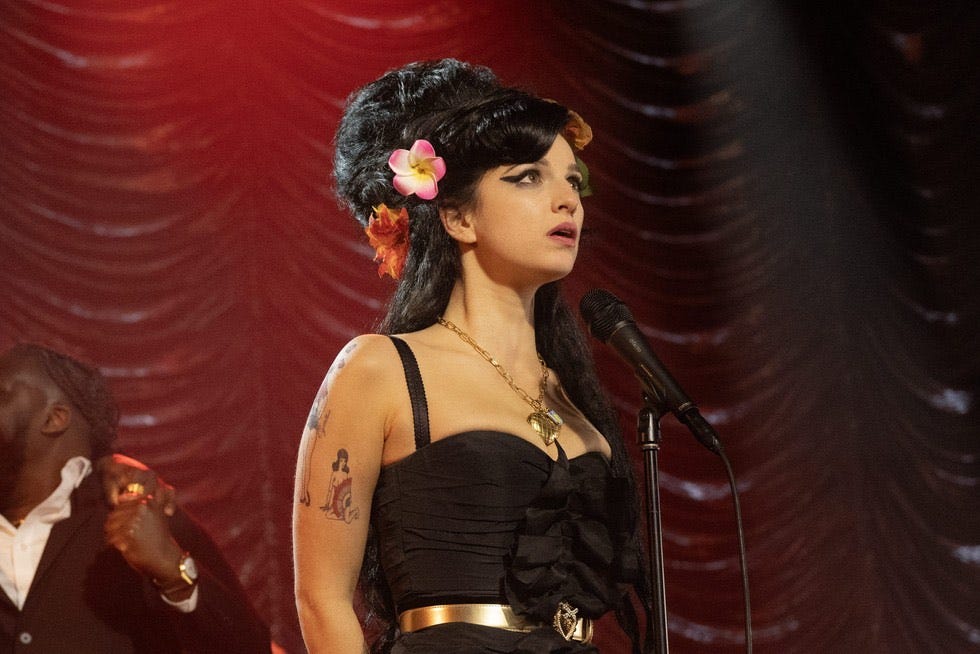
The biopic further faced scrutiny for oversimplifying Winehouse’s life, portraying her primarily as a hopeless romantic while overlooking her experiences as a victim of domestic abuse and exploitation, including by her father. Critics further noted the film’s failure to address how her ex-husband, Blake Fielder-Civil, introduced her to drugs such as crack cocaine and heroin.
“Some of us still remember a world where Winehouse was hounded by paparazzi, called a “junkie” and found that her misgivings took a larger stage than her talent. Back to Black refuses to acknowledge the humanity beneath it all, unfairly sensationalizing a talented, troubled woman beyond the grave,” wrote Jade Gomez in Paste Magazine.
Marilyn Monroe’s death became a media spectacle. Since her passing in 1962, coverage has been marked by mystery and speculation regarding the circumstances of her death, to such a point that a reinvestigation into her death was reopened in 1982. Known as one of Hollywood’s biggest stars of all time, conspiracy theories opened discussions on whether her fatal overdose was a suicide, an accident, or foul play.
Reports from the Los Angeles Times showed that Monroe’s death was from “acute barbiturate poisoning,” with barbiturates being a class of drugs that affect the central nervous system (CNS). While conspiracy theories questioned why the medical examiner found no barbiturate residue in her stomach if the drugs were taken orally, this claim was later proven false. Information showed that the barbiturates had time to disperse into her system, as she was found several hours after her death.
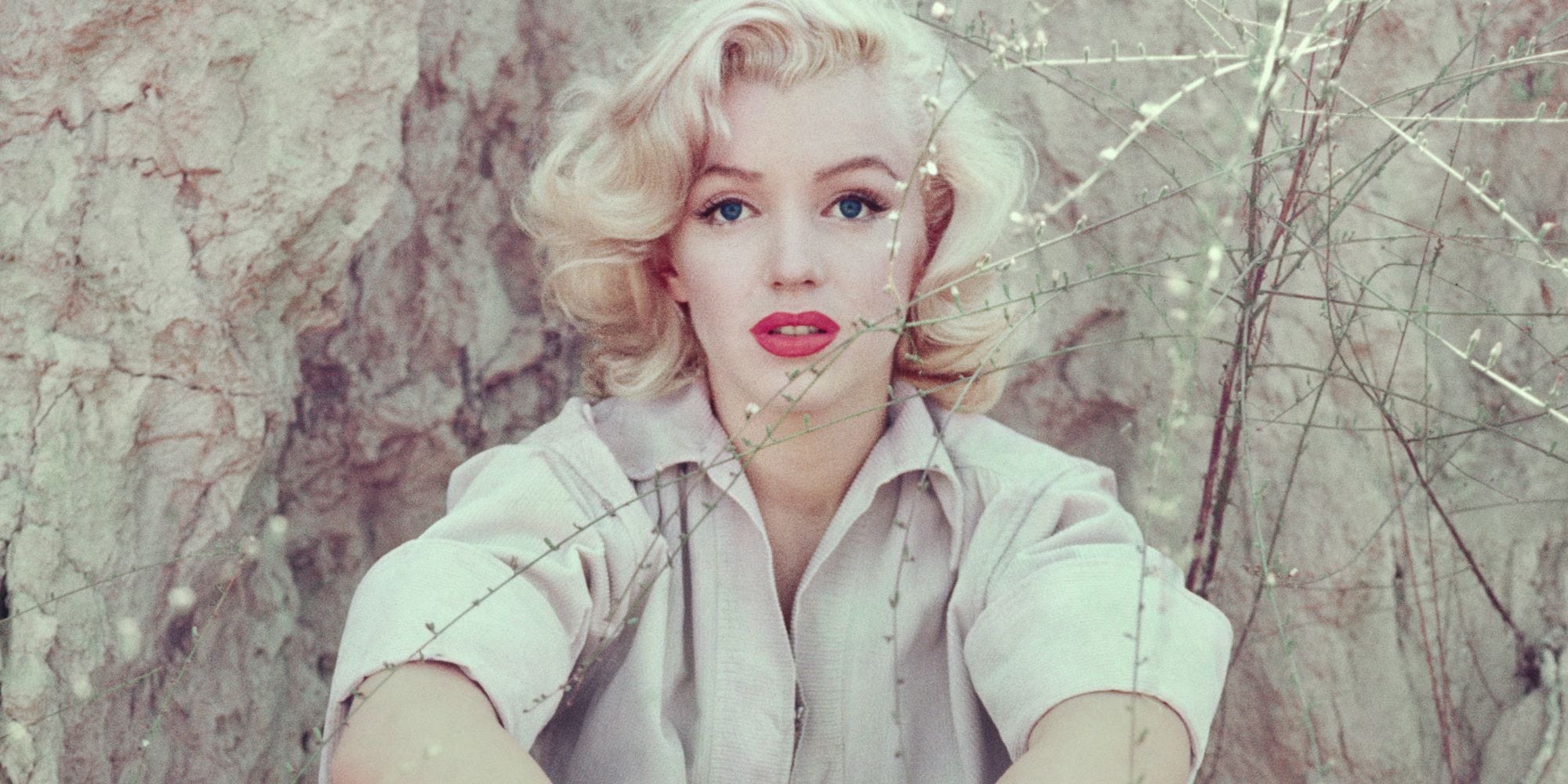
The media scrutiny surrounding Marylin Monroe’s death led to so much speculation that the FBI created a file to document theories about her passing. The file, made public 50 years after her death, revealed how much of the media’s focus placed on the circumstances surrounding her death, rather than the event itself.
The Societal Implications of Idolization
The idealization of celebrities, especially after their deaths, reflects a broader trend of elevating public figures to “near-mythical” status. This tendency to place celebrities on a pedestal often comes at the expense of mental health, as both celebrities and their audiences face repercussions from parasocial relationships.
Studies from the National Library of Medicine show that people who idolize celebrities are more likely to have concerns with body image, dissociation, and clinical symptoms of depression, anxiety, and social dysfunction. Using the Celebrity Worship Scale, research conducted in the United Kingdom among university students found a correlation between moderate levels of celebrity worship and cosmetic surgery, with Botox being the most considered option.
Research from the University of Barcelona shows that people on the Absorption Addiction Model (AAM), a three-level framework assessing participation in parasocial relationships, showed increased narcissistic tendencies at levels 2 and 3.


Leave a Reply