
Examining HBO’s Euphoria and Its Influence on Perceptions of Mental Health, Identity, and the Pressures Facing Today’s Youth.
Dante Belcher
Sep 3, 2024
Content Warning: This article contains discussions of mental health issues, substance abuse, explicit language, and trauma as depicted in the HBO series Euphoria. Reader discretion is advised.
Since its premiere in 2019, HBO’s Euphoria has become a defining show for Gen Z, breaking viewership records and, at one point, becoming the most-tweeted TV series of the 2020s. The series also has become a critical darling at the Emmys, with the series winning multiple. However, while Euphoria has generated buzz throughout its two seasons and upcoming third season, the series has faced controversy for its portrayal of content such as self-harm, drug use, and extreme nudity among its teenaged characters.
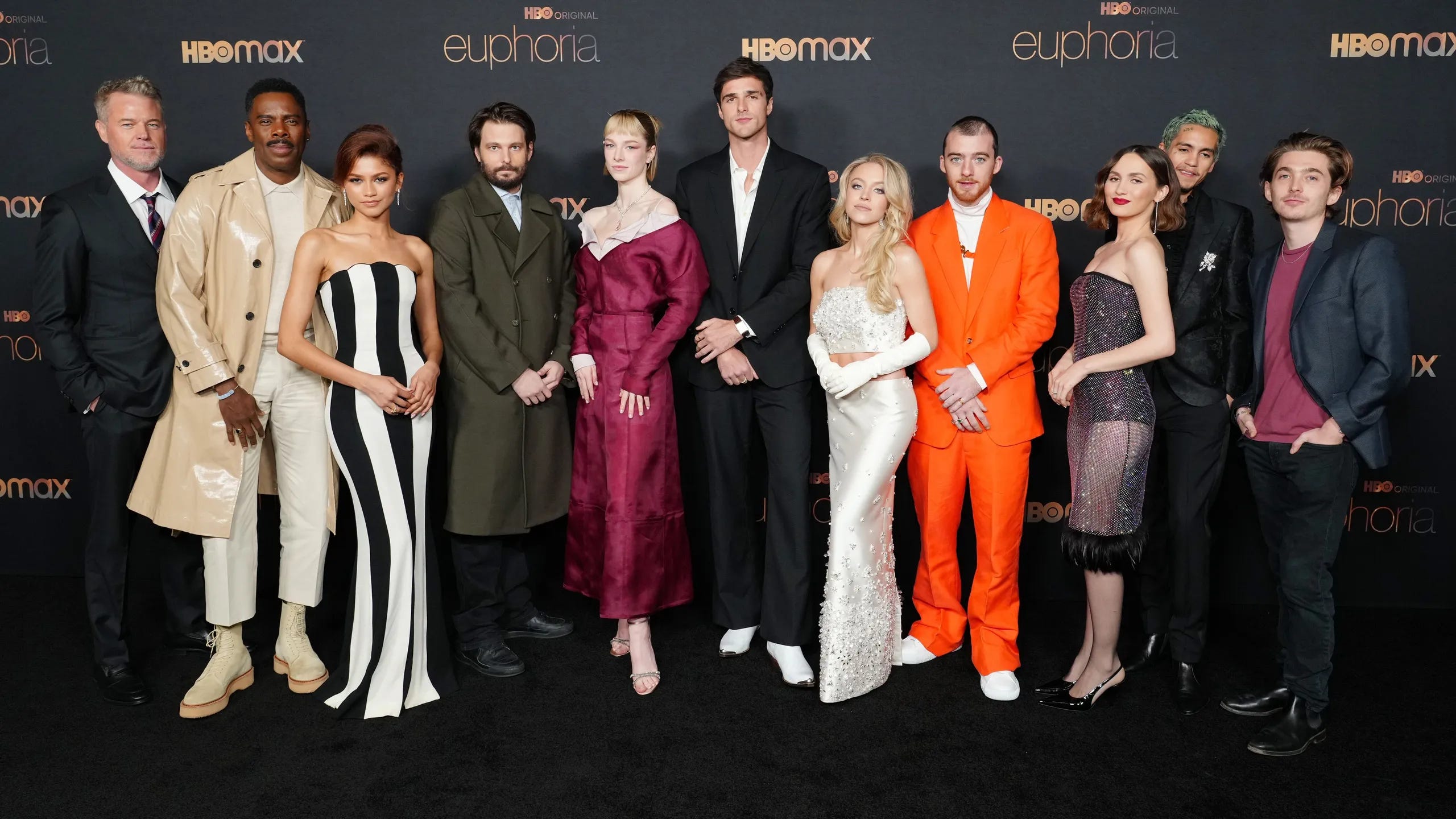
The teen drama stars Zendaya as the main character Rue Bennett, a teenager who struggles with substance abuse. The series also stars Sydney Sweeney, Jacob Elordi, Hunter Schafer, Coleman Domingo, and Grey’s Anatomy alum Eric Dane. While the series follows the characters in the fictional town of East Highland, California, there is an exploration of topics beyond Rue’s substance abuse such as child abuse, toxic relationships and positivity, domestic violence, human trafficking, and sexual assault.
Euphoria is inspired by series creator Sam Levinson’s upbringing and his own experiences with substance abuse as a teenager, in an interview with Entertainment Weekly regarding the writing process he remarked,
“I just write myself and what I was feeling and what I was going through when I was younger and I was dealing with addiction,” said Levinson.
Exploration of Trauma
Euphoria has gained significant attention for its explicit portrayal of substance abuse, particularly through the character of Rue Bennett. The pilot episode provides a detailed backstory for Rue, who becomes addicted to opiates after the loss of her father to cancer. Born shortly after the September 11 attacks, Rue’s struggle with addiction begins as she takes her father’s prescription drugs to cope with his illness and her family’s challenges. Her addiction escalates, leading to an overdose and subsequent rehabilitation, setting the stage for the series.
The show introduces several other characters with their own traumatic experiences. Nate Jacobs, initially presented as a typical high school quarterback with anger issues, is revealed to have deep-seated trauma and sexual insecurities stemming from his father, Cal, a closeted bisexual man. A key plot point in the second episode involves Nate discovering his father’s hidden porn collection, which includes non-consensual videos of both young men and women.
Cal’s double life and its repercussions become central to the narrative with the introduction of Jules, a transgender girl who moves to East Highland with her father. Jules, who lies about her age on a hookup app, ends up having sex with Cal, who non-consensually records the encounter. This incident leads to legal and personal conflicts, including Nate’s catfishing and blackmailing of Jules. Cal faces legal consequences by the end of the second season.
Jules’s relationship with Rue becomes increasingly strained in season two, particularly as Rue gets involved in drug trafficking and Jules cheats on her with Elliot, a newcomer who also battles substance abuse. Maddy Perez, introduced as a confident and popular girl, experiences a tumultuous relationship with Nate. Initially emotionally abusive, their relationship turns physical, culminating in Nate choking Maddy at a carnival, which leads to police involvement. Despite breaking up with Nate, Maddy later faces a dangerous confrontation with him in season two after discovering a compromising sex tape.
Cassie Howard’s storyline revolves around her experiences with objectification and seeking male validation following her father’s abandonment and her mother’s struggle with alcoholism. After an abortion, Cassie’s relationship with her ex-boyfriend McKay ends. Her friendship with Maddy deteriorates after a secret affair with Nate. Cassie’s sister, Lexi, a childhood friend of Rue, gains confidence through her playwriting and begins a romantic relationship with Fezco, a local drug dealer and Rue’s friend.
Kat Hernandez is introduced as a plus-sized girl advocating for body positivity. In the first season, after her virginity is exploited through revenge porn, Kat engages in underage sex work as a camgirl but quits following a traumatic experience with an older man.
Impact
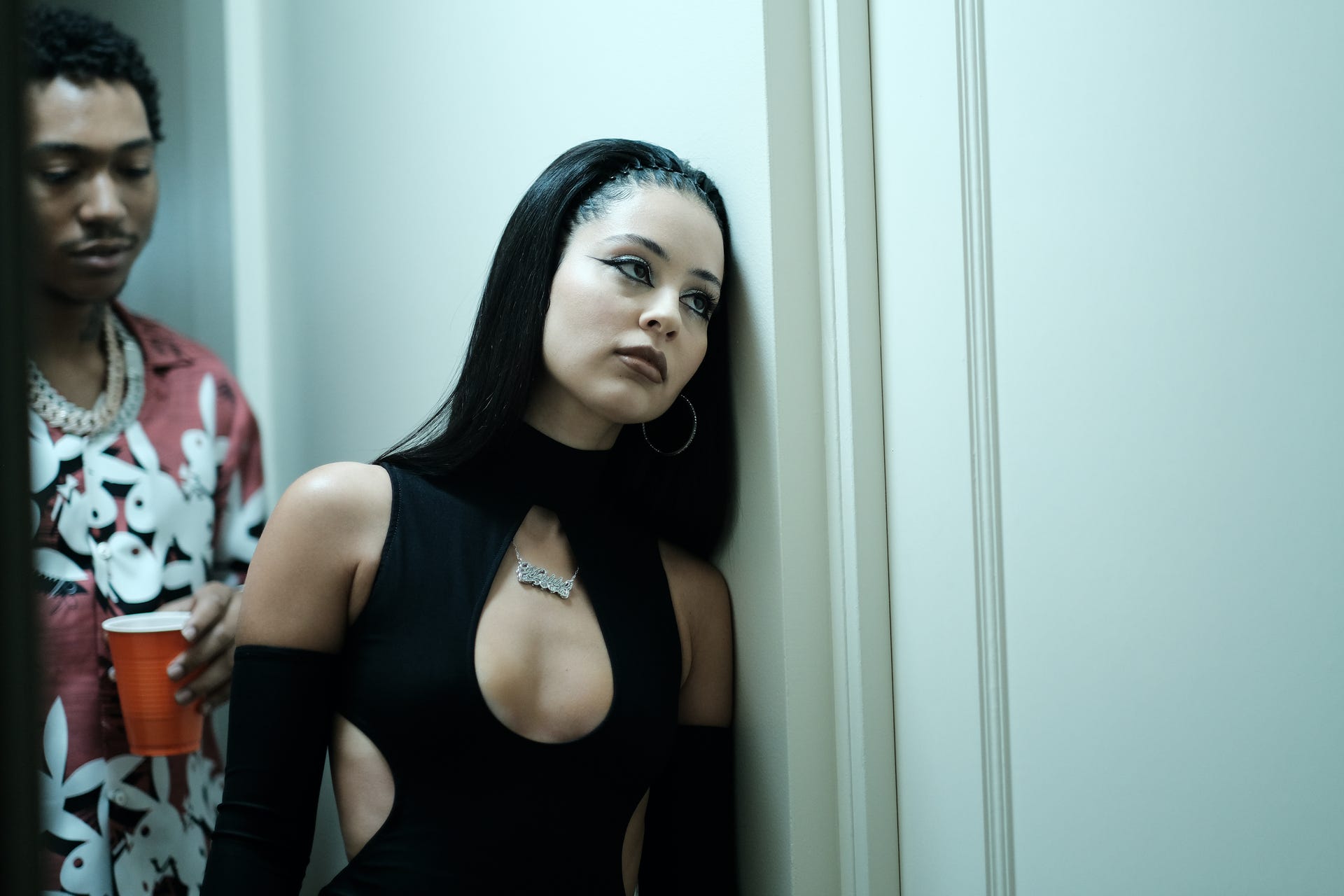
While Euphoria does include content warnings, many viewers have reported being triggered by its graphic depiction of sensitive topics. According to research from Middle Tennessee State University, 60% of people surveyed found that the series’ content made them feel anxious and mentally overwhelmed. Some respondents noted that the anxiety caused by watching the show was “more of an anxious (feeling), but not in an overwhelming way, more in a ‘what’s going to happen next’ way.”
Further research found that 57% of respondents found the content triggering, with another respondent relating on a personal level,
“I enjoy the storyline. I like that I can see dysfunction on a screen. I like that I can see broken families, families with drug problems, toxic relationships and friends. I relate to that dysfunction even though I don’t dress like they do or wear the makeup, but I did live that life they do,” said the respondent.
Euphoria’s unfiltered and graphic portrayal of substance abuse has led to ripple effects among its Gen Z viewers. Data published through Wiley shows that viewers have shown increased support for harm reduction strategies and empathy towards those who struggle with addiction.
It is estimated that over 100,000 die each year from drug overdoses across all income groups. A study from Johns Hopkins University found that 32% of the U.S. adult population lost someone they knew to a fatal drug overdose. During the study, Alene Kennedy-Hendricks, PhD, assistant professor in John Hopkins’ Department of Health Policy and Management called the overdose crisis a “national tragedy.”
“Although large numbers of U.S. adults are bereaved due to overdose, they may not be as visible as other groups who have lost loved ones to less stigmatized health issues. Movements to build support for policy change to overcome the devastating toll of the overdose crisis should consider the role of this community,” said Hendricks.
In an era where drugs such as fentanyl and opiates, are becoming more available and easily obtainable, studies have shown that community involvement and support is vital in breaking the stigma towards substance abuse.
Criticisms of Euphoria
Euphoria has started a conversation regarding substance abuse and the effects of trauma. However, since the series inception there has been controversy and backlash due to the subject material and characters being high school aged.
The first season gained attention for its frequent inclusion of full-frontal nudity of its male characters, with a high school locker room scene in the second episode receiving backlash. Jules’ statutory rape scene with Cal in the pilot episode earned the series greater scrutiny. The Parents Television and Media Council (PTC) said the series was “dark, depraved, degenerate and nihilistic” and have criticized HBO for its content.
“The show frequently depicts characters, both teens and adults, engaged in sex, some scenes of which depict statutory rape; and it normalizes pornography and promotes underage drinking, smoking, drug use, among other dangerous behavior. AT&T/HBO have arrogantly claimed they have ‘creative freedom’ to show sexual violence involving children. And while Euphoria is rated TV-MA, suggesting it is intended only for mature audiences, the program has been marketed directly to children via social media, including instructions on how to view it on the HBO streaming app for free,” the PTC released in a statement.
The Drug Abuse Resistance Education program (D.A.R.E), which was founded during the Ronald Regan-era, advocated for a zero-tolerance policy regarding drug use and expressed the desire to consult the representatives of the show.
“Rather than further each parent’s desire to keep their children safe from the potentially horrific consequences of drug abuse and other high-risk behavior, HBO’s television drama, ‘Euphoria,’ chooses to misguidedly glorify and erroneously depict high school student drug use, addiction, anonymous sex, violence, and other destructive behaviors as common and widespread in today’s world,” said D.A.R.E in a statement.
Series creator Sam Levinson responded to the criticisms during an interview with The Hollywood Reporter, saying that “There are going to be parents who are going to be totally fucking freaked out,” claimed Levinson.
HBO President and CEO Casey Bloys dismissed the criticisms in the same interview,
“We’re not trying to put out a Gossip Girl,” said Bloys.
Ahead of the season two premiere, Zendaya released a statement on Instagram warning viewers of the explicit content.
“I know I’ve said this before, but I want to reiterate to everyone that Euphoria is for mature audiences. This season, maybe even more so than the last, is deeply emotional and deals with subject matter that can be triggering and difficult to watch,” Zendaya wrote.
Influence on Pop Culture
Despite the controversy, Euphoria has significantly impacted pop culture and fashion, influencing beauty standards and trends, particularly through social media.
In an interview with Time Magazine, fashion historian and curator Darnell-Jamal Lisby said that the series’ approach to fashion symbolizes Gen Z.
“When I see Gen Z, they are risk takers, they’re putting it all out there. They have this unabashed confidence to be their truest selves in terms of their sexuality, in terms of their gender identity. If they want to be a little more ‘provocative,’ they’re going to do it,” said Lisby.
In the series Zendaya’s character Rue often rejects gender norms, preferring to wear androgynous clothing and suits for formalwear. The psychedelic streetwear prominently featured on the show has led to fans recreating the looks on social media.
Gen Z is also the first generation to fully be born in the “digital age,” with most of us having grown up in a world dominated by the internet, and social media.
Euphoria’s impact on fashion has also impacted trends on the red carpet, featuring bright and eccentric colors inspired by 70’s-era glam rock and looks by singer Nina Simone and super model Twiggy.
Series makeup department head Doniella Davy expressed her excitement in an interview for these changing beauty standards,
“Our society is still brimming with antiquated beauty, makeup and gender norms, and Gen Z’s unapologetic approach to self-expression works to dismantle these norms in a more widespread way than ever before, because of the constant flow of self-broadcasting that is social media,” said Davy.
Since the premiere of the series, there have been numerous makeup tutorials and fashion styling techniques inspired by the show on social media such as Instagram and post notably Tik Tok.
Euphoria has stood as a defining cultural moment for Gen Z. The series raw portrayal of trauma, substance abuse, and relationships have renewed conversations on the realities of coming of age, and addressing the elephant in the room of addiction, while simultaneously earning criticism for its explicit portrayal of these issues.


Leave a Reply