
Week 20 brings major domestic and international policy shifts, including new travel restrictions, a push to defund public media, and proposed deep tax and health care changes.
Dante Belcher
Jun 6, 2025
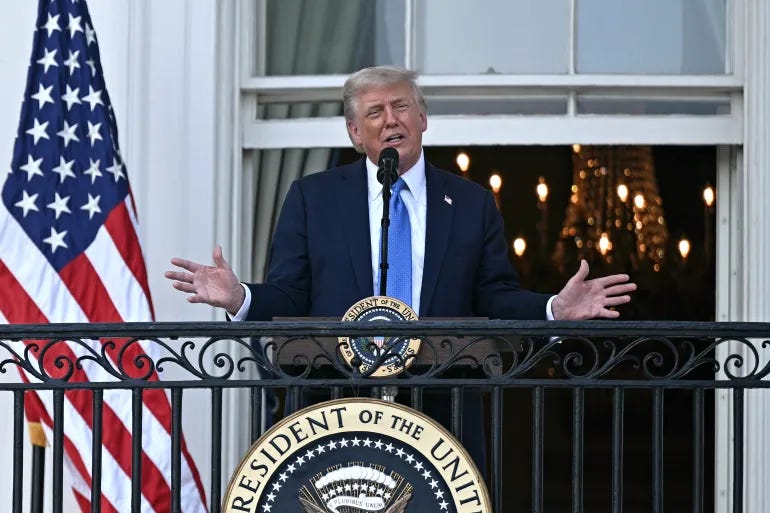
Trump’s twentieth week brought sweeping developments on immigration enforcement, abortion rights, public media funding, LGBTQ+ recognition, and university oversight.
President Trump signed a new travel ban affecting 12 countries, including Iran, Somalia, Haiti, and Afghanistan—citing national security. Simultaneously, Immigration and Customs Enforcement (ICE) was instructed to escalate arrests, even without warrants, with a minimum target of 3,000 arrests per day. On abortion rights, the administration rescinded a Biden-era policy requiring hospitals to perform emergency abortions in life-threatening situations, rolling back federal protections established after Roe v. Wade was overturned in 2022.
The president also stirred controversy by asking Congress to rescind more than $9 billion in funding for public broadcasting and foreign aid—deepening tensions after The Introspective previously reported on lawsuits filed by NPR and PBS over similar executive actions.
As backlash continues against diversity, equity, and inclusion (DEI) policies, Defense Secretary Pete Hegseth ordered the Navy to remove Harvey Milk’s name from a ship—sparking outrage from LGBTQ+ advocates in San Francisco. Meanwhile, following The Introspective’s earlier reporting on tensions with Harvard University, Columbia University now faces a similar threat, with the Trump administration moving to revoke its accreditation over antisemitism allegations.
The Congressional Budget Office (CBO) also raised concerns after the House of Representatives passed the “One Big Beautiful Bill” Act. Analysts warn the plan could raise deficits by $2.4 trillion and result in nearly 11 million people losing health insurance by 2034—including 1.4 million undocumented immigrants currently covered by state-funded programs.
Immigration, Travel Bans, and Abortion Rights
As tensions over anti-immigrant sentiment escalate, President Trump announced a sweeping travel ban impacting 12 countries—including Afghanistan, Myanmar (Burma), Chad, the Republic of the Congo (not to be confused with the neighboring Democratic Republic of the Congo), Equatorial Guinea, Eritrea, Haiti, Iran, Libya, Somalia, Sudan, and Yemen—citing national security concerns.
“President Trump is fulfilling his promise to protect Americans from dangerous foreign actors that want to come to our country and cause us harm,” White House Deputy Press Secretary Abigail Jackson wrote in a post on X, citing the recent attack in Boulder, Colorado, as the administration’s motivation for the ban.
“These commonsense restrictions are country-specific and include places that lack proper vetting, exhibit high visa overstay rates, or fail to share identity and threat information,” she continued.
The legislation also imposes restrictions on people from seven additional countries—Burundi, Cuba, Laos, Sierra Leone, Togo, Turkmenistan, and Venezuela. Exceptions will be made for lawful permanent residents, current visa holders, and individuals whose entry is deemed to serve U.S. national interests.
At the same time, Immigration and Customs Enforcement (ICE) officers were ordered to escalate arrests—even without warrants—as new internal quotas set a target of 3,000 arrests per day.
In an email obtained by The Guardian, Marcos Charles, the acting executive associate director of Enforcement and Removal Operations, instructed officials to “turn the creative knob” regarding arrests and to “push the envelope.”
“All collaterals encounters [sic] need to be interviewed, and anyone that is found to be amenable to removal needs to be arrested,” Charles wrote.
“We complained for the last four years about not being allowed to do our job, and now the time has come for us to step up!”
In the same report, Michael Kagan, director of the University of Nevada, Las Vegas Immigration Clinic, said Trump’s policies throughout both his first and current terms have increased the risks of police brutality and racial profiling.
“Everyone can be a priority,” said Kagan.
“It’s about immigration enforcement becoming indiscriminate and just targeting whoever they can get their hands on, rather than a more targeted approach.”
Meanwhile, Trump officials rescinded a Biden-era policy that had required hospitals to perform emergency abortions in cases such as ectopic pregnancy and preeclampsia—a serious complication involving high blood pressure and organ damage—even in states where abortion is banned. The move further restricts reproductive care after Roe v. Wade was overturned in 2022.
“CMS will continue to enforce EMTALA, which protects all individuals who present to a hospital emergency department seeking examination or treatment, including for identified emergency medical conditions that place the health of a pregnant woman or her unborn child in serious jeopardy,” said the Department of Health and Human Services (HHS) in a press release. CMS and EMTALA refer to the Centers for Medicare and Medicaid Services and the Emergency Medical Treatment and Labor Act of 1986.
“CMS will work to rectify any perceived legal confusion and instability created by the former administration’s actions.”
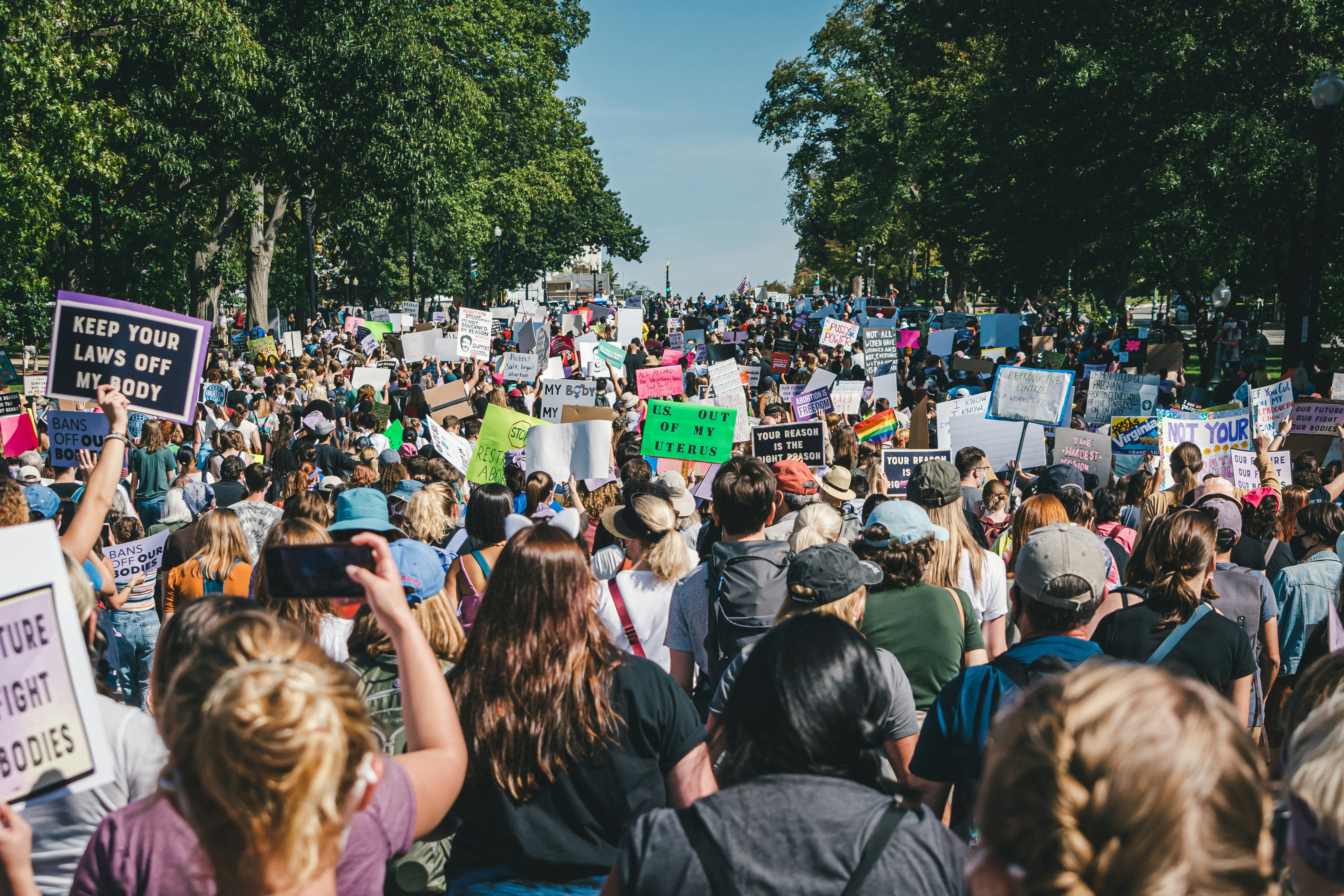
However, in a post on X, CMS Administrator Dr. Mehmet Oz stated that the law “has not changed.”
“Women will receive care for miscarriage, ectopic pregnancy, and medical emergencies in all fifty states,” Oz wrote.
“This has not and will never change in the Trump administration.”
Broadcasting Cuts, Harvey Milk, and Columbia University
Following previous Introspective reports detailing lawsuits filed by NPR and PBS over federal funding cuts, President Trump asked Congress to revoke more than $9 billion in funding for public broadcasting and foreign aid—including $1.1 billion in rescinded support for public broadcasters over the next two years.
A memo obtained by The Introspective also revealed requests to eliminate funding allocated to United Nations (UN) peacekeeping efforts, $900 million in global health programs, and $800 million in migration and refugee assistance.
In response, PBS President and CEO Paula Kerger emphasized the critical role federal funding plays for smaller and rural TV stations.
“Without PBS member stations, Americans will lose unique local programming and emergency services in times of crisis,” Kerger said.
“There’s nothing more American than PBS, and we are proud to highlight real issues, individuals, and places that would otherwise be overlooked by commercial media.”
In a separate statement, NPR President and CEO Katherine Maher warned that local radio stations could face severe budget shortfalls, potentially leading to mass layoffs. Maher also questioned the legality of Trump’s request.
“The proposal, which is explicitly viewpoint-based and aimed at controlling and punishing content, violates the Public Broadcasting Act, the First Amendment, and the Due Process Clause,” she said.
Simultaneously, as backlash against diversity, equity, and inclusion (DEI) policies continues, Defense Secretary Pete Hegseth ordered the Navy to remove the name of Harvey Milk—a gay veteran and LGBTQ+ advocate—from a naval ship. Milk was the first openly gay man elected to public office in California before being killed in 1978.
“Secretary Hegseth is committed to ensuring that the names attached to all DOD installations and assets are reflective of the commander-in-chief’s priorities, our nation’s history, and the warrior ethos,” said Pentagon spokesperson Sean Parnell, adding that any renaming will “be announced after internal reviews are complete.”
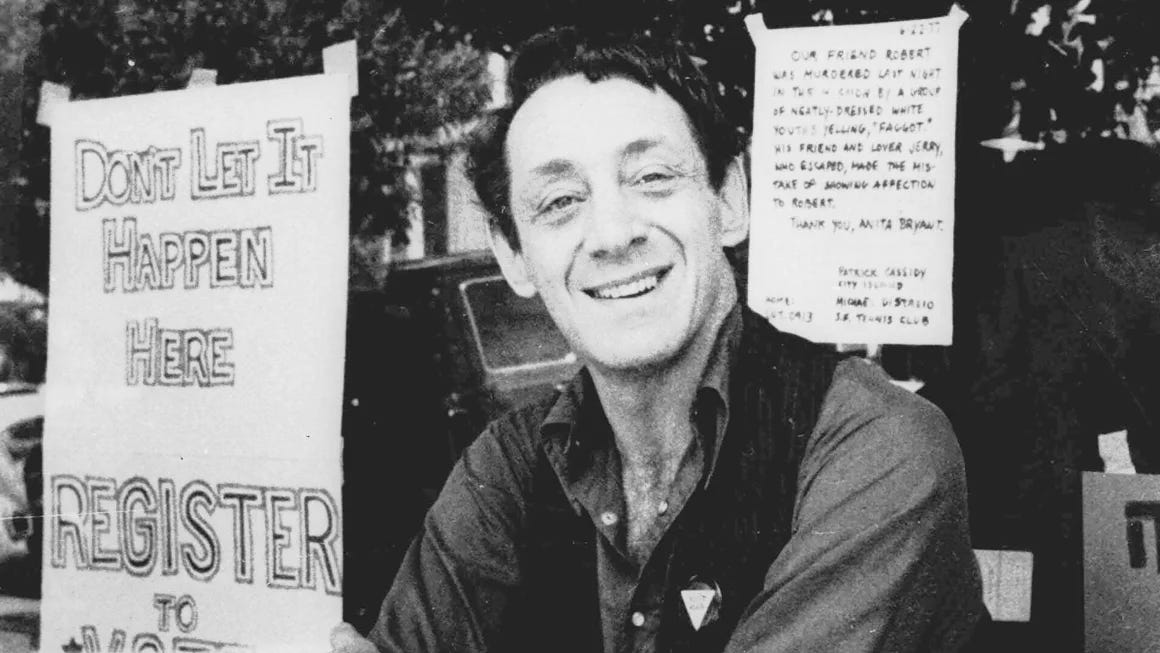
California Gov. Gavin Newsom condemned the decision, stating, “Donald Trump’s assault on veterans has hit a new low.”
“Harvey Milk wasn’t just a civil rights icon — he was a Korean War combat veteran whose commander called him ‘outstanding,’” Newsom wrote in a post on X.
“Stripping his name from a Navy ship won’t erase his legacy as an American icon, but it does reveal Trump’s contempt for the very values our veterans fight to protect.”
Meanwhile, following earlier Introspective coverage of tensions between Harvard University and the Trump administration over antisemitism allegations, officials are now threatening to revoke Columbia University’s accreditation. The administration has accused the Ivy League institution of violating the Civil Rights Act of 1964.
“Columbia University’s leadership acted with deliberate indifference towards the harassment of Jewish students on its campus. This is not only immoral, but also unlawful,” Education Secretary Linda McMahon said in a press release.
“We look forward to the commission keeping the department fully informed of actions taken to ensure Columbia’s compliance with accreditation standards, including compliance with federal civil rights laws.”
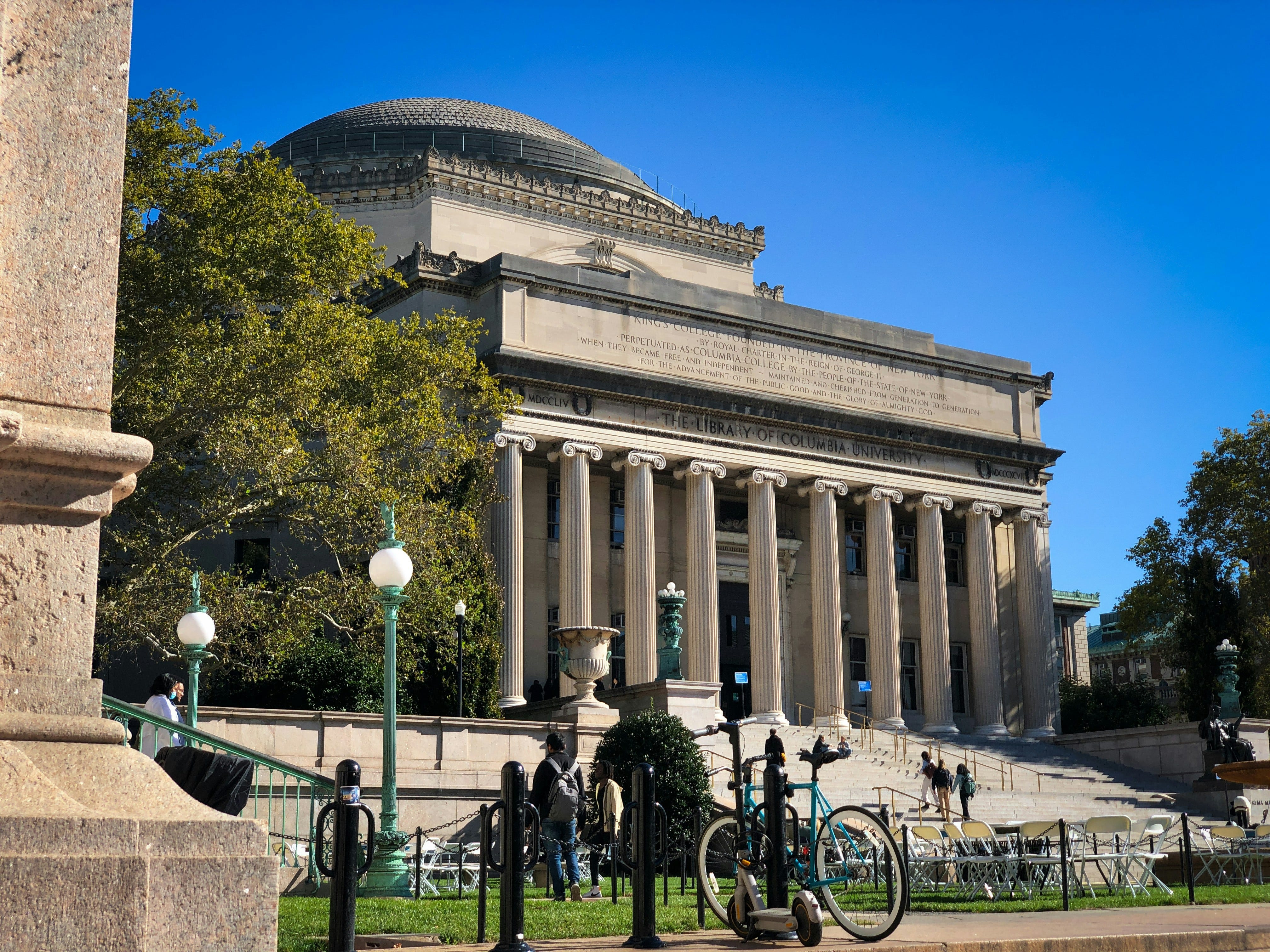
In response, Columbia University acknowledged the concerns and said it had been in communication with the Middle States Commission on Higher Education.
“Columbia is deeply committed to combatting antisemitism on our campus. We take this issue seriously and are continuing to work with the federal government to address it,” the university said in a statement.
The Office for Civil Rights initially launched the investigation over allegations tied to campus protests in support of Palestine.
Budget Plan Concerns
Following a previous Introspective report detailing the House of Representatives’ passage of the “One Big Beautiful Bill Act,” a major piece of legislation backed by President Trump, the Congressional Budget Office (CBO) estimated that the bill could increase annual budget deficits by more than $2.4 trillion over the next decade. Nearly 11 million people could lose health insurance due to proposed cuts to Medicaid and the Affordable Care Act (ACA).
House Majority Leader Steve Scalise dismissed the CBO’s concerns, arguing that the legislation would help businesses invest in their employees while maintaining low tax rates.
“This bill will actually reduce the deficit if you recognize the historical economic growth that has always been there,” Scalise said in a press release.

In a report by CBS News, House Speaker Mike Johnson also pushed back against the CBO’s projections.
“We’re not buying the CBO estimates,” Johnson said.
“The primary emphasis is on the work requirements. That’s the largest pool of people that they claim will be affected, and the minimal work requirement is 20 hours a week. Volunteer in your community, get a job, or do a job training.”


Leave a Reply