
Week 20 concludes with new legal showdowns, controversial deportations, and intensifying standoffs between the Trump administration and its critics in media, higher education, and state governments.
Dante Belcher
Jun 9, 2025
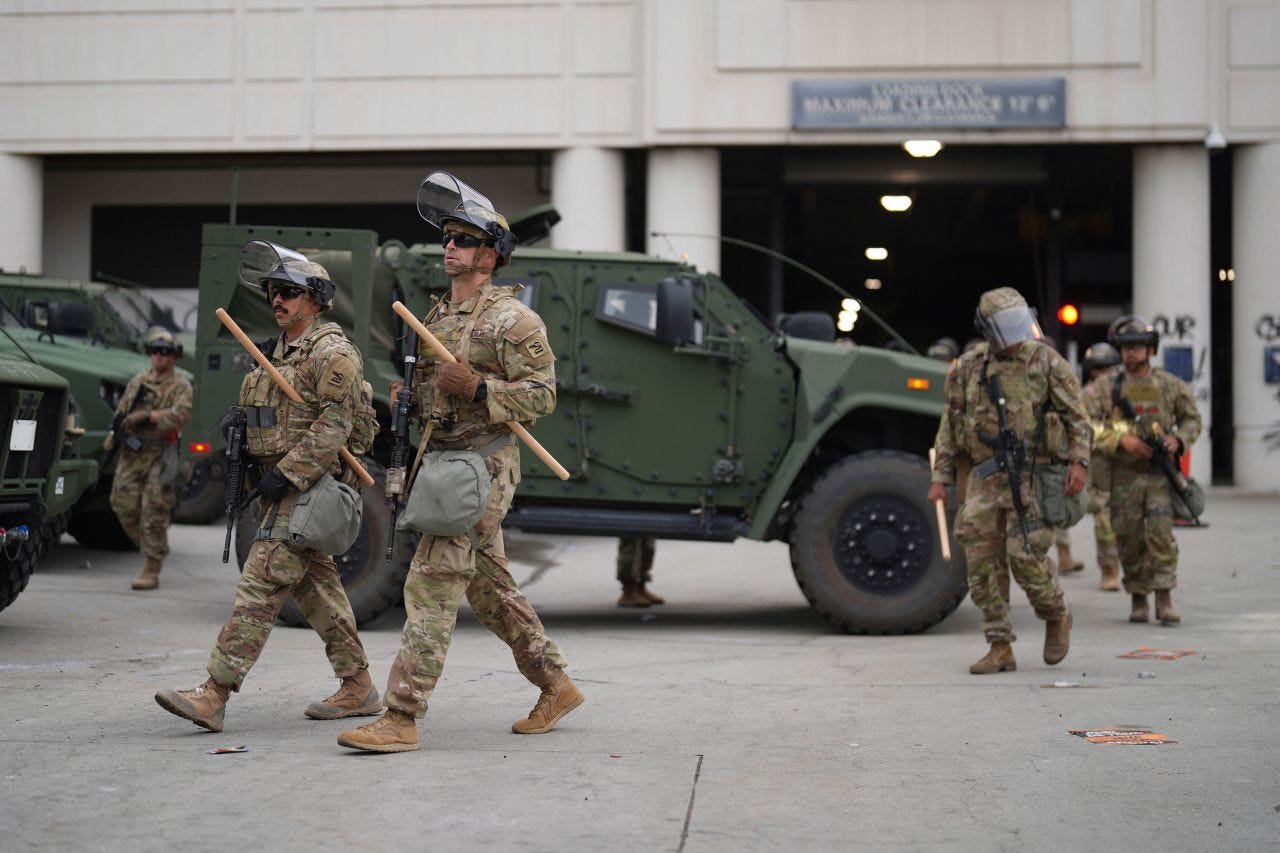
Trump’s twentieth week saw further escalations in immigration enforcement, legal battles, press restrictions, and Supreme Court decisions. President Trump deployed the National Guard to Los Angeles following mass protests against Immigration and Customs Enforcement (ICE) raids—marking the first time since the 1992 L.A. riots that a president has federalized National Guard troops in the city.
At the same time, a Guatemalan man who was wrongfully deported became the first person to be returned to the U.S. under a court order during Trump’s second term.
Following previous reporting from The Introspective on the wrongful deportation of Kilmar Abrego Garcia to El Salvador, he has now been returned to the United States, however, he faces smuggling charges. Meanwhile, proposed legislation in Congress would criminalize the publication of ICE agents’ identities—raising alarms among critics who say it could violate the First Amendment.
In Colorado, a state employee filed a lawsuit against Gov. Jared Polis, alleging that he ordered officials to illegally share the personal data of undocumented minors’ sponsors with ICE—violating state laws that he himself signed. That same day, in a case previously covered by The Introspective, a federal appeals court upheld the White House’s ban on the Associated Press from covering events in the Oval Office and other restricted spaces.
Elsewhere, the Supreme Court granted temporary access to the Department of Government Efficiency (DOGE) to review sensitive Social Security Administration (SSA) records, amid ongoing litigation. The move comes as Elon Musk—a former DOGE member—engaged in a heated exchange with the president on social media.
As tensions continue between Harvard University and the federal government over allegations of antisemitism and the freezing of research grants, Yale University joined 18 other institutions in a lawsuit supporting Harvard. The universities argue that the administration’s actions set a dangerous precedent for academic independence.
Finally, the far-right group the Proud Boys filed a lawsuit against the Department of Justice (DOJ) over their prosecution in the January 6, 2021, insurrection, alleging “political prosecution” and violations of their First Amendment rights.
Immigration: A Boiling Point
Anti-immigrant sentiment reached a boiling point over the weekend after President Trump deployed the National Guard in response to protests in Los Angeles against ICE raids—marking the first time since the 1992 L.A. riots that a president has federalized National Guard troops in the city.
“Numerous incidents of violence and disorder have recently occurred and threaten to continue in response to the enforcement of federal law by U.S. Immigration and Customs Enforcement (ICE) and other United States government personnel who are performing federal functions and supporting the faithful execution of federal immigration laws,” Trump wrote in a memo Saturday.
“The members and units of the National Guard called into federal service shall be at least 2,000 National Guard personnel, and the duration of duty shall be for 60 days or at the discretion of the Secretary of Defense.”
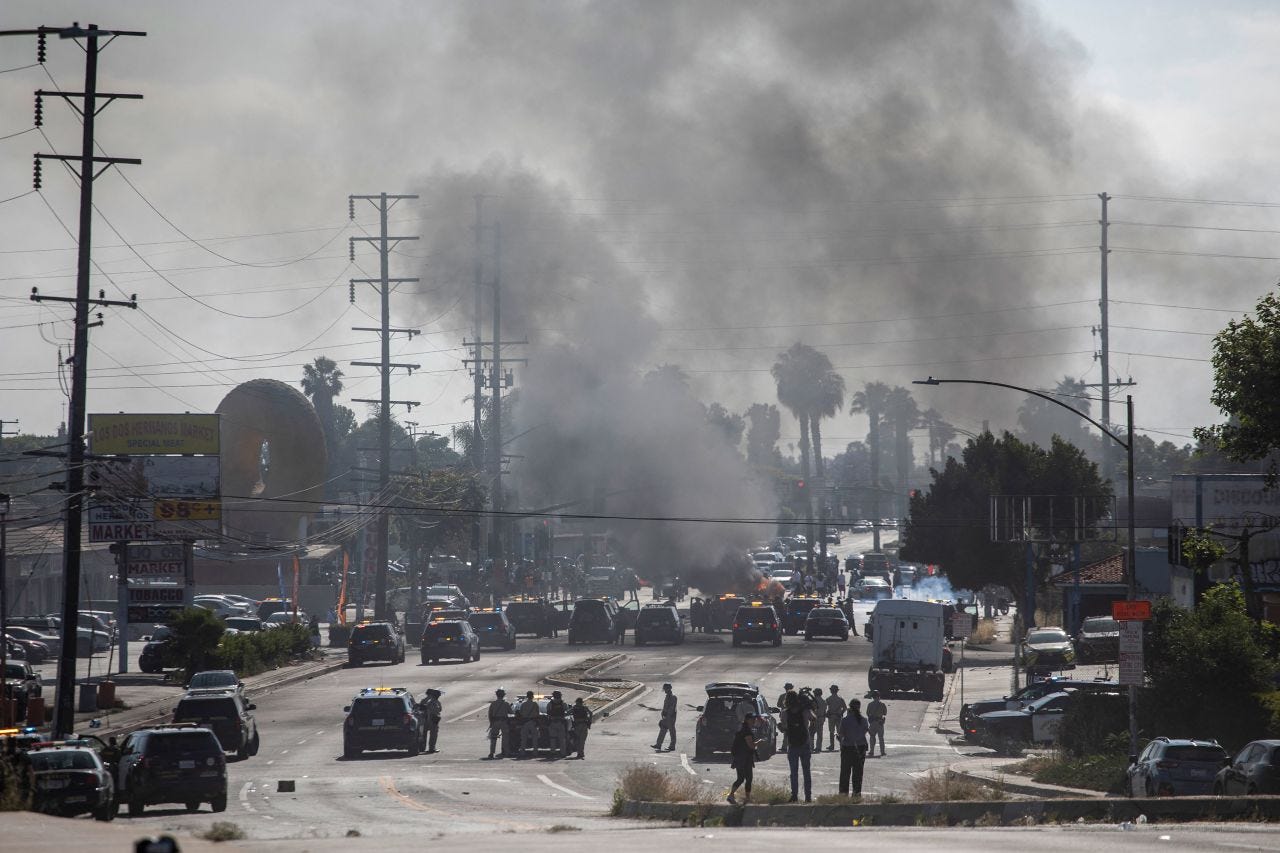
Defense Secretary Pete Hegseth later threatened to deploy Marines to the region, calling the protests a “national security risk.”
“If violence continues, active-duty Marines at Camp Pendleton will also be mobilized,” Hegseth posted on X.
“They are on high alert.”
California Gov. Gavin Newsom responded to Hegseth’s remarks, calling his actions “deranged behavior.”
“The Secretary of Defense is now threatening to deploy active-duty Marines on American soil against its own citizens,” Newsom wrote.
Despite backlash to the president’s decision, House Speaker Mike Johnson defended Trump’s move in an interview with ABC News.
“I think the president did exactly what he needed to do,” Johnson said.
“That is real leadership, and he has the authority and the responsibility to do it.”
Meanwhile, a Guatemalan man who was wrongly deported to Mexico has become the first deportee to be returned to the United States during Trump’s second term. He is now in ICE custody.
In a statement to CNN, Department of Homeland Security (DHS) spokesperson Tricia McLaughlin confirmed the case, referring to the man as O.C.G.
“The person in question was an illegally present alien who was granted withholding of removal to Guatemala. He was instead removed to Mexico, a safe third option for him,” McLaughlin said, adding that the Trump administration is “committed” to returning the asylum system to its “original intent.”
“Yet, this federal activist judge ordered us to bring him back, so he can have an opportunity to prove why he should be granted asylum to a country that he has had no past connection to.”
At the same time, following previous reports from The Introspective highlighting the wrongful deportation of permanent resident Kilmar Abrego Garcia, he has also been returned to the United States to face federal charges. Abrego Garcia is charged with one count of conspiracy and one count of unlawful transportation of undocumented immigrants, alleging that between 2016 and 2025, he helped smuggle immigrants from Latin America into the United States through the Texas border.
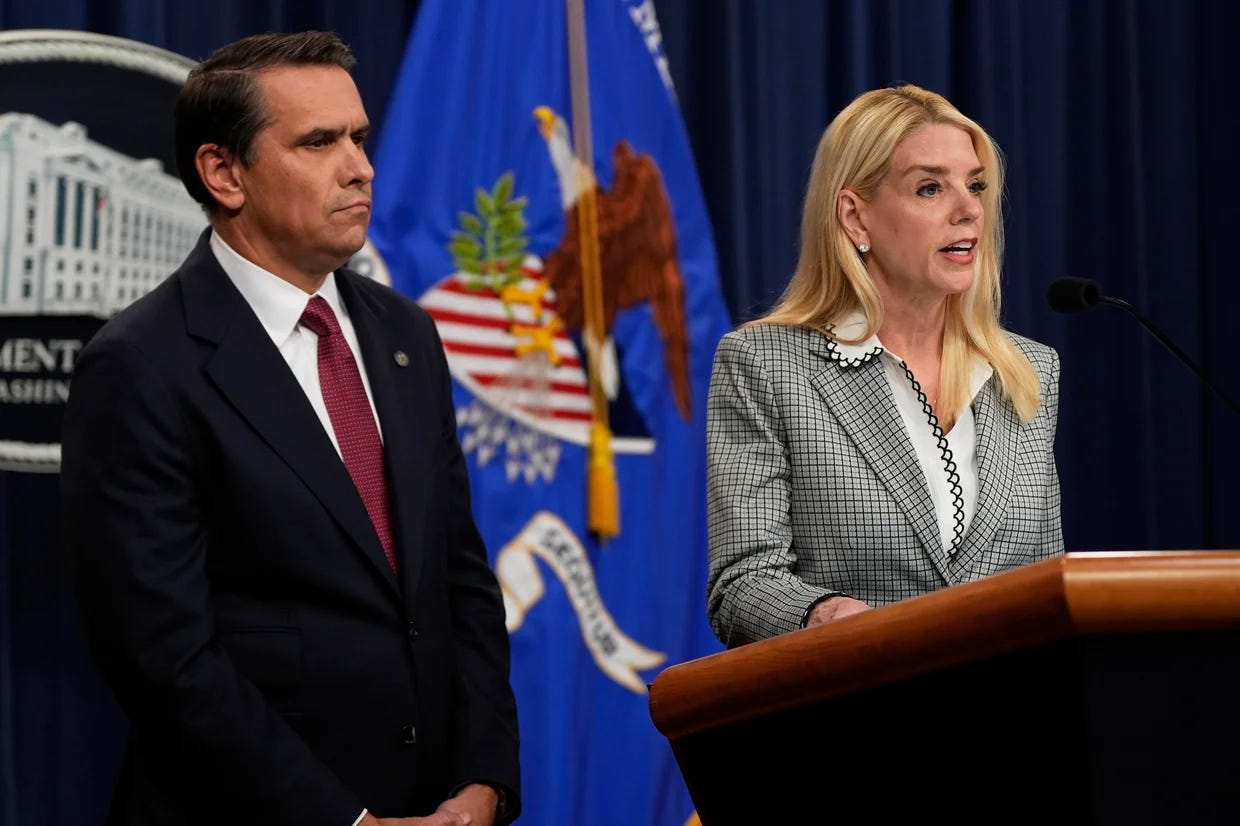
“Abrego Garcia has landed in the United States to face justice,” said Attorney General Pam Bondi.
“This is what American justice looks like.”
Further backlash ensued after Sen. Marsha Blackburn proposed legislation that would make it a federal crime to publicly identify ICE officers—potentially punishable by up to five years in prison.
“Blue city mayors are doing everything they can to obstruct the Trump administration’s efforts to deport criminal illegal aliens,” Blackburn said in a press release.
“My Protecting Law Enforcement from Doxxing Act would make this illegal and hold blue city mayors accountable for obstructing enforcement of our immigration laws by putting law enforcement officers in harm’s way.”
The proposed bill would need to pass both the Senate and the House of Representatives before being signed into law by President Trump.
Colorado and Associated Press
Colorado Gov. Jared Polis was sued by a state employee who alleges that he ordered officials to illegally share the personal data of undocumented minors’ sponsors with Immigration and Customs Enforcement (ICE), in violation of state laws that he himself signed.
“Twice since 2021, Governor Polis signed new laws directing that government agencies and employees ‘shall not disclose … personal identifying information that is not publicly available information for the purpose of investigating for, participating in, cooperating with, or assisting in federal immigration enforcement, including enforcement of civil immigration laws,’” read the lawsuit, obtained by KUSA.
The lawsuit seeks to block further data sharing, citing two specific bills—SB21-131 and SB25-276—which prohibit state officials from disclosing such information to federal immigration authorities without a court order or warrant.
Meanwhile, following previous Introspective reporting on the Associated Press being barred from attending White House events, a federal appeals court has upheld the ban.
In the majority opinion, Judge Neomi Rao wrote, “These restricted presidential spaces are not First Amendment fora opened for private speech and discussion. The White House therefore retains discretion to determine, including on the basis of viewpoint, which journalists will be admitted.”
Judge Cornelia Pillard dissented from the ruling, warning about its implications for press freedom.
“The panel’s stay of the preliminary injunction cannot be squared with longstanding First Amendment precedent, multiple generations of White House practice and tradition, or any sensible understanding of the role of a free press in our constitutional democracy,” Pillard wrote.
“Looking further ahead, if any merits panel were to accept those theories, the result would be a press pool — and perhaps an entire press corps — limited during Republican administrations to the likes of Fox News and limited to outlets such as MSNBC when a Democrat is elected.”
Supreme Court, Yale University, and January 6 lawsuit
The Supreme Court allowed the Department of Government Efficiency (DOGE) to access data from the Social Security Administration (SSA), stating that officials should “have access to the agency records in question in order for those members to do their work.”
In a dissenting opinion, Justice Ketanji Brown Jackson criticized the court for intervening prematurely.
“In essence, the ‘urgency’ underlying the government’s stay application is the mere fact that it cannot be bothered to wait for the litigation process to play out before proceeding as it wishes,” Jackson wrote.
In a statement, Democracy Forward—representing the American Federation of State, County and Municipal Employees; the American Federation of Teachers; and the Alliance for Retired Americans—called the ruling a “sad day” for democracy.
“This ruling will enable President Trump and DOGE’s affiliates to steal Americans’ private and personal data,” the organization said.
White House spokesperson Liz Huston praised the decision.
“The Supreme Court allowing the Trump administration to carry out commonsense efforts to eliminate waste, fraud, and abuse—and modernize government information systems—is a huge victory for the rule of law,” Huston said.
A separate order issued Friday by the court also allowed the administration to shield DOGE from Freedom of Information Act (FOIA) requests seeking thousands of pages of internal content.
That same day, members of the Proud Boys—a far-right group—filed a lawsuit against the Department of Justice over their prosecutions for involvement in the Jan. 6, 2021, insurrection at the U.S. Capitol, alleging violations of their constitutional rights.
“The plaintiffs themselves did not obstruct the proceedings at the Capitol, destroy government property, resist arrest, conspire to impede the police, or participate in civil disorder, nor did they plan for or order anyone else to do so,” read the lawsuit, obtained by The Introspective.
At a press conference, former Proud Boys leader Enrique Tarrio referred to certain Jan. 6 defendants as “hostages.”
“It’s not about any other country today, and that’s why this lawsuit is so important—to bring back law and order into our system,” Tarrio said.
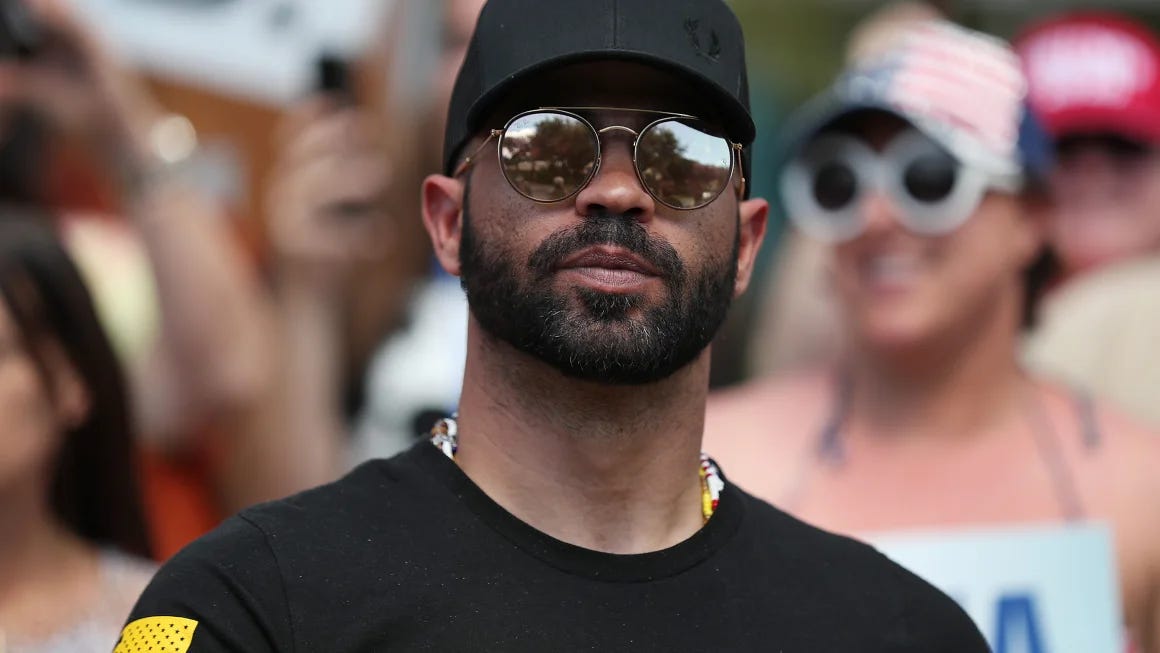
A previous report from The Introspective noted that more than 1,500 people have been pardoned by President Trump since the start of his second term. Tarrio received a full pardon, while the sentences of fellow Proud Boys members Joseph Biggs, Zachary Rehl, Ethan Nordean, and Dominic Pezzola were commuted.
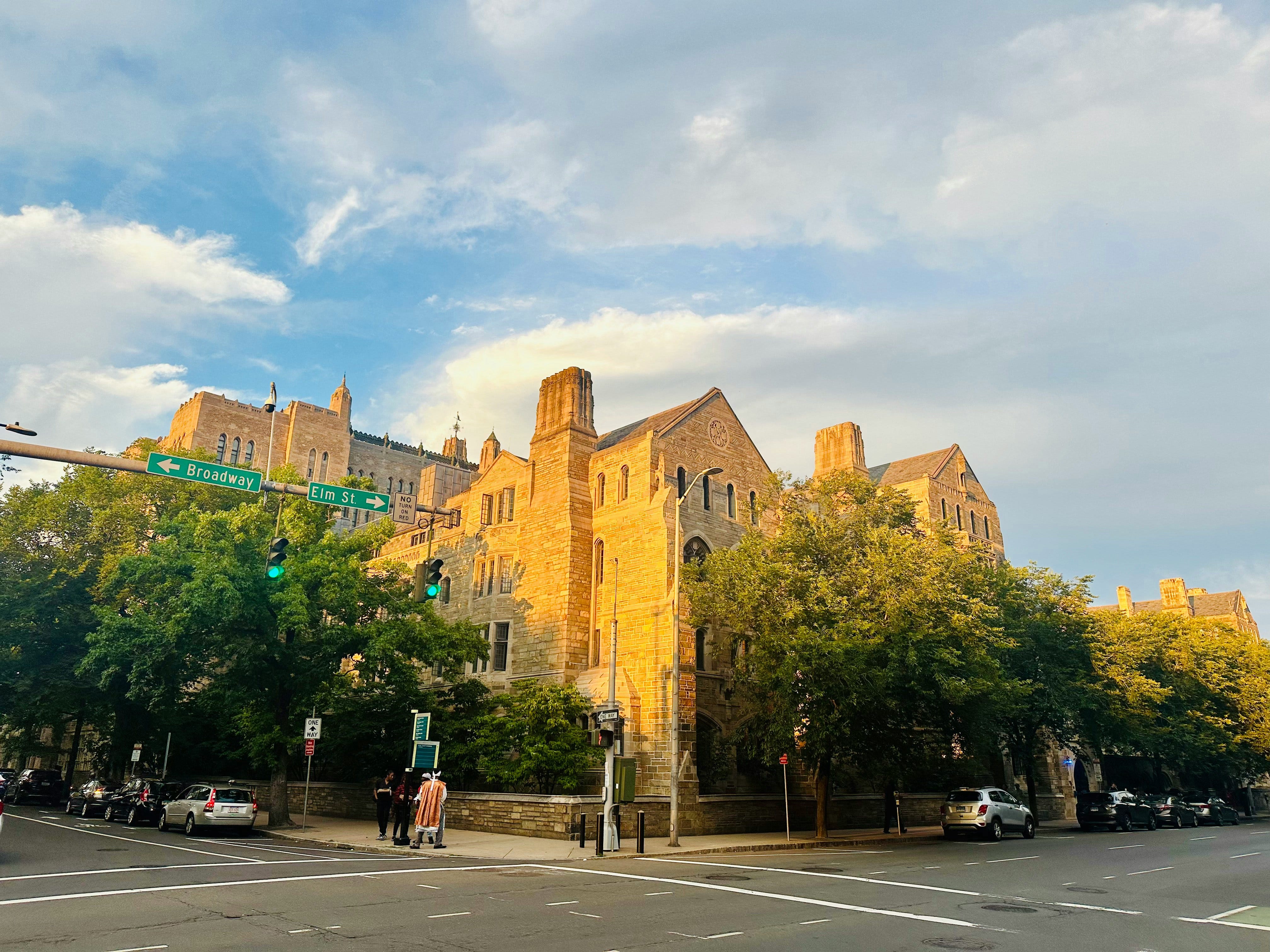
Meanwhile, as tensions escalate between Harvard University and the Trump administration over allegations of antisemitism and the revocation of federal research grants, Yale University joined 18 other schools in filing a lawsuit supporting Harvard. The schools argue that the administration’s actions set a dangerous precedent for academic institutions nationwide.
“The elimination of funding at Harvard negatively impacts the entire ecosystem,” read the filing, obtained by Yale Daily News.
“The cuts will disrupt ongoing research, ruin experiments and datasets, destroy the careers of aspiring scientists, and deter long-term investments at universities across the country.”
President Trump has cited on-campus protests in support of Palestine as contributing to antisemitic behavior at Harvard, despite no evidence being provided.


Leave a Reply