
The Trump administration ramps up trade actions, faces new Epstein-related legal battles, and navigates economic pressures following Fed resistance.
Trump’s 28th week brought updates on trade and the economy, Jeffrey Epstein, and federal funding. As the trade war continues, Trump announced tariffs on the European Union (EU), India, and Brazil—raising implications as the Federal Reserve held interest rates steady despite pushback from President Trump. At the same time, the economy grew 3% in the second quarter (spring) after shrinking throughout the winter.
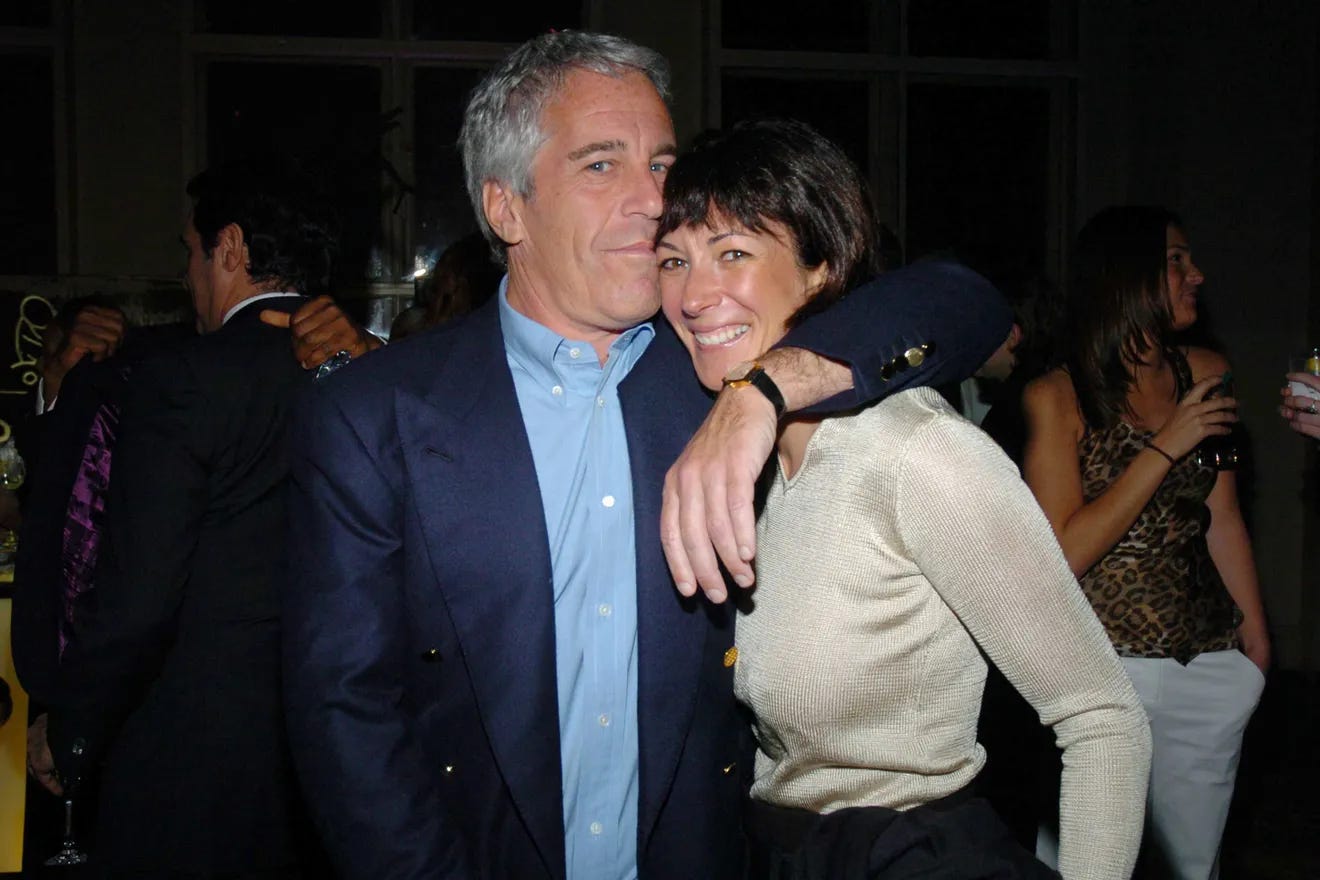
As backlash from the Jeffrey Epstein scandal continues, Ghislaine Maxwell, a longtime associate of the convicted child sex offender, requested that the Supreme Court overturn her conviction, claiming unjust prosecution. This follows a previous report from The Introspective highlighting the House Oversight Committee’s subpoena for Maxwell to testify from prison. Meanwhile, Senate Democrats invoked the rare “Rule of Five” law to force the Department of Justice (DOJ) to release the Epstein files.
In federal funding, Brown University reached a deal with the Trump administration to restore grant funding to the school—becoming the third Ivy League institution to reach a deal with the administration, following previous Introspective reports detailing settlements with Columbia University and the University of Pennsylvania (UPenn).
Trade and Economy
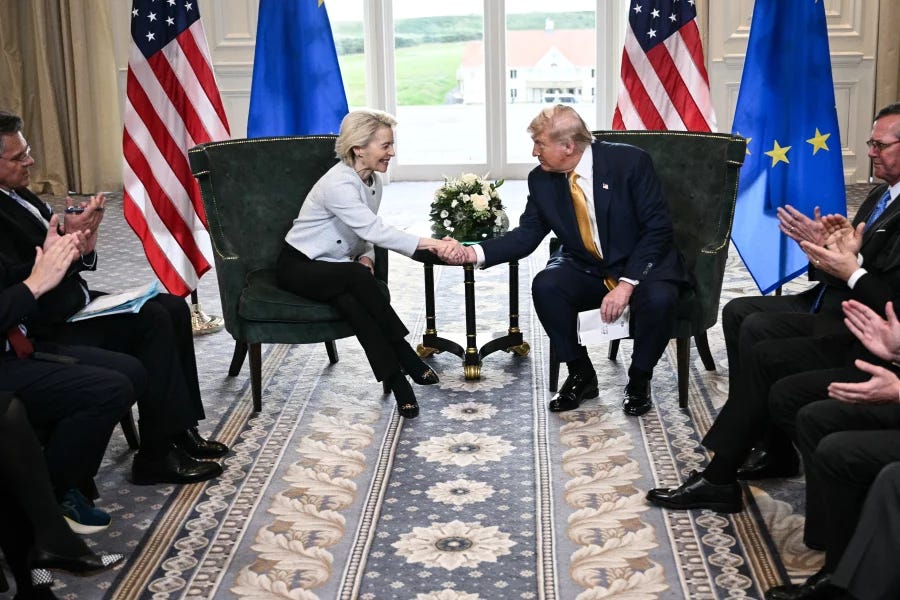
As the trade war continues, Trump announced a 15% tariff against the EU after a meeting with European Commission President Ursula von der Leyen on Sunday, with Trump calling the agreement the “biggest deal ever made.”
“Fifteen percent is not to be underestimated, but it is the best we could get,” said von der Leyen.
“Fifteen percent is certainly a challenge for some, but we should not forget it keeps access to the American market.”
Under the new deal, the EU will purchase $750 billion in energy and make investments of $600 billion in the U.S. by 2028, while still paying tariffs on cars and car parts, medicine, and semiconductors—a crucial component for electronics. However, the EU will continue to pay 50% tariffs on steel, aluminum, and copper.
At the same time, Trump later set a 25% tariff against India, set to take effect Aug. 1.
“Remember, while India is our friend, we have, over the years, done relatively little business with them because their Tariffs are far too high, among the highest in the World, and they have the most strenuous and obnoxious non-monetary Trade Barriers of any Country,” wrote Trump on Truth Social.
“Also, they have always bought a vast majority of their military equipment from Russia, and are Russia’s largest buyer of ENERGY, along with China, at a time when everyone wants Russia to STOP THE KILLING IN UKRAINE — ALL THINGS NOT GOOD!”
“INDIA WILL THEREFORE BE PAYING A TARIFF OF 25%, PLUS A PENALTY FOR THE ABOVE, STARTING ON AUGUST FIRST,” he added.
In a statement, India’s Ministry of Commerce and Industry said officials are “studying” the implications of Trump’s announcement.
“India and the U.S. have been engaged in negotiations on concluding a fair, balanced and mutually beneficial bilateral trade agreement over the last few months,” said the ministry.
“We remain committed to that objective.”

After previously threatening tariffs, Trump signed an executive order issuing a 50% tariff against Brazil, accusing the Brazilian government of “serious human rights abuses that have undermined the rule of law in Brazil,” referring to the ongoing persecution of former Brazilian President Jair Bolsonaro over allegations he attempted to overturn his 2022 election loss.
“The Order finds that the Government of Brazil’s politically motivated persecution, intimidation, harassment, censorship, and prosecution of former Brazilian President Jair Bolsonaro and thousands of his supporters are serious human rights abuses that have undermined the rule of law in Brazil,” read the order.
The order exempts Brazilian exports such as orange juice, oil, coal, minerals, and Embraer aircraft.
Meanwhile, the Federal Reserve held interest rates steady at a range of 4.25% to 4.5%, despite pushback from Trump to lower rates.
“MUST NOW LOWER THE RATE. No Inflation!” wrote Trump on Truth Social.
The maintained interest rates come as the economy grew 3% throughout the spring, reversing a 0.5% decline from the winter.
Epstein and Ghislaine Maxwell
As the fallout from the Epstein scandal continues, Ghislaine Maxwell requested the Supreme Court overturn her 2021 sex trafficking conviction, citing a non-prosecution agreement that she claims shielded her from any charges—despite federal prosecutors stating the agreement only applied in Florida and not New York, where she was charged.
“Plea and non-prosecution agreements resolve nearly every federal case. They routinely include promises that extend to others—co-conspirators, family members, potential witnesses. If those promises mean different things in different parts of the country, then trust in our system collapses,” read the court filing.
Attorneys for Maxwell said the terms of the agreement were unqualified.
“It is not geographically limited to the Southern District of Florida, it is not conditioned on the co-conspirators being known by the government at the time, it does not depend on what any particular government attorney may have had in his or her head about who might be a co-conspirator, and it contains no other caveat or exception. This should be the end of the discussion,” wrote the defense.
At the same time, Senate Democrats invoked the rare “Rule of Five” law—also known as Section 2954—to force the DOJ to release the Epstein files.
“Today Senate Democrats take additional action to try and uncover the truth about the Epstein files,” said Senate Minority Leader Chuck Schumer.
“This is what oversight looks like, and this is what keeping your promises to the American people looks like.”
Enacted in 1928, the “Rule of Five” allows five members of the Senate Committee on Homeland Security and Governmental Affairs to submit an information request on issues within its jurisdiction to a federal agency—giving minority members of the oversight committee the power to request information without the committee chairman.
“Today’s letter matters. It’s not a stunt, it’s not symbolic, it’s a formal exercise of congressional power under federal law, and we expect an answer from DOJ by August 15. That’s what accountability looks like,” said Schumer.
Brown University
Following previous reports from The Introspective detailing Columbia University and UPenn reaching settlements to restore funding, Brown University became the third Ivy League school to reach a deal with the Trump administration. The agreement was made in exchange for adherence to a previous executive order banning transgender women from competing in women’s sports, addressing allegations of antisemitism, and a $50 million donation to workforce development programs.

“The university’s foremost priority throughout discussions with the government was remaining true to our academic mission, our core values, and who we are as a community at Brown,” said Brown University President Christina Paxson in a press release.
“This is reflected in key provisions of the resolution agreement preserving our academic independence, as well as a commitment to pay $50 million in grants over 10 years to workforce development organizations in Rhode Island, which is aligned with our service and community engagement mission.”
 Brown Univeristy Agreement
In a statement, Education Secretary Linda McMahon celebrated the settlement, stating that the Trump administration is reversing “decadeslong woke-capture” of universities.
“Restoring our nation’s higher education institutions to places dedicated to truth-seeking, academic merit, and civil debate — where all students can learn free from discrimination and harassment — will be a lasting legacy of the Trump administration,” she said.
“Because of the Trump administration’s resolution agreement with Brown University, aspiring students will be judged solely on their merits, not their race or sex.”


Leave a Reply