
Executive orders, immigration crackdowns, and historic dismissals define a turbulent week.
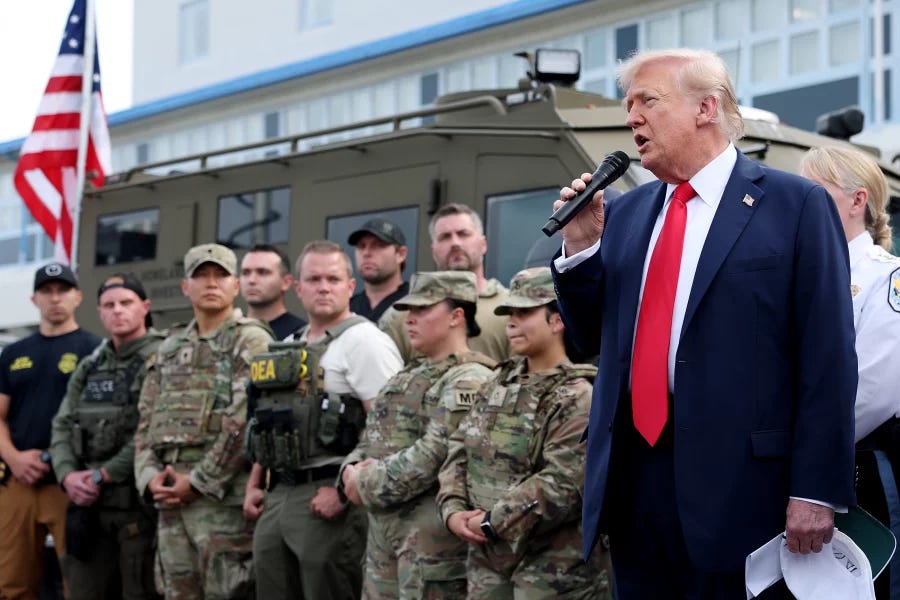
Trump’s 32nd week brought updates to Washington, D.C., immigration, mass firings and the trade war. As Trump’s takeover of D.C. continues, the president announced he will seek the death penalty for murders committed in the capital city, raising implications since the death penalty hasn’t been used in the district since 1981. At the same time, the administration took control of the city’s Union Station—a vital transit hub—as Transportation Secretary Sean Duffy said the move will “help make this city safe and beautiful.”
President Trump later signed an executive order Monday that penalizes people who burn the American flag, contradicting a 1989 Supreme Court ruling that protected flag burning under the First Amendment. Trump also signed executive orders ending the practice of cashless bail—a policy in which judges used risk assessment to release someone before a trial rather than requiring immediate payment—and directing the Pentagon to create a “reaction force” nationwide aimed at stopping civil unrest. As backlash to diversity, equity and inclusion (DEI) continues, the Trump administration directed 40 states to remove references to transgender people from sex education curricula or lose federal funding. Meanwhile, more than 21 Federal Emergency Management Agency (FEMA) employees were placed on leave after signing a letter criticizing the administration’s natural disaster response.
As anti-immigrant sentiment continues, U.S. District Judge Paula Xinis blocked the Trump administration from deporting legal resident Kilmar Abrego Gracia until October, with his attorneys later stating that Abrego Gracia will seek asylum. The Trump administration also reinstated “neighborhood checks” to vet immigrants seeking citizenship. Meanwhile, the Department of Justice (DOJ) announced that temporary immigration judges no longer need experience in immigration law.
Trump later announced that the DOJ will sue California over Gov. Gavin Newsom’s plans to draw a new congressional map, earning backlash as the president praised a similar move by Texas that would give Republicans a stronger advantage in the 2026 midterms. At the same time, Centers for Disease Control and Prevention (CDC) Director Susan Monarez refused to step down from her position after being fired by the Department of Health and Human Services (HHS) only a month after being appointed.
Federal Reserve Governor Lisa Cook filed a lawsuit against the Trump administration after the president fired her earlier this week—marking the first time in history a president dismissed a central bank governor. Cook has since alleged her firing is unlawful. Meanwhile, following a previous report from The Introspective, President Trump imposed a 50% tariff against India after the country purchased oil from Russia, raising implications as the trade war continues.
D.C. Takeover
As the unprecedented takeover of Washington, D.C., continues, President Trump said the federal government will seek the death penalty for murders committed in the city.
“Anybody murders something in the capital, capital punishment,” Trump said Tuesday.
“Capital, capital punishment. If somebody kills somebody in the capital, Washington, D.C., we’re going to be seeking the death penalty. And that’s a very strong preventative.”
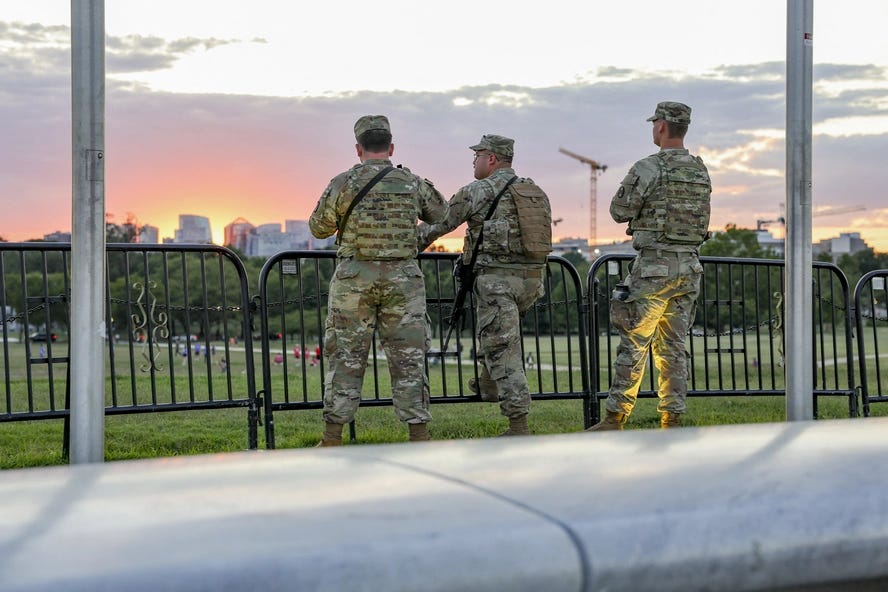
The Supreme Court temporarily voided the death penalty after Furman v. Georgia in 1972, and it was repealed locally by the D.C. Council in 1981.
At the same time, Transportation Secretary Sean Duffy announced that the Trump administration had taken control of Union Station, claiming the move was necessary to “help make this city safe and beautiful” as Amtrak launched new train sets for the Acela—a high-speed train that runs from Boston to Washington, D.C.
“With these new Acela trainsets, Amtrak will provide more reliable service and lower prices for the American people—all while increasing the organization’s profitability,” Duffy said.
“But we’re not stopping there. Instead of being a point of pride, Washington’s Union Station has fallen into disrepair. By reclaiming station management, we will help make this city safe and beautiful at a fraction of the cost.”
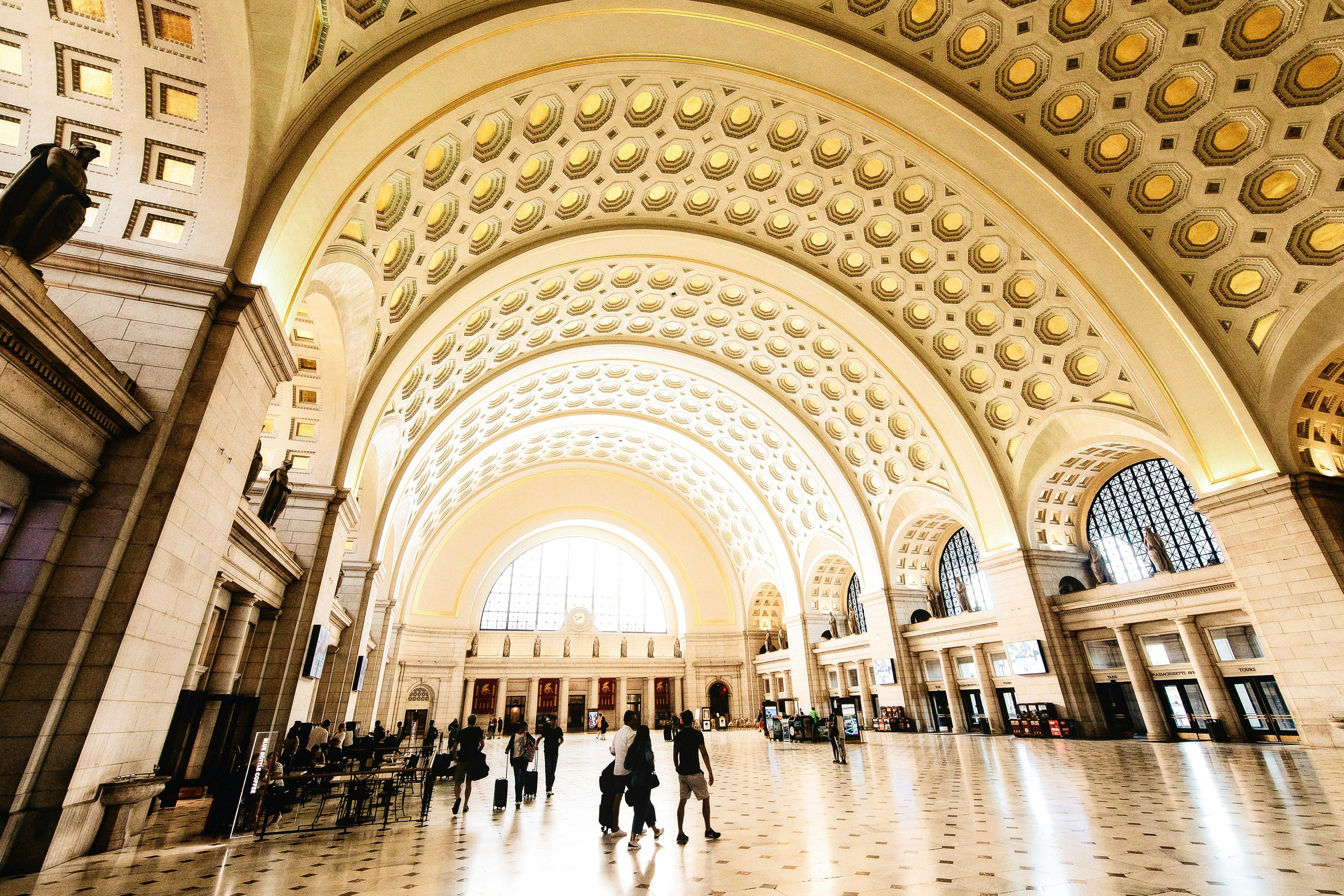
More than 70,000 people travel through Union Station daily, making it a vital hub for travel in the city and along the East Coast.
Executive Orders, FEMA, and LGBTQ+ Rights
Trump signed an executive order that penalizes people who burn the American flag, raising implications as the order contradicts Texas v. Johnson—a 1989 Supreme Court ruling that protected flag burning under the First Amendment.
“The attorney general shall prioritize the enforcement to the fullest extent possible of our nation’s criminal and civil laws against acts of American flag desecration that violate applicable, content-neutral laws, while causing harm unrelated to expression, consistent with the First Amendment,” the executive order read.
“This may include, but is not limited to, violent crimes; hate crimes; illegal discrimination against American citizens, or other violations of Americans’ civil rights; and crimes against property and the peace, as well as conspiracies and attempts to violate, and aiding and abetting others to violate, such laws.”
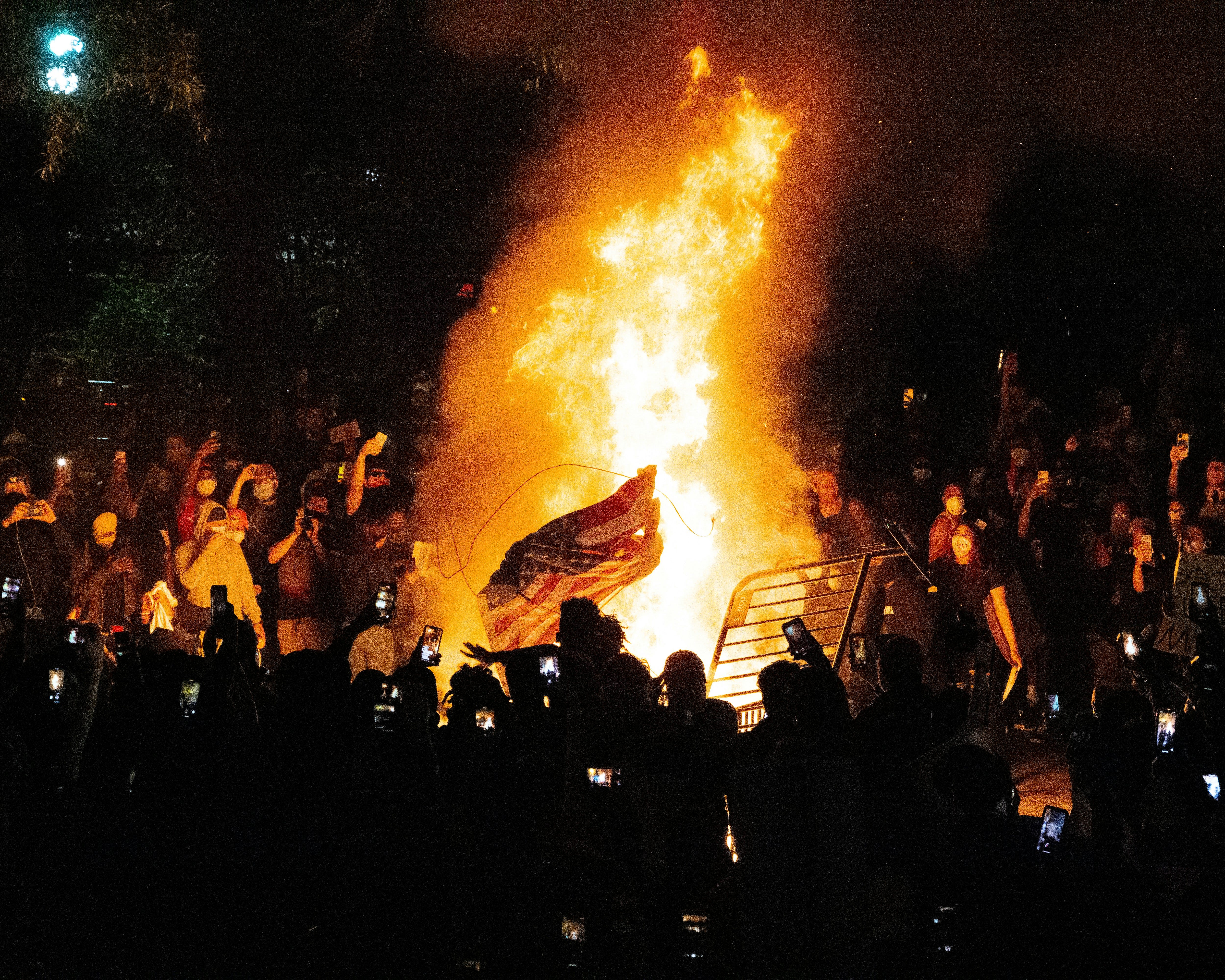
Trump previously said Monday that burning the American flag “incites riots.”
“The people in this country don’t want to see our American flag burned and spit on,” he said.
In a statement, Bob Corn-Revere, chief counsel at the Foundation for Individual Rights and Expression (FIRE), emphasized that the president does not have the power to change the First Amendment.
“Flag burning as a form of political protest is protected by the First Amendment. That’s nothing new. While people can be prosecuted for burning anything in a place they aren’t allowed to set fires, the government can’t prosecute protected expressive activity — even if many Americans, including the president, find it ‘uniquely offensive and provocative,’” he said.
“You don’t have to like flag burning. You can condemn it, debate it, or hoist your own flag even higher. The beauty of free speech is that you get to express your opinions, even if others don’t like what you have to say.”
Trump then signed two executive orders that end cashless bail—a policy in which judges used risk assessment to release someone before a trial rather than requiring immediate payment.
“We’re ending it,” Trump said as he signed the orders.
“But we’re starting by ending it in D.C., and that we have the right to do through federalization.”
The first order, Measures to End Cashless Bail and Enforce the Law in the District of Columbia, aims to end cashless bail in the capital, declaring a “crime emergency.”
“The District of Columbia government’s pretrial release policies, which include prohibiting cash bail, contribute to the disgraceful conditions referenced in the aforementioned executive order, as law enforcement must arrest the same individuals multiple times, and dangerous criminals are sometimes rapidly released,” the order read. It seeks to hold those arrested in federal custody “to the fullest extent permissible under applicable law.”
“It is therefore the policy of my administration that all necessary and lawful measures be taken to end cashless bail policies and ensure the pretrial detention of any criminal suspect who threatens public safety.”
The second order, Taking Steps to End Cashless Bail to Protect Americans, ends cashless bail nationwide, directing Attorney General Pam Bondi to create a list of state and local jurisdictions that have “substantially eliminated cash bail as a potential condition of pretrial release from custody for crimes that pose a clear threat to public safety and order, including offenses involving violent, sexual, or indecent acts, or burglary, looting, or vandalism.”
“Maintaining order and public safety requires incarcerating individuals whose pending criminal charges or criminal history demonstrate a clear ongoing risk to society,” the order read.
“When these individuals are released without bail under city or state policies, they are permitted —even encouraged—to further endanger law-abiding, hard-working Americans because they know our laws will not be enforced.”
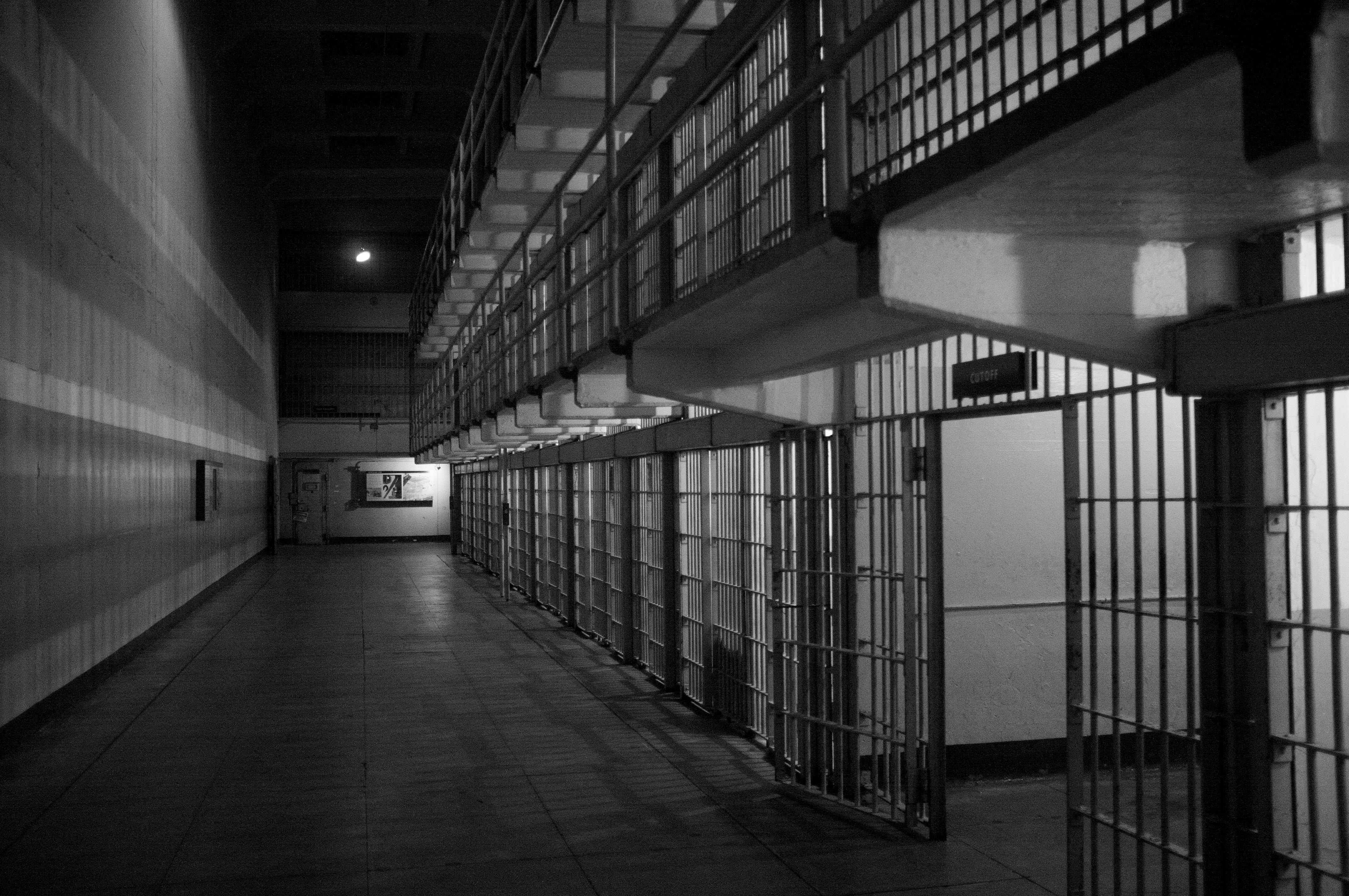
Trump also signed an executive order directing the Pentagon to create a “reaction force” of National Guardsmen across the country aimed at stopping civil unrest.
“The secretary of defense shall immediately begin ensuring that each state’s Army National Guard and Air National Guard are resourced, trained, organized and available to assist federal, state and local law enforcement in quelling civil disturbances and ensuring public safety and order whenever the circumstances necessitate, as appropriate under law,” the order read.
“In coordination with the respective adjutants general, the secretary of defense shall designate an appropriate number of each state’s trained National Guard members to be reasonably available for rapid mobilization for such purposes,” it continued.
“The secretary of defense shall ensure the availability of a standing National Guard quick reaction force that shall be resourced, trained and available for rapid nationwide deployment.”
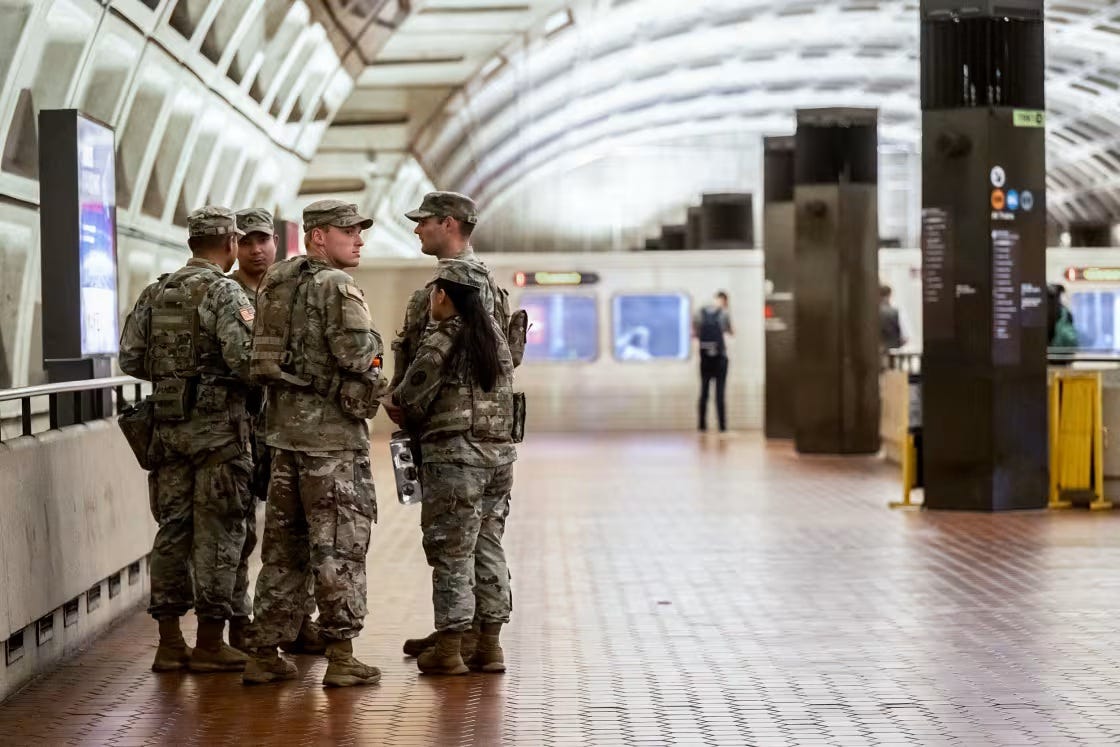
In an interview with ABC News, retired Maj. Gen. Linda Singh, who led the National Guard in Baltimore after the 2015 police killing of Freddie Gray, said the Guard already has the ability to handle civil unrest, warning of the unprecedented nature of the order.
“What happens if there’s an escalation and civilians are killed? Or Guardsmen are killed? I don’t think we have an answer for that,” Singh said.
“I think we are setting precedents we can’t come back from.”
At the same time, more than 21 FEMA employees were placed on leave after signing a letter criticizing the administration’s natural disaster response. The move came after more than 100 people were killed in unprecedented flooding in Central Texas over the Fourth of July weekend.
“Since January 2025, FEMA has been under the leadership of individuals lacking legal qualifications, Senate approval and the demonstrated background required of a FEMA administrator,” the letter read.
“Decisions made by FEMA’s senior official performing the duties of the administrator (SOPDA) David Richardson, former SOPDA Cameron Hamilton, and Secretary of Homeland Security Kristi Noem erode the capacity of FEMA and our state, local, tribal and territorial (SLTT) partners, hinder the swift execution of our mission, and dismiss experienced staff whose institutional knowledge and relationships are vital to ensure effective emergency management.”
A FEMA spokesperson dismissed the employees as “the same bureaucrats who presided over decades of inefficiency” and alleged they had “forgotten that their duty is to the American people, not entrenched bureaucracy.
“Our obligation is to survivors, not to protecting broken systems,” the spokesperson said.
“Under the leadership of Secretary Noem, FEMA will return to its mission of assisting Americans at their most vulnerable.”
Meanwhile, as backlash to diversity, equity and inclusion (DEI) policies continues, the Trump administration directed 40 states and six territories—including Washington, D.C.—to remove references to transgender people from sex education curricula or lose federal funding.
“Accountability is coming,” said Andrew Gradison, acting assistant secretary for the Administration for Children and Families (ACF), a division of HHS, in a press release, using transphobic language.
“Federal funds will not be used to poison the minds of the next generation or advance dangerous ideological agendas. The Trump administration will ensure that PREP reflects the intent of Congress, not the priorities of the left.”

The 40 states that received letters include Alabama, Alaska, Arizona, Colorado, Connecticut, Delaware, Georgia, Hawaii, Illinois, Iowa, Kentucky, Louisiana, Maine, Maryland, Massachusetts, Michigan, Minnesota, Mississippi, Missouri, Montana, Nebraska, Nevada, New Jersey, New Mexico, New York, North Carolina, Ohio, Oklahoma, Oregon, Pennsylvania, Rhode Island, South Carolina, South Dakota, Tennessee, Utah, Vermont, Washington, West Virginia, Wisconsin and Wyoming.
The territories—including Washington, D.C.—are Guam, Northern Mariana Islands, Palau, Puerto Rico and the U.S. Virgin Islands.
 ACF Letters
Immigration
As anti-immigrant sentiment continues, U.S. District Judge Paula Xinis blocked the Trump administration from deporting legal resident Kilmar Abrego Gracia until October. This comes after Abrego Gracia was arrested at an Immigration and Customs Enforcement (ICE) office in Baltimore on Monday and is currently being held at a detention center in Virginia.
His attorneys have since filed an emergency motion for Abrego Gracia to seek asylum.
“At 5 p.m. yesterday, petitioner filed a motion to reopen before an immigration judge to seek asylum in the United States,” his attorneys said in the court filing.
“Petitioner proposes that the parties allow the immigration judge to resolve that motion within two weeks from today.”
Abrego Gracia Asylum Filing
His attorneys later highlighted the potential risks Abrego Gracia would face if deported to Uganda. A previous report from The Introspective detailed the Trump administration reaching deals with the African country, along with Honduras, to deport undocumented immigrants to nations they are not originally from.
“Respondent fears persecution and torture in Uganda because he is a Salvadoran national and would be a deportee without any legal status in Uganda,” his attorneys said in the filing, later referencing El Salvador’s Terrorism Confinement Center (CECOT), a mega-prison in the country’s center.
“Furthermore, he is at risk of being removed to El Salvador by the Ugandan government, where he is likely to once again face persecution and torture within CECOT.”
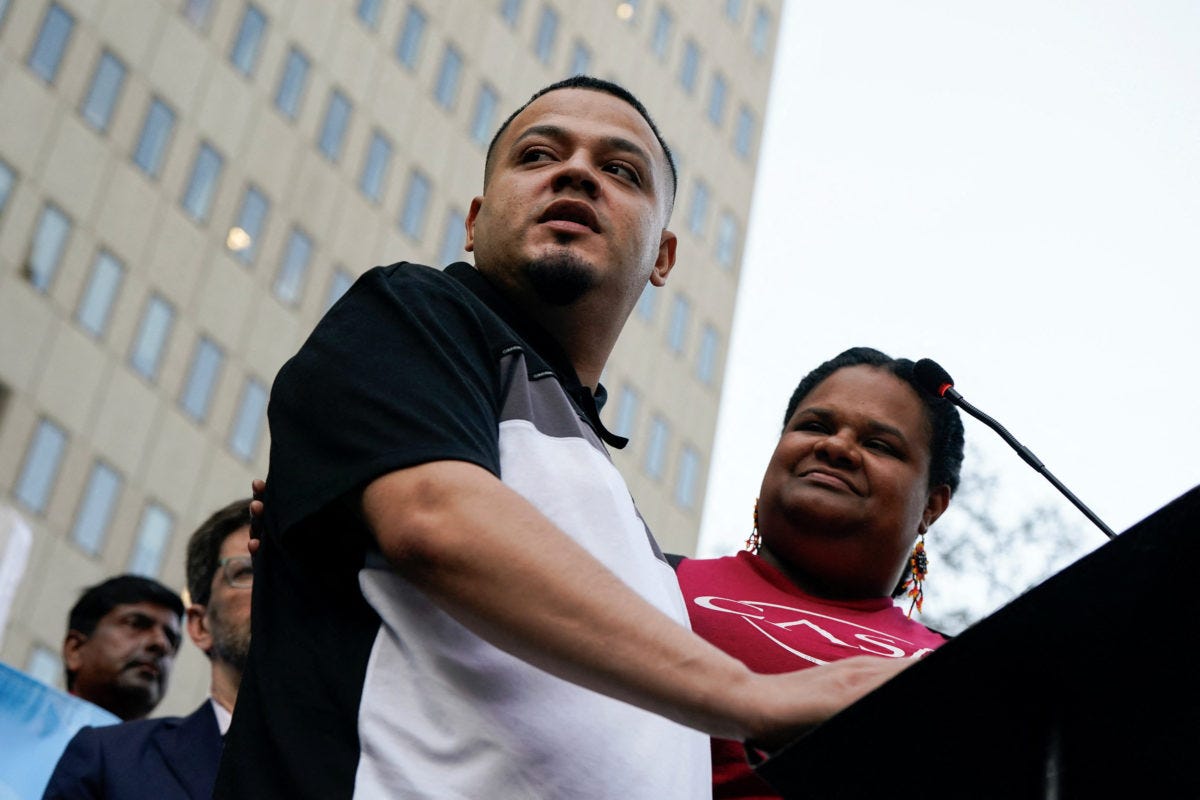
Abrego Gracia has since designated Costa Rica as the country he would prefer to be deported to in the event he is removed from the United States.
At the same time, the Department of Homeland Security (DHS) and U.S. Citizenship and Immigration Services (USCIS) reinstated the practice of “neighborhood checks” to vet immigrants applying for citizenship, according to a memo obtained by The Introspective.
“USCIS is exercising its statutory authority in INA 335(a) and will immediately end the general waiver of neighborhood investigations to fully ensure that aliens applying for naturalization meet statutory requirements,” the memo read, using xenophobic language. It also stated that applicants must show good character, follow the U.S. Constitution and be “well-disposed to the good order and happiness of the United States.”
DHS/USCIS Memo
The naturalization process for becoming a U.S. citizen typically requires applicants to have lived in the U.S. for at least three to five years as legal permanent residents. It also requires that applicants have no serious criminal history and pass a civics and English test.
Meanwhile, the DOJ announced that temporary immigration judges no longer need experience in immigration law, enabling the Executive Office for Immigration Review (EOIR), a sub-agency of the DOJ, to appoint judges with the approval of Attorney General Pam Bondi.
“Immigration law experience is not always a strong predictor of success as an immigration judge, and EOIR has hired individuals from other federal agencies and department components without prior immigration experience who have become successful and exemplary,” read a memo obtained by The Introspective.
EOIR Memo
Temporary immigration judges previously were required to have more than 10 years of experience in immigration law or to be former appellate immigration judges.
Lawsuits and CDC
Trump threatened to sue California over Gov. Gavin Newsom’s plans to draw a new congressional map, earning backlash as the president praised a similar move by Texas that would give Republicans a stronger advantage in the 2026 midterms.
“I think I’m going to be filing a lawsuit pretty soon, and I think we’re going to be very successful in it,” Trump said.
“We’re going to be filing it through the Department of Justice. That’s going to happen.”
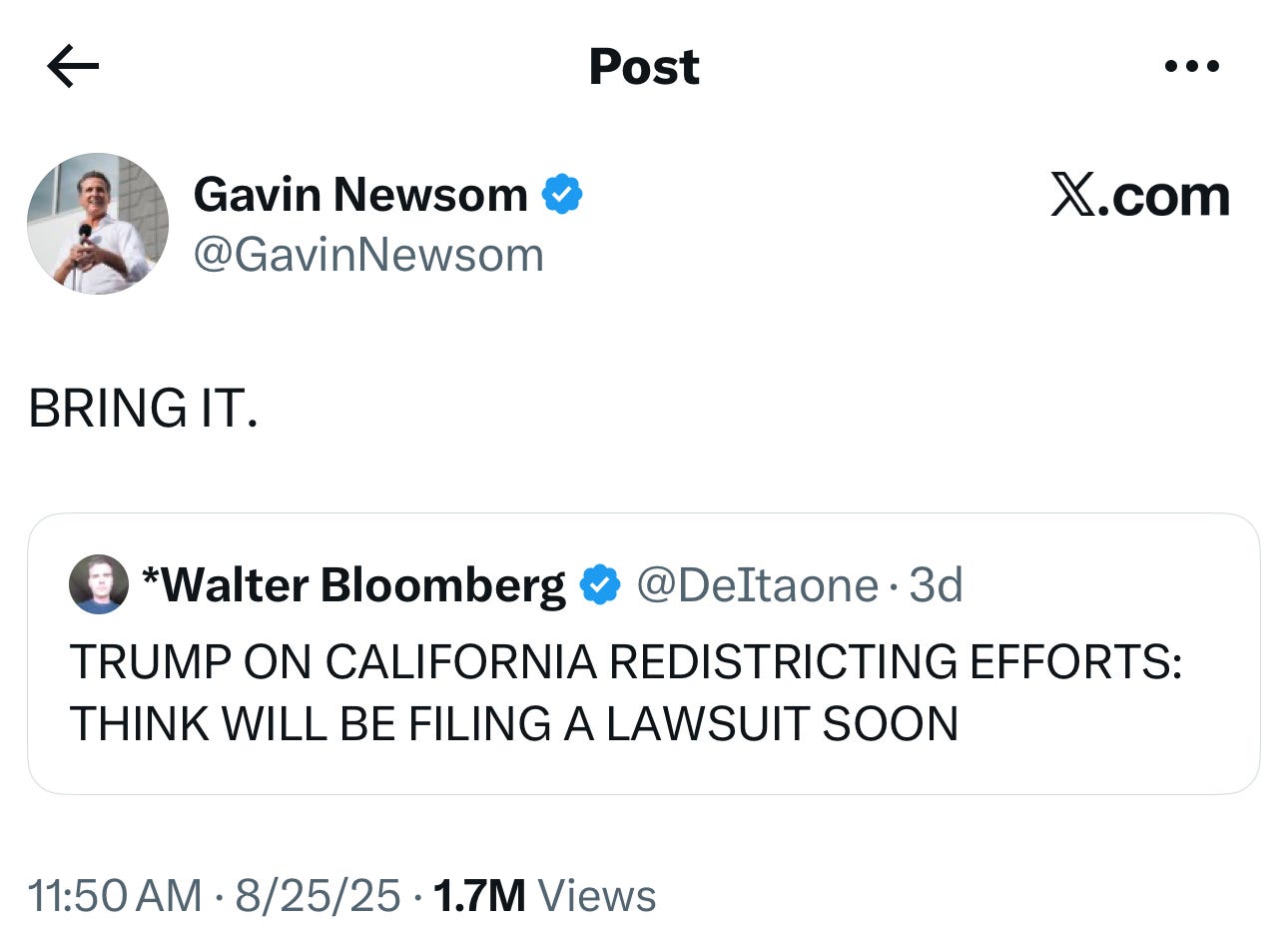
In a post on X, Newsom immediately responded to Trump’s threat.
“BRING IT,” he wrote.
In a Truth Social post, Trump later celebrated Texas passing its new congressional map, with the legislation sent to Gov. Greg Abbott’s desk to be signed into law. He also thanked Texas Lt. Gov. Dan Patrick.
“Dan’s leadership was pivotal in the passage of the new, fair, and much improved, Congressional Map, that will give the wonderful people of Texas the tremendous opportunity to elect 5 new MAGA Republicans in the 2026 Midterm Elections — A HUGE VICTORY for our America First Agenda,” Trump wrote.
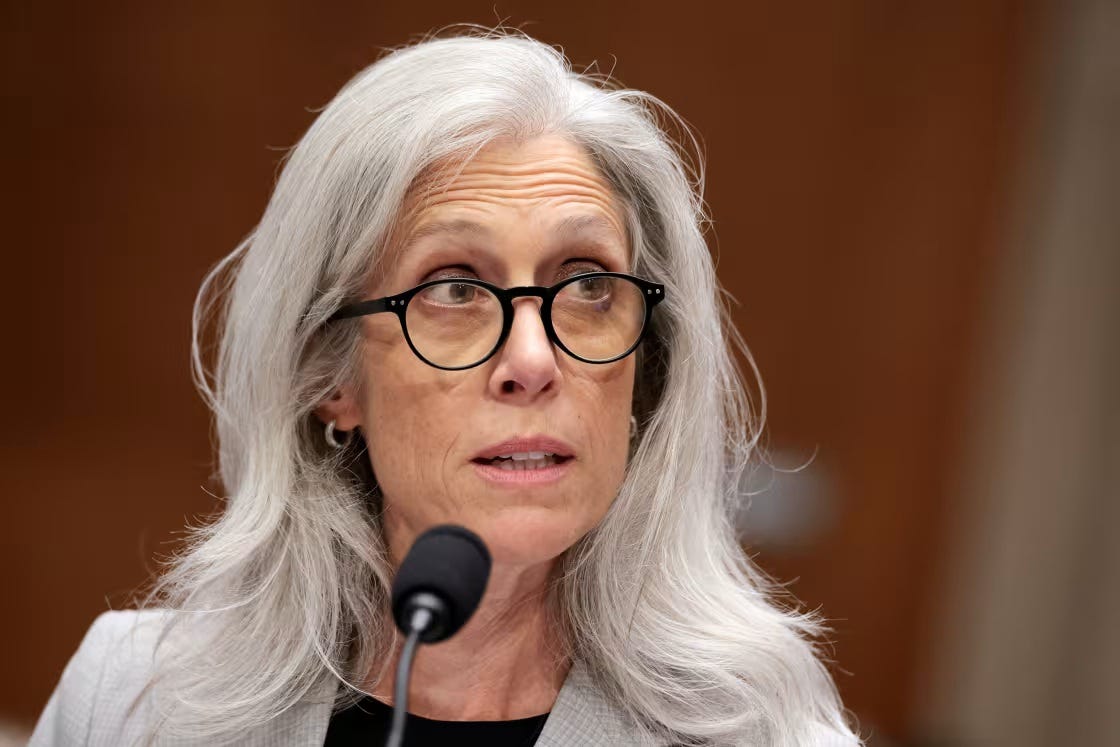
At the same time, CDC Director Susan Monarez refused to step down from her position after being fired by HHS only a month after being appointed.
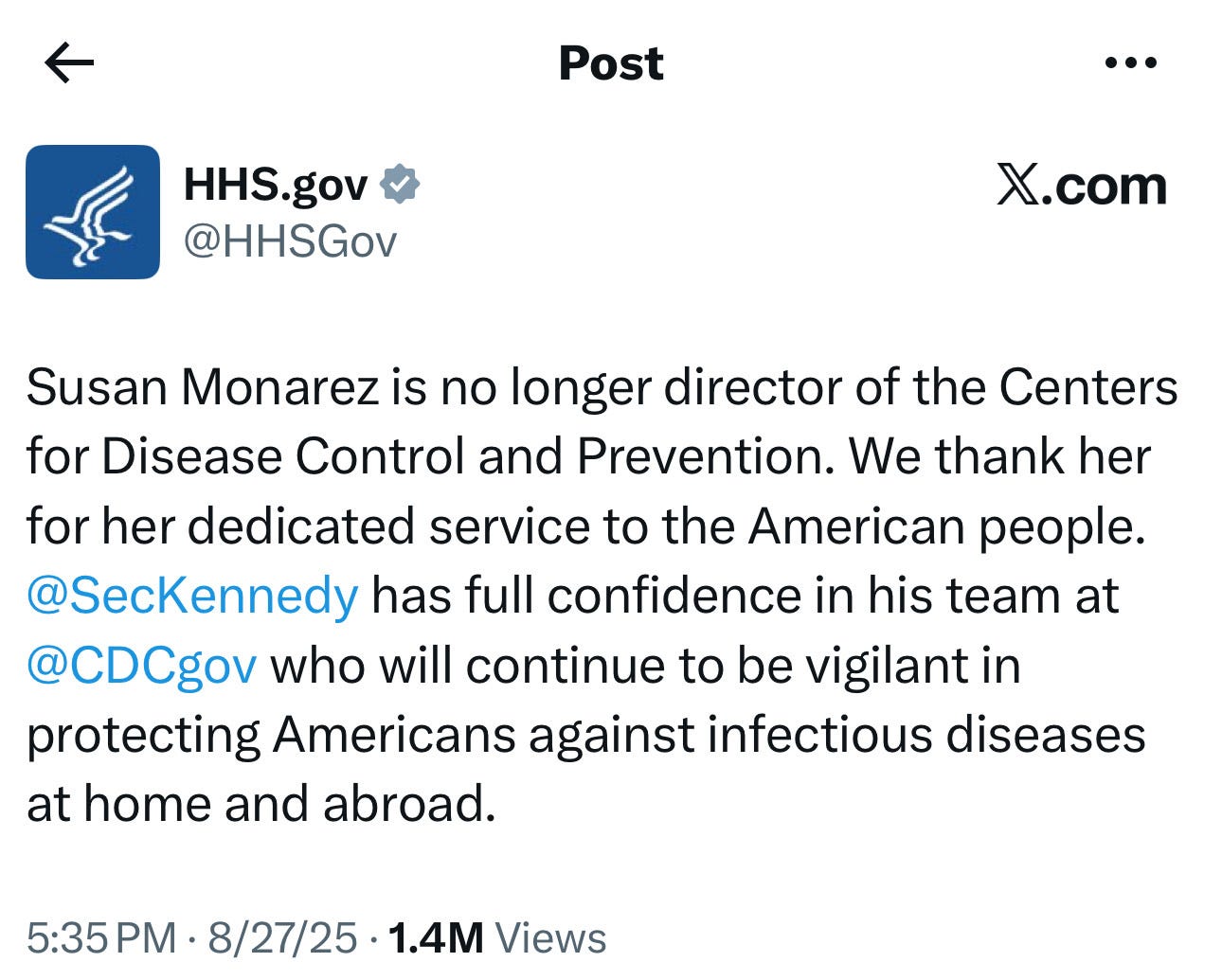
“Susan Monarez is no longer director of the Centers for Disease Control and Prevention. We thank her for her dedicated service to the American people,” HHS wrote in a post on X announcing her firing.
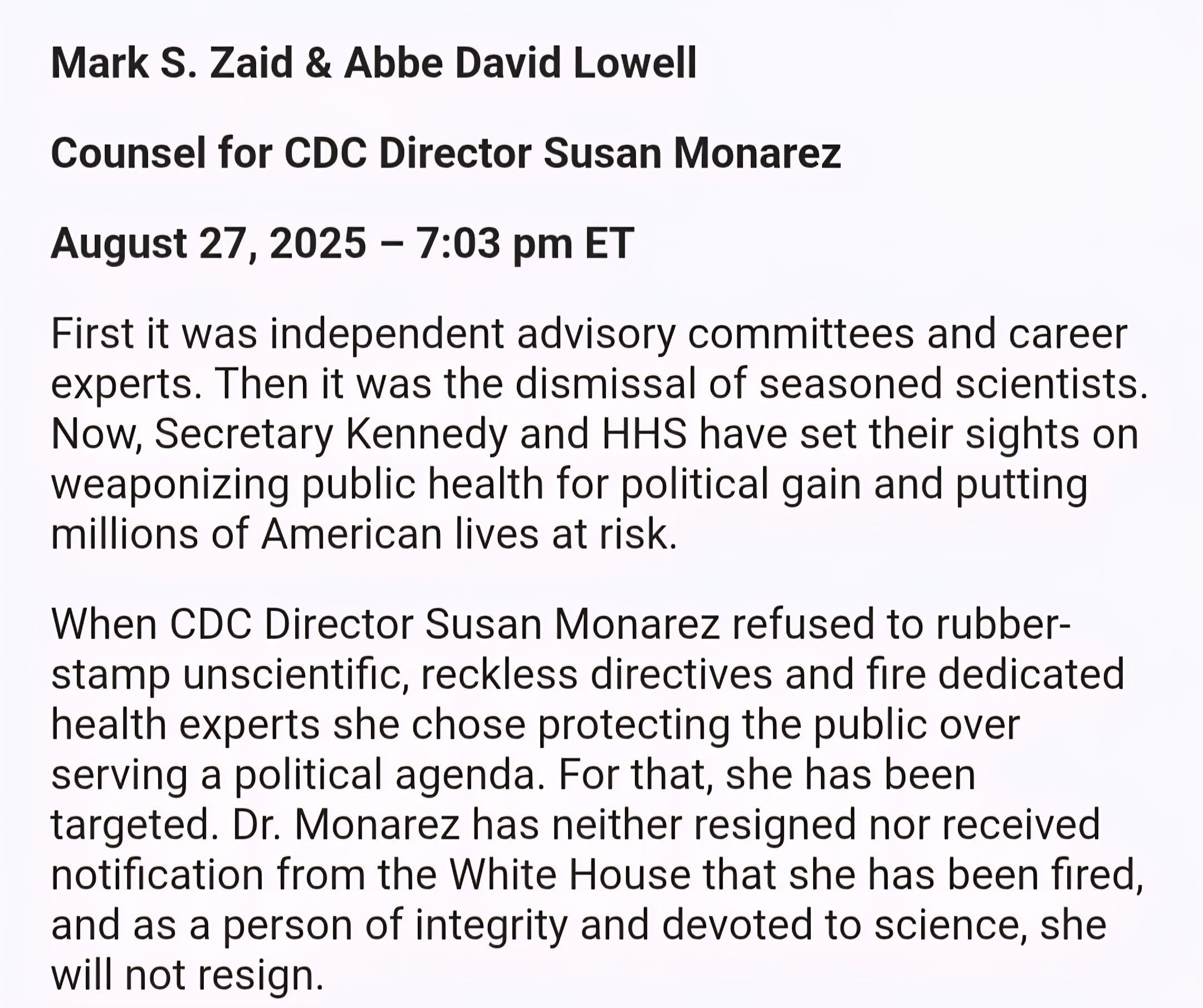
In a statement obtained by The Introspective, Monarez’s lawyers, Mark Zaid and Abbe Lowell, accused Health Secretary Robert F. Kennedy Jr. of “weaponizing public health for political gain.”
“When CDC Director Susan Monarez refused to rubber-stamp unscientific, reckless directives and fire dedicated health experts, she chose protecting the public over serving a political agenda. For that, she has been targeted,” they wrote.
Kennedy declined to comment directly on Monarez in an interview with Fox News, instead claiming that the CDC’s priorities need to be re-examined.
“What I will say is President Trump has very, very ambitious hopes for what CDC [can do] right now. CDC has problems. You know, we saw the misinformation coming out of COVID. They got the testing wrong. They got the social distancing, the masks, the school closures that did so much harm to the American people,” he said.
“And we are fixing it, and it may be that some people should not be working there anymore.”
Monarez’s firing comes just weeks after a shooting at CDC headquarters in Atlanta. The alleged shooter listed grievances with the COVID-19 vaccine as a motive.
Meanwhile, HHS Deputy Secretary Jim O’Neill has been named acting head of the CDC.
Trade War and Economy
Federal Reserve Governor Lisa Cook filed a lawsuit against the Trump administration after the president fired her earlier in the week—marking the first time in history a president dismissed a central bank governor—alleging that her firing was “illegal” after Trump accused Cook of lying on a mortgage application.
“It is clear from the circumstances surrounding Governor Cook’s purported removal from the Federal Reserve Board that the mortgage allegations against her are pretextual, in order to effectuate her prompt removal and vacate a seat for President Trump to fill and forward his agenda to undermine the independence of the Federal Reserve,” wrote attorneys Abbe Lowell and Norm Eisen in the lawsuit.
Lisa Cook Lawsuit
Cook also asked the court to prohibit Federal Reserve Chair Jerome Powell from carrying out Trump’s termination, arguing that “an unsubstantiated allegation” is not a legitimate reason for dismissal.
“President Trump’s conception of ‘cause’ has no limiting principle,” the lawsuit continued.
“It would allow him to remove any Federal Reserve Board member with whom he disagrees about policy based on chalked-up allegations.”
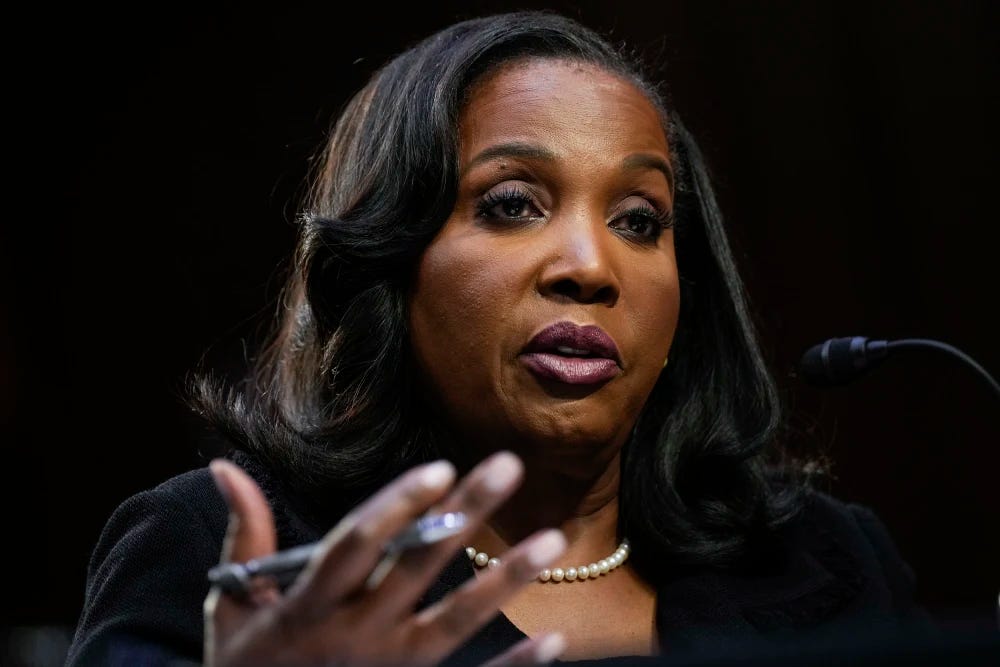
Cook was appointed to the position by former President Joe Biden, with her term set to expire in 2038.
Meanwhile, as the trade war continues, a 50% tariff against India went into effect after the country purchased Russian oil.
Indian Prime Minister Narendra Modi called the move “politics of economic selfishness” and vowed to protect Indian businesses.
“For me, the interests of farmers, small businesses, and dairy are topmost. My government will ensure they aren’t impacted,” he said during a rally in his home state of Gujarat.


Leave a Reply