
Federal actions and court battles highlight ongoing tensions across immigration, defense, and civil rights.
Trump’s 33rd week ended with updates on the D.C. takeover, immigration, LGBTQ+ rights, and the economy. As Trump’s takeover of the capital city continues, D.C. Attorney General Brian Schwalb filed a lawsuit against the Trump administration, alleging that the president violated the Constitution and federal law. At the same time, backlash occurred after 450 people were arrested at a Hyundai manufacturing site in Georgia during an Immigration and Customs Enforcement (ICE) raid, straining relations with South Korea—where Hyundai is based—as multiple Korean employees were detained. That same day, a federal judge halted the Trump administration from ending Temporary Protected Status (TPS) for Haitians and Venezuelans, following a previous report from The Introspective detailing the Supreme Court’s decision to allow the administration to deport more than 530,000 immigrants from Cuba, Haiti, Nicaragua, and Venezuela. Meanwhile, the Trump administration announced plans to deport Kilmar Abrego Garcia to the African country of Eswatini.
As backlash to diversity, equity, and inclusion (DEI) continues, the Department of Justice (DOJ) is considering banning transgender people from owning guns in the wake of the mass shooting at a Minneapolis church. This comes after Texas banned transgender people from using public bathrooms, requiring them to use facilities in accordance with their assigned sex at birth. Meanwhile, Trump signed an executive order renaming the Department of Defense (DOD) to the Department of War.
In the economy, the Justice Department launched a criminal investigation into Federal Reserve Governor Lisa Cook. This follows a previous report from The Introspective highlighting Cook’s lawsuit against the Trump administration after the president fired her, alleging that her dismissal was “illegal” after Trump accused her of lying on a mortgage application.
At the same time, a report from the Bureau of Labor Statistics (BLS) showed the U.S. adding 22,000 jobs in August, raising concerns as impacts from the trade war continue.
D.C. Takeover and Immigration
As Trump’s takeover of Washington, D.C., continues, the city’s attorney general, Brian Schwalb, filed a lawsuit against the Trump administration, stating that the president “has run roughshod over a fundamental tenet of American democracy.”
“No American jurisdiction should be involuntarily subjected to military occupation,” the lawsuit read.
“The District of Columbia brings this lawsuit to obtain declaratory and injunctive relief that will stop defendants’ violations of law, remedy the harms defendants are inflicting on the District, and preserve the District’s sovereignty.”
 D.C. Lawsuit
In a press release, Schwalb emphasized the unprecedented federalization of the capital city, calling the deployment “unnecessary.”
“Deploying the National Guard to engage in law enforcement is not only unnecessary and unwanted, but it is also dangerous and harmful to the District and its residents,” Schwalb said.
“It’s D.C. today but could be any other city tomorrow. We’ve filed this action to put an end to this illegal federal overreach.”
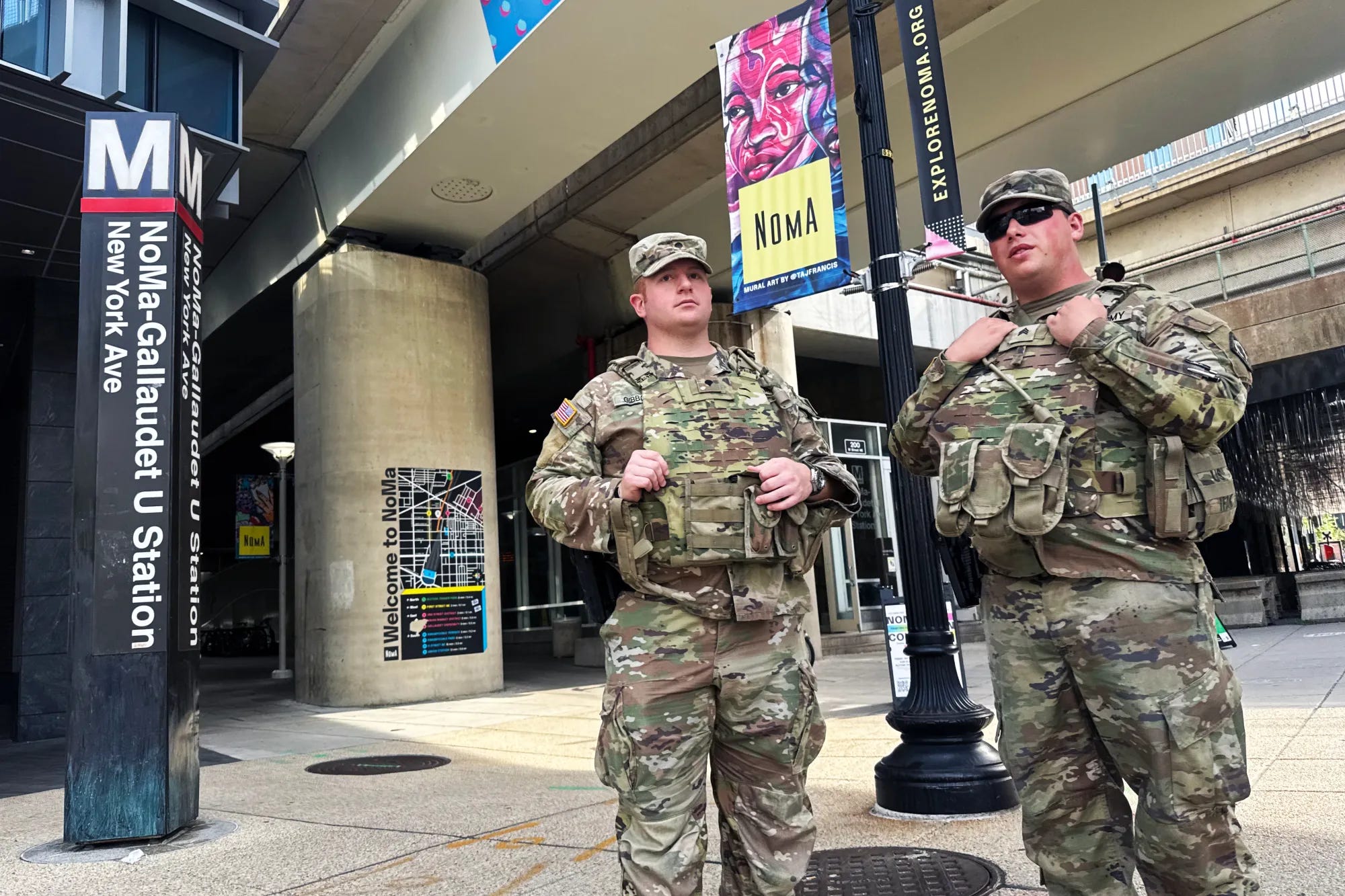
This follows a previous Introspective report detailing a federal judge’s ruling that Trump’s deployment of the National Guard to Los Angeles in June violated the Posse Comitatus Act, an 1878 law that prohibits military use for domestic law enforcement.
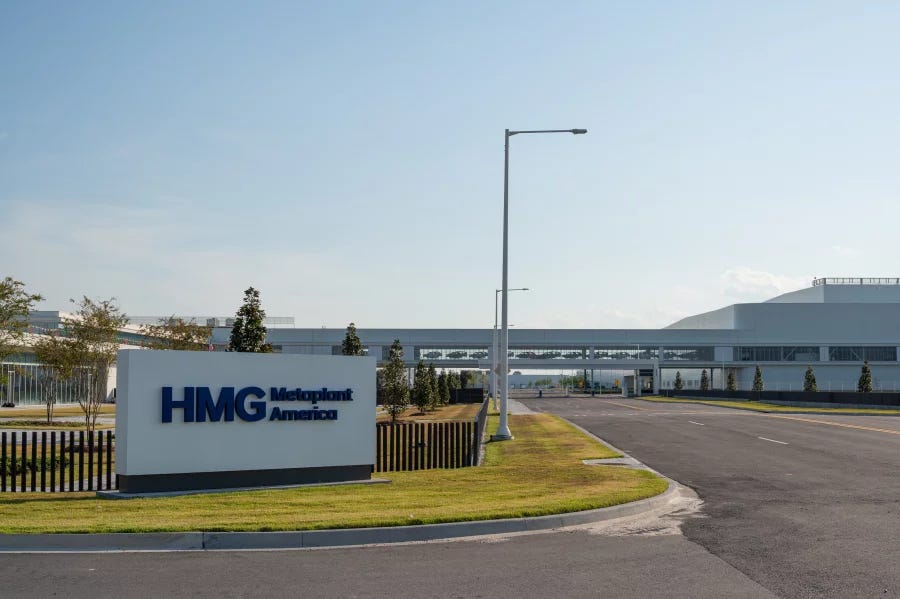
At the same time, relations with South Korea—a key U.S. ally—were strained following an ICE raid at a Hyundai facility in Georgia that led to more than 400 people being arrested, including multiple Korean nationals.
“The business activities of our investors and the rights of our nationals must not be unjustly infringed in the process of U.S. law enforcement,” South Korean Foreign Ministry spokesperson Lee Jaewoong said, expressing “concern and regret” following the raids.
The Department of Homeland Security said in a press release that companies investing in the United States must adhere to the law, claiming that the Korean employees arrested were in violation of their visas.
“We welcome all companies who want to invest in the U.S., and if they need to bring workers in for building or other projects, that’s fine—but they need to do it the legal way,” said Steven N. Schrank, special agent in charge of Homeland Security Investigations in Georgia and Alabama, calling the raid the “largest single-site enforcement operation in the history of Homeland Security Investigations.
“This operation sends a clear message that those who exploit the system and undermine our workforce will be held accountable.”
Hyundai later released a statement saying none of the Korean nationals detained were directly employed by the company and that there is “zero tolerance” for people who don’t follow the law.
“Hyundai is committed to full compliance with all laws and regulations in every market where we operate,” the statement read.
“This includes employment verification requirements and immigration laws. We expect the same commitment from all our partners, suppliers, contractors, and subcontractors.”
Georgia Sen. Raphael Warnock criticized the raid in a press release, accusing Hyundai of “exploiting” immigrants and denouncing the Trump administration’s ongoing anti-immigrant sentiment.
“Companies should not be able to get rich in Georgia by exploiting immigrant workers and putting them at risk of politically motivated raids and violations of due process,” he said.
“It’s bad for our economy, bad for Georgia’s workers, and bad for law-abiding Georgia families living in fear of this administration.”
The detained workers were returned to South Korea on Sunday, following negotiations between the two countries.
That same day, U.S. District Judge Edward Chen blocked the Trump administration from ending TPS for Haitians and Venezuelans, calling the move “unlawful.”
“This case arose from action taken posthaste by the current DHS Secretary, Kristi Noem, to revoke the legal status of Venezuelan and Haitian TPS holders, sending them back to conditions that are so dangerous that even the State Department advises against travel to their home countries,” Chen wrote in the ruling.
“The secretary’s action in revoking TPS was not only unprecedented in the manner and speed in which it was taken but also violates the law.”
TPS Ruling
DHS criticized the ruling, saying Noem will “use every legal option at the department’s disposal to end this chaos and prioritize the safety of Americans.”
“For decades the TPS program has been abused, exploited, and politicized as a de facto amnesty program. Its use has been all the more dangerous given the millions of unvetted illegal aliens the Biden administration let into this country,” read a statement obtained by The Introspective.
A previous Introspective report detailed the Supreme Court allowing the Trump administration to deport 530,000 immigrants from Cuba, Haiti, Nicaragua, and Venezuela.
Meanwhile, the Trump administration announced that Kilmar Abrego Gracia will be deported to the African country of Eswatini, raising implications as Abrego Gracia was granted permanent status in 2019 after entering the United States in 2011.
LGBTQ+ Rights and Legislation
Following a recent mass shooting at a Minneapolis Catholic church, the Department of Justice is considering banning transgender people from owning guns after the alleged shooter—a transgender woman—killed two children and injured 21 at the city’s Annunciation Catholic Church.
“The DOJ is actively evaluating options to prevent the pattern of violence we have seen from individuals with specific mental health challenges and substance abuse disorders. No specific criminal justice proposals have been advanced at this time,” a DOJ spokesperson said in a statement obtained by The Introspective, using transphobic language.
Advocacy group GLAAD criticized the move, accusing the Trump administration of scapegoating transgender people.
“Instead of actual solutions, the administration is again choosing to scapegoat and target a small and vulnerable population,” the spokesperson said, emphasizing that transgender people make up less than 2% of the population.
“Everyone deserves to be themselves, be safe, and be free from violence and discrimination.”
The National Rifle Association (NRA) said in a statement that it opposed “sweeping gun bans” on Americans.
“The NRA supports the Second Amendment rights of all law-abiding Americans to purchase, possess and use firearms,” the association said.
“The NRA does not, and will not, support any policy proposals that implement sweeping gun bans that arbitrarily strip law-abiding citizens of their Second Amendment rights without due process.”

At the same time, Texas banned transgender people from using public bathrooms aligned with their gender identity, requiring them instead to use facilities in accordance with their assigned sex at birth.
“Texas will not bend to the woke left’s gender delusions, and we will not allow men into women’s private spaces,” Sen. Mayes Middleton wrote on X, using transphobic language.
Ash Hall, policy and advocacy strategist for LGBTQIA+ rights at the Texas chapter of the American Civil Liberties Union (ACLU), criticized the legislation as “unconscionable and unconstitutional.”
“Texans, including the transgender community, should be able to safely use public facilities that align with our gender identities as a basic matter of respect, safety and privacy,” they said.
“This law puts anyone at risk who doesn’t seem masculine or feminine enough to a random stranger, including the cisgender girls and women this bill purports to protect. Some people might forgo using public restrooms entirely out of fear for their safety, even if it endangers their health,” they continued.
“This bill is bad for trans and intersex people, bad for cisgender people, bad for business, bad for public health and safety, and bad for Texas. Transgender people have always been here and always will be.”
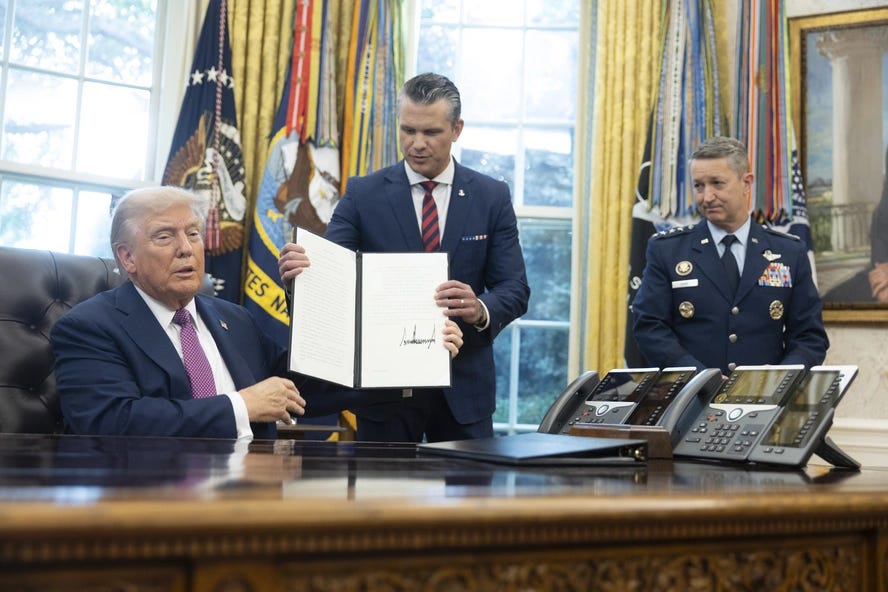
Meanwhile, President Trump signed an executive order renaming the Department of Defense as the Department of War, changing positions such as the secretary of defense to the secretary of war.
“On Aug. 7, 1789, 236 years ago, President George Washington signed into law a bill establishing the United States Department of War to oversee the operation and maintenance of military and naval affairs,” the executive order read.
“It was under this name that the Department of War, along with the later formed Department of the Navy, won the War of 1812, World War I and World War II, inspiring awe and confidence in our nation’s military, and ensuring freedom and prosperity for all Americans,” it continued.
“I have therefore determined that this department should once again be known as the Department of War.”
Federal Reserve and Economy
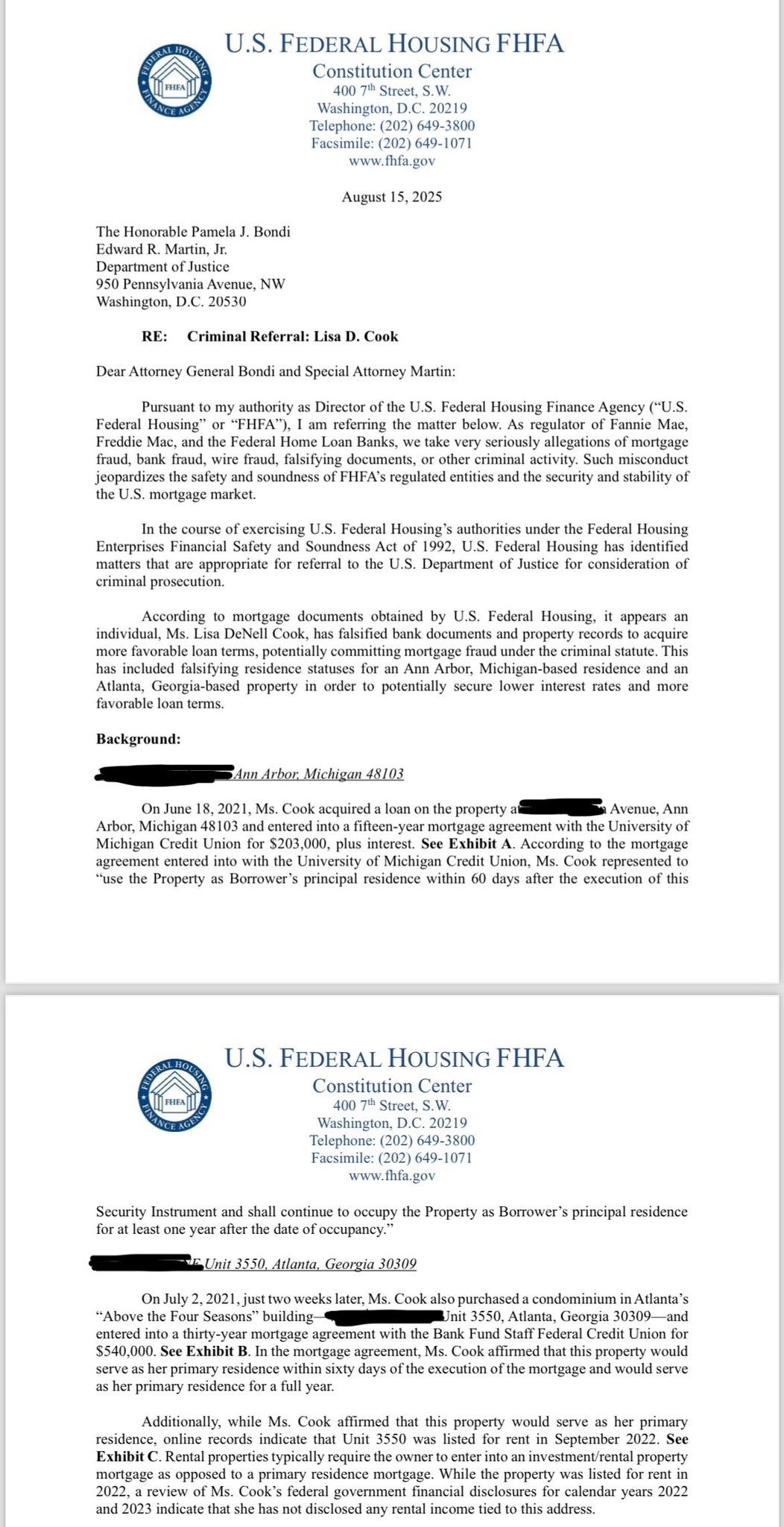
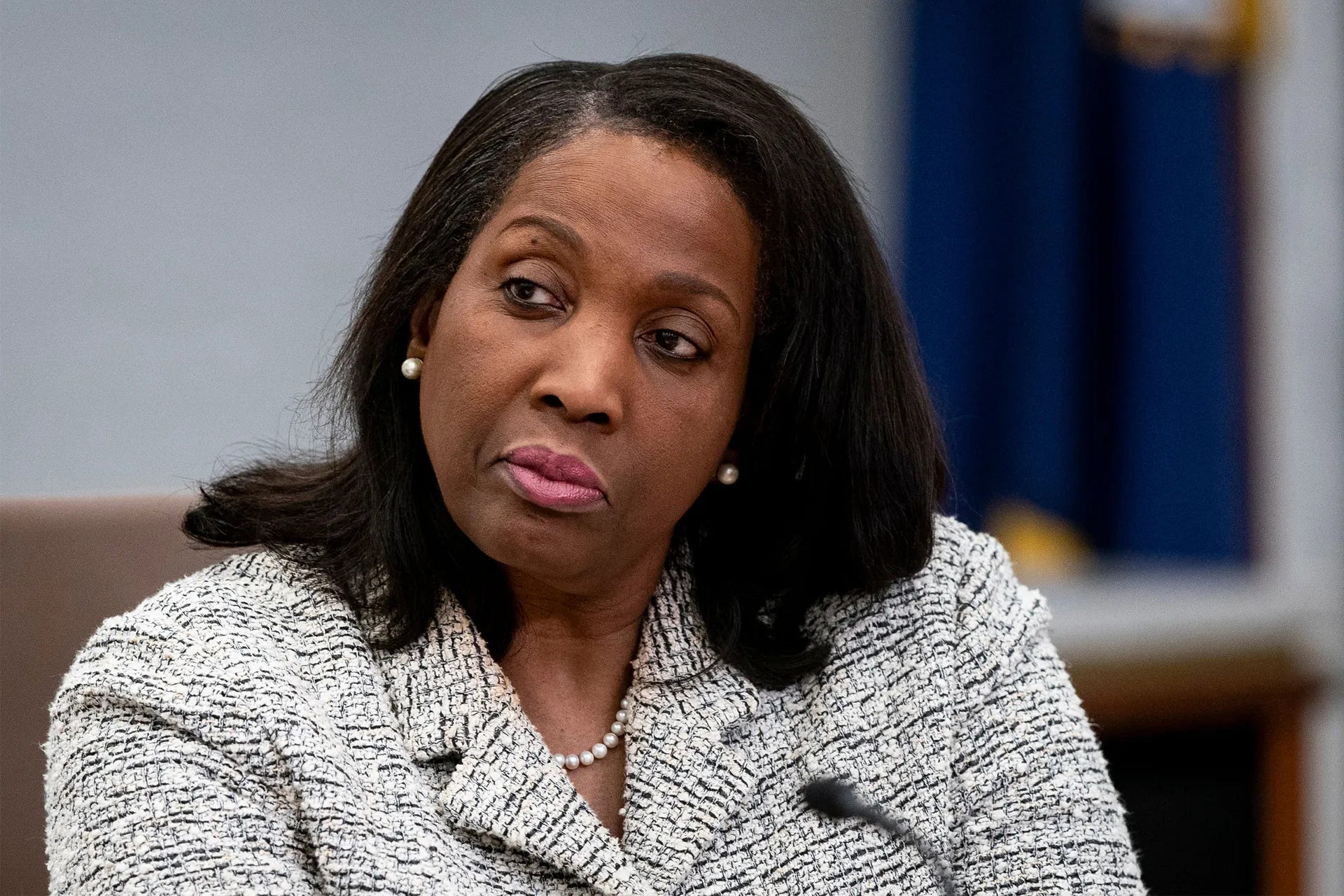
Following a previous Introspective report detailing the firing of Federal Reserve Governor Lisa Cook, the Department of Justice opened a criminal investigation alleging that Cook was involved in mortgage fraud.
In a letter obtained by The Introspective, Federal Housing Finance Agency Director Bill Pulte alleged that Cook “falsified bank documents and property records to acquire more favorable loan terms.”
Abbe Lowell, an attorney representing Cook, called the administration’s actions “overreach.”
“This Justice Department—perhaps the most politicized in American history—will do whatever President Trump demands. He wants cover, and they are providing it,” he said.
“The questions over how Governor Cook described her properties from time to time, which we have started to address in the pending case and will continue to do so, are not fraud. But it takes nothing for this DOJ to undertake a new politicized investigation, and they appear to have just done it again.”
Meanwhile, as the trade war continues, a report from the Bureau of Labor Statistics found that the U.S. added 22,000 jobs in August, falling short of economists’ predictions as the unemployment rate rose to 4.3%, up from 4.2% in July.


Leave a Reply