
As economic turmoil spreads globally and at home, a Pentagon investigation, a controversial appointment, and new judicial rulings add fuel to a volatile week.
Dante Belcher
Apr 7, 2025
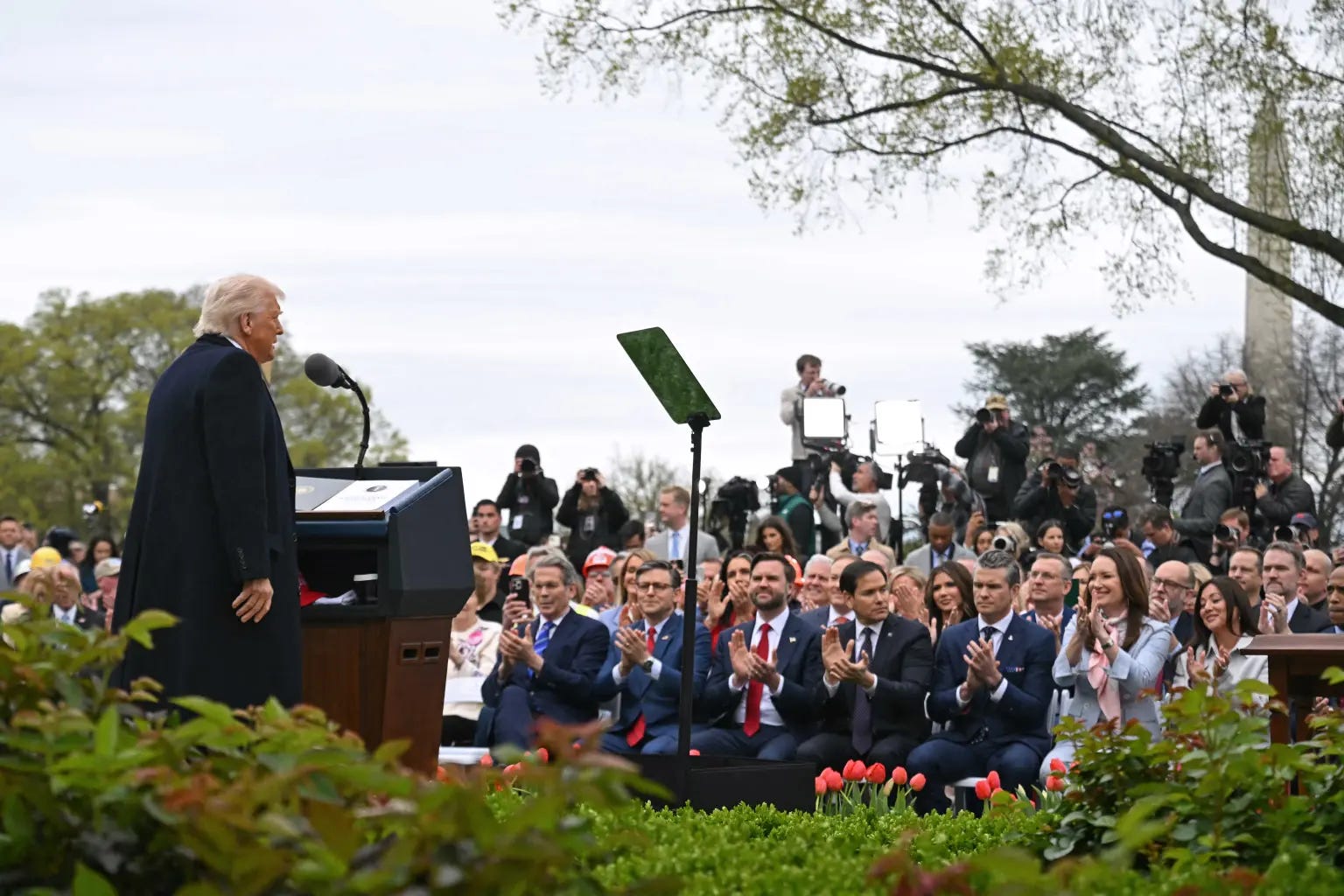
The second half of week eleven in President Trump’s second term continues to spark ripple effects across trade, national security, and immigration. Canada and China have responded to Trump’s “Liberation Day” tariffs with harsh retaliatory measures, including steep import taxes on U.S. goods. The tariffs—among the highest seen since the 1800s—have triggered a crash in global stock markets not seen since the early days of the COVID-19 pandemic.
Meanwhile, fallout from the growing “Signalgate” scandal deepened after an independent watchdog announced a formal investigation into the use of the encrypted messaging app Signal by senior Trump administration officials. Defense Secretary Pete Hegseth and other officials used the app to discuss U.S. military strikes on the Houthi group in Yemen. The controversy intensified after a journalist was accidentally included in the encrypted chats.
In the legal sphere, a federal judge ordered the U.S. government to reverse the wrongful deportation of Kilmar Armando Abrego Garcia, an immigrant with protected status who had been sent to El Salvador. The ruling followed an earlier Introspective report detailing the case. A Justice Department attorney was placed on leave after stating publicly that Abrego Garcia should not have been deported.
Simultaneously, the Supreme Court approved a freeze on millions of dollars in federal grants intended to address nationwide teacher shortages. The decision, viewed as a major victory for Trump’s administration, marks a shift in education policy amid ongoing backlash against diversity, equity, and inclusion (DEI) initiatives. The grants would have supported programs in math, science, and special education, according to a previous Introspective report.
Finally, former surgeon and television personality Dr. Mehmet Oz was confirmed by the Senate to lead the Centers for Medicare and Medicaid Services (CMS). His appointment has raised concerns among public health advocates, given his past promotion of medical misinformation and alignment with figures such as Health Secretary Robert F. Kennedy Jr.
Tariff Fallout and Global Economic Turbulence
Continuing The Introspective’s coverage of the escalating trade war, China has imposed a 34% retaliatory tariff on all imports from the United States after President Trump announced sweeping tariffs—some as high as 54%—on all nations trading with the U.S.
“This practice of the U.S. is not in line with international trade rules, seriously undermines China’s legitimate rights and interests, and is a typical unilateral bullying practice,” said China’s Council Tariff Commission in a press release.
Trump responded on Truth Social, accusing Chinese officials of overreacting.
“CHINA PLAYED IT WRONG, THEY PANICKED – THE ONE THING THEY CANNOT AFFORD TO DO!” he wrote.
Canada, in response to Trump’s earlier tariffs on auto imports, announced matching tariffs on all vehicles imported from the United States. A previous Introspective report detailed the U.S. auto tariffs to be as high as 25%.
“We take these measures reluctantly,” said Canadian Prime Minister Mark Carney.
“And we take them in ways that are intended to cause maximum impact in the United States and minimum impact in Canada.”
In an interview with Global, Carney said that the 1965 Auto Pact between the U.S. and Canada—an agreement that eliminated auto tariffs and sparked decades of cooperation and job growth—has effectively been dismantled by Trump’s “Liberation Day” tariffs.
“In the year I was born, Canada and the United States signed the Auto Pact, an agreement that ended auto tariffs between our nations and began a 60-year period of close cooperation, partnership, job growth, and prosperity. And that era has now ended unless the United States and Canada can agree on a new comprehensive approach,” he said.
Stock markets have plummeted to levels not seen since the COVID-19 pandemic amid fears of a global recession. The Dow Jones Industrial Average lost more than 4,000 points over 48 hours, marking the first back-to-back loss of more than 1,500 points in its 140-year history. Apple and Nvidia—two of the largest U.S. companies by market value—lost a combined $470 billion.

Economic impacts are also being felt by working-class Americans. Research from Yale University estimates that the tariffs will raise annual costs for the average family by $3,800. Households earning between $30,000 and $60,000 are projected to lose nearly 4% of their disposable income, while households earning more than $175,000 will lose only about 1.6%.
Signalgate Scandal: Pentagon Launches Probe
As fallout from the Signalgate scandal continues, the Pentagon’s independent watchdog has launched an investigation into the use of the encrypted messaging app Signal by Defense Secretary Pete Hegseth, Secretary of State Marco Rubio, and other Trump administration officials to discuss military airstrikes on the Houthi group in Yemen. Signal’s encryption has raised national security concerns.
“The purpose of this memorandum is to notify you that we are initiating the subject evaluation,” wrote Acting Inspector General Steven Stebbins in a press release.
“We are conducting this evaluation in response to a March 26, 2025, letter I received from the chairman and ranking member of the Senate Armed Services Committee, requesting that I conduct an inquiry into recent public reporting on the Secretary of Defense’s use of an unclassified, commercially available messaging application to discuss information pertaining to military actions in Yemen in March 2025.”
“The objective of this evaluation is to determine the extent to which the Secretary of Defense and other DoD personnel complied with DoD policies and procedures for the use of a commercial messaging application for official business. Additionally, we will review compliance with classification and records retention requirements,” Stebbins added.
The probe follows revelations that Jeffrey Goldberg, editor-in-chief of The Atlantic, was accidentally added to a Signal group chat that allegedly showed senior Trump officials discussing—and applauding—U.S. military actions in Yemen.
Court Rulings and Wrongful Deportation
Amid rising anti-immigrant sentiment, a federal judge ruled Friday that the United States must bring back Kilmar Armando Abrego Garcia, a Maryland resident with protected status who was mistakenly deported to El Salvador, by Monday night. This follows a previous report detailing the Trump administration’s admission that the deportation was an “administrative error.”
“This case is certainly important to Abrego Garcia and his family,” said U.S. District Court Judge Paula Xinis, criticizing the Trump administration for deporting Abrego Garcia without “legal basis” and “without justification.”
“This was an illegal act,” Xinis said.
“Congress said you can’t do it, and you did it anyway.”
Erez Reuveni, an attorney representing the Department of Justice (DOJ), was placed on leave after criticizing Abrego Garcia’s deportation during the court hearing.
“Our only arguments are jurisdictional… he should not have been sent to El Salvador,” Reuveni told Judge Xinis, expressing frustration over the lack of communication from the Trump administration and asking the judge to give officials “one more chance.”

In a statement obtained by ABC News, Attorney General Pam Bondi said that “every Department of Justice attorney is required to zealously advocate on behalf of the United States.”
“Any attorney who fails to abide by this direction will face consequences,” Bondi wrote.
Trump officials have since filed an emergency appeal, attempting to block Judge Xinis’ order.
Meanwhile, as backlash against policies promoting diversity, equity, and inclusion (DEI) grows, the Supreme Court approved a freeze on millions of dollars in grants that would have addressed nationwide teacher shortages, marking the second Trump administration’s first win at the high court.
Health and Human Services Confirmation
Former surgeon and TV personality Dr. Mehmet Oz was confirmed Thursday to lead the Centers for Medicare and Medicaid Services (CMS), placing the former talk show host in charge of Medicare, which provides health care for people 65 and older and those with disabilities; Medicaid, which offers health insurance to low-income adults and children; and the Affordable Care Act (ACA).
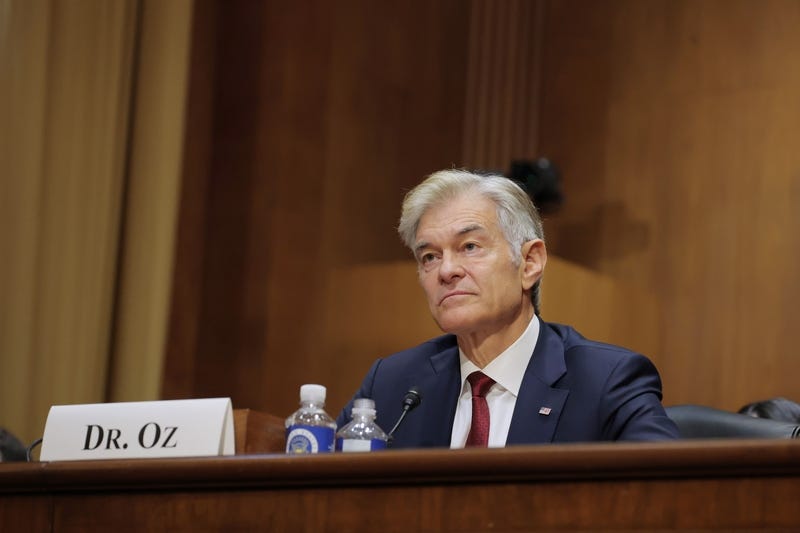
As Congress debates cuts to Medicaid, controversy continues to surround Oz’s confirmation. A 2014 study found that his former program, The Dr. Oz Show, frequently made medical recommendations that either lacked scientific evidence or were contradicted by existing research.
“Approximately half of the recommendations have either no evidence or are contradicted by the best available evidence,” the study’s authors wrote, warning the public to approach medical talk shows with caution.
“Potential conflicts of interest are rarely addressed. The public should be skeptical about recommendations made on medical talk shows.”
A report from The New York Times detailed Dr. Oz’s role in spreading disinformation during the COVID-19 pandemic, particularly his promotion of hydroxychloroquine and chloroquine—malaria drugs that were later found by the Food and Drug Administration (FDA) to be ineffective against the virus and potentially harmful.
“Hydroxychloroquine and chloroquine have not been shown to be safe and effective for treating or preventing COVID-19,” the FDA wrote.
“Patients who also have other health issues, such as heart and kidney disease, are likely to be at increased risk of these heart problems when receiving these medicines.”
Oz has also expressed support for Health Secretary Robert F. Kennedy Jr.’s “Make America Healthy Again” campaign, which aims to overhaul the Department of Health and Human Services (HHS) in line with President Trump’s broader initiative to downsize the federal government.
“Some of these decisions are not difficult. Some of them need to be simplified. And some of them need to be reminded frequently,” Oz told CBS News, speaking in favor of promoting health choice.
“The idea of giving incentives to patients is a worthy one—especially for Medicaid beneficiaries,” he added.
Meanwhile, the CMS is expected to lose more than 300 employees as federal layoffs continue, significantly impacting staff focused on health equity and health care delivery for communities of color.


Leave a Reply