
The week included shots near the White House, troop deployments to Poland, immigration policy changes, and Tulsi Gabbard’s resignation.
Dante Belcher
May 25, 2026
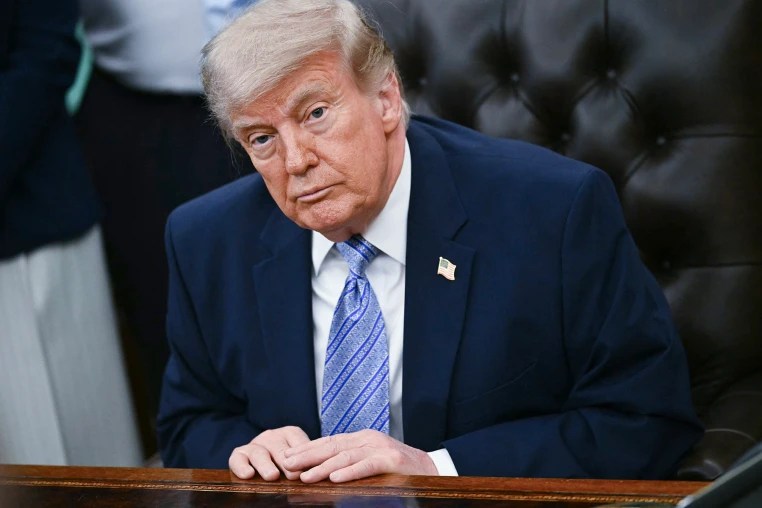
Trump’s 70th week brought gun violence, troop deployments, immigration policy changes and resignations. This came after shots were fired near the White House, with the suspect—a 21-year-old—shot and killed by the Secret Service. Trump later deployed 5,000 troops to Poland, raising implications following a previous report from The Introspective detailing troops being pulled from Germany. Meanwhile, Tulsi Gabbard announced she is resigning as director of national intelligence.
As anti-immigrant sentiment continues, prospective immigrants are now required to apply for green cards in their home countries before coming to the United States, raising implications as global tensions continue. At the same time, following the arrest of Kilmar Abrego Garcia last year and a previous report from The Introspective detailing his release, a federal judge dismissed all human trafficking charges against him.
White House Gunshots, Poland, and Tulsi Gabbard
Secret Service agents shot and killed 21-year-old Nasire Best after he approached agents at a security checkpoint and opened fire on officers.
“FBI is on the scene and supporting Secret Service responding to shots fired near White House grounds,” FBI Director Kash Patel wrote on X, acknowledging the shooting.
Best was previously arrested in July after walking onto a restricted area of the White House lawn and claiming to be “Jesus Christ.”
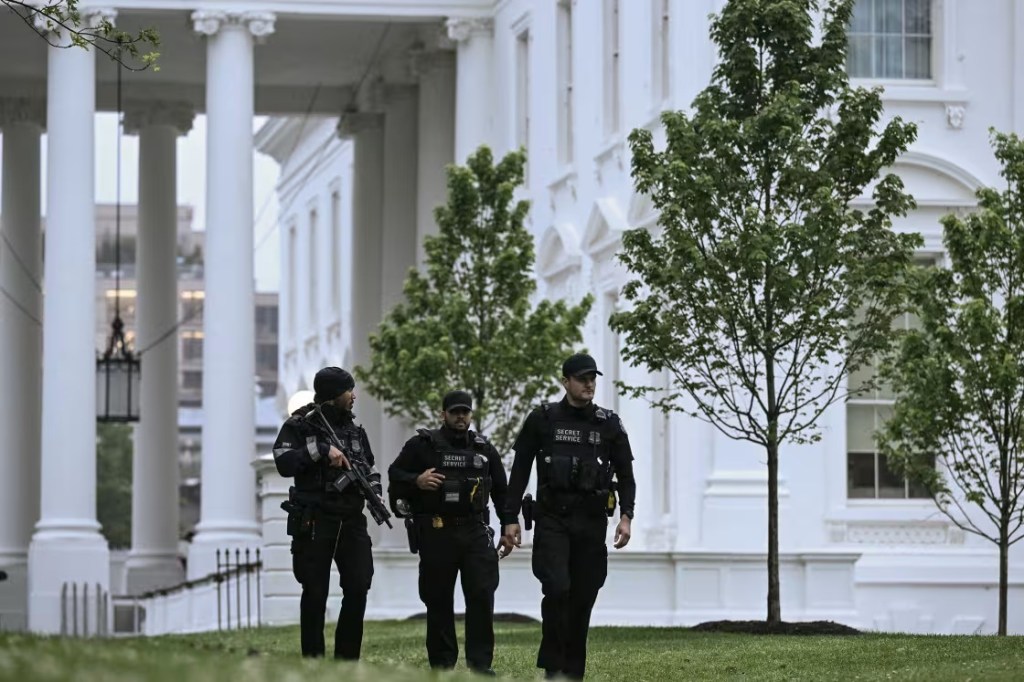
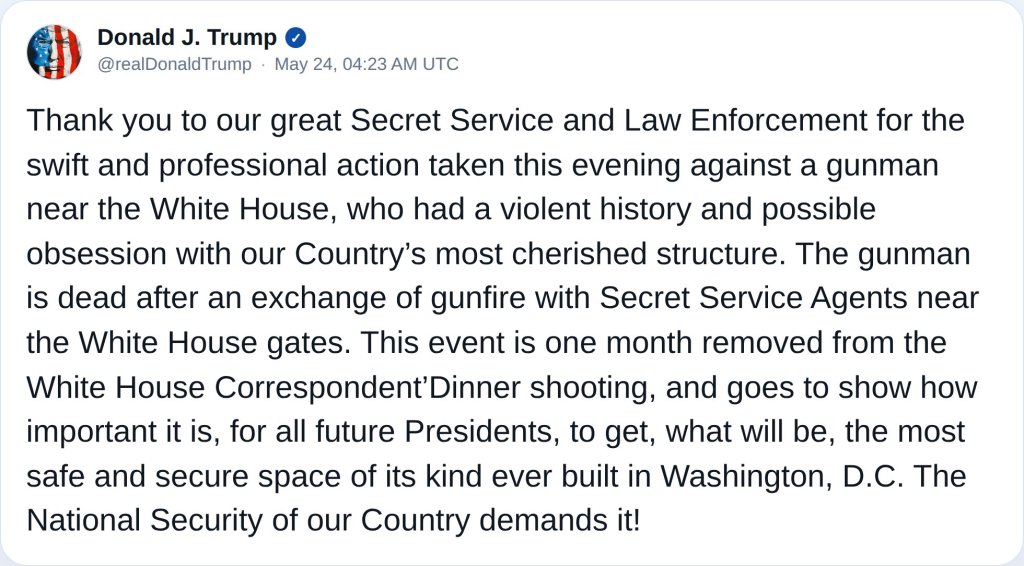
Trump, who was home at the time of the shooting, thanked Secret Service agents in a Truth Social post.
“Thank you to our great Secret Service and Law Enforcement for the swift and professional action taken this evening against a gunman near the White House, who had a violent history and possible obsession with our Country’s most cherished structure,” he wrote, adding that it had been a month since the White House Correspondents’ Dinner shooting.
“The gunman is dead after an exchange of gunfire with Secret Service Agents near the White House gates.”
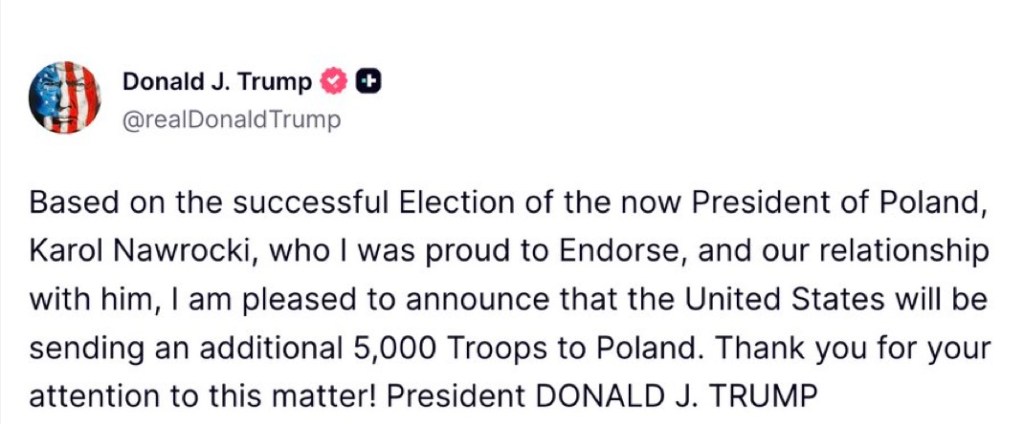
At the same time, Trump announced he would deploy 5,000 troops to Poland.
“Based on the successful Election of the now President of Poland, Karol Nawrocki, who I was proud to Endorse, and our relationship with him, I am pleased to announce that the United States will be sending an additional 5,000 Troops to Poland,” he wrote on Truth Social.
Polish President Karol Nawrocki later thanked Trump in an X post, saying “the security of Poland and the Polish people is my top priority!”
“I stand and will continue to stand guard over the Polish-American alliance — a vital pillar of security for every Polish home and for all of Europe,” he wrote.
“I thank U.S. President Donald J. Trump for his friendship toward Poland and for the decisions whose practical dimension we see very clearly today.”
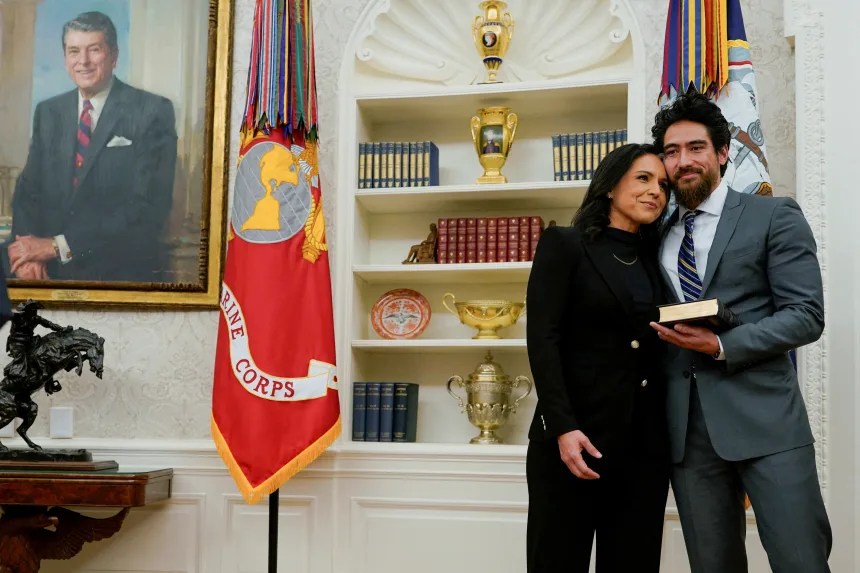
Meanwhile, Tulsi Gabbard announced that she would step down as director of national intelligence after her husband was diagnosed with bone cancer.
“My husband, Abraham, has recently been diagnosed with an extremely rare form of bone cancer. He faces major challenges in the coming weeks and months. At this time, I must step away from public service to be by his side and fully support him through this battle,” she wrote in her resignation letter, obtained by The Introspective.
“I will forever remain grateful to you and the American people for the profound honor of serving our nation as DNI.”
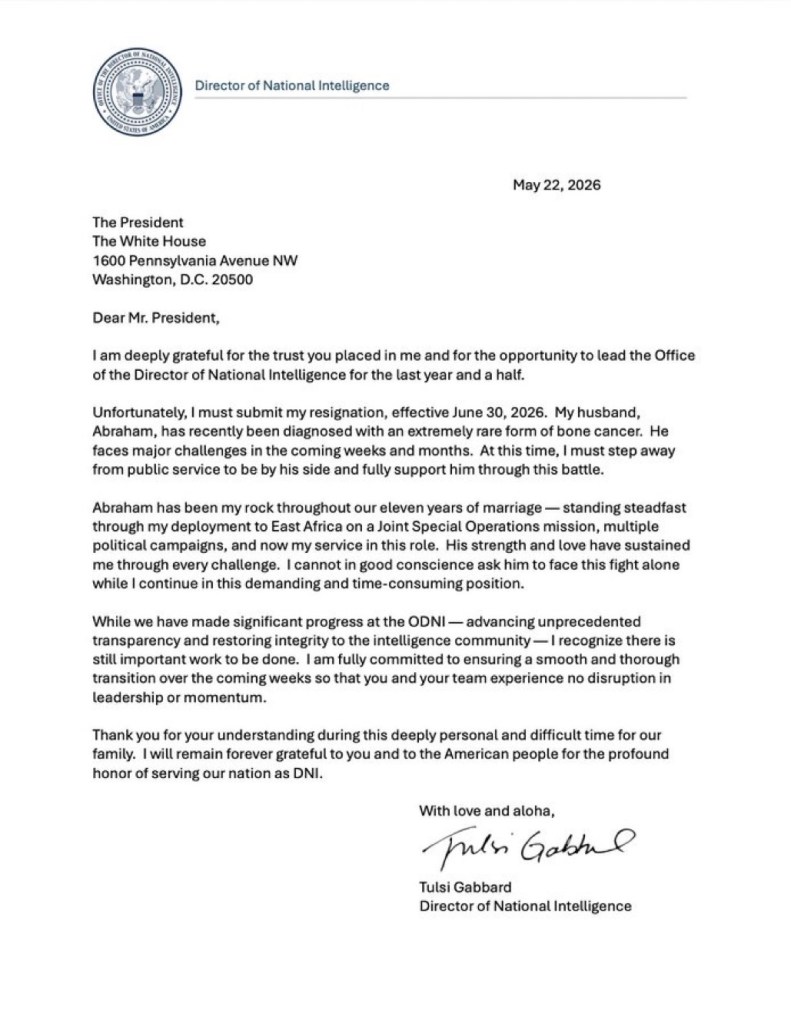
Her last day is June 30, with Principal Deputy Director of National Intelligence Aaron Lukas serving as acting DNI.
Immigration and Kilmar Abrego Gracia
As anti-immigrant sentiment continues, prospective immigrants are now required to apply for green cards in their home countries before coming to the United States.
“We’re returning to the original intent of the law to ensure aliens navigate our nation’s immigration system properly. From now on, an alien who is in the U.S. temporarily and wants a Green Card must return to their home country to apply, except in extraordinary circumstances. This policy allows our immigration system to function as the law intended instead of incentivizing loopholes. When aliens apply from their home country, it reduces the need to find and remove those who decide to slip into the shadows and remain in the U.S. illegally after being denied residency,” said U.S. Citizenship and Immigration Services spokesperson Zach Kahler in a press release.
“Nonimmigrants, like students, temporary workers or people on tourist visas, come to the U.S. for a short time and for a specific purpose. Our system is designed for them to leave when their visit is over. Their visit should not function as the first step in the Green Card process. Following the law allows the majority of these cases to be handled by the State Department at U.S. consular offices abroad and frees up limited USCIS resources to focus on processing other cases that fall under its purview, including visas for victims of violent crime and human trafficking, naturalization applications and other priorities,” he continued.
“The law was written this way for a reason, and despite the fact that it has been ignored for years, following it will help make our system fairer and more efficient.”
This comes as 600,000 people already in the U.S. apply for a green card each year.
Meanwhile, U.S. District Judge Waverly Crenshaw dropped human trafficking charges against Kilmar Abrego Gracia, calling the prosecution “vindictive” after he was deported to El Salvador despite gaining protected status in 2019.
“The objective evidence here shows that, absent Abrego’s successful lawsuit challenging his removal to El Salvador, the Government would not have brought this prosecution,” Crenshaw wrote in a court filing.
“Instead of investigating the November 2022 traffic stop to identify who was responsible for the human smuggling, [U.S. Deputy Attorney General Todd] Blanche started the investigation to implicate Abrego,” he continued.
“He did so to justify the Executive Branch’s decision to remove him to El Salvador.”
Abrego Garcia’s attorney, Sean Heckler, later said that Abrego Garcia “is a victim of a politicized, vindictive White House and its lawyers at what used to be an independent Justice Department.”
“We are so pleased that he is a free man. Justifiably so,” he continued.
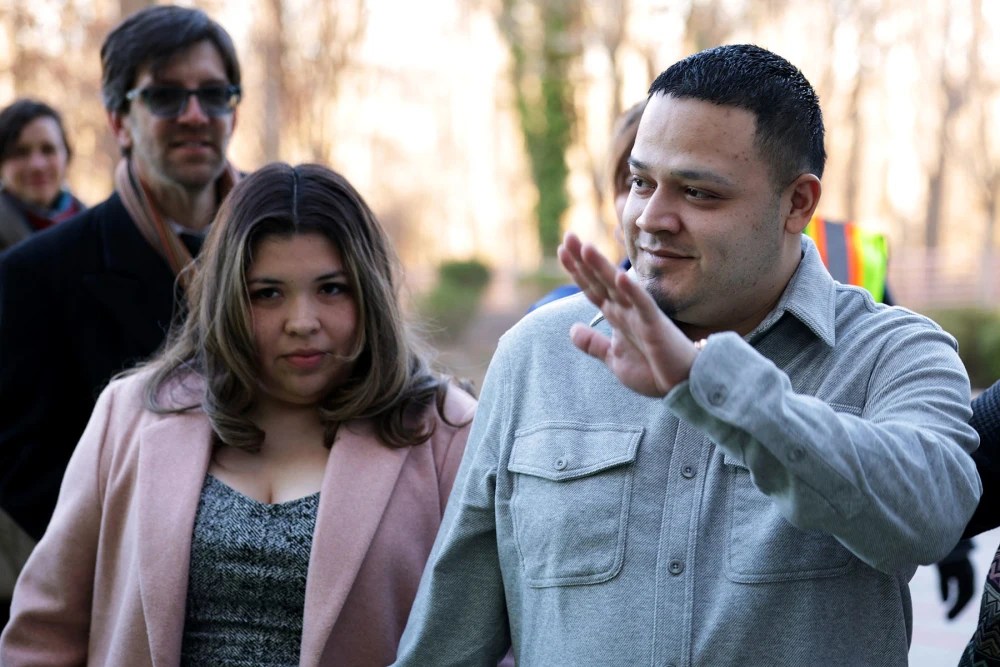
The Department of Justice criticized the decision in a statement obtained by The Introspective.
“Another activist judge has placed politics above public safety,” a DOJ spokesperson wrote.
“The judge’s order is wrong and dangerous, and we will appeal.”
This comes after a previous report from The Introspective detailed Abrego Garcia’s release from custody.


Leave a Reply