
The week included a new DOJ investigation, court fights over federal payments, and a ruling blocking changes to the Kennedy Center.
Dante Belcher
June 1, 2026
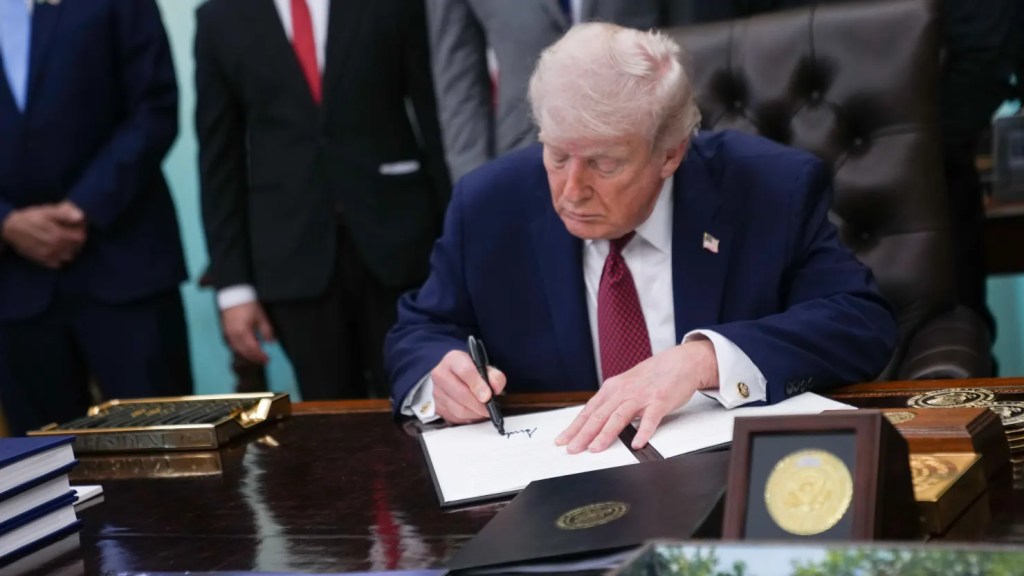
Trump’s 71st week brought updates from the Department of Justice and several court decisions. Following previous reports from The Introspective detailing allegations that Trump raped writer E. Jean Carroll in the 1990s, the DOJ launched an investigation into Carroll after billionaire Reid Hoffman allegedly paid her legal fees. At the same time, former President Joe Biden filed a lawsuit against the DOJ to block the release of audio recordings related to an investigation by then-Special Counsel Robert Hur.
A federal judge temporarily froze payments from Trump’s “Anti-Weaponization Fund,” a fund meant to compensate those who were allegedly targeted by the Biden administration. Meanwhile, following a previous report from The Introspective detailing that the Kennedy Center—a D.C. landmark for arts and entertainment—would close for two years beginning in July, a federal judge blocked the center from closing and later ruled that Trump unlawfully added his name to the institution.
DOJ
Following previous reports from The Introspective detailing allegations that Trump raped writer E. Jean Carroll in the 1990s, the DOJ launched an investigation into Carroll after billionaire Reid Hoffman, co-founder of LinkedIn, allegedly paid her legal fees.
In a series of X posts, Hoffman denied the allegations against him, calling them “absurdly false,” while adding, “Trump cannot be allowed to use the full weight and power of the U.S. government to come after women who speak up, or anyone who supports them in doing so.”
“Trump hopes that these fraudulent investigations will silence those who stand up to him. He is wrong. I will not bend the knee,” he wrote.
This comes following a previous report from The Introspective detailing Trump calling for an investigation into Hoffman after he was found to have ties to Jeffrey Epstein.
“Hoffman, in my opinion, should be under investigation,” Trump said in the report.
“He’s a sleazebag.”
At the same time, former President Joe Biden filed a lawsuit against the DOJ to block the release of audio recordings related to an investigation by then-Special Counsel Robert Hur.
“Every American, including a sitting or former vice president, has a right to privacy in the personal conversations he has within his own home,” the court filing stated.
“The materials at issue are audio recordings and transcripts of President Biden’s private, sensitive conversations with his writing partner, Mark Zwonitzer, which took place at President Biden’s home in 2016 and 2017. The Department obtained these materials in 2023 in connection with the investigation of Special Counsel Robert K. Hur into President Biden’s handling of classified records,” it continued, adding that Biden “cooperated fully” in the investigation.
“The public and private dimensions of President Biden’s life have always been intertwined, but perhaps never more so than during that difficult year,” it added.
“President Biden and Zwonitzer recorded their conversations for use in writing Promise Me, Dad, and they both understood that they were speaking privately.”
In a Truth Social post, Trump acknowledged the lawsuit.
“A Crooked Politician!!!” he wrote.
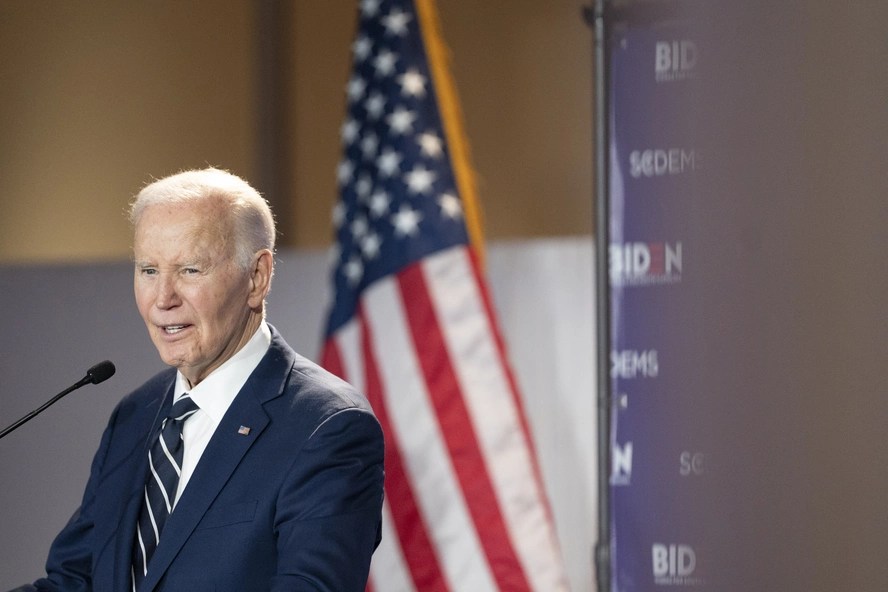
This comes as the memoir Promise Me, Dad detailed the death of Biden’s son Beau in 2015.
Court Decisions
U.S. District Judge Leonie Brinkema paused the “Anti-Weaponization Fund” as payments were set to begin.
“While plaintiffs’ Motion is pending, it is hereby ORDERED that defendants be and are ENJOINED from taking any further action pursuant to the creation or operation of the Anti-Weaponization Fund, which includes the transferring of money to the Fund; the consideration of any claims submitted to the Fund; and the disbursing of any funds from the Fund,” the court filing stated.
In a statement obtained by The Introspective, Skye Perryman, president and CEO of Democracy Forward, which represented the plaintiffs, celebrated the ruling.
“Today, a federal court recognized the urgent need to prevent taxpayer dollars from being distributed through a secretive and unprecedented political compensation scheme before the legality of that program can be fully reviewed by the court,” she said.
“This is a victory for transparency, the rule of law, and the American people. No administration has the authority to spend public money through a political rewards program that Congress never authorized. We look forward to the next stages in this case.”
The DOJ criticized the judge in a statement, saying the ruling was driven by personal opposition to the fund.
“The Department remains extremely confident in the legality of the Anti-Weaponization Fund, which is supported by ample precedent, including Obama-era settlements,” the statement read.
“We will not allow the policy preferences of judges to interfere with our efforts to provide restitution to victims of lawfare.”
Meanwhile, U.S. District Judge Casey Cooper blocked the closure of the Kennedy Center and ruled that its board acted “unlawfully” by adding Trump’s name to the institution.
“The Kennedy Center’s organic statute makes crystal clear that the Center is to be named for President Kennedy, and it cannot bear any other formal name or public memorial based on the Board’s unilateral say-so,” read the court filing.
“Congress gave the Kennedy Center its name, and only Congress can change it.”


Leave a Reply