
The week included major Supreme Court rulings on immigration, a delayed housing bill, and new classroom Bible requirements.
Dante Belcher
June 29, 2026
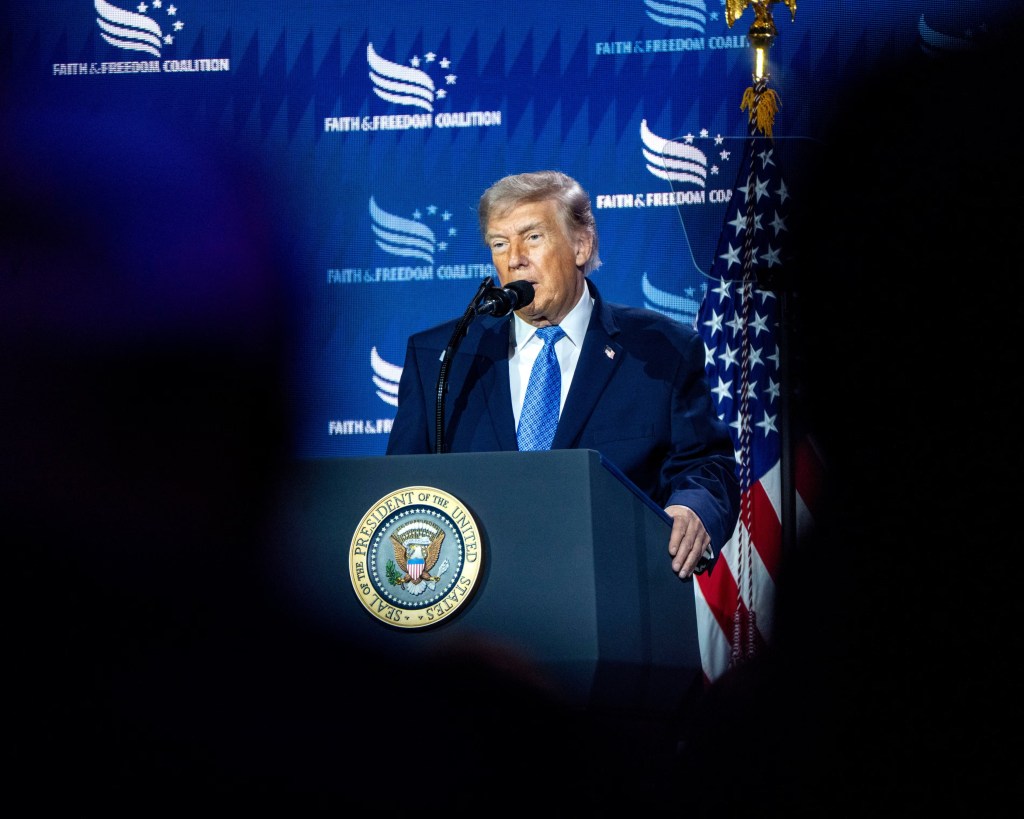
Trump’s 75th week brought updates to immigration, affordable housing, and religious protections. As anti-immigrant sentiment continues, the Supreme Court allowed the Trump administration to turn away asylum seekers at the U.S.-Mexico border. At the same time, the court allowed the administration to end Temporary Protected Status (TPS) for Haitians and Syrians, raising implications following a previous report from The Introspective detailing the end of TPS for immigrants from Cuba, Haiti, Nicaragua, and Venezuela.
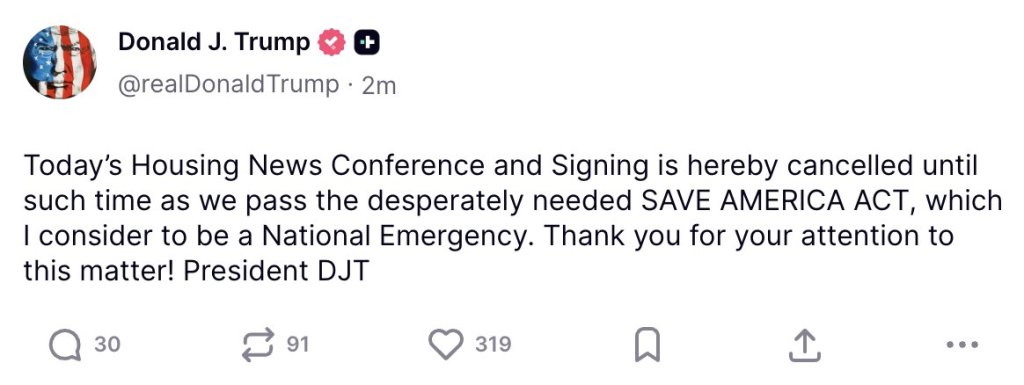
As tensions over affordable housing continue, Trump canceled the signing of a bipartisan housing bill until the SAVE America Act—which requires proof of citizenship and a photo ID to vote in federal elections—is passed. Meanwhile, Texas passed a law requiring Bible passages to be read in K-12 public schools.
Immigration
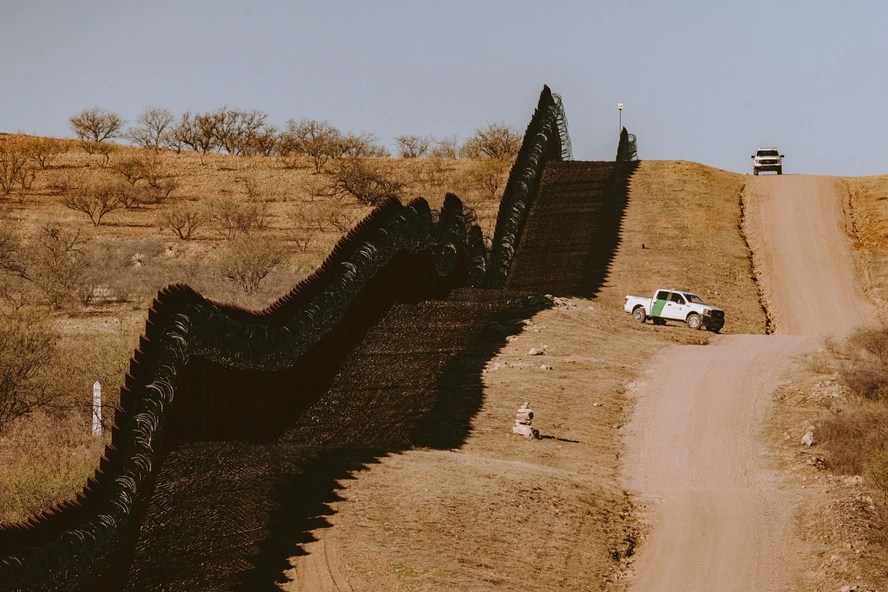
As anti-immigrant sentiment continues, the Supreme Court allowed the Trump administration to turn away asylum seekers at the U.S.-Mexico border.
“We hold that an alien who is standing in Mexico does not ‘arriv[e] in the United States’ by attempting, and failing, to set foot in this country. An alien ‘arrives in the United States’ only when he crosses the border,” wrote Justice Samuel Alito, stating that asylum seekers must cross the border to be considered.
This comes as U.S. law says that an asylum seeker who “arrives in” the United States cannot be deported until the application is processed.
“An alien present in the United States who has not been admitted or who arrives in the United States (whether or not at a designated port of arrival and including an alien who is brought to the United States after having been interdicted in international or United States waters) shall be deemed for purposes of this chapter an applicant for admission,” read the law.
“An applicant for admission may be required to state under oath any information sought by an immigration officer regarding the purposes and intentions of the applicant in seeking admission to the United States, including the applicant’s intended length of stay and whether the applicant intends to remain permanently or become a United States citizen, and whether the applicant is inadmissible.”
In a press release, Sarah Rich, senior attorney at Democracy Forward, an advocacy group, criticized the ruling.
“On the 250th anniversary year of the United States, our federal executive branch is abandoning its obligations to asylum seekers fleeing perilous circumstances in fear for their lives and putting thousands of people—including children—in dangerous and dire situations,” she said.
“Today, the U.S. Supreme Court issued a decision that will put even more people and families in harm’s way. We are disappointed in the Court’s decision and call on all Americans to demand that our government protect the families the Court abandoned today. Congress should act to protect not only the lives of asylum seekers, but also the best of American values.”
Rebecca Cassler, senior litigation attorney at the American Immigration Council, referred to the ruling as “cruelty.”
“Cruelty is not a substitute for real solutions. Blocking people from seeking asylum at official ports of entry will do nothing to fix our broken immigration system; it only makes things more chaotic and dangerous for vulnerable families.”
“What we need is an asylum system that is fair, efficient, accountable, and treats people with dignity. Unfortunately, today’s decision validates an approach that treats people seeking safety as a problem to shut out instead of creating an orderly system that actually works.”
This comes as the court also allowed the administration to end Temporary Protected Status (TPS) for Haitians and Syrians, raising implications following a previous report from The Introspective detailing the end of TPS for immigrants from Cuba, Haiti, Nicaragua, and Venezuela.
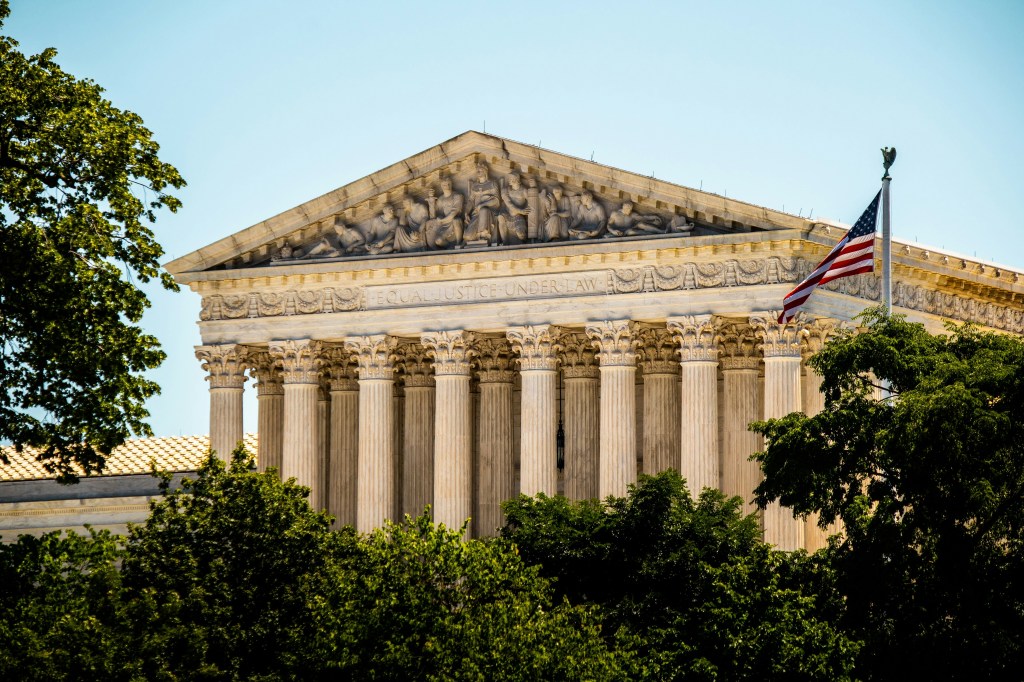
“In these cases, we consider whether respondents, who challenge the termination of Temporary Protected Status (TPS) for aliens from Syria and Haiti, are entitled to orders postponing the terminations during litigation,” wrote Justice Samuel Alito.
“We hold that they are not.”
In a dissent, Justice Elena Kagan criticized the decision, accusing the majority of condoning comments Trump made regarding Haitian immigrants over the years.
“The statements fairly shout, in their racial undertones and overtones alike, that race entered into the president’s resolve to remove Haitians from this country,” she wrote.
In a statement obtained by The Introspective, the White House celebrated the ruling, calling it a “win.”
“This is a tremendous win for the Trump administration. Today, the Supreme Court affirmed what President Trump has always maintained: Temporary Protected Status is, by definition, temporary,” said White House spokesperson Abigail Jackson.
Dahlia Doe, a Syrian TPS holder and lead plaintiff in the case, called the ruling a “devastating blow.”
“Today’s decision is a devastating blow to me and thousands of TPS holders and our families who built our lives in this country in good faith,” she said.
“We are real people whose futures now hang in the balance. This is not simply a legal outcome; for us, it is the loss of stability, the fear of separation from our families, and the uncertainty of what comes next,” she continued.
“We are parents, workers, students, caregivers, and neighbors, and despite this disappointing decision, our contributions and our humanity remain unchanged.”
Viles Dorsainvil, a Haitian TPS holder and plaintiff in the case, further criticized the ruling.
“This decision places thousands of Haitian families in immediate fear. Haiti is not safe, and everyone knows it,” he said.
“The Court’s ruling does not change the reality on the ground or the contributions we make here in the United States. The truth is this—we are parents, workers, caregivers, and leaders—and we will not disappear quietly. We will continue fighting for safety and dignity.”
Housing and Texas
As tensions over affordable housing continue, Trump canceled the signing of a bipartisan housing bill until the SAVE America Act is passed.
“Today’s Housing News Conference and Signing is hereby cancelled until such time as we pass the desperately needed SAVE AMERICA ACT, which I consider to be a National Emergency,” he wrote on Truth Social.
Trump later suggested that lowering interest rates would alleviate the housing crisis.
“I made billions of dollars with housing. I know housing better than anybody, maybe anywhere. It’s all about the interest rate. Lower the interest rates, you can have all the housing you want,” he said.
“Low interest rates will solve everything, will solve that. Now, despite that, we’re doing well with housing.”
House Speaker Mike Johnson said he was confident that Trump would sign the bill.
“But he wanted to make a point today, which is an important one. That’s where the American people are. The American people want safe and secure elections, and the SAVE America Act does that,” he said.

In an X post, Sen. Elizabeth Warren criticized Trump for not signing the bill.
“Huge bipartisan majorities in Congress passed a bill to lower housing costs,” she wrote.
“But at the 11th hour, Donald Trump is refusing to sign it into law. His policies have made your costs go up — and he doesn’t care.”
Meanwhile, the Texas State Board of Education voted 9-5-1 to require Bible passages to be read in K-12 classrooms.
 The Introspective
Leave a comment