
The week included landmark Supreme Court decisions, new federal lawsuits over gun laws, and a legal challenge from former CIA Director John Brennan.
Dante Belcher
July 6, 2026
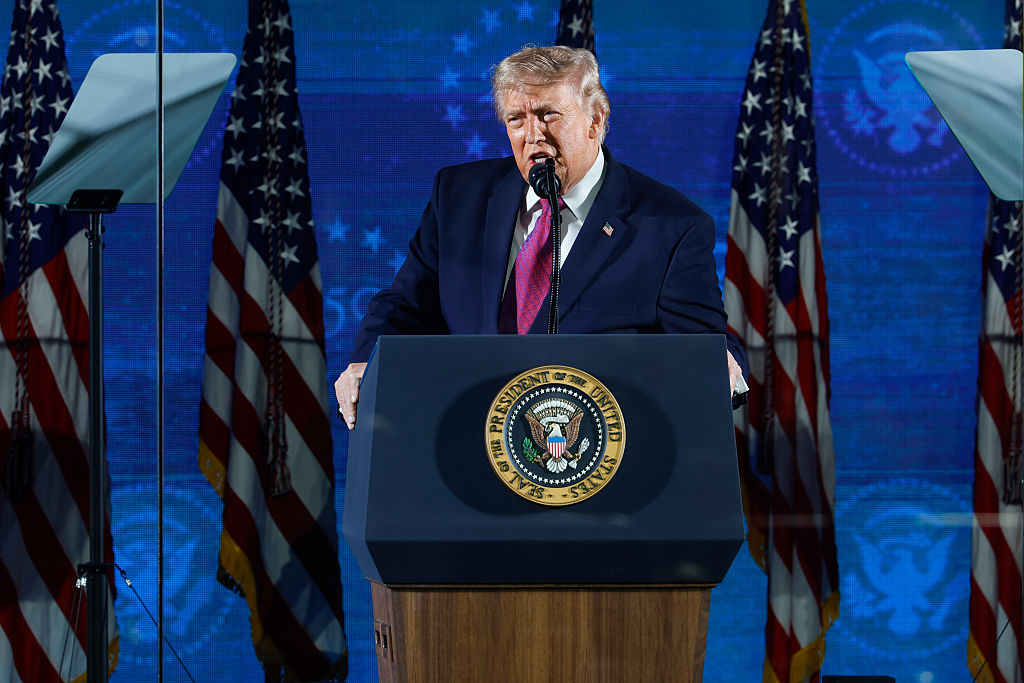
Trump’s 76th week brought Supreme Court decisions and lawsuits. Following an executive order aimed at limiting birthright citizenship, the Supreme Court upheld the constitutional right, raising implications as anti-immigrant sentiment continues. The court later upheld state bans on transgender women in women’s sports, following a previous report from The Introspective regarding an executive order banning transgender women. At the same time, the court allowed Trump to fire Federal Trade Commission (FTC) Chair Rebecca Slaughter while also ending Watergate-era limits on how much political parties can spend on individual federal candidates.
Former CIA Director John Brennan later filed a lawsuit against the Trump administration to preserve records in the event of an investigation against him. Meanwhile, the Department of Justice sued Virginia and California over their gun laws.
Supreme Court
As anti-immigrant sentiment continues, the Supreme Court upheld birthright citizenship, writing that “children born of parents unlawfully or temporarily present in the United States” are “citizens at birth.”
“Citizenship, then and now, was the right to have rights — to freely participate in our political community. The Framers of the Fourteenth Amendment extended that promise to ‘every free-born person in this land,’” wrote Chief Justice John Roberts.
“We keep that promise today.”
Justice Clarence Thomas dissented, agreeing with Trump’s claim that the 14th Amendment was only meant for formerly enslaved Black people.
“I am not sure that today’s opinion will stand the test of time,” he wrote.
“The Citizenship Clause ‘added greatly to the dignity and glory of American citizenship.’ Today’s opinion devalues that citizenship. I respectfully dissent.”
At the same time, as backlash to DEI and LGBTQ rights continues, the court later upheld state bans on transgender women in women’s sports.
“The Constitution and Title IX do not require an overhaul of women’s and girls’ sports throughout America,” wrote Justice Brett Kavanaugh, adding that transgender women’s “desire to compete warrants respect” and that they should not be “ostracized or vilified.”
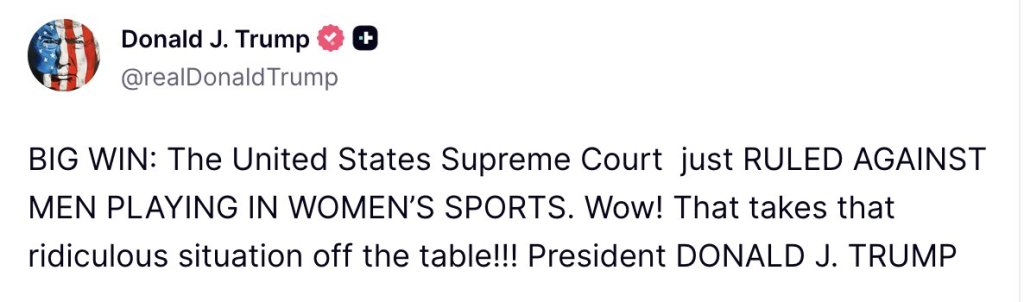
In a Truth Social post, Trump celebrated the ruling.
“BIG WIN: The United States Supreme Court just RULED AGAINST MEN PLAYING IN WOMEN’S SPORTS,” he wrote, using transphobic language.
“Wow! That takes that ridiculous situation off the table!!!”
In a press release, West Virginia Gov. Patrick Morrisey celebrated the decision, writing that the state had “defended a simple principle most Americans instinctively understand: that women’s sports exist to provide women and girls a fair opportunity to compete and succeed.”
“Today’s decision will be remembered as one of the most important victories for women’s athletics since the enactment of Title IX itself,” he wrote.
In a statement, Sarah Kate Ellis, president and CEO of LGBTQ advocacy group GLAAD, criticized the ruling, saying it “is at odds with the fundamental principles of fairness, freedom, and family that define our country and our communities.”
“By allowing sweeping restrictions on a very small number of transgender students who simply wanted to participate in sports alongside their peers, the ruling creates an unnecessarily unfair playing field,” she wrote.
“Personal freedom and opportunity are best served when our legal protections expand access and guarantee safety for everyone. Today’s decision unfairly strips the rights of a few and threatens the ability of every girl and woman to play the sports they love.”
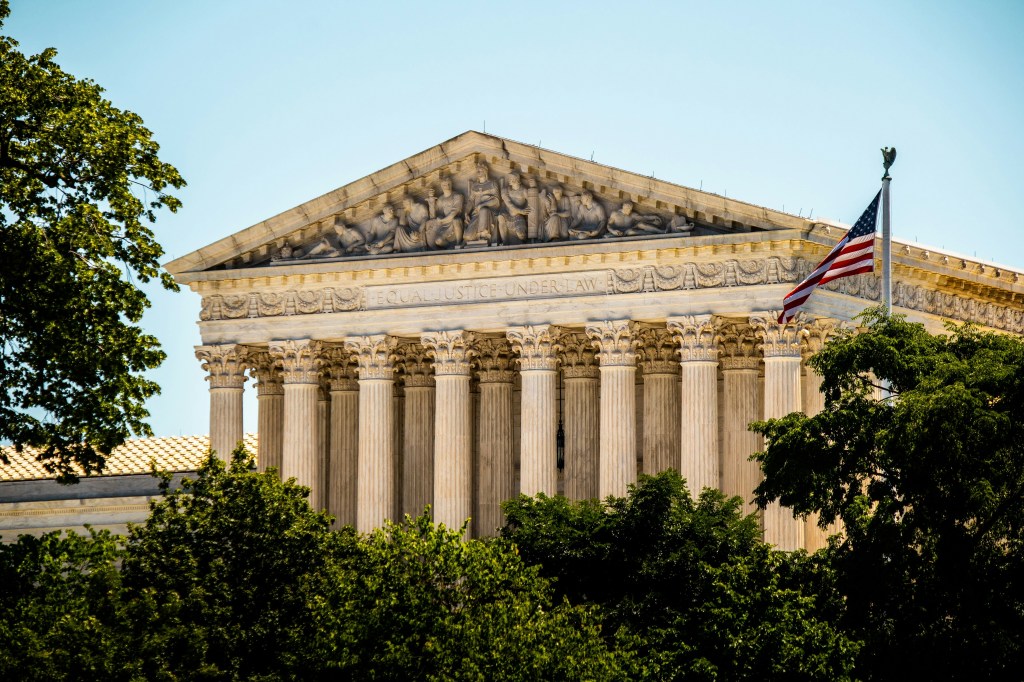
The court later allowed Trump to fire Federal Trade Commission Chair Rebecca Slaughter, with three justices dissenting.
“Today, this Court undoes centuries of political practice and concludes that all three branches of Government have been acting in open defiance of the Constitution all this time. Its conclusion is wrong,” wrote Justices Sonia Sotomayor, Elena Kagan and Ketanji Brown Jackson in their dissent.
“The text of the Constitution, along with its history, the longstanding practices of the political branches, and the precedents of this Court, make clear that Congress may limit the causes for which the heads of commissions like the FTC can be removed by the President,” they continued.
“In holding otherwise, the Court gives the President a power unknown even to the English Crown against which the Founders revolted, elevating him above his once coequal branches by transforming a duty to take care that the laws be faithfully executed into a license to act in defiance of those very laws.”
Meanwhile, the Supreme Court ended Watergate-era limits on how much political parties can spend on individual federal candidates.
“In short, constitutional text, history, and precedent establish that the political-party coordinated-expenditure limits violate the First Amendment,” wrote Justice Brett Kavanaugh.
The decision comes as the midterm elections approach.
Lawsuits
Former CIA Director John Brennan sued the Trump administration to preserve records in the event of an investigation against him, calling it “phantom criminal conduct.”
“To fully consider those motions, the reviewing judge would need to scrutinize the motivations of the Justice Department officials who directed, oversaw or undertook those actions to determine whether they violated Director Brennan’s rights, and specifically whether they were motivated by a desire to vindictively prosecute him as an act of retribution,” wrote Brennan’s lawyers in the lawsuit.
Meanwhile, the DOJ filed lawsuits against Virginia and California over laws that limit certain types of guns.
“The Constitution is not a suggestion, and the Second Amendment is not a second-class right,” Acting Attorney General Todd Blanche said in a press release.
“This Justice Department has done more to protect the Second Amendment than any administration in our nation’s history, and we will continue to do so whenever necessary.”
California’s law would limit the number of legal firearms a person may purchase, with Blanche calling it “unlawful.”
“The Second Amendment is a sacred right belonging to all Americans, even those in California. California cannot ban the most popular type of handgun in America,” he said in a separate press release.
“We will work to stop this blatant trampling of our rights by the California government to protect the rights of lawful gun owners.”


Leave a Reply