
The week included a national energy emergency, a mail-voting ruling, and a new oil deal with Venezuela.
Dante Belcher
Aug 31, 2026
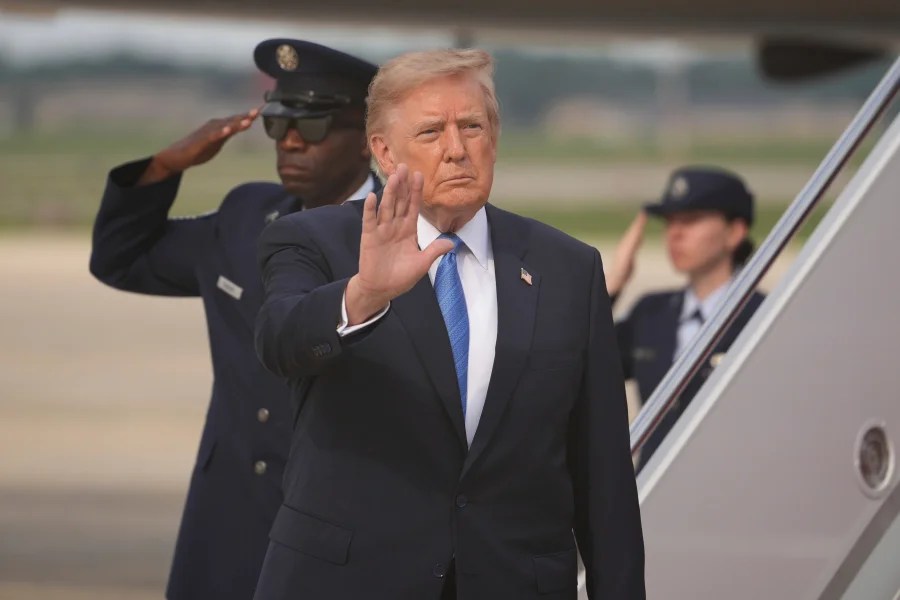
Trump’s 84th week brought updates to executive orders, mail-in voting, national security and Venezuela. This comes as Trump signed an executive order renaming Lake Ontario to “Lake America,” raising implications as the move caused backlash. At the same time, Trump later declared a national energy emergency, restricting the purchase and installation of certain foreign-produced equipment, citing an “unusual and extraordinary foreign threat” to national security. Following a previous report from The Introspective detailing an executive order limiting mail-in voting, a federal judge barred the Trump administration from restricting the method.
The FBI alleged that a Chinese hacking group targeted U.S. government agencies, such as NASA, the National Institutes of Health (NIH) and the Department of Health and Human Services (HHS), for years, raising concerns over national security. Meanwhile, as the trade war continues, the U.S. announced a deal with Venezuela to lower gas prices, following a previous Introspective report detailing the capture of then-President Nicolás Maduro.
Executive Orders and Mail-In Voting
As global tensions continue, Trump announced that Lake Ontario would be renamed “Lake America” in the United States.
“The United States is the greatest protector of the Great Lakes, including the body of water currently known as Lake Ontario,” he said in the executive order.
“Without the security and investment provided by the United States, this freshwater system would not be open for shipping, recreation and responsible use to the same extent as it is today.”
In an X post, Canadian Prime Minister Mark Carney criticized the move, emphasizing how the name Lake Ontario predates both Canada and the United States.
“The name Lake Ontario comes from the Wendat word Ontari’io, which, appropriately, means ‘the lake is beautiful, the lake is big,’” he wrote.
“The name is more than 400 years old, predating both the Confederation of Canada and the Declaration of Independence of the United States of America,” he continued.
“Canadians also know that naming reality means calling it Lake Ontario—then, now and always.”
New York Gov. Kathy Hochul later wrote on X that “New York won’t be calling it that.”
Trump later said that the move was not meant to send a political message but added that “Canada’s been ripping us off for a long time.”
“They wanted to be treated like a state and they’re not a state,” he said.
“We just can’t do that anymore.”
He later said he “loves the people of Canada.”
“I don’t think their representatives do an appropriate job. Maybe they’ll change. I really don’t know. It doesn’t make much difference,” he added.
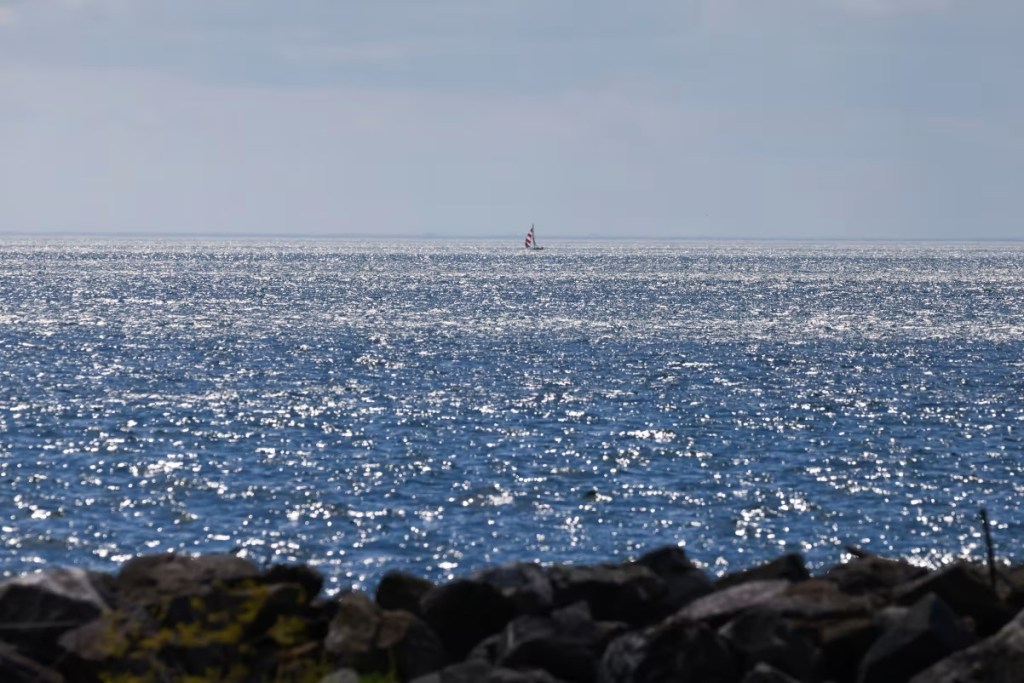
At the same time, Trump declared a national energy emergency, restricting the purchase and installation of certain foreign-produced equipment, citing an “unusual and extraordinary foreign threat” to national security.
“As President of the United States, my highest duty is protecting the national security, foreign policy and economy of this country,” read the declaration.
“Certain foreign actors are increasingly creating and exploiting vulnerabilities in the United States bulk-power system, which provides the electricity that supports our national defense, vital emergency services, critical infrastructure and economy.”
The move also gave the Department of Energy (DOE) 120 days to publish formal rules implementing the changes, raising implications after a report from The New York Times warned of an 18-month blackout of the U.S. power grid due to outdated infrastructure and potential coordinated attacks.
Later, following previous reports from The Introspective detailing an executive order limiting mail-in voting and states filing a lawsuit, a federal judge barred the Trump administration from restricting the method.
“Based on the record presently before the court, Plaintiff States face irreparable harm where they are required to comply with a likely unconstitutional regulation for which compliance is practically impossible as to the 2026 midterm elections, now little more than two months away,” wrote U.S. District Judge Indira Talwani.
“Most Plaintiff States have already ordered their mail ballots, and some are required by state law to send them to eligible voters as early as next week.”
The Department of Justice later appealed the decision, raising implications as the midterm elections approach.
FBI and Venezuela
The DOJ alleged that a Chinese hacking group known as QTFY targeted U.S. government agencies for several years, raising implications as many of the alleged members were formerly part of the Chinese military.
“State-sponsored malicious hackers preying on America’s critical infrastructure will be stopped and prosecuted. We are here to ensure security for the American people and will use every tool we have to keep that promise,” said Attorney General Todd Blanche in a press release.
“Federal law enforcement investigated and disabled the PRC’s malicious software, the latest in a series of technical operations to dismantle indiscriminate hacking activities sponsored by the People’s Republic of China.”

The DOJ later alleged that the group attempted a hack against NASA in 2019; however, it was unsuccessful.
“The FBI remains relentless in our efforts to counter nation state cyber actors, taking decisive action against those threatening the United States and our critical infrastructure,” said Special Agent in Charge Mark Remily of the FBI San Diego Field Office.
“Through complex investigations, aggressive technical operations and strong partnerships, FBI San Diego will continue to identify, disrupt and impose costs on our cyber adversaries. We are committed to dismantling the tools behind these state-sponsored crimes and protecting the American people from malicious cyber activity.”
Meanwhile, as the trade war and inflation from the Iran war continue, the U.S. announced a deal with Venezuela to lower gas prices.
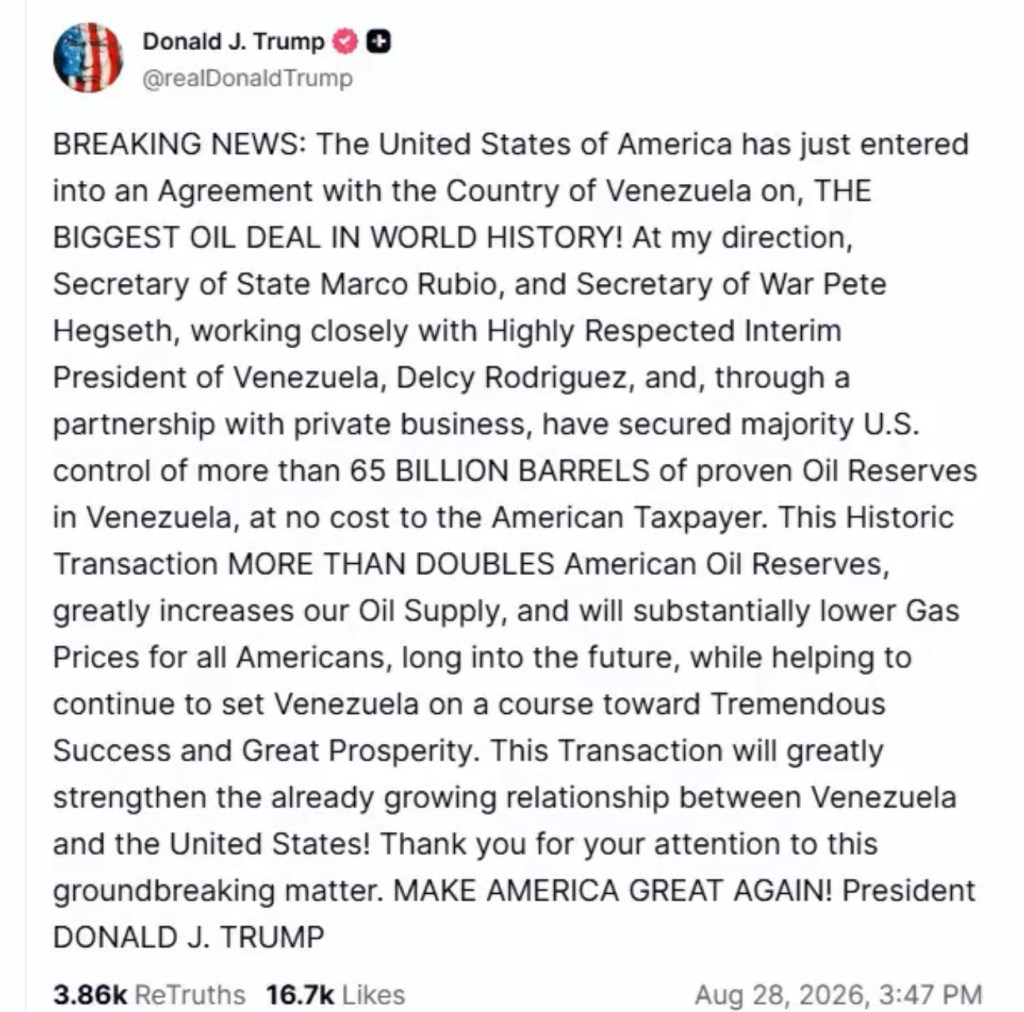
“The United States of America has just entered into an Agreement with the Country of Venezuela on, THE BIGGEST OIL DEAL IN WORLD HISTORY! At my direction, Secretary of State Marco Rubio, and Secretary of War Pete Hegseth, working closely with Highly Respected Interim President of Venezuela, Delcy Rodriguez, and, through a partnership with private business, have secured majority U.S. control of more than 65 BILLION BARRELS of proven Oil Reserves in Venezuela, at no cost to the American Taxpayer,” Trump announced on Truth Social.
“This Historic Transaction MORE THAN DOUBLES American Oil Reserves, greatly increases our Oil Supply, and will substantially lower Gas Prices for all Americans, long into the future, while helping to continue to set Venezuela on a course toward Tremendous Success and Great Prosperity.”
In an X post, Secretary of State Marco Rubio celebrated the deal, calling it “a huge win for both the American and Venezuelan people.”
“It demonstrates how President Trump’s bold foreign policy is driving America First wins: securing stable reserves and low-cost oil in our Hemisphere and lowering gas prices here at home,” he wrote.
“For the Venezuelan people, this deal will bring nearly $100 billion in private investment, support thousands of high-paying jobs and drive the reconstruction of Venezuela’s economy.”
This comes as Venezuela holds the largest proven oil reserves in the world.


Leave a Reply